Ancient Egypt and Essential Oils: Sacred Scents from the Nile
Explore how Ancient Egypt used essential oils and aromatics in religion, medicine, beauty, and mummification. Discover the sacred origins of modern aromatherapy from the temples and tombs along the Nile.
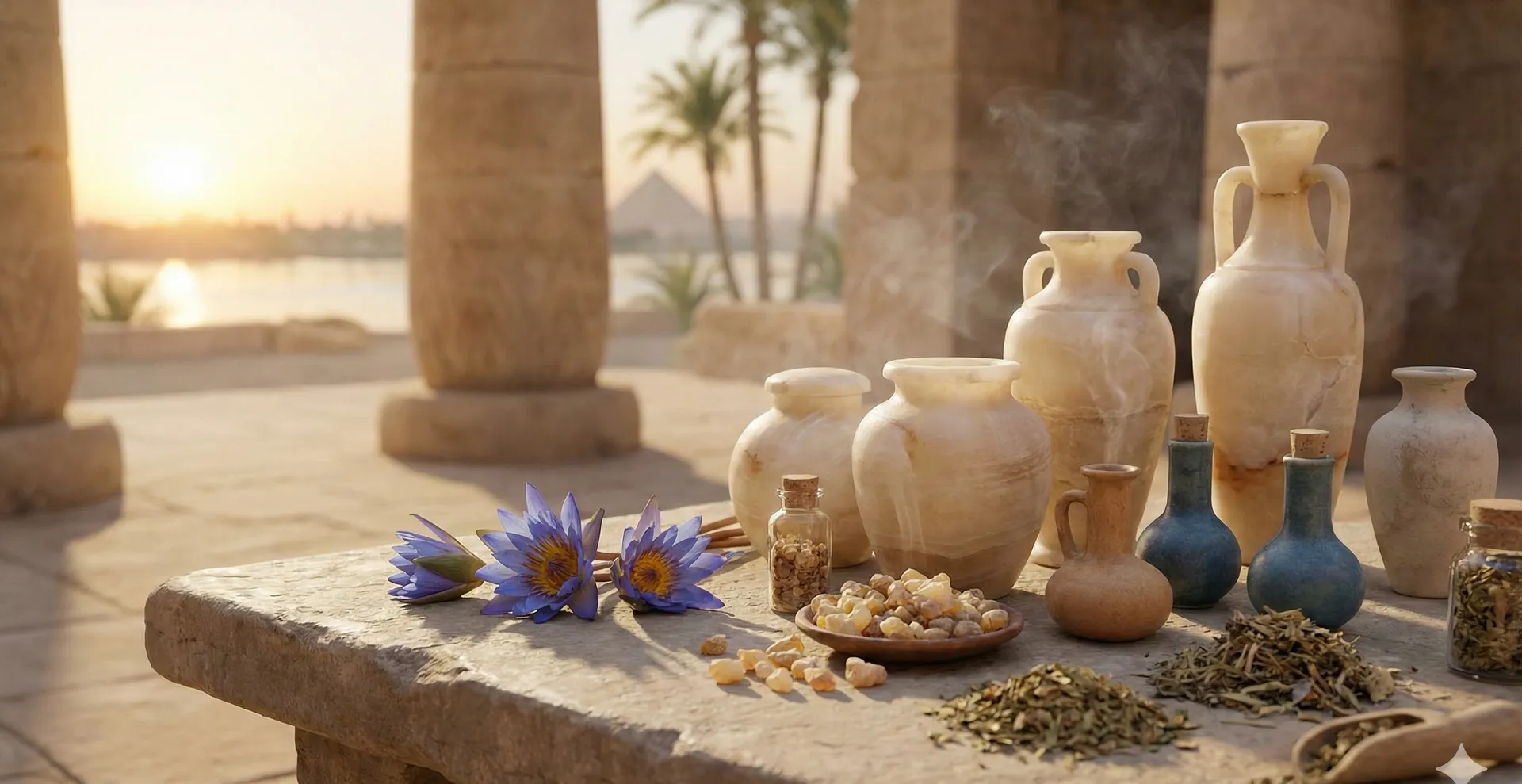
Few civilizations have captured the imagination of the world as powerfully as Ancient Egypt. From monumental pyramids to exquisite tomb paintings, the Egyptians left behind a rich legacy of art, science, and spirituality. Among their many achievements, one area stands out for its surprising modern relevance: the sophisticated use of essential oils and aromatic substances.
Today, essential oils are popular in wellness, beauty, and holistic health. Yet many people do not realize that the roots of these practices stretch back thousands of years to the temples, palaces, and workshops that lined the Nile. Ancient Egyptians used aromatic oils not only for fragrance, but also for medicine, ritual, daily hygiene, and even embalming. Understanding their methods and beliefs offers a fascinating window into how humans have long connected scent, health, and the sacred.
The Role of Scent in Ancient Egyptian Culture
For the Egyptians, fragrance was far more than a luxury. It was a vital part of religious, social, and medical life. In a hot climate, pleasant aromas helped mask unpleasant smells, but they also carried deep symbolic and spiritual meanings.
- Spiritual purity: Fragrance symbolized holiness and closeness to the gods. To "smell sweet" before a deity meant to be spiritually clean and worthy.
- Social status: Fine oils and perfumes were expensive and associated with nobility, priests, and royalty.
- Health and protection: Aromatic oils were believed to ward off disease, evil spirits, and the corruption of the body.
Temple rituals, royal banquets, and everyday grooming all involved the use of oils, resins, and aromatic unguents. This constant interaction with scent shaped not only Egyptian aesthetics, but also their medicine and religious symbolism.
From Plants to Precious Oils: How Egyptians Produced Aromatics
Although modern steam distillation emerged much later, Ancient Egyptians developed advanced methods for extracting aromatic compounds from plants. Their techniques combined observation, experimentation, and practical ingenuity.
Key methods of extraction
- Maceration in oils: Plant material was soaked in a base oil, such as moringa or sesame oil. Over time, the carrier absorbed the plant’s fragrance, producing a perfumed oil.
- Infusion and gentle heating: Mild heat helped release aromatic components from herbs, flowers, and resins without burning them.
- Resin collection: Trees such as frankincense and myrrh were tapped for their resin, which could be burned as incense or dissolved into oils and unguents.
- Fat-based unguents: Solid fats were combined with aromatic substances to create scented salves and cones worn on the head during festivities.
While these processes did not produce essential oils in the modern, highly concentrated sense, they created potent aromatic preparations that served many of the same functions: scenting, healing, preserving, and sanctifying.
Sacred Oils in Religion and Ritual
Religion permeated every aspect of Egyptian life, and essential oils and aromatics played a central role in worship. The Egyptians believed that the gods not only delighted in pleasant smells, but could also be invoked and honored through sacred scents.
Temple rituals and offerings
In temples across Egypt, priests performed daily rituals to maintain harmony between the human world and the divine. Essential oils and incense were integral to these ceremonies.
- Anointing statues of the gods: Priests washed and anointed sacred images with fragrant oils to "awaken" them and invite the presence of the deity.
- Incense offerings: Burning resins such as frankincense and myrrh sent fragrant smoke upward, symbolizing prayers and devotion rising to the heavens.
- Purification of spaces: Aromatic fumigation helped cleanse temples and sanctuaries, creating a pure environment suitable for divine presence.
Different scents were associated with specific gods and spiritual qualities. For example, kyphi, a famous Egyptian incense blend, was used at dusk in temples and homes. It was said to promote relaxation, vivid dreams, and a connection to the divine.
The symbolism of fragrance
Ancient texts often describe gods and goddesses as possessing a "sweet smell" or spreading a divine fragrance wherever they go. This aroma signified life, fertility, and blessing. To be surrounded by pleasant scent was to be in alignment with cosmic order, or ma’at, the principle of balance and harmony.
In funerary texts, perfumes and oils appear as gifts to the deceased, ensuring that they too could enjoy the sweet fragrances of the afterlife and be welcomed by benevolent deities.
Perfume, Beauty, and Daily Life
Aromatics were not reserved solely for temples. In daily life, both men and women used fragranced oils for grooming, skin care, and social occasions. In a land of intense sun and dry air, oils were practical as well as pleasurable.
Cosmetics and skin care
- Moisturizing the skin: Plant-based oils infused with herbs and flowers protected the skin from drying and cracking.
- Anti-aging preparations: Documents such as the Ebers Papyrus record recipes for reducing wrinkles, treating blemishes, and maintaining a youthful appearance.
- Hair and scalp treatments: Oils mixed with aromatic resins were applied to the hair and scalp to nourish, perfume, and protect from parasites.
Beauty in Ancient Egypt carried moral and spiritual dimensions. A well-groomed person, scented with subtle perfumes, was seen as harmonious, civilized, and in tune with the gods’ ideals of balance and order.
Festivals, banquets, and scented cones
At banquets and religious festivals, guests often wore aromatic cones made from perfumed fat placed atop the head. As the event progressed, the cone slowly melted, releasing fragrance and lightly oiling the hair and skin.
This striking practice combined practicality, luxury, and symbolism. The melting cone marked the passage of time during a celebration, while its fragrance enhanced the festive atmosphere and honored the deities linked to joy, music, and fertility.
Essential Oils in Medicine and Healing
Ancient Egyptian medicine blended empirical observation with spiritual beliefs. Physicians recognized many physical causes of illness, but they also considered spiritual imbalance and the influence of unseen forces. Essential oils and aromatics operated at this intersection of body and spirit.
Medical papyri and aromatic prescriptions
Several surviving medical texts, such as the Ebers Papyrus and the Edwin Smith Papyrus, contain hundreds of remedies. Many of them feature plant-based ingredients and aromatic substances that resemble today’s essential oil components.
- Antiseptic and antimicrobial uses: Resins and aromatic balsams were applied to wounds and infections to cleanse and protect the skin.
- Digestive support: Herbs and seeds with aromatic properties were used for stomach complaints and intestinal issues.
- Respiratory relief: Inhalation of fragrant smoke or vapors was recommended for certain lung and sinus conditions.
- Mood and sleep support: Soothing scents were used to calm the mind, ease anxiety, and improve sleep quality.
Healers, priests, and magicians frequently worked together, weaving aromatic remedies into incantations, amulets, and rituals that addressed physical symptoms and spiritual causes simultaneously.
Mind–body connections
The Egyptians understood that smell deeply affects mood and consciousness. Fragrant oils were used in rites intended to dispel fear, attract love, or inspire courage. Although their explanations relied on religious and symbolic language, the underlying mind–body connection aligns with modern research on how scent influences the nervous system.
Thus, essential oils in Ancient Egypt were not confined to physical healing. They also supported emotional stability, spiritual protection, and mental clarity—roles that closely mirror contemporary aromatherapy practices.
Embalming, the Afterlife, and the Power of Preservation
Perhaps the most famous Egyptian use of aromatic substances appears in mummification. The process of embalming relied heavily on resins, oils, and spices to preserve the body and prepare it for eternal life.
Mummification and aromatic substances
During mummification, embalmers cleansed and dried the body, then applied a variety of resins, oils, and unguents. These substances served several purposes:
- Preservation: Aromatic resins created a protective barrier against decay and microbial growth.
- Purification: Scented oils symbolically purified the body, making it suitable for the soul’s journey through the afterlife.
- Honor and status: Rare and costly aromatics reflected the importance of the deceased and their relationship with the gods.
Traces of these materials have been identified in mummies and burial artifacts, revealing a complex and carefully chosen palette of fragrances. The embalming process transformed the body into a sacred object, infused with scents meant to endure beyond death.
Perfumed tombs and funerary rites
Aromatics extended beyond the body itself. Tombs were stocked with jars of perfumed oils, incense, and ointments intended for use in the afterlife. Visitors to tombs and funerary chapels also burned incense and anointed offerings to honor the dead.
In this way, essential oils and aromatics helped bridge the worlds of the living and the dead. Fragrance became a medium of continuity, carrying love, remembrance, and devotion across the threshold of mortality.
Famous Aromatics of Ancient Egypt
Many plants and resins beloved by the Egyptians remain central to modern aromatherapy and perfumery. While their exact recipes are still debated, historical records and scientific analysis highlight several standout substances.
Frankincense and myrrh
Frankincense and myrrh, both aromatic tree resins, were treasured for religious and therapeutic uses. They were imported from regions to the south and east of Egypt and were considered gifts worthy of gods and kings.
- Frankincense: Used in incense blends for purification, prayer, and meditation; associated with clarity and spiritual elevation.
- Myrrh: Frequently used in embalming, wound treatments, and skin-care preparations; valued for its preserving and protective qualities.
Kyphi: The legendary temple incense
Kyphi was one of the most famous Egyptian aromatic blends, prepared in temples according to complex, often secret recipes. Ancient authors describe it as containing resins, spices, wine, and honey, among other ingredients.
Kyphi was burned in the evening, and its smoke was believed to aid sleep, calm the mind, and inspire meaningful dreams. It illustrates how Egyptians combined multiple aromatic substances to create nuanced sensory and spiritual experiences.
Lotus, henna, and other botanicals
- Blue lotus: Often depicted in art, it symbolized rebirth and the rising sun. Its scent was associated with joy, love, and spiritual awakening.
- Henna: Used for body decoration, hair coloring, and protective rituals that combined beauty and symbolic meaning.
- Other herbs and flowers: Coriander, cumin, cinnamon, and various local herbs contributed fragrance, flavor, and therapeutic properties to many preparations.
These botanicals created a rich aromatic landscape woven into every level of Egyptian life, from the royal court and the temple sanctuary to the everyday household.
Ancient Practices and Modern Aromatherapy
Although modern essential oils are typically more concentrated and are produced with advanced distillation technology, many core principles of contemporary aromatherapy echo ancient Egyptian wisdom.
Parallels with today’s essential oil use
- Holistic approach: Both ancient and modern practices recognize that scent influences body, mind, and spirit simultaneously.
- Ritual and intention: Whether in a temple ceremony or a modern meditation session, fragrance is used to set intentions and create a meaningful atmosphere.
- Integration with self-care: Egyptians used oils for beauty and health, just as people today use essential oils in skincare, massage, and relaxation rituals.
By studying Ancient Egypt’s use of aromatics, modern practitioners can deepen their appreciation for the cultural and spiritual roots of essential oil traditions. It becomes clear that these substances have long served as more than pleasant fragrances; they are tools for transformation, connection, and healing.
Respecting history and safety
While the past is inspiring, it is also important to remember that modern safety standards and scientific understanding provide crucial guidance. Some substances used in antiquity may be irritating or unsafe by today’s knowledge, and essential oils in their contemporary concentrated form should always be handled with care.
Learning from Ancient Egypt invites a balanced approach: honoring time-tested insights about the power of scent while applying them with modern research, ethical sourcing, and respect for individual sensitivities.
Why Ancient Egyptian Aromatics Still Matter
Ancient Egypt’s sophisticated use of essential oils and aromatics reveals a culture that understood the profound impact of scent on human experience. For them, fragrance intertwined with faith, medicine, beauty, and the journey beyond death.
When people diffuse essential oils, apply a fragrant blend to the skin, or light a stick of incense today, they participate—perhaps unknowingly—in a tradition that stretches back to the banks of the Nile. The same desire to purify, to heal, to uplift the spirit, and to honor the sacred continues to guide the use of scent.
By exploring the connection between Ancient Egypt and essential oils, modern readers can discover not only historical facts, but also a deeper sense of continuity. Across centuries and cultures, the language of aroma still speaks to the human heart, inviting balance, presence, and reverence for the unseen.