Best Practices for Cleaning Avocados: A Complete Food-Safe Guide
Learn the best practices for cleaning avocados safely and effectively. Discover step-by-step washing methods, safe cutting tips, and storage advice to reduce contamination and protect your health.
Avocados are a nutrient-dense, versatile fruit enjoyed in everything from salads and sandwiches to smoothies and desserts. Because most people peel or scoop avocados before eating them, it is easy to assume they do not need much cleaning. However, the outer skin can carry dirt, bacteria, and pesticide residues that may transfer to the edible flesh during cutting and handling. Following best practices for cleaning avocados reduces the risk of foodborne illness, supports better kitchen hygiene, and helps you get the most from this popular superfood.
Why Cleaning Avocados Properly Matters
Even though avocado skin is thick and inedible, it still comes into contact with many surfaces before reaching your kitchen. During harvesting, transport, and storage, avocados can pick up contaminants such as soil, dust, and microorganisms from equipment, crates, hands, and countertops. Once you cut into the fruit, anything on the peel can be carried by the knife or your hands onto the flesh.
Proper cleaning helps to:
- Reduce bacteria and pathogens that might cause foodborne illness, especially if the avocado is used in raw dishes like guacamole or salads.
- Lower pesticide and residue levels on the peel, preventing cross-contact when cutting.
- Protect vulnerable individuals such as young children, pregnant people, older adults, and those with weakened immune systems.
- Improve overall kitchen hygiene by limiting the spread of contaminants to knives, cutting boards, and other foods.
Adopting simple cleaning habits takes just a few extra seconds and can make a meaningful difference in food safety.
Step-by-Step Guide to Cleaning Avocados
Cleaning avocados does not have to be complicated. A straightforward, consistent routine ensures that every avocado you prepare is as safe and clean as possible.
1. Start With Clean Hands and Tools
Before handling avocados or any fresh produce, always wash your hands thoroughly. This reduces the chance that germs from your hands will contaminate the avocado surface and then the flesh as you cut.
- Wash your hands with warm water and soap for at least 20 seconds.
- Rinse and dry your hands with a clean towel or disposable paper towel.
- Ensure your cutting board, knife, and any utensils are clean and dry before use.
Using a dedicated cutting board for produce can further reduce cross-contamination with raw meat, seafood, or poultry.
2. Inspect the Avocado
Before washing, take a moment to examine the avocado. This helps identify fruit that may be spoiled or damaged.
- Look for obvious mold, extensive bruising, or deep cuts in the skin.
- Check for soft, mushy spots that may indicate internal spoilage.
- Discard any avocados that have a sour smell, visible mold, or signs of rot.
Cleaning cannot fix spoiled fruit, so it is better to identify and discard questionable avocados before investing time in preparation.
3. Rinse Under Cool Running Water
The simplest and most effective cleaning method for avocados is rinsing them under cool running water. This helps remove loose dirt, debris, and some microorganisms from the surface.
- Hold the avocado under cool, gently running tap water.
- Rotate the avocado as you rinse to ensure all sides are thoroughly wetted.
- Avoid using hot water, which can slightly soften the peel and does not improve cleanliness.
Running water helps wash away particles more effectively than soaking in a bowl, where contaminants can collect and spread.
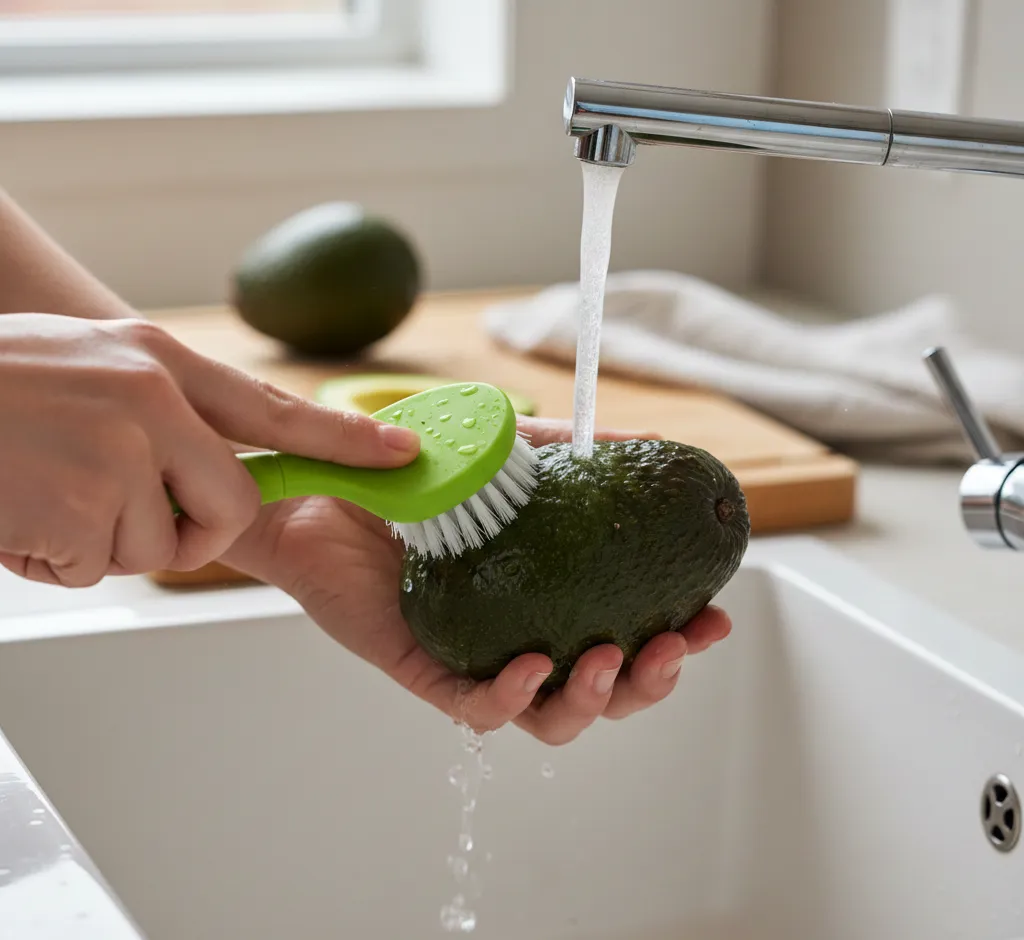
4. Use a Clean Produce Brush (When Appropriate)
Avocado skins have a slightly bumpy texture, which can trap dirt and microbes in crevices. A soft, clean produce brush can help dislodge these particles without damaging the fruit.
- Use a produce brush reserved only for fruits and vegetables, not for dishes or other cleaning tasks.
- Gently scrub the avocado in a circular motion under running water, covering the entire surface.
- Apply light pressure to avoid bruising or breaking the skin.
After use, rinse the brush well and allow it to air-dry to keep it clean and ready for next time.
5. Avoid Soap, Detergent, or Bleach
Household soaps, dish detergents, bleach, or chemical cleaners are not safe for use on avocados or any produce. The peel is porous enough that residues from these products can remain on the surface and transfer to the flesh.
- Do not use dish soap, hand soap, or antibacterial soaps on avocados.
- Do not use chlorine bleach or cleaning sprays on produce.
- Rely on clean, running water and, if desired, a produce brush for surface cleaning.
Specialty produce washes are widely marketed, but plain water is usually sufficient when combined with proper handling and scrubbing.
6. Optional: Use a Vinegar or Baking Soda Rinse
Some home cooks prefer natural rinses, such as dilute vinegar or baking soda solutions, to enhance cleaning. While research shows that water alone is typically effective for most household needs, these methods can offer a bit of extra reassurance.
- Vinegar solution: Mix one part white vinegar with three parts water. Briefly soak the avocado for a minute or two, gently rubbing the surface, then rinse thoroughly under running water.
- Baking soda solution: Add around one teaspoon of baking soda to two cups of water. Stir to dissolve, rub the avocado in the solution, and rinse well.
Always rinse thoroughly afterward to remove any remaining vinegar or baking soda residue so it does not affect the taste or odor of the avocado.
7. Dry the Avocado Before Cutting
Drying the avocado after washing helps prevent water from carrying surface contaminants onto your cutting board or into the flesh.
- Pat the avocado dry with a clean kitchen towel or disposable paper towel.
- Ensure all sides are dry, especially near the stem area and any creases in the peel.
- Use a fresh towel if you are cleaning multiple avocados to avoid spreading contaminants between fruits.
Drying also provides a better grip, reducing the risk of the fruit slipping while you cut, which can help prevent kitchen accidents.
Safe Cutting Practices After Cleaning
Once your avocado is clean and dry, safe cutting practices become the next important step. Proper technique protects your hands and maintains cleanliness.
1. Use a Stable Cutting Surface
A stable cutting board helps prevent slips and reduces the risk of injury. It also makes it easier to cut cleanly without bruising the avocado.
- Choose a cutting board that does not wobble or slide on the countertop.
- Place a damp paper towel or cloth under the board to keep it from moving.
- Use a board designated for produce when possible to avoid cross-contamination from raw meats.
2. Choose the Right Knife
The right knife makes cutting avocados safer and cleaner. A sharp, medium-sized chef's knife or utility knife is usually ideal.
- Use a sharp knife to make clean cuts with minimal pressure.
- Avoid dull knives, which are more likely to slip and cause injury.
- Hold the avocado firmly but gently to avoid squeezing out the flesh as you cut.
Keeping knives clean during food preparation also reduces the chance of transferring contaminants between ingredients.
3. Cut and Remove the Pit Safely
Many people cut avocados by slicing around the pit and twisting the halves. While this method is effective, it should be done carefully to avoid hand injuries.
- Place the clean, dry avocado on the cutting board.
- Hold it steady with one hand and cut lengthwise around the pit with the other, rotating the avocado as you slice.
- Gently twist the two halves in opposite directions to separate them.
- Instead of striking the pit with the knife (which can be risky), remove it by carefully scooping it out with a spoon.
Using a spoon instead of a knife to remove the pit significantly reduces the chance of cutting your hand.
4. Avoid Cross-Contamination During Preparation
Even after cleaning, it is important to keep the avocado flesh away from any surfaces or tools that may have touched raw meats, unwashed produce, or dirty sponges. Treat avocado flesh with the same care you would use for other ready-to-eat foods.
- Do not place cut avocado directly on the countertop; use a clean plate or cutting board.
- Wash knives and boards that have contacted raw meat before using them with avocados.
- If preparing several ingredients, keep raw and ready-to-eat items separated throughout the process.
Thoughtful organization in the kitchen makes it easier to maintain food safety as you work.
How to Store Clean Avocados Safely
Cleaning avocados is only part of the story. Proper storage also affects safety, freshness, and flavor, especially if you do not use the entire fruit right away.
1. Storing Whole, Uncut Avocados
Whole avocados can be cleaned either before storage or just before use. Many people prefer to wash them right before cutting to keep the peel dry in storage.
- Store unripe avocados at room temperature, away from direct sunlight.
- Once ripe, move them to the refrigerator to slow further ripening.
- If you wash avocados before refrigerating, make sure they are fully dry to prevent mold growth on the skin.
Checking avocados daily for ripeness ensures they are used at peak flavor and texture.
2. Storing Cut Avocados
Once cut, avocado flesh begins to brown due to exposure to air. While this color change does not immediately mean the avocado is unsafe, it can affect appearance and taste. Safe storage reduces browning and maintains quality.
- Brush or sprinkle the cut surface with a small amount of lemon or lime juice to slow browning.
- Place the avocado halves in an airtight container or wrap them tightly in plastic wrap, pressing out excess air.
- Keep the pit in the unused half when possible, as it helps protect some of the surface from air.
- Refrigerate cut avocados and use them within one to two days for best quality.
If the surface has browned slightly, you can usually scrape off a thin layer to reveal greener flesh underneath, as long as there is no foul odor or signs of spoilage.
Common Mistakes to Avoid When Cleaning Avocados
Even experienced home cooks sometimes develop habits that can undermine good cleaning practices. Avoiding common mistakes keeps avocados safer and fresher.
1. Skipping the Wash Because the Skin Is Not Eaten
The most frequent mistake is skipping the cleaning step entirely. Because avocado skin is not eaten, many assume it is safe to cut without washing. However, as soon as the knife passes through the peel, it can carry contaminants inside.
- Always wash avocados before cutting, even if you plan to peel them.
- Remember that your hands also transfer microbes from the skin to the flesh.
A quick rinse and scrub is a simple habit that offers significant safety benefits.
2. Using Dirty Towels or Sponges
Reusing a damp, dirty towel or sponge to wipe down avocados can undo the benefits of washing. These items often harbor bacteria and food residues, which can be transferred back onto the clean fruit.
- Use clean, dry towels or disposable paper towels for drying.
- Wash kitchen towels regularly in hot water.
- Replace sponges frequently and avoid using them directly on produce.
Maintaining clean cleaning tools is a crucial, often overlooked part of food safety.
3. Soaking Avocados for Too Long
Soaking avocados in a sink full of water may seem convenient, but it is not the best approach. Sinks can harbor bacteria, and soaking can allow contaminants in the water to cling to the fruit.
- Limit soaking time if using any cleaning solution and always follow with a fresh water rinse.
- Avoid soaking produce in standing water in the sink.
Running water is more effective and generally safer than soaking for most household cleaning needs.
4. Washing Too Far in Advance
Washing avocados well before you plan to use them can lead to issues if they are not dried properly. Excess moisture on the peel can encourage mold or bacterial growth during storage.
- If possible, wash avocados shortly before cutting and using them.
- If you must wash in advance, dry them meticulously and store in a cool, dry place.
Timing your cleaning closer to preparation supports both safety and freshness.
Additional Tips for Handling Avocados Safely
A few extra habits can help you maintain a cleaner, safer kitchen when working with avocados and other produce.
1. Separate Produce From Raw Proteins
In the refrigerator and during meal prep, keep avocados and other ready-to-eat foods away from raw meat, poultry, and seafood. This minimizes the chance that juices carrying harmful bacteria will drip onto them.
- Store raw proteins on the bottom shelf of the refrigerator in sealed containers.
- Keep avocados and other produce on higher shelves or in crisper drawers.
Separation is one of the simplest but most powerful principles of food safety.
2. Clean Surfaces Before and After Prep
Kitchen surfaces can quickly accumulate food residues, spills, and microorganisms. Wiping them down before and after preparing avocados keeps the area sanitary and reduces cross-contact.
- Disinfect countertops regularly, especially after working with raw animal products.
- Pay attention to high-touch areas, such as handles, knobs, and faucet levers.
Combining clean avocados with a clean workspace creates a strong foundation for safe food preparation.
3. Pay Attention to Recalls and Safety Alerts
Occasionally, avocados may be subject to recalls due to contamination discovered during routine testing or illness investigations. Staying informed helps you respond quickly if a product you have purchased is affected.
- Check official food safety websites or local authorities for recall announcements.
- If a recall affects avocados you own, follow guidance on discarding or returning them.
Even with excellent cleaning practices, it is wise to heed recall notices for added peace of mind.
Enjoying Avocados With Confidence
Avocados offer healthy fats, fiber, vitamins, and minerals, making them a valuable part of many balanced diets. With just a few simple habits—washing thoroughly, using clean tools, handling safely, and storing properly—you can significantly reduce the risk of contamination and enjoy avocados with greater confidence.
By treating avocados with the same care given to other fresh produce, you protect yourself and your family while preserving the fruit's quality and flavor. Incorporate these best practices into your routine, and cleaning avocados will quickly become a seamless, natural part of your kitchen workflow.