Best Way to Wash Strawberries Gently: A Complete, Step‑by‑Step Guide
Learn the best way to wash strawberries gently without bruising them. Discover step-by-step methods, optional vinegar or baking soda soaks, storage tips, and what to avoid so your berries stay clean, sweet, and fresh longer.
Strawberries are some of the most beloved fruits in the world – sweet, juicy, refreshing, and perfect for everything from smoothies and desserts to salads and breakfast bowls. However, because strawberries grow close to the ground and have a delicate, porous surface, they can easily collect dirt, bacteria, and pesticide residue. Knowing the best way to wash strawberries gently is essential if you want fruit that is both clean and fresh without becoming mushy or waterlogged.
This guide walks through how to wash strawberries the right way, which methods to avoid, and how to keep them fresh for longer. Each step is designed to be gentle on the berries while still effectively removing contaminants.
Why You Should Always Wash Strawberries
Strawberries may look clean when you bring them home, but appearances can be misleading. These berries are grown in open fields, often on soil and under plastic covers, and handled multiple times before they reach your kitchen.
- Soil and dust: Because strawberries grow close to the ground, they can pick up soil particles, dust, and small debris.
- Bacteria and microorganisms: Contact with soil, water, and human handling can introduce bacteria and other microbes.
- Pesticide residue: Conventional strawberries are frequently treated with pesticides. Rinsing helps reduce, though not completely eliminate, these residues.
- Mold spores: Invisible mold spores can remain on the surface, speeding up spoilage if not washed away.
Even if you buy organic strawberries, washing is still important. Organic production reduces pesticide use, but it does not remove dirt, bacteria, or potential contamination during harvesting, transport, and storage.
Key Principles for Washing Strawberries Gently
Before exploring specific techniques, it helps to understand a few core principles that guide the best way to wash strawberries gently.
- Wash just before eating: Rinsing introduces moisture, which encourages mold and faster spoilage. Only wash the amount you plan to eat or use.
- Keep the stems on while washing: Leaving the green tops attached helps prevent water from entering the interior of the berry and diluting its flavor.
- Use cool water, not hot: Cool or room-temperature water is ideal. Hot water can damage the delicate skin and make the berries soft.
- Be gentle, not abrasive: Avoid scrubbing strawberries or rubbing them harshly. Their skin is thin, and too much friction can bruise or tear them.
- Dry thoroughly but carefully: Removing excess moisture after washing is crucial to keeping strawberries fresh and preventing sogginess.
Step-by-Step: Best Way to Wash Strawberries Gently
This simple, effective method uses only cool water and a few basic tools. It works well for everyday snacking, baking, or cooking and protects the texture and flavor of the berries.
Step 1: Sort and Inspect the Strawberries
Start by emptying your container of strawberries into a clean bowl or onto a flat surface.
- Remove spoiled berries: Discard any berries that are moldy, leaking juice, or extremely soft. Mold spreads quickly, so removing damaged fruit helps protect the rest.
- Separate slightly bruised berries: Set aside any slightly soft or bruised strawberries and use them first in smoothies, sauces, or baking.
This quick inspection step ensures you are only washing strawberries that are still in good condition and worth preserving.
Step 2: Prepare a Gentle Water Bath
Instead of rinsing strawberries directly under a strong stream of water, the gentlest way is to give them a water bath.
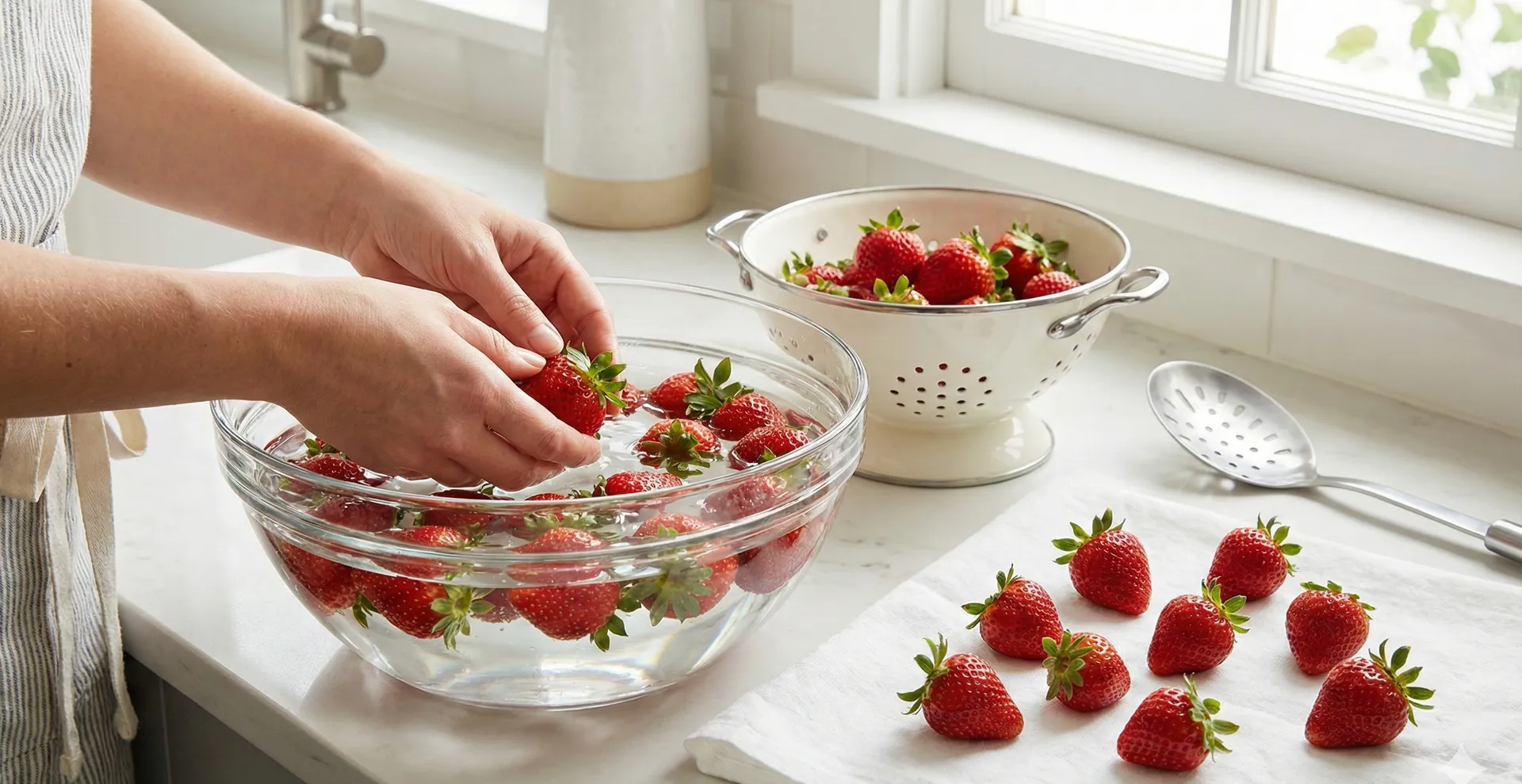
- Fill a large bowl with cool, clean water.
- Use enough water so that the strawberries can float and move freely without being crowded.
Using a bowl instead of direct tap pressure prevents bruising and reduces the risk of smashing the berries against a colander or sink.
Step 3: Submerge and Swish Carefully
Place the strawberries, with their green tops still attached, into the bowl of water.
- Gently move the berries around with your hands to loosen dirt and debris.
- Avoid squeezing the berries. Light, swirling motions are enough to release most of the surface contamination.
- Let them soak for about 5–10 minutes, but no longer. Extended soaking can cause the berries to absorb water and lose flavor.
During this time, dirt and small particles will fall to the bottom of the bowl while the strawberries remain floating near the top.
Step 4: Lift, Do Not Pour
When the berries are clean, the next important step is how you remove them from the water.
- Use your hands or a slotted spoon to lift the strawberries out of the water.
- Avoid pouring the water and berries together into a colander, as this can push dirt back onto the fruit.
By lifting the berries, you leave most of the sediment and debris at the bottom of the bowl, ensuring a cleaner result.
Step 5: Optional Quick Rinse
If you want extra reassurance, you can finish with a brief, gentle rinse.
- Place the strawberries in a colander in a single layer.
- Run cool water over them in a soft stream while gently turning the colander to rinse all sides.
Keep this rinse short and delicate to avoid damaging the berries or waterlogging them.
Step 6: Dry the Strawberries Thoroughly
Proper drying is just as important as the washing itself when you want to keep strawberries fresh and flavorful.
- Line a tray or large plate with clean paper towels or a lint-free kitchen towel.
- Arrange the washed strawberries in a single layer on the towel.
- Pat the tops and sides very gently with another towel to remove surface moisture.
Allow the strawberries to air-dry for a few more minutes until they look dry and no longer leave wet spots on the towel. The drier they are, the slower they will spoil.
Natural Cleaning Boosters: Vinegar and Baking Soda
For those who want extra cleaning power, especially to help reduce bacteria and pesticide residues, two common household options are often mentioned: vinegar and baking soda. Both can be used carefully without harming the fruit when properly diluted.
Using a Vinegar Bath
A mild vinegar solution can help reduce bacteria and remove more residue from the surface of strawberries. The key is to keep the mixture weak and the soaking time short.
How to Make a Vinegar Wash
- Mix 1 part white vinegar with 3 parts cool water in a large bowl.
- Place the strawberries, with stems attached, into the bowl.
- Gently swirl them and let them sit for no more than 5 minutes.
After soaking, lift the berries out of the vinegar solution, then rinse them thoroughly with cool water to remove the vinegar taste. Finally, dry them carefully as described earlier.
Vinegar is particularly useful if the strawberries seem very dirty or if food safety is a concern, such as when serving children, older adults, or people with weakened immune systems.
Using Baking Soda in the Wash
Baking soda can help loosen certain residues and grime on the surface of fruits. It should be used sparingly and fully dissolved in water.
How to Use Baking Soda Safely
- Fill a bowl with cool water.
- Add about 1 teaspoon of baking soda per liter of water and stir to dissolve.
- Place the strawberries in the solution and swish gently for a couple of minutes.
Once finished, remove the strawberries from the bowl, rinse them under cool running water, and dry them thoroughly. Proper rinsing ensures no baking soda taste remains.
Methods to Avoid When Washing Strawberries
Not every cleaning trend on the internet is a good idea. Some methods can damage strawberries, affect their taste, or even pose safety concerns.
- Do not use soap or dish detergent: These products are not meant for food and can leave harmful residues on the berries.
- Avoid strong scrubbing tools: Brushes or scouring pads will break the skin and can cause the berries to release juice and spoil faster.
- Do not soak for long periods: Extended soaking in water, vinegar, or other solutions can lead to waterlogged, mushy strawberries.
- Avoid very hot water: High temperatures can damage the delicate fruit and encourage premature spoiling.
- Skip harsh chemicals: Bleach, disinfectants, and non-food-grade cleaners are unsafe for washing produce.
Sticking to cool water and mild, food-safe solutions like diluted vinegar is the safest, most effective approach.
When to Hull Strawberries: Before or After Washing?
Hulling means removing the green leafy top and the small white core. The timing of this step affects how well the strawberries hold up during washing.
- For most uses, hull after washing: Keeping the stems attached during washing helps prevent water from entering the inside of the strawberries.
- For recipes needing sliced or hulled berries immediately: You can hull after washing and drying, then use the strawberries right away in your recipe.
Washing first and hulling second offers the best balance between cleanliness and preserving flavor and texture.
How to Store Strawberries After Washing
Once your strawberries are clean and dry, proper storage will help them stay fresh and tasty for as long as possible. Because strawberries are highly perishable, small details make a big difference.
Storing Washed Strawberries
- Make sure the berries are completely dry before storing.
- Line a shallow container with a dry paper towel to absorb any remaining moisture.
- Arrange the strawberries in a single layer if possible, to avoid squishing.
- Cover the container loosely with a lid or plastic wrap, leaving a small gap for air circulation.
- Store in the refrigerator and plan to eat within 1–3 days.
Because moisture is the enemy of freshness, avoid sealing washed strawberries in airtight containers while they are still damp. Condensation can quickly lead to mold.
Storing Unwashed Strawberries for Later
If you do not plan to eat the strawberries right away, the best strategy is to store them unwashed and clean them just before serving.
- Keep them in their original container or move to a breathable container lined with a paper towel.
- Refrigerate as soon as you get home.
- Check daily and remove any berries that show signs of mold or spoilage.
Unwashed strawberries typically keep a bit longer than washed ones, as their natural protective surface remains intact until you are ready to eat them.
Frequently Asked Questions About Washing Strawberries
Can you wash strawberries the night before?
Yes, you can wash strawberries the night before you need them, as long as you dry and store them properly. Make sure they are fully dry, then place them in a shallow, lined container in the refrigerator. Use them within a day or two for the best flavor and texture.
Is vinegar necessary to clean strawberries?
Vinegar is not strictly necessary. For everyday use, a gentle bath in cool water followed by a quick rinse is often enough to remove most dirt and debris. However, a mild vinegar solution can provide extra reassurance when you are concerned about bacteria or want to reduce pesticide residues more effectively.
Should you wash strawberries if they are organic?
Yes, organic strawberries still need washing. While they are grown with fewer synthetic pesticides, they can still carry soil, microbes, and environmental contaminants. Treat organic strawberries the same way as conventional ones when it comes to cleaning and drying.
Can you wash strawberries and then freeze them?
Absolutely. If you plan to freeze strawberries, wash them gently, dry them thoroughly, and hull them after they are dry. Place them in a single layer on a baking sheet and freeze until firm, then transfer to freezer-safe bags or containers. This method prevents them from clumping together.
What if strawberries still taste watery after washing?
If strawberries taste watery, they may have been soaked for too long or not dried well enough. Shorten the soaking time, avoid prolonged contact with water, and make sure to air-dry them completely before storing or eating. Choosing fully ripe, fragrant strawberries at the store or market also helps ensure better flavor.
Simple Checklist: Best Way to Wash Strawberries Gently
To recap, here is a quick checklist you can follow every time you prepare strawberries:
- Wash strawberries just before eating or using them.
- Keep stems attached while washing.
- Use a cool water bath in a bowl, not harsh running water.
- Gently swish and soak for 5–10 minutes.
- Lift berries out of the water instead of pouring.
- Optionally use a mild vinegar or baking soda solution for extra cleaning, followed by a good rinse.
- Dry thoroughly on a clean towel before eating or storing.
- Store in the refrigerator and enjoy within a few days.
By following these simple steps, you protect the delicate texture and natural sweetness of strawberries while making sure they are clean and safe to enjoy. This gentle approach works whether you are preparing a quick snack, a special dessert, or a big fruit platter for guests.