Calendula Cream for Wound Healing: What the Science Really Shows
Discover how calendula cream may support wound healing. Learn its evidence-based benefits, mechanisms, safety profile, and practical tips for using calendula cream on minor wounds while following modern wound-care standards.
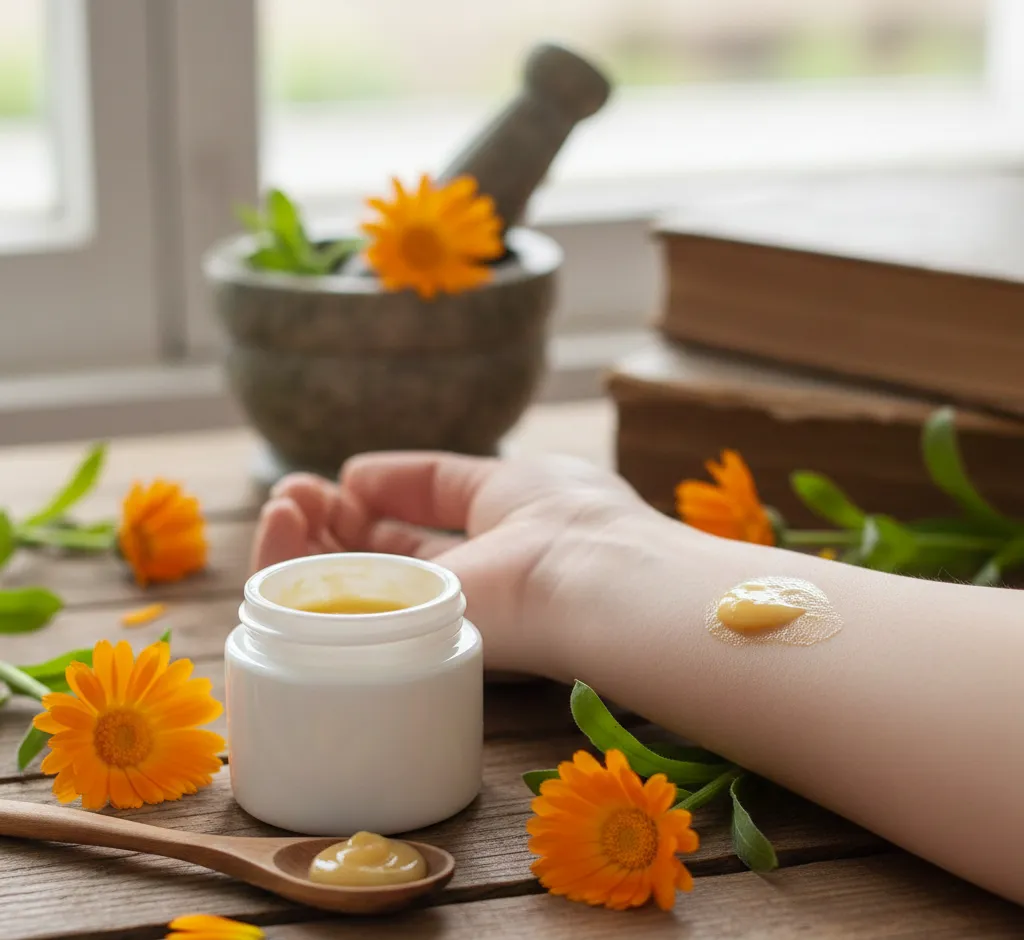
Calendula cream has become a popular natural option for supporting wound healing, especially for minor cuts, abrasions, and irritated skin.[web:1][web:17] While it has a long history in traditional herbal medicine, modern research is beginning to clarify when it may be helpful and what its limits are.[web:5][web:15] This article explains how calendula cream works, what the clinical studies show, how to use it safely, and how it fits alongside conventional wound care.
What Is Calendula Cream?
Calendula cream is a topical preparation made from the flowers of Calendula officinalis, also known as pot marigold.[web:16][web:17] The flowers contain flavonoids, carotenoids, triterpenoids, and other plant compounds with anti-inflammatory and antioxidant activity, which are incorporated into creams, ointments, gels, and oils for skin use.[web:16][web:19]
In herbal and complementary medicine, calendula products are used for minor wounds, burns, rashes, and radiation‑related skin irritation.[web:15][web:17] Calendula cream is typically applied to intact or superficially damaged skin and is not a substitute for surgical care, systemic antibiotics, or management of deep or infected wounds.[web:5][web:15]
How Calendula Supports Wound Healing
Wound healing is a multistep process involving inflammation, tissue formation (granulation), and remodeling; disruption at any stage can delay closure and increase complication risk.[web:11][web:12] Calendula appears to act on several of these phases through anti-inflammatory, antioxidant, and tissue‑supporting mechanisms.[web:5][web:16]
Anti-inflammatory effects
Experimental studies indicate that calendula extracts reduce pro‑inflammatory mediators such as interleukin‑1β, interleukin‑6, tumor necrosis factor‑α, and interferon‑γ, and can inhibit cyclooxygenase‑2 activity.[web:10][web:13] By dampening excessive inflammation, calendula may help shorten the inflammatory phase of healing and reduce edema and discomfort in injured tissues.[web:5][web:7]
Topical calendula creams have also been shown in animal models to reduce swelling and inflammatory pain, with evidence pointing to antioxidant actions and possible modulation of peripheral opioid receptors.[web:7] These effects may explain why some patients report less tenderness and irritation when using calendula preparations on minor wounds.[web:3][web:17]
Promotion of granulation and epithelialization
Granulation tissue provides the scaffold for new skin formation, and its quality influences both closure time and scar strength.[web:11][web:12] A systematic review of calendula extract in wound healing found moderate evidence in animal studies that treatment groups showed faster granulation tissue formation and quicker resolution of the inflammatory phase compared with controls.[web:5][web:20]
Histological research on cutaneous wounds treated with calendula gel reported more fibroblasts, increased collagen synthesis, fewer epithelial gaps, and higher tensile strength in healed skin, suggesting improved tissue organization.[web:11] Such findings support the traditional use of calendula for optimizing the structural quality of the healing wound, although human confirmation is still limited.[web:5][web:11]
Possible antimicrobial and antioxidant actions
Calendula flowers contain polyphenols and terpenoids with antimicrobial and antioxidant properties, which may help protect damaged skin from oxidative stress and secondary infection.[web:15][web:16] Some clinical and experimental reports suggest that calendula preparations may reduce the risk of superficial wound colonization, although robust comparative trials are scarce.[web:3][web:18]
Antioxidant activity can also shield cell membranes and extracellular matrix components from free radical damage, supporting healthier tissue regeneration.[web:16][web:19] This combination of protective and restorative effects makes calendula an attractive adjunct in topical formulations for fragile or irritated skin.[web:12][web:15]
Clinical Evidence: How Strong Is the Proof?
Modern evidence for calendula cream in wound healing is still emerging and varies by wound type.[web:5][web:20] Overall, results are promising for certain acute and chronic wounds but inconsistent for more complex lesions and burns.[web:5][web:9]
Acute skin wounds and hand injuries
A randomized clinical trial on patients with acute hand and finger skin loss treated by secondary intention compared a standardized extract of calendula with mineral oil as control.[web:2][web:6] The calendula group showed faster epithelization and shorter healing times than the control group, indicating a potential benefit for uncomplicated acute wounds in the hands.[web:2][web:6]
Animal studies in which calendula cream or alcoholic extracts were applied to surgical incisions demonstrated enhanced collagen maturation and more rapid epithelialization between days 10 and 25 compared with untreated wounds.[web:3][web:11] While animal data cannot be directly extrapolated to humans, they provide mechanistic support for clinical observations.[web:5][web:11]
Post-surgical wounds (including cesarean)
A study on cesarean section patients found that calendula ointment applied to the incision appeared to improve wound scores and reduce healing time compared with standard care, although the trial size was modest.[web:9] These findings suggest that calendula may be a useful adjunct for low‑risk surgical wounds when combined with appropriate medical management and hygiene.[web:5][web:9]
However, not all post‑procedural contexts show uniform benefit; for example, calendula has produced mixed results in preventing or treating radiation‑induced dermatitis, with one trial showing improvement versus a standard cream and another showing no difference.[web:1][web:5] This underscores that calendula cannot be considered universally effective for all treatment‑related skin injuries.[web:5][web:15]
Chronic wounds and ulcers
Chronic wounds, such as venous leg ulcers, have complex pathology involving circulation, inflammation, and often infection.[web:5][web:12] Two clinical control studies reported that calendula preparations were associated with reduced ulcer surface area and higher healing rates compared with control treatments, suggesting a supportive role in selected chronic ulcers.[web:3][web:5]
Conversely, a randomized trial in patients with diabetic leg ulcers did not find a meaningful improvement in healing with calendula extract relative to control therapy.[web:5] This indicates that underlying systemic disease and vascular compromise may limit calendula’s benefits and reinforces the need for multidisciplinary management of complex ulcers.[web:5][web:12]
Burns and radiation dermatitis
Evidence for calendula in burn care is inconsistent and should be interpreted cautiously.[web:5][web:18] Some animal studies suggest a protective effect when calendula extract is given before burn injury, but a clinical trial in patients with partial‑to‑full‑thickness burns showed no clear benefit from topical calendula compared with standard care.[web:5][web:18]
Regarding radiation‑related skin damage, calendula ointment has demonstrated reduced severity of acute radiation dermatitis in one randomized trial compared with a conventional cream, whereas another trial found no significant difference versus an aqua gel product.[web:1][web:15] These conflicting results highlight that calendula may help some patients but is not a guaranteed preventive or treatment strategy for therapy‑induced skin lesions.[web:1][web:5]
Benefits of Calendula Cream for Minor Wounds
Within its appropriate scope, calendula cream can offer several practical advantages for everyday skin injuries.[web:15][web:17] These benefits are most relevant for superficial, uncomplicated wounds managed at home or as part of conservative care.
- Support for faster closure: Studies suggest calendula may modestly shorten healing time for certain acute wounds by accelerating epithelialization and granulation tissue formation.[web:2][web:5]
- Reduced redness and swelling: Anti‑inflammatory properties can help calm irritated skin, potentially decreasing local edema and discomfort.[web:7][web:10]
- Comfort during recovery: Some reports describe less pain and discomfort with calendula preparations, which may encourage patients to adhere to dressing changes and aftercare instructions.[web:3][web:7]
- Cosmetic acceptability: Calendula creams are often formulated with emollients that keep the wound environment moist yet breathable, supporting better cosmetic outcomes compared with dry scabbing.[web:11][web:17]
Safety and Possible Side Effects
Overall, calendula topical preparations are considered low risk for most users when applied to unbroken or superficially broken skin.[web:15][web:16] Toxicity studies in animals have shown a wide margin of safety, and cosmetic testing has documented minimal irritation or sensitization in typical formulations.[web:16]
However, allergic reactions can occur, especially in individuals sensitive to plants in the Asteraceae (daisy) family, which includes ragweed and chrysanthemums.[web:15][web:17] Rare cases of contact dermatitis have been reported, so new users should monitor for redness, itching, or worsening irritation and discontinue use if such symptoms appear.[web:15][web:17]
When calendula cream is not enough
Calendula cream should not be used as the primary treatment for deep, heavily contaminated, or infected wounds, or for serious burns and ulcers.[web:5][web:12] Such conditions require prompt medical assessment for debridement, systemic therapy, dressings, and sometimes surgical intervention.[web:5][web:9]
People with diabetes, severe circulatory problems, or immune compromise should consult a clinician before relying on calendula for wound care, as delayed healing and infection risk are high in these groups.[web:5][web:9] Calendula should also be used cautiously around fresh surgical sites unless approved as part of a surgeon‑guided postoperative plan.[web:9][web:15]
How to Use Calendula Cream for Wounds
Using calendula cream properly can help maximize its potential benefits while minimizing risk.[web:15][web:17] Application steps may vary depending on product instructions and clinical advice, but some general principles are consistent across sources.
Basic application steps
- Clean the area: Gently wash the wound with mild soap and water or a recommended cleanser, then pat dry with a clean towel.[web:15][web:17]
- Assess the wound: Ensure the wound is minor, superficial, and not showing signs of infection such as spreading redness, pus, or fever; seek medical care if these are present.[web:5][web:12]
- Apply a thin layer: Spread a light layer of calendula cream over the affected area as directed on the product label or by a healthcare professional.[web:15][web:17]
- Cover if needed: For areas prone to friction or contamination, a sterile non‑stick dressing can be placed over the cream to protect the wound.[web:3][web:11]
- Repeat as directed: Many references suggest applying calendula preparations two to three times daily, adjusting based on product strength and skin response.[web:15][web:17]
Practical tips for everyday use
- Perform a small patch test on intact skin before first use, particularly if there is a history of plant allergies.[web:15][web:17]
- Avoid applying calendula cream directly into deep puncture wounds, animal bites, or heavily bleeding injuries, where professional care is essential.[web:5][web:12]
- Use calendula as an adjunct, not a replacement, for evidence‑based wound care practices such as appropriate cleaning, protection, and medical follow‑up when indicated.[web:5][web:20]
Who Might Benefit Most?
Calendula cream is best suited for individuals seeking a gentle, plant‑derived adjunct to standard wound care for minor skin injuries.[web:15][web:17] It may be particularly appealing for people with generally sensitive skin who tolerate simple emollient formulations well and want additional anti‑inflammatory support.[web:16][web:19]
Patients recovering from low‑risk surgical procedures, minor hand injuries, or superficial abrasions may benefit from calendula as part of a broader, clinician‑guided aftercare plan.[web:2][web:9] However, those with complex chronic wounds, diabetic ulcers, or severe burns should rely primarily on specialist care and view calendula, if used at all, only as a secondary supportive measure.[web:5][web:12]
Key Takeaways on Calendula Cream for Wound Healing
Evidence from laboratory, animal, and human studies suggests calendula cream can support wound healing through anti‑inflammatory, antioxidant, and tissue‑regenerative effects, particularly in minor and selected acute wounds.[web:2][web:5] At the same time, findings across different wound types are mixed, and well‑designed large clinical trials are still needed to define optimal indications, formulations, and dosing.[web:1][web:5]
For everyday minor cuts, scrapes, and uncomplicated postoperative wounds, calendula cream can be a reasonable adjunct to standard care when used correctly and with medical guidance where appropriate.[web:9][web:17] It should not replace timely professional evaluation for serious, infected, or slow‑healing wounds, but can play a supportive role in a comprehensive, evidence‑informed approach to skin recovery.[web:5][web:12]