Choosing the Best Steam Irons for Hard Water Areas: Features, Tips & Maintenance
Discover how to choose the best steam irons for hard water areas, with expert advice on essential features, maintenance routines, and product recommendations to keep your clothes and appliances pristine.
Living in a hard water area poses a unique challenge for homeowners looking to keep clothes wrinkle-free and appliances working efficiently. Hard water contains high mineral content, notably calcium and magnesium, which can cause limescale buildup in household items like steam irons. This article guides you through the selection of steam irons tailored to hard water conditions, explaining essential features, maintenance routines, and optimal usage practices to extend your iron's life and achieve consistent results.
Understanding Hard Water and Its Impact on Steam Irons
Hard water is defined by its elevated concentration of minerals, which can accumulate inside steam irons, clogging steam vents and heating elements. Over time, limescale not only diminishes steam output but also risks garment stains and reduces appliance lifespan, forcing frequent replacements and extra maintenance.
Key Features to Look For
- Anti-Calc/Calc-Clean Systems: Choose irons with built-in anti-calc or calc-clean technology. These systems either trap minerals or make removal easy through periodic cleaning processes, drastically reducing the risk of limescale build-up and prolonging your iron’s effectiveness. Some advanced models offer replaceable cartridges or permanent collectors that capture calcium deposits for easy rinsing [web:5] [web:2].
- Ceramic or Stainless Steel Soleplate: Opt for irons with ceramic or stainless steel soleplates as they are more resistant to mineral deposits, offer smoother gliding, and are easier to clean compared to aluminum soleplates [web:3] [web:7].
- High Steam Output and Steam Shot: Look for continuous steam rates above 40g/min and powerful steam shot capability. This ensures better crease removal and helps flush out any mineral buildup inside the iron during use [web:7] [web:6].
- Large Water Tank: A larger capacity minimizes refilling, which is useful if you opt to mix tap and distilled water or use demineralized water [web:3] [web:5].
- Automatic Shut-Off & Safety Features: Many modern irons include auto shut-off and anti-drip technology, which increase safety and minimize water leakage that could complicate limescale issues [web:7].
Recommended Steam Iron Models for Hard Water Areas
- Rowenta DW5080 Focus Steam Iron: Known for an efficient anti-calc system, robust steam output, and high-quality soleplate.
Suitable for regular laundry loads in hard water areas. - Philips Azur Elite GC5037/86: Features advanced calc-clean, powerful steam, and an ergonomic design for frequent use.
- Tefal Irons with Removable Scale Collector: Their proprietary scale removal system facilitates easy cleaning and maintenance [web:2] [web:11].
- PurSteam Steam Iron: Large tank, ceramic soleplate, and reliable performance based on user reviews in hard water regions [web:3].
- Morphy Richards easyCHARGE Power+ Cordless Iron: Top-rated for convenience, relatively low maintenance, and consistent steam output [web:13].
Proper Water Usage and Maintenance
Can You Use Tap Water?
Most modern steam irons are designed to tolerate tap water, but regions with very hard water require extra precautions:
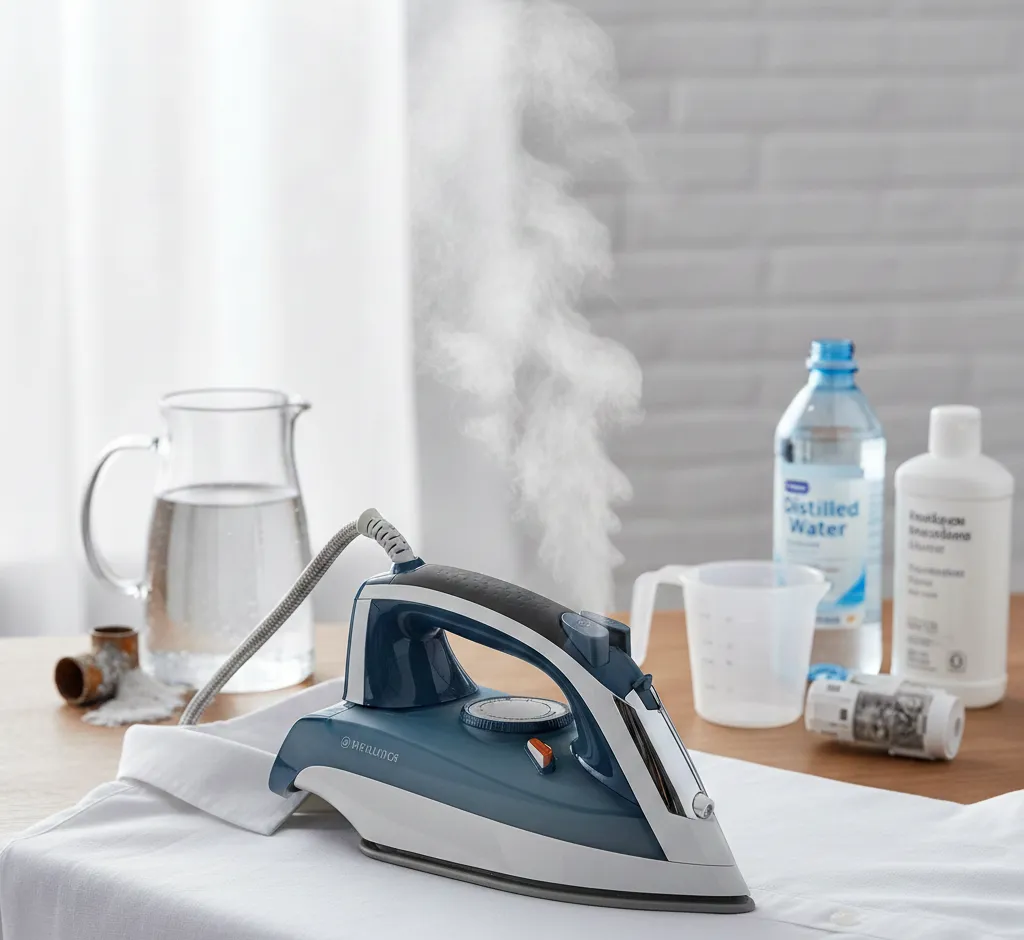
- Manufacturers often recommend mixing 50% distilled or demineralized water with 50% tap water to balance safety and effectiveness. Avoid using pure distilled water exclusively, as it may cause internal corrosion in some models.
Using only tap water can accelerate scale formation in hard water areas. Follow device guidelines for water types and frequency of cleaning [web:5].
Regular Cleaning Routines
- Follow Calc-Clean Procedures: Schedule monthly or bi-monthly anti-calc routines or use the integrated cleaning program as described in your iron’s manual.
- Empty the Water Tank: After each use, empty the tank to prevent standing water and mineral deposits in the reservoir.
- Use Cleaning Agents: Some irons allow for approved descaling agents or vinegar diluted with water. Always consult the appliance manual for compatible solutions.
- Rinse and Repeat: Regularly rinse removable scale collectors or cartridges according to the manufacturer’s guidance.
Expert Tips for Trouble-Free Ironing in Hard Water Zones
- Avoid Perfumed or Bottled Waters: Additives can increase residue accumulation or even damage internal components.
- Check Your Local Water Hardness: Use local authority maps or kits to determine water hardness and tailor maintenance accordingly [web:5].
- Descale as Needed: If steam output drops or clothes start showing white marks, perform a descaling cycle before damage sets in.
Comparing Steam Iron Feature Highlights
| Model | Anti-Calc/Scale System | Soleplate Type | Steam Output (g/min) | Water Capacity |
|---|---|---|---|---|
| Rowenta DW5080 | Auto flush | Stainless steel | 35-170 | 300 ml |
| Philips Azur Elite | Advanced calc clean | Ceramic | 45-250 | 350 ml |
| Tefal Anti-Scale | Removable collector | Ceramic | 50-240 | 320 ml |
| PurSteam Elite | Self-clean | Ceramic | 40-180 | 400 ml |
| Morphy Richards Power+ | Manual flush | Stainless steel | 30-200 | 280 ml |
Frequently Asked Questions
Is distilled water always best?
While distilled or demineralized water reduces limescale risks, blending it with tap water—per manufacturer instructions—is sometimes advised for optimal iron performance [web:9].
Can hard water damage my clothes?
Yes, untreated hard water can lead to mineral spots, especially on delicate or brightly colored fabrics. Using the appropriate water mix and regular cleaning greatly reduces this risk [web:5].
How often should I descale?
Ideally, perform a cleaning cycle at least once a month, or more frequently if water hardness is severe or steam performance deteriorates.
Conclusion: Make Hard Water Ironing Hassle-Free
The best approach for ironing in hard water areas is proactive: choose a steam iron with robust anti-calc features, match your water supply to manufacturer guidelines, and stick to reliable cleaning routines. With the right model and smart care, even clothes in the hardest water zones stay fresh, smooth, and perfectly pressed.