Complete Guide to Office Chair Warranties: What You Need to Know Before You Buy
Learn how office chair warranties work, what they cover, and how to compare them so you can buy a chair that lasts. Essential guide for home and office users.
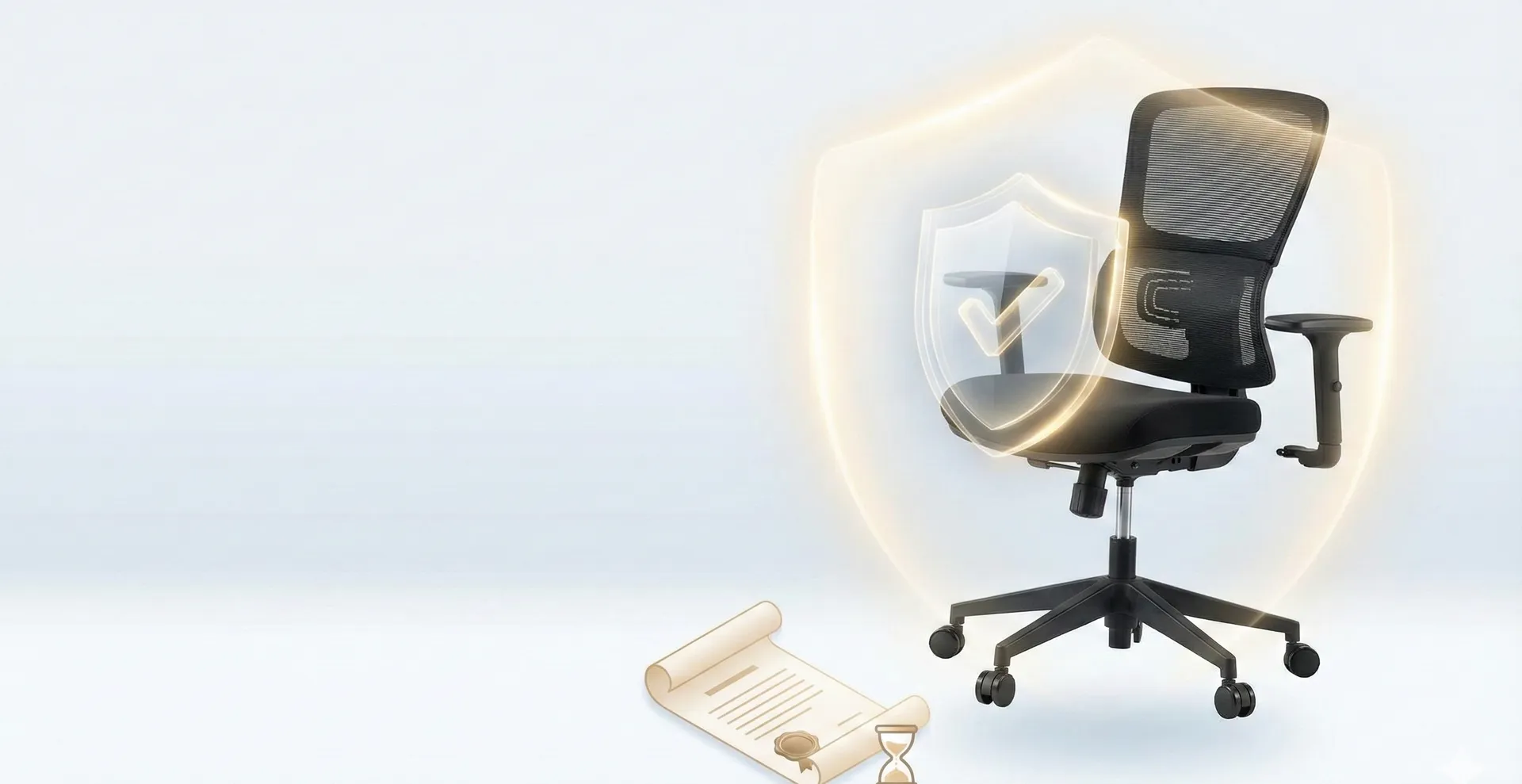
Choosing an office chair is not only about comfort, design, and ergonomics. A solid warranty is just as important, because it protects your investment and signals how confident the manufacturer is in the long-term durability of the chair. [web:1][web:4]
Many buyers focus on seat cushioning, armrests, or adjustability, only to discover later that worn mechanisms, cracked casters, or peeling upholstery are not covered as expected. A clear understanding of how office chair warranties work helps you avoid unpleasant surprises and ensures you get the support you need if something goes wrong. [web:1][web:15]
What an Office Chair Warranty Actually Is
At its core, a warranty is a promise from the manufacturer that the chair will be free from material and manufacturing defects for a defined period, and that defective covered parts will be repaired or replaced. [web:1][web:11]
This promise typically applies only under normal, intended use, and usually to the original purchaser who can provide proof of purchase. Office chair warranties often exclude misuse, abuse, improper assembly, and damage caused by modifications or unauthorised repairs. [web:1][web:13]
Warranty vs. Product Lifespan
A common misconception is that the warranty period equals the chair’s exact lifespan. In reality, the warranty is an indicator of the minimum durability the manufacturer is willing to stand behind, not necessarily the maximum time the chair can last. [web:4]
Premium chairs may come with 7–15-year or even “limited lifetime” warranties, which usually reflects more robust engineering and higher-quality materials, whereas budget models often carry 1–3-year warranties, suggesting a shorter expected service life under regular use. [web:2][web:4]
Typical Warranty Lengths for Office Chairs
Warranty length varies significantly depending on brand, model, and target market. Entry-level office and gaming chairs often provide 1–3 years of coverage for key functional parts such as gas lifts, reclining mechanisms, and casters. [web:4][web:9]
Mid-range and high-end task or ergonomic chairs commonly offer between 5 and 12 years of coverage on major components, and some premium manufacturers provide 12–15-year or limited lifetime warranties on frames and structural parts. [web:2][web:3][web:7][web:11]
Component-Based Warranty Periods
Many manufacturers break down the warranty by component, offering longer coverage for the chair frame and pneumatic lift, and shorter coverage for upholstery, foam, or arm pads. For example, frames and gas lifts may be covered for life, while casters, mechanisms, and armrests get 3–10 years, and fabrics only 1–3 years. [web:4][web:5][web:11]
This tiered structure reflects the different wear patterns of each part: metal components are expected to last longer, whereas textiles and foam naturally degrade more quickly and are more exposed to wear, stains, and environmental factors. [web:4][web:5]
What Office Chair Warranties Usually Cover
While each policy is unique, there are common categories of coverage you will see across office chair brands. Understanding these will help you quickly evaluate whether a warranty matches your usage and expectations. [web:1][web:15]
- Structural frame: The frame and main metal structure are often covered for the longest period, sometimes for life, because they are critical to safety and stability. [web:2][web:5][web:7]
- Mechanisms: Recline, tilt, swivel, and height adjustment mechanisms are typically covered for several years, reflecting their frequent use and moving parts. [web:1][web:9]
- Pneumatic lift: Gas cylinders that enable height adjustment often receive extended coverage because failure significantly affects chair usability. [web:5][web:9]
- Base and casters: Chair bases and wheels are usually covered but for shorter periods than frames, as they are subject to impacts, uneven floors, and rolling over debris. [web:1][web:5]
- Upholstery and foam: Fabrics, mesh, and padding have the shortest coverage due to fading, staining, and compression, which manufacturers often consider normal wear and tear. [web:4][web:5][web:11]
- Armrests and accessories: Arms, headrests, and accessory attachments typically receive mid-range coverage, somewhere between mechanisms and upholstery. [web:2][web:5]
What Is Usually Excluded
Most office chair warranties exclude damage from misuse, abuse, or accidents, such as exceeding weight limits, using the chair as a step stool, or intentional damage. [web:1][web:15]
Cosmetic issues like scratches, dents, stains, discoloration from sunlight, or gradual fabric fading are often not covered, as they are considered normal wear rather than defects in materials or workmanship. [web:1][web:4][web:13]
Common Warranty Limitations to Watch For
The phrase “limited warranty” signals that there are specific boundaries on what is covered, for how long, and under what circumstances. Carefully reading these limitations helps you avoid assuming that every issue is automatically eligible for free repair or replacement. [web:1][web:2]
Limitations can apply to usage patterns, user weight, environment, or even geographic region, so pay attention to the details that match your own situation (for example, heavy users, multi-shift environments, or home vs. commercial offices). [web:2][web:5][web:11]
Weight Capacity and User Profile
Warranties often specify a maximum user weight, beyond which coverage can be voided. Standard task chairs may be rated for around 250–300 pounds, while heavy-duty or big-and-tall chairs are designed for higher capacities. [web:2][web:5]
If your weight is near or above the listed maximum, it is important to choose a chair rated for heavier use; otherwise, a manufacturer can deny claims by arguing that the product was not used within its design parameters. [web:2][web:5]
Single-Shift vs. 24/7 Use
Some chairs are rated for typical single-shift use (about 8 hours per day), while others are explicitly designed for 24/7 environments like control rooms or call centers. Warranties often shorten or exclude coverage if the chair is used in multi-shift or 24/7 settings without being rated for that purpose. [web:2][web:4]
Conversely, chairs marketed for intensive or 24/7 use will state this, and their warranties explicitly confirm that coverage applies under those demanding conditions, often with reinforced components and stricter quality control. [web:2][web:5]
How Warranty Terms Reflect Chair Quality
Warranty terms are not just legal text; they can reveal a lot about the brand’s confidence in its products. Longer, clearer warranties with fewer exclusions generally correlate with higher build quality and better long-term value. [web:2][web:4]
Shorter warranties or those filled with broad exclusions may indicate cost-cutting in materials or design, meaning you might replace the chair sooner and potentially pay more over time despite the lower initial purchase price. [web:4][web:15]
Examples of Strong Warranty Signals
- A warranty of 7–12 years that covers parts and labor for most components, not just the frame. [web:2][web:3][web:7]
- Coverage that explicitly includes intensive or 24/7 use and higher weight capacities without drastic reductions in term length. [web:2][web:5]
- Transparent breakdowns of coverage per component, showing long terms for frames and mechanisms and reasonable terms for fabrics. [web:4][web:11]
These features suggest that the manufacturer expects the chair to perform reliably for many years in real-world conditions, not just in light, occasional use. [web:2][web:4]
How to Read an Office Chair Warranty
Warranties can seem dense, but a systematic reading approach makes them manageable. Start by looking for the duration, what is covered, what is excluded, and what you must do to make a claim. [web:1][web:4]
Checking these elements before buying prevents misunderstandings later and helps you compare different chairs on more than just price and comfort. [web:2][web:15]
Key Sections to Check
- Coverage scope: Identify whether the warranty covers only manufacturing defects or extends to functional failures over time. [web:1][web:13]
- Duration by component: Look for a table or list showing how long each part is warranted, especially frame, mechanism, gas lift, casters, arms, and upholstery. [web:4][web:5][web:11]
- Usage conditions: Confirm whether the warranty is valid for home or commercial use, single-shift or 24/7 operation, and check any weight or environmental limits. [web:2][web:4]
- Exclusions: Pay attention to exclusions for cosmetic damage, abuse, improper assembly, or unauthorised repairs, as these are common reasons for denied claims. [web:1][web:15]
- Claim process: Review how to submit claims, including deadlines, required documentation, and who pays for shipping or on-site labor. [web:1][web:7][web:13]
How to Compare Office Chair Warranties
When comparing potential chairs, it is useful to evaluate not only the comfort and price but also the real value of the warranty. This means going beyond headline phrases like “limited lifetime” and looking at the details. [web:2][web:4]
A practical comparison considers warranty length, coverage breadth, exclusions, claim difficulty, and how well the terms align with your specific usage pattern and body type. [web:2][web:4][web:11]
Key Comparison Factors
- Length vs. exclusions: A long warranty with many exclusions may be less valuable than a shorter one that covers more real-world issues. [web:2][web:4]
- Parts and labor: Some warranties cover only parts, while others include labor and on-site service, which can greatly reduce your out-of-pocket costs. [web:1][web:3][web:7]
- Ease of claims: Clear instructions, online forms, and responsive support are signs of a customer-friendly warranty experience. [web:1][web:7][web:13]
- Brand reputation: Established brands with decades-long track records tend to honor warranties consistently and maintain spare parts availability. [web:2][web:3][web:11]
- Intended use match: Ensure the warranty explicitly fits your use case, whether that is home office, corporate setting, or 24/7 control room. [web:2][web:4]
How to Maintain Coverage and Avoid Voiding Your Warranty
Even a strong warranty can be voided if the chair is used, maintained, or modified in ways the manufacturer does not allow. Basic care and adherence to instructions help keep your coverage intact. [web:1][web:13]
Following the recommended assembly, usage, and cleaning guidelines also keeps the chair safer and more comfortable, which directly supports your health and productivity. [web:1][web:15]
Best Practices for Owners
- Keep your proof of purchase: Save invoices, order confirmations, and serial numbers, as they are often required to validate any warranty claim. [web:1][web:13]
- Follow assembly instructions: Incorrect assembly can lead to premature failure and give the manufacturer a reason to deny coverage. [web:1][web:15]
- Respect weight limits: Ensure all regular users are within the specified capacity and consider a heavy-duty model if needed. [web:2][web:5]
- Use the chair as intended: Avoid standing on it, sitting on armrests, or using it outdoors unless the manufacturer explicitly permits such use. [web:1][web:4]
- Clean with approved methods: Use cleaning agents and methods recommended by the manufacturer to avoid damaging fabrics, foam, or finishes. [web:4][web:11]
How to File a Warranty Claim for an Office Chair
If a covered part fails within the warranty period, a structured claim helps resolve the issue faster. Most brands require that problems be reported promptly and that the defect is documented clearly. [web:1][web:7]
Knowing the typical steps in advance makes the process less stressful and increases the likelihood of a successful repair or replacement. [web:1][web:13]
Step-by-Step Claim Process
- Review the warranty: Re-read the terms to confirm that your issue and chair model are covered and that you are within the allowed time frame. [web:1][web:15]
- Gather documentation: Collect proof of purchase, serial number, detailed description of the problem, and clear photos or videos of the defect. [web:1][web:7]
- Contact the right party: Some brands require contacting the retailer first, while others handle claims directly through their support channels or online forms. [web:1][web:7][web:13]
- Follow instructions: Complete any claim forms, attach requested files, and respond promptly to questions from support staff. [web:7][web:13]
- Arrange repair or replacement: Depending on the policy, you may receive replacement parts, send the chair to a service center, or schedule on-site repair; clarify who pays for shipping and labor in each scenario. [web:1][web:3][web:7]
Practical Tips Before Buying an Office Chair
Integrating warranty assessment into your buying process ensures that you choose a chair that not only feels good on day one but also remains reliable over years of daily use. [web:2][web:4]
These tips help you balance comfort, ergonomics, price, and long-term protection, making your purchase more strategic and cost-effective. [web:2][web:11]
Checklist for Shoppers
- Verify total warranty length and component-specific terms, prioritising longer coverage for frames and mechanisms. [web:2][web:4][web:11]
- Match weight capacity and intended usage (home, office, 24/7) to your real needs to avoid voided coverage. [web:2][web:5]
- Compare exclusions carefully, especially regarding upholstery, foam, and cosmetic wear, so you know what to expect as the chair ages. [web:1][web:4][web:15]
- Consider the brand’s reputation for honoring warranties and availability of spare parts over many years. [web:2][web:3][web:11]
- Factor warranty value into price: a slightly higher upfront cost can be worthwhile if the coverage is stronger and longer. [web:2][web:4]
Why Warranty Matters for Ergonomics and Productivity
An ergonomic office chair is an investment in health, comfort, and productivity, and the warranty helps safeguard that investment. When key ergonomic features like lumbar support, recline, or seat height fail prematurely, it can lead to discomfort and reduced focus at work. [web:4][web:15]
A comprehensive, clearly written warranty ensures that the chair can be restored to proper working order without excessive additional cost, allowing you to maintain a consistent ergonomic setup over the long term. [web:2][web:3]
Final Thoughts on Office Chair Warranties
Office chair warranties are more than paperwork; they are a window into build quality, durability expectations, and the level of support you can expect when issues arise. Treating the warranty as a core buying criterion—alongside ergonomics and aesthetics—helps you choose chairs that deliver genuine long-term value. [web:2][web:4][web:11]
By learning how to interpret warranty terms, assessing coverage against your real usage, and following recommended care and claim procedures, you can sit with greater confidence, knowing that your investment is properly protected. [web:1][web:4][web:15]