Do Adaptogens in Beauty Products Really Reduce Stress?
Wondering if adaptogens in beauty products really reduce stress? Discover what adaptogens are, how they affect stressed skin, what science says, and how to use adaptogenic skincare realistically and safely as part of a holistic self-care routine.
Stress shows up on our faces long before we admit it to ourselves. Dull skin, breakouts, redness, fine lines and that unmistakable “tired” look are all closely tied to how our bodies respond to daily pressure. In recent years, one buzzword has started to dominate both wellness and skincare conversations: adaptogens. But do adaptogens in beauty products really reduce stress, or are they just clever marketing?
This in-depth guide explores what adaptogens are, how they work, what science actually says about them, and whether adaptogenic creams, serums and masks can ease stress – for your skin, your mind, or both.
What Are Adaptogens, Really?
Adaptogens are a group of herbs, roots and fungi believed to help the body adapt to physical, mental and emotional stress. Instead of having a single, direct action (like a painkiller), they are thought to support the body’s overall resilience and balance.
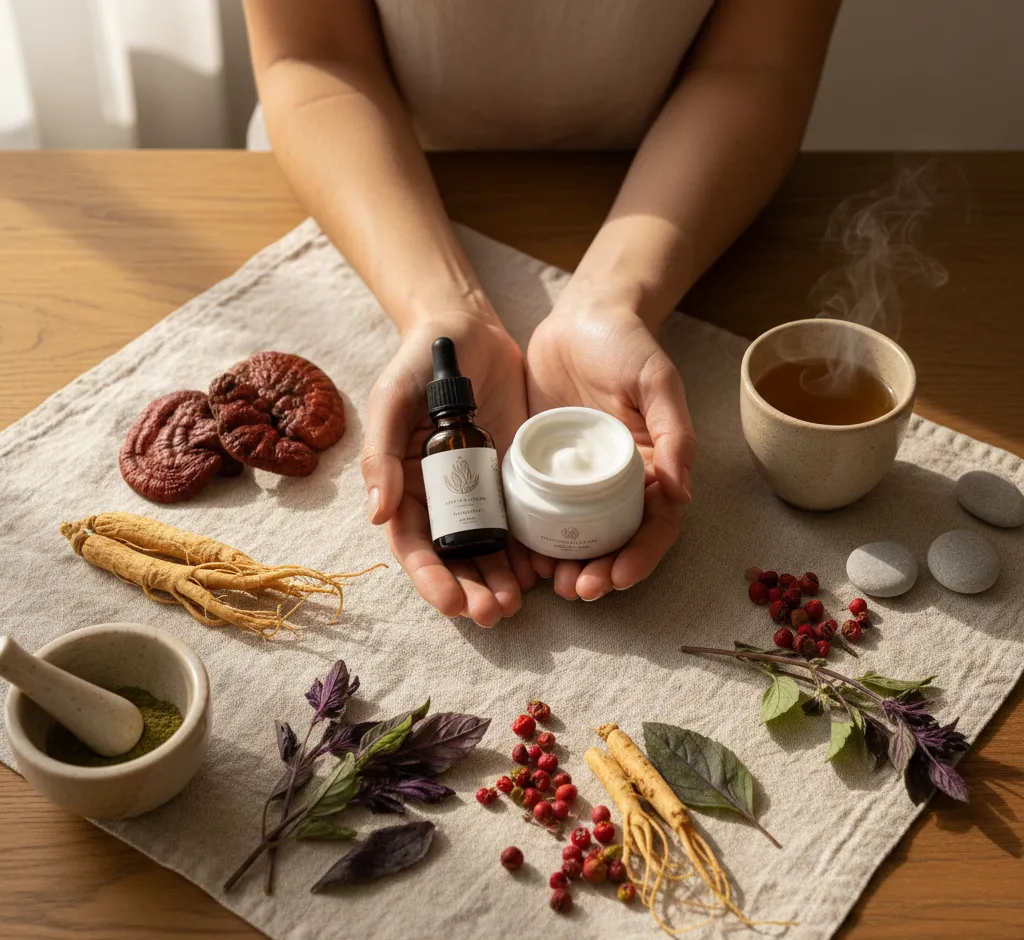
Common adaptogens you’ll see listed on beauty labels include:
- Ashwagandha (Withania somnifera)
- Rhodiola rosea
- Holy basil (tulsi)
- Ginseng (Panax ginseng, American ginseng)
- Schisandra berries
- Reishi and other medicinal mushrooms (chaga, cordyceps)
- Licorice root
Traditionally, adaptogens are taken internally as teas, tinctures or supplements. Now, beauty brands are infusing them into serums, moisturizers, facial mists and even shampoos, promising calmer skin and a calmer mind.
How Does Stress Affect Your Skin?
To understand whether adaptogens in beauty can reduce stress, we first need to see how stress and skin are connected. The relationship is surprisingly tight.
The stress-skin connection
When you’re stressed, your body releases hormones like cortisol and adrenaline. In the short term, this helps you cope with challenges. Over time, chronic stress can disrupt almost every system in the body – including your skin.
Common skin effects of ongoing stress include:
- Increased breakouts and acne due to higher sebum (oil) production.
- Weakened skin barrier, making skin more sensitive, dry and reactive.
- Flare-ups of conditions like eczema, psoriasis and rosacea.
- Slower wound healing, so blemishes and irritation take longer to fade.
- Premature aging through inflammation and more oxidative stress.
Your skin has its own local stress-response system that mirrors the brain’s hypothalamic–pituitary–adrenal (HPA) axis. In other words, your skin can “feel” and respond to stress hormones, even when they are applied topically.
Psychological vs. skin stress
It helps to separate two ideas:
- Systemic or psychological stress: how stressed you feel overall, and what is happening in your nervous system and hormones throughout the body.
- Local skin stress: inflammation, irritation, dryness and oxidative damage happening in the skin itself.
Most adaptogenic skincare is better positioned to help with local skin stress than with deep psychological stress – but that local relief can still influence how you feel about yourself and your day.
How Do Adaptogens Work in the Body?
When taken internally, adaptogens are thought to work mainly by modulating the HPA axis and the body’s stress hormones. Instead of acting as sedatives or stimulants, they may help smooth out extremes, supporting better balance over time.
Across different studies, adaptogens have been associated with:
- Mild anti-anxiety and mood-balancing effects in some people.
- Improved fatigue and mental performance under stress (especially rhodiola and ginseng).
- Reduced markers of oxidative stress and inflammation.
However, most of the strong evidence relates to oral use, not topical creams. That distinction matters a lot when we evaluate adaptogenic beauty products.
Adaptogens in Beauty: What Can They Actually Do?
When adaptogens are added to skincare, their main potential benefits shift from internal stress management to supporting skin health. Many adaptogenic plants contain antioxidants, anti-inflammatory compounds and barrier-supporting molecules. These can be helpful for stressed, reactive or dull-looking skin.
Common skin benefits of adaptogenic ingredients
- Antioxidant protection: Many adaptogens (like ginseng, schisandra, reishi) are rich in polyphenols and other antioxidants that help neutralize free radicals in the skin.
- Anti-inflammatory support: Ashwagandha, licorice and holy basil can help calm redness and irritation in lab and animal studies, and sometimes in small human trials.
- Barrier repair: Some adaptogenic extracts may support the skin barrier by reducing water loss and improving resilience to environmental stressors.
- Hydration and plumping: Mushroom extracts can bind water and support a more hydrated, plump appearance.
- Brightening effects: Licorice root is well known in skincare for its ability to help with hyperpigmentation.
These benefits all target visible signs of stress on the skin rather than the psychological causes of stress. In other words, adaptogenic skincare may help your skin look less stressed, even if it does not directly change how stressed you feel inside.
Do Adaptogens in Beauty Products Reduce Stress?
This is the central question for many consumers: when you apply an adaptogenic cream, are you actually less stressed? The honest answer is nuanced.
1. Direct psychological stress reduction: evidence is weak
At this stage, there is little direct scientific evidence that applying adaptogens topically significantly lowers systemic stress hormones like cortisol in humans or directly improves anxiety and mood.
Most well-designed studies on adaptogens and stress involve oral supplements, not skincare. These studies sometimes show improvements in self-reported stress, anxiety or fatigue. Translating those results to adaptogenic face creams is a big leap.
2. Local skin stress: evidence is more promising
Where adaptogenic skincare shows more realistic promise is in reducing local skin stress:
- Soothing irritated or inflamed skin.
- Reducing redness or sensitivity.
- Supporting barrier repair and hydration when skin feels depleted.
A calmer, stronger skin barrier can better withstand daily triggers like pollution, UV exposure, temperature swings and harsh cleansers. Over time, this may mean fewer flare-ups, less tightness and more comfort – which can indirectly make you feel more at ease.
3. The ritual effect: real, but often overlooked
There is another way adaptogenic beauty can reduce stress that is easy to underestimate: the ritual itself. Taking a few minutes to slow down, massage a serum into your skin, breathe deeply and focus on yourself can:
- Shift your attention away from racing thoughts.
- Activate the body’s relaxation response through touch and breathing.
- Create a sense of control and care in an otherwise chaotic day.
Whether or not the adaptogen is doing the heavy lifting, the self-care routine matters. If you truly enjoy using a product and it encourages you to pause, that alone can reduce your perceived stress levels.
Popular Adaptogens in Skincare and Their Roles
Ashwagandha
Ashwagandha is often marketed as a “calm in a bottle” ingredient. In skincare, it may:
- Offer antioxidant support to protect against environmental damage.
- Help calm redness and irritation through anti-inflammatory compounds.
- Support overall skin tone and texture.
Its stress-reducing reputation mainly comes from oral supplement studies, but its antioxidant and soothing properties can still support stressed-looking skin when applied topically.
Ginseng
Ginseng is a long-standing favorite in Asian skincare. It is associated with:
- Improved circulation and a more radiant complexion.
- Antioxidant protection that helps fight dullness and premature aging.
- Support for skin firmness and elasticity in some formulations.
Again, any stress benefits from topical ginseng are best understood as helping the skin cope with environmental stress, rather than directly calming your mind.
Reishi and other mushrooms
Reishi, chaga and cordyceps mushrooms are rich in polysaccharides and antioxidants.
- They can help hydrate and soothe the skin.
- They may support barrier function and reduce reactivity.
- They offer antioxidant benefits that help defend against pollution and UV-related damage (when used alongside sunscreen).
Holy basil, rhodiola and schisandra
These botanicals frequently appear in “antipollution” or “urban stress” skincare lines. They are chosen for their:
- Anti-inflammatory and antioxidant potential.
- Support for skin that is constantly exposed to modern stressors such as smog and blue light.
In most cases, brands use a blend of several adaptogens to create a “stress shield” for the skin, even though clinical evidence on specific combinations remains limited.
Marketing vs. Reality: How to Read Adaptogen Claims
The term “adaptogen” is trendy, which means it is also widely used as a marketing hook. To avoid disappointment, it helps to look deeper than the buzzword on the front of the bottle.
Key questions to ask
- Where is the adaptogen on the ingredient list? If it is listed near the very end, it may be present only in tiny amounts.
- Is the form standardized? A standardized extract gives more consistent levels of active compounds than a vague “herbal blend” or “plant water”.
- Does the brand share any testing data? Even small in-house studies on redness, hydration or barrier repair are helpful transparency signals.
- What other ingredients are in the formula? Niacinamide, ceramides, hyaluronic acid and gentle oils are often doing more proven work than the adaptogen itself.
Be especially cautious with big claims like “clinically proven to reduce stress” unless the brand clearly shows how they measured stress (subjective feeling, cortisol, heart rate variability, skin redness?) and in what kind of study.
How to Use Adaptogenic Skincare to Support a Calmer Routine
Even if adaptogenic skincare isn’t a magic switch for your nervous system, it can still be a valuable part of a holistic stress-management approach. Here is how to make the most of it.
1. Choose products for your skin type and main concern
- For sensitive or reactive skin: Look for gentle, fragrance-free formulas with adaptogens like reishi, licorice or ashwagandha combined with barrier-supporting ingredients (ceramides, squalane).
- For dull, tired skin: Products with ginseng, rhodiola or schisandra plus vitamin C, niacinamide or mild exfoliants can help restore radiance.
- For dry, depleted skin: Mushroom-based hydrating serums or creams can lock in moisture and improve comfort.
2. Turn application into a mini mindfulness ritual
To tap into the stress-relieving potential of your skincare routine:
- Slow down: Take 2–5 minutes where your only focus is your skin.
- Breathe: Inhale slowly through your nose for a count of four, hold for four, exhale for six. Repeat a few times as you apply your product.
- Massage: Use gentle, upward strokes and light pressure on tense areas like the jaw, temples and brow.
- Engage your senses: Notice textures and scents (if your skin tolerates fragrance). This anchors your mind in the present moment.
This simple ritual can help signal to your nervous system that it is safe to relax, which may reduce perceived stress more effectively than the adaptogen alone.
3. Combine skincare with internal stress support
If you are interested in adaptogens for mental and emotional resilience, talk with a qualified healthcare practitioner about whether oral adaptogen supplements are appropriate for you. Combine them with foundational practices like:
- Consistent, good-quality sleep.
- Regular movement, even light walking or stretching.
- Balanced nutrition and adequate hydration.
- Breathwork, meditation, journaling or therapy.
In that context, adaptogenic skincare can be a soothing, enjoyable add-on to an already supportive lifestyle.
Who Should Be Cautious With Adaptogenic Beauty?
While most adaptogenic skincare products are generally considered gentle, there are some situations where extra care is wise.
- Very sensitive or allergy-prone skin: Herbal ingredients can sometimes trigger reactions. Patch-test new adaptogenic products on a small area of skin for a few days before full use.
- Compromised skin barrier: If your skin is actively inflamed, cracked or severely irritated, keep your routine extremely simple and consult a dermatologist before layering botanical extracts.
- Pregnancy and breastfeeding: Topical use is usually low risk, but if you are also taking adaptogens orally, always check with your healthcare provider.
Remember that “natural” doesn’t automatically mean non-irritating. Your individual skin response is what matters most.
Practical Takeaways: What You Can Expect
So, if you invest in an adaptogen-rich serum or cream, what results are realistic to expect?
- Likely: Softer, more comfortable skin; better hydration; reduced visible redness or irritation over time; a more enjoyable, grounding skincare ritual.
- Possible: An indirect improvement in how stressed you feel, because your skin looks and feels better and your self-care routine becomes a calming habit.
- Unlikely (with current evidence): Major, clinically significant drops in systemic stress hormones or a cure for chronic anxiety purely from topical adaptogens.
Set your expectations accordingly, and you are more likely to feel satisfied rather than misled.
Conclusion: Do Adaptogens in Beauty Really Reduce Stress?
Adaptogens in beauty products occupy an interesting middle ground between skincare and wellness. Based on what we currently know:
- They can help reduce signs of stress in the skin by offering antioxidant, anti-inflammatory and barrier-supporting benefits.
- They are unlikely to dramatically reduce psychological or hormonal stress when applied only to the skin, at least according to existing evidence.
- They may indirectly support stress relief as part of a soothing self-care ritual and a broader, holistic approach to health.
If you love the idea of adaptogens and enjoy using them, there is no need to avoid adaptogenic skincare – just be honest with yourself about what it can and cannot do. Think of these products as skin-supporting allies and ritual enhancers, not as standalone cures for burnout or chronic stress.
Ultimately, the most powerful “antistress” routine for your skin combines thoughtful ingredients, daily protective habits (like sunscreen and gentle cleansing) and consistent inner work to support your mind and body. Adaptogens can play a role in that story – just not the whole story.