Do Gemstone-Infused Products Really Energize Your Skin? Science, Myth, And How To Choose Wisely
Do gemstone-infused skincare products really energize your skin, or is it just clever marketing? Explore the science, potential benefits, myths, and tips for choosing safe, effective crystal-based beauty products.
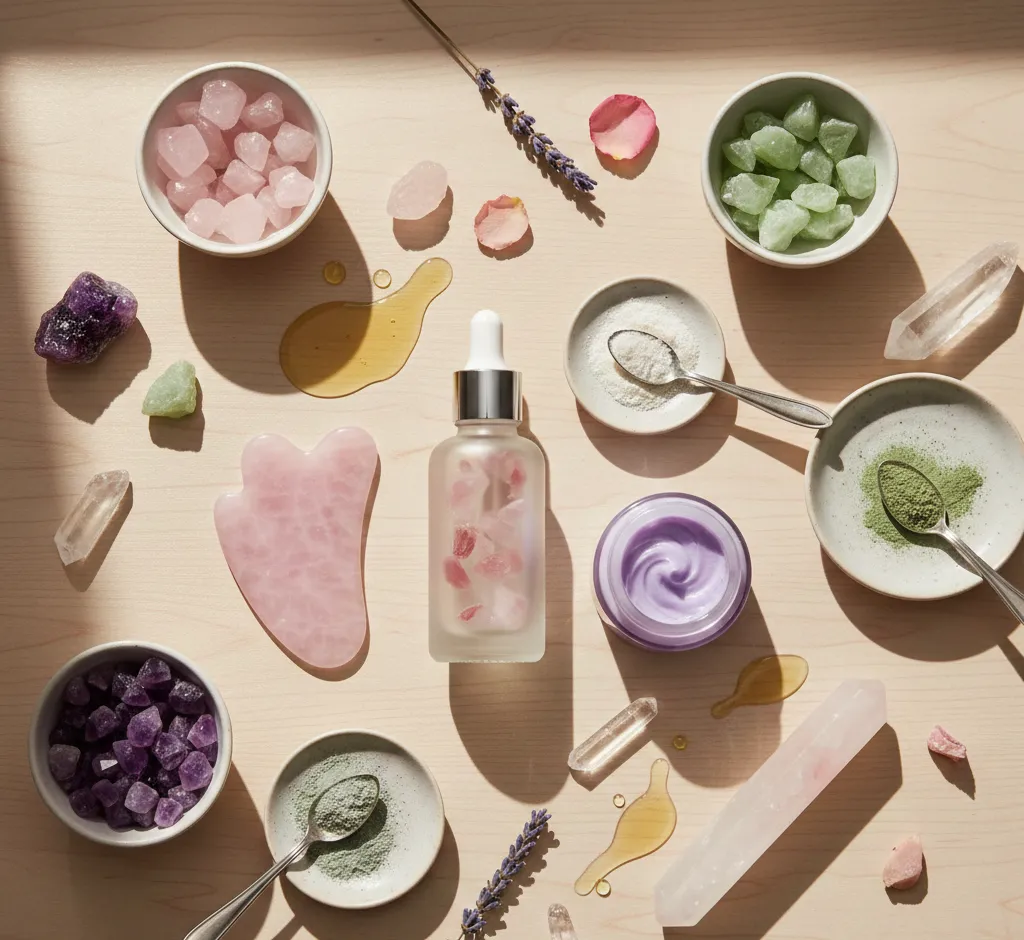
Gemstone-infused skincare is one of the most eye-catching trends in the beauty industry. Serums with amethyst dust, rose quartz facial mists, jade-infused creams, and crystal rollers all promise to energize the skin, boost radiance, and even balance your mood. But how much of this is science, and how much is smart marketing wrapped in a beautiful package?
This article takes a clear, evidence-informed look at gemstone-infused products. You will learn what these products actually contain, what “energizing” skin really means, what current science can and cannot support, and how to choose products that are both safe and genuinely beneficial for your skin.
What Are Gemstone-Infused Skincare Products?
At the most basic level, gemstone-infused skincare products are creams, serums, mists, masks, or tools that include crystals or minerals as a selling point. The gemstones may be present in different ways:
- Finely milled powders (e.g., tourmaline, pearl, ruby, diamond dust) blended into formulations.
- Whole stones or chips placed inside bottles of oil, serum, or mist as an aesthetic and symbolic element.
- Solid tools made from stone such as jade rollers, rose quartz gua sha tools, or crystal massage wands.
- Energetic “infusions” claimed to be made by placing formulations near crystals or “charging” them with crystal energy.
On their packaging and in marketing campaigns, brands often highlight benefits such as:
- “Energizes dull, tired skin.”
- “Raises your vibration and radiance.”
- “Detoxifies and purifies the complexion.”
- “Balances chakras and skin tone.”
To understand whether these claims hold up, it helps to first clarify what “energizing” means in the context of skin and how the skin actually functions.
What Does It Mean To “Energize” Skin?
In scientific terms, the skin does not become “energized” the way a battery does. When professionals say a product is energizing, they usually refer to mechanisms such as:
- Improving microcirculation: Better blood flow can temporarily enhance color and glow.
- Supporting cellular metabolism: Ingredients that help cells produce ATP (cellular energy) can indirectly influence firmness and repair.
- Stimulating mild exfoliation: Shedding dull, dead surface cells reveals fresher-looking skin.
- Hydrating and plumping: Well-hydrated skin reflects light better and looks more alive.
By contrast, when marketers talk about energizing skin with gemstones, they often blend scientific-sounding language with spiritual or metaphysical concepts such as vibrational frequencies and crystal auras. These ideas may be meaningful in a holistic or spiritual context but fall outside what dermatology can currently measure or verify.
What Science Says About Gemstone Ingredients
There is currently limited direct scientific research on gemstones used specifically in cosmetic formulations to energize skin. However, there are a few relevant scientific angles worth exploring.
1. Mineral content and trace elements
Some gemstones contain minerals like silica, calcium, magnesium, iron, or trace metals. In theory, these minerals could affect the skin if:
- They are present in a form that can detach from the crystal structure.
- They are small enough and biologically available to interact with the skin surface.
In practice, most cosmetic-grade gemstone powders are inert, stable crystals. They do not dissolve readily, and their minerals are not easily absorbed through the epidermis. For most users, these powders function more like physical particles that may:
- Add subtle luminosity by reflecting light.
- Provide gentle physical exfoliation, depending on particle size and shape.
- Change texture or slip of the product (how it glides on the skin).
These effects can make skin appear smoother or more radiant but do not necessarily “energize” it at a cellular level.
2. Tourmaline and heat generation
Tourmaline is often highlighted as an “energizing” stone because it can generate a weak electrical charge under pressure or heat, a property called pyroelectricity or piezoelectricity. Some brands claim that tourmaline in creams or tools can:
- Increase microcirculation.
- Gently warm the skin.
- Enhance the penetration of active ingredients.
Laboratory experiments show that tourmaline can influence infrared emission and static charge when exposed to heat or mechanical stress. However, evidence that tourmaline powder in a cream meaningfully changes skin blood flow or product absorption in real-world conditions remains sparse and not well standardized.
At best, tourmaline may contribute a subtle warming or tingling sensation, which people interpret as “energizing.” The psychological perception of warmth and activity can be powerful, even if the underlying measurable effect is minimal.
3. Pearl powder and skin radiance
Pearl powder, sometimes grouped with gemstone ingredients, has a longer history of use in traditional Chinese medicine and beauty rituals. It contains:
- Calcium carbonate.
- Trace minerals.
- Conchiolin, a protein associated with nacre (mother-of-pearl).
Some preliminary studies suggest that pearl powder may have mild antioxidant properties and could support barrier function when well-formulated. Its light-reflective properties can also make skin appear smoother and brighter.
Still, even in this relatively better-studied case, the term “energizing” is more marketing language than a strict scientific claim.
4. Placebo effect and sensory experience
One of the most underestimated aspects of skincare is the mind-skin connection. If using a gemstone-infused product makes a person feel calm, cared for, or ritualistic about self-care, there can be real downstream benefits:
- Lower perceived stress, which can decrease stress-related skin flares.
- Better adherence to a consistent skincare routine.
- Improved sleep and mood, which indirectly affect skin health.
In other words, even if crystals do not directly energize skin cells, the experience of using them can contribute to a healthier-looking complexion.
Common Gemstones Used In Skincare – And What They Actually Do
Below is a closer look at some of the most popular gemstones in beauty products and the difference between claims and realistic expectations.
Rose quartz
Marketing claims: Promotes self-love, soothes emotions, calms redness, softens fine lines.
Realistic benefits:
- As a solid tool (roller or gua sha), it can help with gentle massage, which may temporarily reduce puffiness and enhance circulation.
- If kept cool, it can provide a refreshing, de-puffing effect around the eyes.
- The stone itself does not contain active skincare molecules that specifically treat redness or wrinkles.
Jade
Marketing claims: Detoxifies, drains lymphatic fluid, balances qi (energy), clears skin.
Realistic benefits:
- Jade rollers and gua sha tools can support lymphatic drainage through massage.
- Consistent use can temporarily reduce fluid retention and improve facial contours.
- Detoxification claims are overstated; the liver and kidneys handle systemic detox, not jade tools.
Amethyst
Marketing claims: Protects against negativity and environmental stress, purifies the aura, clears blemishes.
Realistic benefits:
- Amethyst powder can add a soft, blurred finish or gentle exfoliation depending on particle size.
- There is no solid clinical evidence that amethyst in skincare directly impacts acne, oil production, or environmental protection.
Tourmaline
Marketing claims: Energizes skin, boosts microcirculation, enhances penetration of active ingredients.
Realistic benefits:
- Possible mild warming or stimulating sensation under certain conditions.
- Any measurable boost in circulation or absorption is likely modest and not a replacement for proven actives like niacinamide, vitamin C, or retinoids.
Quartz (clear)
Marketing claims: Amplifies the effects of other ingredients, raises vibration, brings clarity.
Realistic benefits:
- As a solid tool, quartz functions similarly to jade or rose quartz for massage and lymphatic support.
- There is no clinical data showing that clear quartz “amplifies” other skincare ingredients beyond normal formulation science.
The Real Drivers Of “Energized” Skin
When people say their skin looks more energized after using a gemstone product, several factors beyond the crystal itself may be at work:
1. Massage and touch
Facial massage with rollers, gua sha, or even fingertips can:
- Increase local blood flow, giving a temporary glow.
- Reduce puffiness by supporting lymphatic drainage.
- Relax tense muscles in the jaw and forehead, softening expression lines.
These benefits occur regardless of whether the tool is made from jade, rose quartz, stainless steel, or plastic. The gemstone adds aesthetic and emotional value more than functional superiority.
2. Hydration and occlusion
Many gemstone-infused products are formulated with humectants, emollients, and occlusives—ingredients that hydrate, soften, and lock in moisture. Common examples include:
- Hyaluronic acid.
- Glycerin.
- Ceramides.
- Squalane or plant oils.
These ingredients have very solid scientific support for improving skin texture, plumpness, and radiance. In many cases, they are the true drivers of the “energized” appearance—not the gemstone.
3. Light-reflective particles
Finely milled gemstone powders and other reflective particles (such as mica) can create an optical blurring effect. They scatter light in a way that makes fine lines and uneven texture less noticeable. Skin may look smoother and more radiant, which people interpret as energized and youthful.
4. Fragrance and ritual
The sensory experience of skincare—texture, scent, packaging, and ritual—has real psychological impact. A calming or uplifting routine can reduce stress, which indirectly benefits conditions like dullness, redness, and breakouts. Crystal-themed packaging and narratives may enhance this experience, making the routine feel more luxurious and personal.
Potential Risks And Considerations
Gemstone-infused products are generally marketed as gentle and natural, but they are not risk-free. Consider the following points before incorporating them into your routine.
1. Particle size and skin barrier
Rough or poorly milled gemstone powders can be abrasive. Overuse of physical exfoliants may:
- Micro-tear the skin barrier.
- Increase sensitivity and redness.
- Worsen conditions like rosacea or acne.
If choosing a product with gemstone powder, look for those described as micro-milled or formulated for sensitive skin, and avoid daily use if you notice irritation.
2. Heavy metals and purity
Some minerals and stones can contain trace heavy metals. Reputable brands should test raw materials and finished products for contaminants and comply with cosmetic regulations. However, not all brands are equally transparent.
Whenever possible, choose products from companies that publish information about their safety testing, sourcing, and quality control practices.
3. Overpaying for marketing
Gemstone-infused products can be significantly more expensive than similar formulations without crystals. In many cases, consumers pay a premium for storytelling, packaging, and perceived luxury rather than clinically proven performance.
If your main goal is healthier, more energized-looking skin, it may be more cost-effective to invest in proven actives like vitamin C, niacinamide, retinoids, peptides, and broad-spectrum sunscreen.
4. Confusing spiritual value with medical claims
Crystals hold deep cultural and spiritual meaning for many people. That is valid and can be personally powerful. However, spiritual benefits should not be confused with medical or dermatological claims.
If a brand suggests that gemstones can treat serious skin conditions or replace evidence-based therapies, approach those claims with caution and consult a dermatologist for persistent or severe concerns.
How To Choose A Gemstone-Infused Product Wisely
If you enjoy crystals and like the idea of gemstone skincare, there is no need to avoid these products entirely. The key is to choose them thoughtfully and manage expectations.
Step 1: Define your main goal
Before shopping, ask yourself what you actually want to address:
- Dullness and lack of glow.
- Dehydration and tightness.
- Fine lines and early signs of aging.
- Puffiness and tension.
Once you know your goal, you can evaluate whether the product’s non-gemstone ingredients are appropriate and evidence-based for that concern.
Step 2: Read the ingredient list
Look beyond the prominent gemstone name on the front label. On the ingredient list, identify:
- Evidence-based actives (e.g., niacinamide, vitamin C, retinol, peptides, AHAs/BHAs, ceramides).
- Support ingredients (humectants, emollients, antioxidants).
- Potential irritants if your skin is sensitive (e.g., certain fragrances or essential oils).
If the gemstone is listed near the end of the ingredient list, it is likely present in a small amount for marketing and aesthetic purposes rather than as a primary active.
Step 3: Evaluate claims critically
Claims such as “energizes skin” or “raises your vibration” are often vague. More trust-inspiring signs include:
- Specific, measurable benefits (e.g., “improves skin hydration by X% in four weeks”).
- References to consumer or clinical testing, even if limited.
- Clear explanation of how the key ingredients (not just the gemstone) work.
Use marketing language as inspiration, not as hard evidence.
Step 4: Patch test and start slowly
As with any new skincare product:
- Patch test on a small area of skin for several days.
- Introduce only one new product at a time.
- Monitor for irritation, breakouts, or redness.
If your skin reacts poorly, discontinue use—even if the product is labeled as natural, clean, or gentle.
Step 5: Use the ritual to your advantage
Even if the gemstone is more symbolic than active, you can transform your skincare routine into a mini self-care ritual:
- Take a few deep breaths while applying the product.
- Use slow, intentional massage to relax facial muscles.
- Pair the routine with affirmations or mindfulness if that resonates with you.
This ritual can contribute to reduced stress and improved well-being, which often shows up on your skin over time.
Who Might Benefit Most From Gemstone-Infused Products?
Gemstone-infused products may be particularly appealing for people who:
- Enjoy holistic wellness, crystals, and ritualistic self-care.
- Value the emotional and aesthetic aspects of their skincare routine.
- Already have a basic, effective routine and want an optional add-on “treat” product.
They may be less suitable for people who:
- Have very sensitive, reactive, or compromised skin barriers.
- Prefer minimalist routines focused strictly on clinically proven actives.
- Are on a tight budget and need to prioritize high-impact ingredients.
So, Do Gemstone-Infused Products Truly Energize Skin?
When evaluated through the lens of modern dermatology and cosmetic science, the answer is nuanced:
- Direct, measurable energizing effects from gemstones themselves are not strongly supported by current evidence. Most crystals are inert on the skin and do not dramatically change cellular energy or metabolism.
- Indirect benefits are real but often come from other factors: massage, hydration, light-reflective particles, and the psychological impact of sensory rituals.
- The quality of the overall formula matters far more than the presence or absence of a gemstone. Gemstone-infused or not, a product rich in proven actives and suited to your skin type will do more to improve your complexion.
That does not mean gemstone products are useless. They can be enjoyable, motivating, and part of a meaningful self-care practice. The key is to view the gemstone as an optional bonus—not as a substitute for solid formulation and realistic expectations.
Practical Takeaways
- Use gemstone tools (like rollers and gua sha) mainly for massage and relaxation, not as miracle cures.
- Choose gemstone-infused creams or serums based on their overall ingredient list, not just the crystal story.
- Expect subtle, indirect benefits rather than dramatic transformation from gemstones alone.
- Remember that sunscreen, a gentle cleanser, moisturizers, and targeted actives will have the biggest impact on long-term skin health.
If gemstone-infused skincare makes your routine feel more enjoyable and intentional—and your skin tolerates the products well—there is no harm in keeping them as part of your beauty ritual. Just pair them with evidence-based habits, and let crystals be the sparkly accent rather than the main source of your skin’s “energy.”