Electric Flosser vs Traditional Floss: Which Is Better for Your Teeth and Gums?
Electric flosser vs traditional floss: discover which interdental cleaning method is more effective, comfortable, and convenient for your oral health, braces, and gum care.
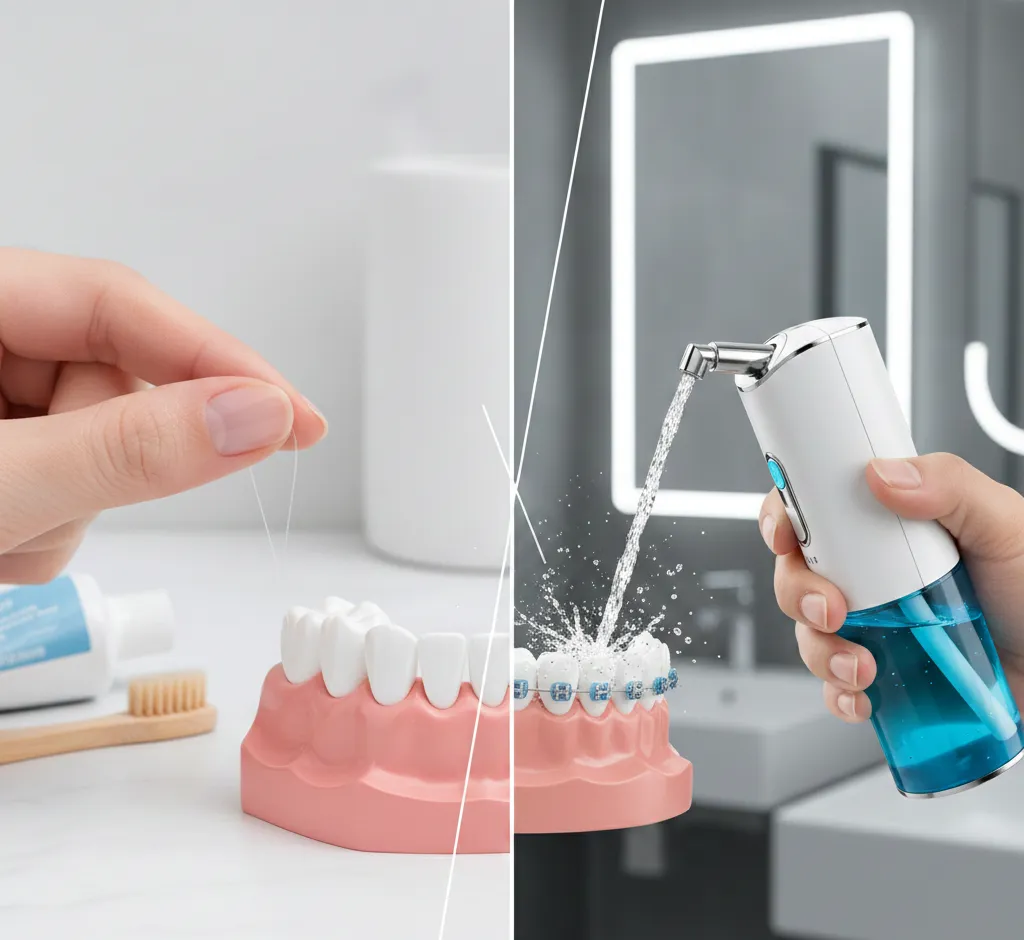
Keeping your teeth and gums healthy is about much more than brushing twice a day. Dentists consistently stress that cleaning between your teeth is just as important as brushing. That is where flossing comes in. Today, you have more options than ever before: from classic string floss to modern electric flossers (such as water flossers and air flossers).
In this article, we will compare electric flossers vs traditional floss from every angle: effectiveness, ease of use, safety, cost, and who each option is best for. By the end, you will be able to decide which interdental cleaning method fits your mouth, lifestyle, and budget.
What Is Traditional Floss?
Traditional floss is a thin strand of nylon, Teflon, or other synthetic material used to remove plaque and food particles between teeth and just below the gumline. It can be waxed or unwaxed, flavored or unflavored, flat or round.
Main types of traditional floss
- Waxed floss – Slightly coated so it glides more smoothly between tight contacts.
- Unwaxed floss – Thinner and sometimes better at "squeaking" plaque off teeth, but can fray more easily.
- PTFE (Teflon) floss – Very smooth and resistant to shredding; often easier to slide into tight spaces.
- Dental tape – Broader and flatter, ideal for people with wider gaps between teeth.
- Floss picks – Small plastic tools with a short piece of floss stretched across a forked end, easier for on-the-go use.
Traditional floss has been the go-to method for decades and is still recommended by dentists worldwide when used correctly.
What Is an Electric Flosser?
"Electric flosser" is a broad term typically referring to devices that use water, air, or vibration to clean between teeth instead of manual string floss. The most common type is the water flosser, also known as an oral irrigator.
Main types of electric flossers
- Water flossers – Use a pulsating stream of water to flush out plaque and debris between teeth and along the gumline.
- Air flossers – Use bursts of air mixed with micro-droplets of water or mouthwash to clean between teeth.
- Powered interdental cleaners – Small vibrating devices with replaceable tips or brushes designed to fit between teeth.
Electric flossers are especially popular with people who find traditional flossing difficult, uncomfortable, or time-consuming.
Effectiveness: Which Cleans Better?
Both electric flossers and traditional floss aim to remove plaque and food particles from areas your toothbrush cannot reach. However, they work in different ways and are not always equally effective in every situation.
Traditional floss: the gold standard when used correctly
Manual floss, when used with proper technique, can be extremely effective at scraping plaque off tooth surfaces. You physically wrap the floss into a C-shape around each tooth and move it up and down, mechanically disrupting the plaque biofilm.
- Strengths: Direct mechanical removal of plaque, excellent for tight contacts, inexpensive and accessible.
- Limitations: Technique-dependent; many people do not floss correctly or regularly, reducing its real-world effectiveness.
Electric flossers: very effective in real-world use
Water and air flossers remove plaque mainly through pressure and pulsation, flushing debris and bacteria out of the spaces between teeth and below the gumline.
- Strengths: Easier for many people to use daily, especially if they have braces, bridges, or implants.
- Limitations: May not scrape plaque as directly from tight contact points as well-executed string flossing.
Clinical studies generally show that both methods can significantly improve gum health and reduce bleeding when used consistently. For many users, electric flossers outperform traditional floss simply because they are more likely to be used regularly.
Ease of Use and Comfort
One of the biggest differences between electric flossers and traditional floss is the user experience. Many people mean to floss daily but skip it because it feels awkward or uncomfortable.
Using traditional floss
- Requires good manual dexterity to reach back teeth.
- Can be tricky for people with large fingers, crowded teeth, or limited mobility.
- May cause fingers to feel sore or numb if you pull too tightly.
- Gums may bleed or feel tender at first, especially if you do not floss regularly.
Using an electric flosser
- Easier to handle, especially for people with arthritis or coordination issues.
- Simple learning curve: point the tip between teeth and follow the gumline.
- Often feels like a gentle massage; many people find it more comfortable and even enjoyable.
- Water can be messy at first, but users usually adapt quickly.
If flossing has always felt like a chore, an electric flosser can make the process faster, more comfortable, and more likely to become a consistent habit.
Gum Health and Sensitivity
Healthy gums do not bleed easily and fit snugly around your teeth. Poor flossing habits or not flossing at all can lead to gingivitis and more serious gum disease over time.
Traditional floss and gums
- If used gently with a proper C-shaped motion, string floss is safe for gums.
- Snapping the floss down can cut or traumatize the gum tissue.
- Beginners often experience bleeding simply because the gums are inflamed and not used to flossing.
Electric flossers and gums
- Pulsating water can be very gentle while still effective at reducing inflammation.
- Many water flossers offer adjustable pressure, ideal for sensitive gums.
- Can reach a bit deeper below the gumline, which may benefit those with early gum disease or periodontal pockets.
For people with sensitive gums, gingivitis, or early periodontal disease, electric flossers are often more comfortable and easier to tolerate daily than manual flossing.
Orthodontics, Implants, and Dental Work
Braces, bridges, crowns, and dental implants create additional surfaces and spaces where plaque can accumulate. These areas can be challenging to clean.
Traditional floss for complex dental work
- Floss threaders or special orthodontic floss are needed to clean under wires and around fixed bridges.
- The process can be time-consuming and frustrating, especially for teenagers with braces.
- Many patients simply stop flossing regularly because it feels too complicated.
Electric flossers for orthodontics and implants
- Water flossers are particularly helpful for cleaning around brackets, wires, and under bridges.
- They can flush out food particles that easily get trapped in orthodontic appliances.
- Special tips are often available for implants and periodontal pockets.
For anyone with braces, extensive dental work, or implants, an electric flosser is often the more practical and efficient choice.
Learning Curve and Habit Formation
Even the most effective tool will not help your oral health if you do not use it consistently. That is why ease of use and habit formation matter so much.
Traditional floss habit challenges
- Many people find it tedious and skip it when they are tired or rushed.
- It can feel awkward at first, especially when reaching the back teeth.
- If you are not confident in your technique, you may not see results and lose motivation.
Electric flosser habit advantages
- Often perceived as more "fun" and high-tech, which motivates regular use.
- Built-in timers on many devices help you clean for the recommended duration.
- Visible results (food particles flushing out) can be satisfying and reinforcing.
From a behavioral standpoint, many users find it easier to stick with an electric flosser routine than a traditional flossing routine.
Cost and Convenience
Cost is a practical factor when choosing between traditional floss and an electric flosser, especially for families.
Cost of traditional floss
- Low initial cost: a roll of floss is inexpensive and widely available.
- Ongoing cost is minimal; even daily flossing costs relatively little over a year.
- Portable and travel-friendly; no batteries or electricity required.
Cost of electric flossers
- Higher initial investment for the device itself.
- Ongoing costs for replacement tips and, in some cases, batteries or electricity.
- Some models are countertop only, requiring space and access to an outlet, while others are cordless and more portable.
When viewed over several years, the cost difference may be worth it if the electric flosser helps you avoid fillings, deep cleanings, or gum treatments due to better daily care.
Travel and Lifestyle Considerations
Your daily routine and travel habits can also influence which option fits you best.
Traditional floss for on-the-go use
- Fits easily in a pocket, wallet, or travel bag.
- No water, electricity, or charging needed.
- Ideal for quick use after meals or in the office.
Electric flossers for home routines
- Best suited for morning or evening routines at home.
- Cordless models can be taken on trips, but they still need charging and refilling.
- Countertop models provide stronger performance but are less portable.
Many people choose to use an electric flosser at home and keep traditional floss or floss picks on hand for travel or quick touch-ups.
Environment and Sustainability
Environmental impact is an increasingly important consideration for many users.
Environmental impact of traditional floss
- Most conventional floss is made from non-biodegradable plastics.
- Floss picks add additional plastic waste due to the handle.
- There are eco-friendlier options, such as biodegradable silk floss or floss in refillable glass containers.
Environmental impact of electric flossers
- Require electricity and contain plastic components and electronics.
- Replacement tips create periodic plastic waste.
- Longer device life and limited consumables may balance some of the impact compared to constant single-use floss picks.
If sustainability is a top priority, consider pairing a durable electric flosser with eco-friendly floss for occasional use, or choose biodegradable traditional floss options.
Safety and Common Mistakes
Both methods are generally safe when used as directed, but common mistakes can reduce effectiveness or cause irritation.
Common traditional floss mistakes
- Snapping the floss down and injuring the gums.
- Not curving the floss around each tooth into a C-shape.
- Skipping the back teeth or only flossing where food is stuck.
- Flossing only before dental check-ups instead of daily.
Common electric flosser mistakes
- Using water pressure that is too high for sensitive gums.
- Moving too quickly and not pausing briefly between each tooth.
- Not directing the tip along the gumline, where plaque often accumulates.
- Using it sporadically instead of as part of a daily routine.
Follow your dentist’s instructions and the manufacturer’s guidelines to get the best results from any interdental cleaning method.
Who Should Choose Electric Flossers?
While both methods can be effective, electric flossers offer specific advantages for certain groups of people.
Electric flossers are ideal if you:
- Have braces, bridges, crowns, or dental implants.
- Struggle with manual dexterity or have conditions like arthritis.
- Have sensitive gums or early gum disease and find string floss painful.
- Dislike traditional flossing and rarely stick with it.
- Want a quicker, easier routine that still supports strong gum health.
In these situations, an electric flosser can significantly improve your daily oral hygiene and may lead to better long-term outcomes.
Who Should Stick With Traditional Floss?
Traditional floss remains an excellent option for many people and is still considered a core part of interdental cleaning.
Traditional floss is ideal if you:
- Have good manual dexterity and do not mind the process.
- Are willing to learn and maintain proper flossing technique.
- Have minimal dental work and relatively straight teeth.
- Prefer a low-cost, low-tech, and portable solution.
- Want the direct mechanical cleaning that string floss provides.
Some dentists recommend using traditional floss even when you own an electric flosser, especially for tight contact areas that benefit from the scraping motion of the floss.
Can You Use Both Electric Flossers and Traditional Floss?
You do not have to choose one method forever. In fact, combining both can give you the best of both worlds.
Smart ways to combine methods
- Use an electric flosser daily for overall interdental and gumline cleaning.
- Add traditional floss a few times a week to target tight spots and areas where plaque tends to build.
- Use traditional floss or floss picks when traveling or away from home.
As long as you are cleaning between every tooth once a day, you are doing your mouth a big favor—regardless of whether you choose electric, traditional, or a mix of both.
How to Choose the Right Option for You
When deciding between an electric flosser vs traditional floss, consider the following key factors.
Questions to ask yourself
- Am I realistically going to use this every day? Choose the option you are most likely to use consistently.
- Do I have braces, implants, or complex dental work? If yes, an electric flosser may be more practical.
- Do my gums bleed or feel sore when I floss? An electric flosser with adjustable pressure can be gentler.
- What is my budget? Balance initial investment vs long-term benefits and dental health savings.
- How important is portability? If you travel often, traditional floss (or a compact cordless flosser) may fit better.
Your dentist or dental hygienist can also help you decide, based on your gum health, tooth alignment, and any existing restorations.
Final Verdict: Electric Flosser vs Traditional Floss
Both electric flossers and traditional floss can play a powerful role in keeping your teeth and gums healthy. Traditional floss excels at direct plaque removal when used with proper technique. Electric flossers shine in real-world usage because they are more comfortable, easier around complex dental work, and more likely to become a habit.
The best choice is the one you will actually use every single day. If an electric flosser makes interdental cleaning faster and more pleasant, it is likely worth the investment. If you are already diligent and comfortable with traditional floss, you may simply need to stay consistent and refine your technique.
For many people, a combination of both methods offers the ideal balance: the convenience and gum benefits of an electric flosser, plus the precision and tactile control of traditional floss. Whichever you choose, make flossing—of any kind—an essential part of your daily oral hygiene routine.