Fabric vs Leather Chair Durability: Which Lasts Longer and Why?
Comparing fabric vs leather chair durability: learn which material lasts longer, how each handles wear, stains, pets, and climate, plus maintenance tips to extend the life of your chairs.
Choosing between fabric and leather chairs is not just a style decision—it is a long-term investment in durability, comfort, and ease of maintenance. Understanding how each material wears over time helps you avoid premature replacements and get better value from every chair you buy.
Durability Overview: Fabric vs Leather
In general, high-quality leather outlasts most standard upholstery fabrics, especially in busy homes or commercial spaces. Well-maintained full-grain or top-grain leather chairs can remain structurally sound and attractive for well over a decade, while many everyday fabrics show visible wear sooner in the form of fading, pilling, or flattened fibers.
However, durability is not only about the base material; it also depends on fabric type, weave density, protective finishes, and overall construction quality of the chair. Modern performance fabrics and tightly woven synthetics can rival or even surpass low-grade or faux leather in day-to-day resilience when properly cared for.
How Leather Chairs Wear Over Time
Natural leather types and grades
Leather chairs are not all equal: full-grain and top-grain leathers are the most durable, because they retain more of the hide’s natural strength. Lower grades, such as corrected-grain, split leather, or bonded leather, are more affordable but typically less resistant to deep wear and long-term stress.
Faux leather (often PVC or PU) can mimic the look of real leather at a lower price, yet it usually has a shorter lifespan, especially in areas of heavy friction like seat edges and armrests. Over time, low-quality faux leather is prone to peeling, cracking, or flaking, which can make the chair look worn long before the internal structure fails.
Strengths: resistance and longevity
- High tear and puncture resistance: Good leather resists punctures and tears better than many common fabrics, which makes it suitable for households with children or in high-traffic seating areas.
- Surface durability: Leather does not fray like woven fabric, so seams and edges often maintain a clean appearance longer if the stitching is strong and properly tensioned.
- Ageing gracefully: Quality leather develops a patina rather than simple wear marks, so small scuffs can blend into an attractive, lived-in look instead of appearing as damage.
Weak points: scratches, sun, and climate
- Scratches and pet claws: Leather resists punctures, but sharp claws or metal hardware can leave visible scratch lines, especially on softer leathers. These marks may be cosmetic rather than structural, yet they do affect appearance.
- UV and heat sensitivity: Direct sunlight can dry and fade leather, leading to stiffness and eventual cracking if the material is not conditioned regularly and positioned away from strong UV exposure.
- Humidity and temperature: Very dry environments draw out the natural oils in leather, while excessive heat from radiators or vents accelerates drying and surface damage. In contrast, controlled indoor climates help leather retain its flexibility much longer.
How Fabric Chairs Wear Over Time
Fabric types and durability differences
Fabric durability varies widely depending on whether the fibers are natural, synthetic, or blended. Natural fibers like cotton and linen often feel soft and breathable but may wear down and fade faster under constant friction, especially if the weave is loose. By contrast, many synthetic fibers—such as polyester, nylon, and acrylic—are engineered to be more resistant to abrasion and stretching.
Performance fabrics add stain-resistant and water-repellent treatments to tightly woven fibers, significantly improving real-world durability on chairs that face spills, pets, and daily use. These treated textiles can maintain color and texture longer than untreated natural fabrics, especially when cleaned according to manufacturer recommendations.
Strengths: breathability and comfort
- Less temperature sensitivity: Fabric does not heat up or cool down as dramatically as leather, which helps prevent cracking due to thermal stress and makes fabric chairs feel more comfortable year-round in many climates.
- Better airflow: Woven upholstery allows more air circulation, reducing the buildup of moisture and body heat that can contribute indirectly to material fatigue in some environments.
- Concealing minor wear: Patterns, textures, and darker tones can help hide small stains or slight pilling better than the smooth, uniform surface of leather.
Weak points: fraying, pilling, and stains
- Abrasion wear: Over time, high-friction zones like front edges, seat centers, and arms can show thinning or fraying, especially on lower-density fabrics.
- Pilling and fuzzing: Some fabrics develop small balls of fiber on the surface, a cosmetic issue that makes chairs look older even if the structure is still sound.
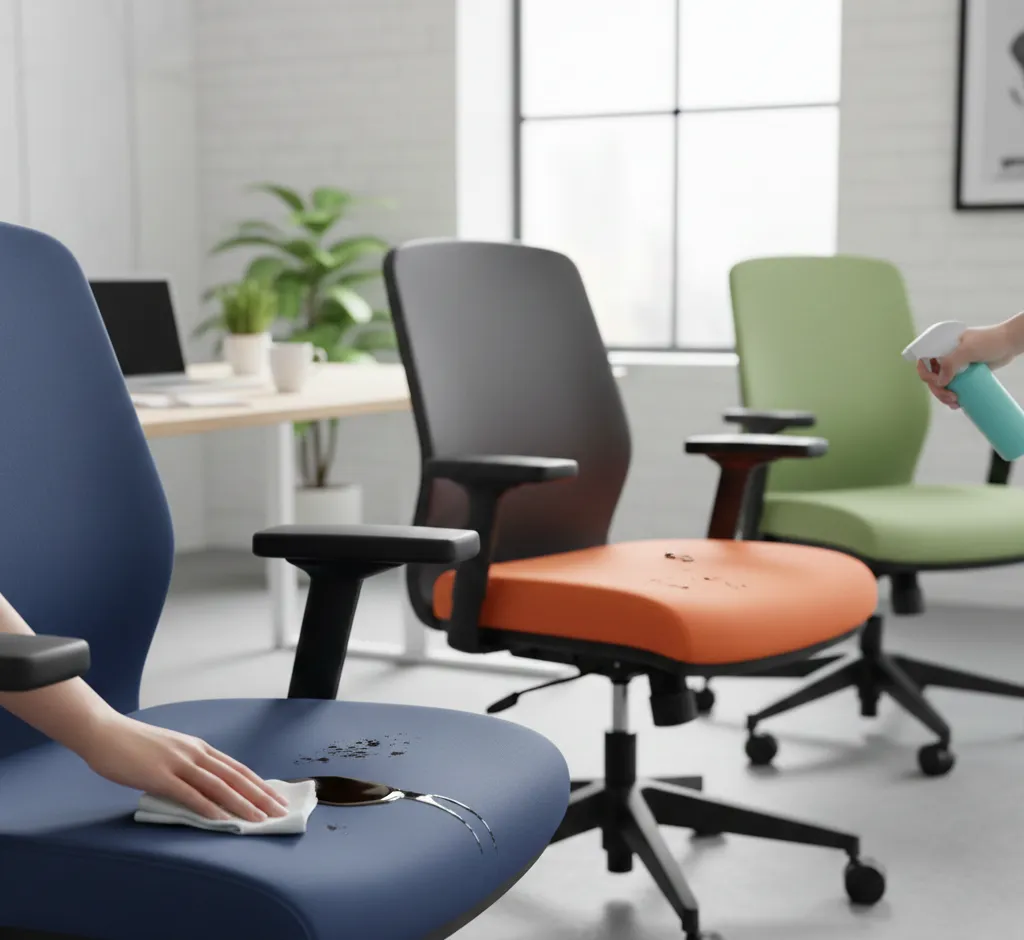
- Stain absorption: Unlike leather, most fabrics absorb liquids quickly. Without prompt blotting and suitable cleaners, spills can lead to permanent discoloration or odors deep in the fibers and foam.
Durability Factors Beyond Material Type
Frame, padding, and construction quality
Even the toughest upholstery will not make a poorly built chair last longer. A solid hardwood or quality metal frame, strong joints, and dense, high-resilience foam cushions are critical components that determine whether a chair keeps its shape and support for years or sags after a short time.
Double-stitching, reinforced seams, and well-anchored webbing or springs all reduce stress on the cover, whether leather or fabric. When these elements are carefully executed, the upholstery experiences less stretching and tearing under everyday use.
Usage patterns and environment
- Traffic level: Chairs in living rooms, home offices, or waiting areas see more frequent use and benefit from tougher materials and higher-quality construction.
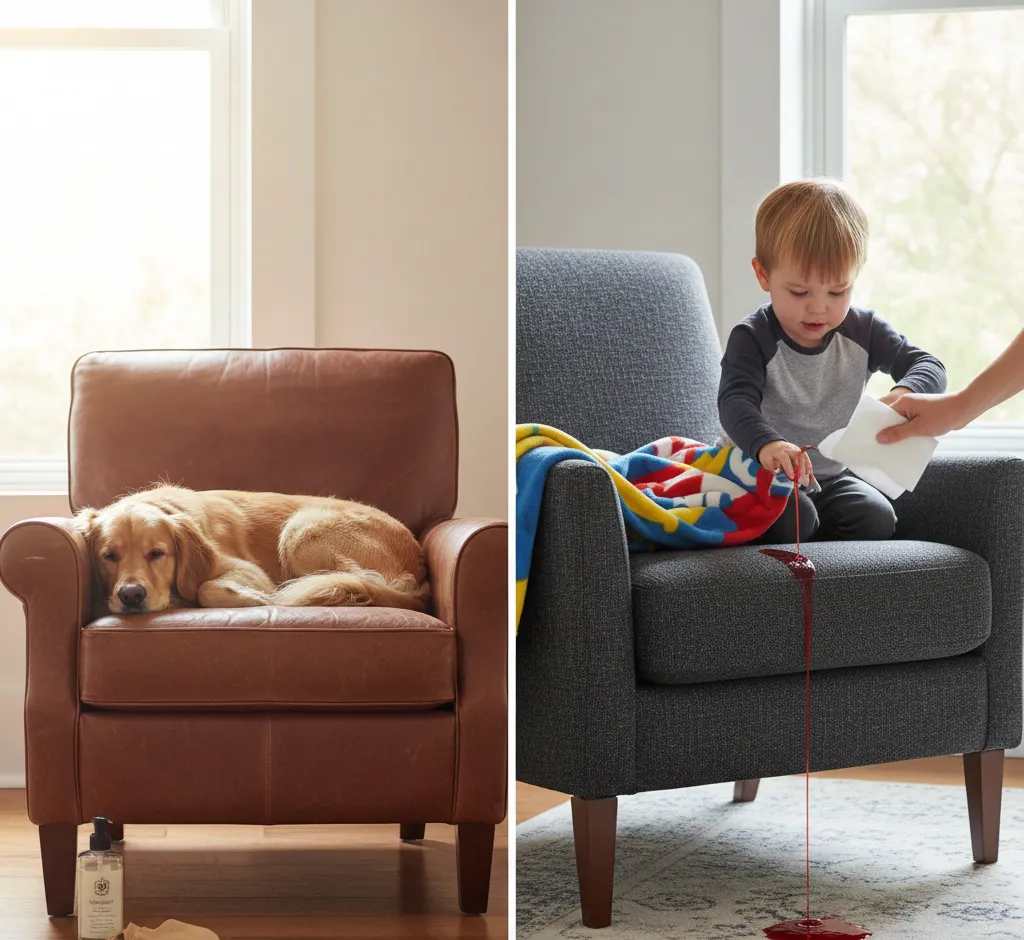
- Users and lifestyle: Homes with children, pets, or frequent guests demand better stain resistance, abrasion tolerance, and easy cleaning than low-use guest rooms.
- Placement: Chairs near windows, radiators, or air conditioners can face extra UV and temperature stress; this especially affects leather but can also fade fabrics over time.
Leather vs Fabric Durability: Side-by-Side
The table below compares key durability-related aspects of fabric and leather chairs to clarify where each material tends to perform better.
| Aspect | Leather Chairs | Fabric Chairs |
|---|---|---|
| Average lifespan (with proper care) | Often 10–20+ years for high-grade leather in typical home use. | Commonly 5–10 years for standard upholstery; performance fabrics can last longer. |
| Abrasion resistance | Very good; resists surface wear and does not fray, but can show scuffs and scratches. | Varies widely; tightly woven synthetics perform best, while loose or natural weaves wear faster. |
| Stain resistance | High; most spills can be wiped off before they soak in. | Moderate to low unless treated; performance fabrics improve resistance significantly. |
| Pet- and child-friendliness | Strong against punctures but vulnerable to visible scratch marks; easy to wipe clean. | Claws and rough play can snag or fray fibers, but some textured or patterned fabrics hide wear well. |
| Sunlight sensitivity | High; prolonged sunlight can dry, fade, and crack the surface. | Moderate; colors can fade, but fibers usually do not crack. |
| Temperature and comfort | Can feel hot and sticky in warm climates and cool in winter, though not directly a durability issue. | More thermally neutral, which helps maintain comfort under varied conditions. |
| Maintenance needs | Requires periodic conditioning and protection from heat and UV to maximize lifespan. | Requires regular vacuuming and prompt spot cleaning; professional cleaning extends life. |
Maintenance Tips to Extend Chair Lifespan
Care tips for leather chairs
- Clean gently and regularly: Dust with a soft cloth and occasionally wipe with a damp (not wet) cloth using a mild cleaner designed for leather.
- Condition the leather: Apply a high-quality leather conditioner at recommended intervals to replenish oils, preserve flexibility, and prevent surface cracking.
- Avoid extreme conditions: Keep leather chairs away from direct sunlight, radiators, and fireplaces, and try to maintain a stable indoor humidity level.
- Use protective habits: Encourage users to avoid sharp accessories, metal studs, or pet claws directly on the surface to reduce scratch marks.
Care tips for fabric chairs
- Vacuum consistently: Use an upholstery attachment to remove dust and debris that otherwise act like sandpaper, wearing down fibers over time.
- Blot spills immediately: Gently blot (do not rub) liquids and treat stains using fabric-safe cleaners following the care label instructions.
- Rotate cushions: If cushions are reversible, rotate or flip them periodically to distribute wear.
- Consider protective treatments: Apply or refresh fabric protectors where appropriate, particularly on dining or office chairs that face frequent spills.
Choosing the Right Material for Your Situation
Best choices for high-traffic homes
In households with children, pets, or daily heavy use, high-grade leather or robust performance fabrics are usually worth the extra investment. If easy cleanup is a priority and you can manage basic conditioning, leather often offers the longest overall service life.
If you expect lots of food and drink spills, or if scratches from pets are a major concern, durable, stain-resistant synthetic fabrics can be a safer compromise. They help balance comfort, appearance, and resilience, especially in casual living or dining spaces.
Climate and comfort considerations
- Warm or humid climates: Breathable fabrics typically feel cooler and reduce stickiness during hot seasons, while leather may feel warmer against the skin.
- Cool or dry climates: Leather can feel luxurious and cozy, but it benefits from added humidity control to prevent drying and cracking.
- Mixed environments: If comfort and longevity are both critical, consider a high-quality fabric for everyday family seating and leather for less frequently used accent or office chairs.
Cost vs Durability: Long-Term Value
Leather chairs often come with a higher upfront cost, but the extended lifespan of well-made pieces can make them more economical over the long term. When a leather chair lasts for many years without needing replacement, the cost per year of use can be surprisingly competitive.
Fabric chairs usually have a lower entry price, making them attractive for budget-conscious buyers or those who like to refresh décor more frequently. While they may not always match top-tier leather in durability, choosing quality fabric, solid construction, and maintaining proper care can still deliver excellent value across a reasonable lifespan.
Final Thoughts
If sustained durability is the top priority and you are prepared to invest in maintenance, high-quality leather generally has the advantage. It resists many forms of daily wear, is easy to wipe clean, and can remain attractive for years when shielded from harsh conditions.
If comfort, breathability, and design versatility matter more—or if you need a budget-friendly option with good resilience—well-chosen fabric chairs, especially those using performance or tightly woven synthetic textiles, can serve reliably for many years. Matching the material to your lifestyle, climate, and cleaning habits is the key to getting the most durable chair for your specific needs.