Hibiscus for Hair Shine and Strength: Benefits, Uses, and DIY Recipes
Discover how hibiscus can transform your hair by boosting shine, strength, and thickness. Learn proven benefits, hibiscus oil and mask recipes, and how to use hibiscus in your weekly hair care routine for healthier, glossier hair.
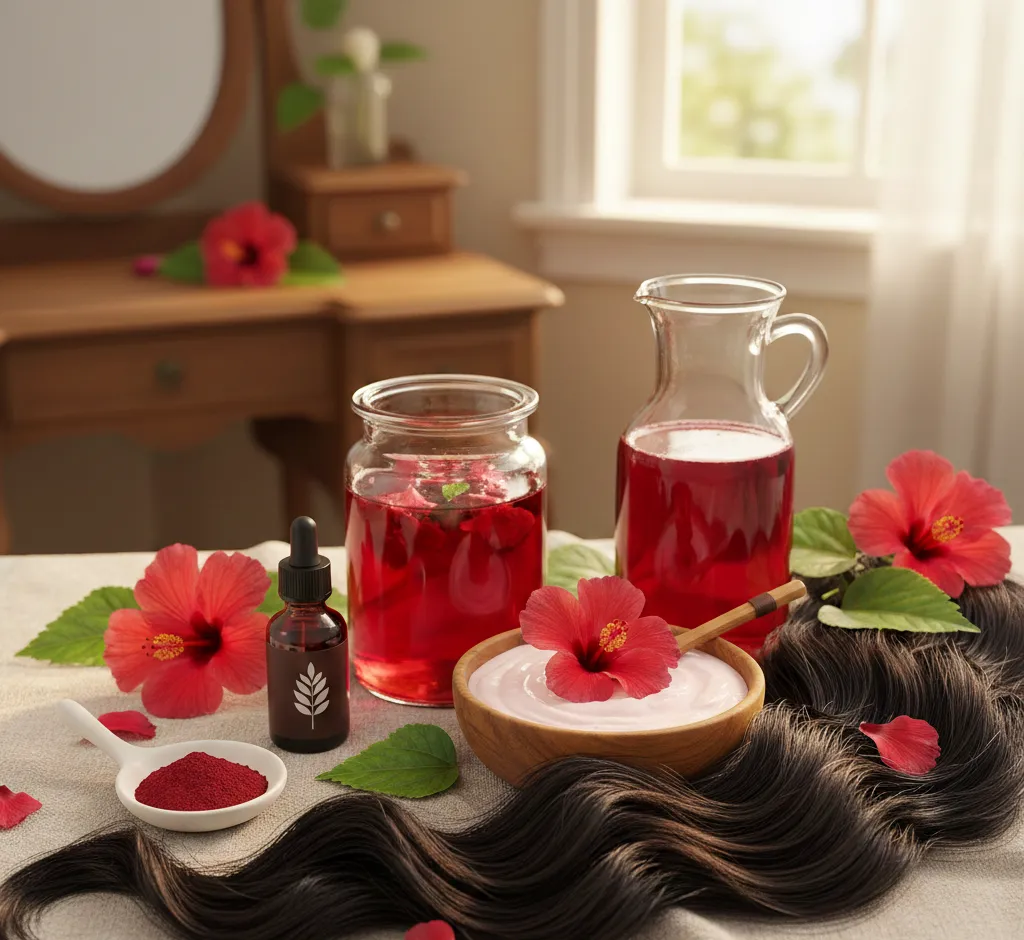
Hibiscus has been cherished for centuries in traditional beauty rituals, especially in Ayurveda, for its ability to support healthy, strong, and glossy hair. Whether you struggle with dullness, breakage, hair fall, or a dry scalp, hibiscus can be a powerful natural ally in your hair care routine.
In this article, you will learn how hibiscus benefits your hair, the best ways to use it (oils, masks, rinses), and how to incorporate it into a long-term hair care plan for maximum shine and strength.
What Makes Hibiscus So Good for Hair?
The hibiscus plant, especially its flowers and leaves, is rich in nutrients that support scalp health and hair fiber integrity. These components work together to help reduce hair fall, promote shine, and encourage healthier growth.
Key Nutrients in Hibiscus
- Vitamin C: Supports collagen production in the scalp, which can help improve hair strength at the roots.
- Antioxidants (polyphenols, flavonoids): Help protect the scalp and hair from oxidative stress caused by pollution, UV rays, and heat styling.
- Amino acids: Contribute to stronger, more resilient hair strands by supporting the building blocks of keratin.
- Natural acids: Help gently exfoliate the scalp, remove product buildup, and balance excess oil.
- Mucilage (natural plant slime): Provides slip and conditioning, making hair smoother, softer, and easier to detangle.
Because of this nutrient profile, hibiscus is often used to address dryness, frizz, dullness, and breakage while improving overall hair texture and shine.
Main Benefits of Hibiscus for Hair Shine and Strength
- Boosts natural shine: Hibiscus smooths the hair cuticle, helping it reflect light more effectively so hair looks glossier.
- Reduces breakage: Its conditioning and strengthening properties help minimize snapping and split ends with consistent use.
- Supports thicker-looking hair: By nurturing the scalp and hair follicles, hibiscus can contribute to the appearance of fuller hair over time.
- Helps balance scalp oil: Gently cleanses buildup without overly stripping natural oils, which can improve scalp comfort and hair quality.
- Improves manageability: The softening effect makes hair easier to detangle and style, especially for dry, curly, or wavy hair types.
Who Can Benefit Most from Hibiscus Hair Care?
Hibiscus is generally suitable for most hair types, but some people may notice especially strong benefits.
- Dry, dull hair: The natural conditioning effect adds softness and noticeable shine.
- Damaged or chemically treated hair: Helps reduce roughness and breakage over time when used regularly alongside a gentle routine.
- Curly and coily hair: The slip and moisture from hibiscus can make curls feel more defined and less frizzy.
- Fine, fragile hair: Lightweight hibiscus rinses and masks can help strengthen without weighing hair down.
- Oily or flaky scalp: Gentle exfoliating and balancing properties may help with buildup and discomfort.
If you have very light or bleached hair, test any hibiscus-based treatments on a small strand first, as the natural pigment from hibiscus flowers can sometimes impart a faint rosy or reddish tint with frequent use.
How to Use Hibiscus for Hair Shine and Strength
You can enjoy the benefits of hibiscus in several easy, at-home formats. The three most popular ways are oils, hair masks, and herbal rinses.
1. Hibiscus-Infused Hair Oil
Hibiscus oil is a classic treatment for improving shine, strength, and scalp health. It works well as a pre-shampoo treatment or overnight mask.
Ingredients
- 2–3 tablespoons of carrier oil (coconut, sesame, almond, or jojoba)
- 2 tablespoons of dried hibiscus petals or a handful of fresh hibiscus flowers and leaves (washed and dried)
How to Make Hibiscus Oil
- Prepare the hibiscus: If using fresh flowers, chop them into small pieces. If using dried petals, crush them lightly.
- Combine with oil: Add hibiscus to your chosen carrier oil in a clean, dry glass jar.
- Infuse the oil: Seal the jar and place it in a warm, shaded area for 1–2 weeks. Shake gently every day to help the infusion.
- Strain: After infusing, strain the oil through a clean cloth or fine sieve to remove plant material.
- Store: Keep the finished oil in a dark glass bottle, away from direct sunlight.
How to Use Hibiscus Oil
- As a scalp massage oil: Warm a small amount of oil between your palms and massage into the scalp for 5–10 minutes to stimulate circulation and nourish roots.
- As a pre-shampoo treatment: Apply from roots to ends, leave on for 30–60 minutes, then shampoo as usual.
- As an overnight treatment: For very dry or damaged hair, apply lightly, cover with a soft towel or bonnet, and wash out in the morning.
Use hibiscus oil 1–2 times per week for best results in shine and strength.
2. Hibiscus Hair Mask for Deep Conditioning
A hibiscus hair mask can provide an intensive conditioning boost, reducing frizz and improving softness and sheen.
Simple Hibiscus Hair Mask Recipe
- 2–3 tablespoons hibiscus powder (or blended fresh hibiscus petals and leaves)
- 2–3 tablespoons yogurt or coconut milk (for moisture and smooth texture)
- 1 tablespoon honey or aloe vera gel (optional, for extra hydration and shine)
- Mix the ingredients: In a bowl, combine hibiscus powder with yogurt or coconut milk until you reach a smooth, creamy paste. Add honey or aloe if using.
- Apply to hair: On slightly damp hair, apply the mask from mid-lengths to ends, then gently work upwards if your scalp tolerates masks well.
- Leave on: Cover your hair with a shower cap and leave the mask on for 20–30 minutes.
- Rinse thoroughly: Rinse with lukewarm water and a mild shampoo if needed. Follow with a light conditioner if your hair type requires it.
Use this mask once a week or once every two weeks, depending on how dry or damaged your hair feels.
3. Hibiscus Hair Rinse for Instant Shine
Hibiscus rinses work like a natural, lightweight conditioner that can leave your hair smoother and more reflective.
Hibiscus Shine Rinse Recipe
- 2–3 tablespoons dried hibiscus petals or 4–5 fresh hibiscus flowers
- 2–3 cups water
- 1 tablespoon apple cider vinegar (optional, for extra cuticle smoothing)
- Boil the water: Bring the water to a gentle boil.
- Steep the petals: Turn off the heat, add hibiscus, cover, and let it steep for 15–20 minutes until the water turns a deep pink or red.
- Cool and strain: Allow the mixture to cool, then strain out the petals.
- Add vinegar: Stir in apple cider vinegar if you are using it.
- Use as a final rinse: After shampooing (and conditioning, if desired), pour the hibiscus rinse slowly over your hair. Gently squeeze out the excess and either rinse lightly with cool water or leave in, depending on your preference.
Use a hibiscus rinse 1–2 times per week for enhanced shine and smoother texture.
How Hibiscus Supports Stronger Hair Over Time
While a single hibiscus treatment can give your hair a visible glow, true strengthening benefits come from consistent use.
Scalp Health and Hair Growth Support
A healthy scalp is the foundation of strong, resilient hair. Hibiscus contributes to scalp wellness in several ways:
- Gentle exfoliation: Natural acids in hibiscus help lift dead skin cells and product buildup that can clog follicles.
- Improved circulation: Using hibiscus oil with a scalp massage may boost blood flow to hair follicles.
- Balanced oil levels: Regular hibiscus care can help regulate excess sebum without over-drying.
When follicles are not obstructed and the scalp environment is balanced, hair is more likely to grow in thicker and stronger.
Cuticle Smoothing and Breakage Reduction
The outer layer of each hair strand, the cuticle, plays a major role in how strong and shiny your hair appears.
- Conditioning effect: Hibiscus coats the hair with a light, smooth layer that reduces friction between strands.
- Cuticle alignment: Rinses and masks help lay the cuticle flatter, which not only makes hair shinier but also less prone to breakage and tangles.
- Moisture balance: By providing hydration without heaviness, hibiscus helps prevent the dryness that leads to brittleness and split ends.
Over time, this can make a noticeable difference in hair length retention, especially if your hair usually breaks before it can grow longer.
How to Add Hibiscus to Your Weekly Hair Routine
To see consistent improvements in shine and strength, build a simple hibiscus-based routine that fits your hair type and lifestyle.
Example Weekly Hibiscus Routine
- 1–2 times per week: Pre-shampoo hibiscus oil massage, followed by a gentle shampoo and, if needed, a light conditioner.
- Once per week or bi-weekly: Hibiscus deep conditioning mask instead of your usual conditioner.
- Once per week: Hibiscus shine rinse as the final step of your wash routine.
Adjust the frequency depending on how your hair responds. Finer hair may prefer more rinses and fewer heavy masks, while thick or curly hair may thrive on richer, oil-based treatments.
Tips for Best Results
- Be consistent: Natural remedies often take several weeks to show their full effect. Aim for at least 4–6 weeks of regular use.
- Use lukewarm water: Very hot water can strip moisture and dull shine. Finish with cool water to help seal the cuticle.
- Limit heat styling: Reduce the use of straighteners and curling irons, or always apply a heat protectant.
- Combine with a balanced diet: Nutrients like protein, iron, and omega-3 fatty acids also play a big role in hair strength and shine.
Precautions and Side Effects
Hibiscus is generally gentle, but there are a few points to keep in mind to ensure safe use.
Possible Sensitivity or Allergies
- Patch test first: Before using hibiscus on your scalp or hair, test a small amount on the inside of your wrist or behind your ear and wait 24 hours.
- Watch for irritation: If you notice redness, itching, or burning, rinse immediately and stop using hibiscus on your hair and scalp.
Color Considerations for Light Hair
- Natural tint: Dark pink or red hibiscus infusions can sometimes add a very subtle rosy or reddish hue, especially to blonde, grey, or very light hair.
- Strand test: Always test on a small, hidden section if you have light hair or highlights and are concerned about color changes.
Quality and Purity of Products
- Choose clean sources: Use organic, food-grade dried hibiscus or hibiscus powder whenever possible to reduce exposure to pesticides.
- Avoid unnecessary additives: If buying ready-made hibiscus oils or masks, check for harsh sulfates, parabens, and synthetic fragrances that might counteract the benefits.
Frequently Asked Questions About Hibiscus for Hair
How long does it take to see results?
Many people notice softer, shinier hair after the first hibiscus rinse or mask. However, for visible improvements in strength, reduced breakage, and thicker-looking hair, expect to use hibiscus regularly for at least 4–8 weeks.
Can hibiscus stop hair fall completely?
Hibiscus can support scalp health and hair strength, which may reduce breakage and excessive shedding, especially when hair is weak or dry. However, if your hair fall is due to hormonal issues, medical conditions, or severe nutritional deficiencies, hibiscus alone will not be enough. In such cases, consult a healthcare professional or dermatologist for a tailored treatment plan.
Can I mix hibiscus with other herbs?
Yes. Hibiscus pairs well with other hair-friendly herbs like amla, fenugreek, bhringraj, and aloe vera. For example, you can add a teaspoon of amla powder to your hibiscus mask to further support scalp health and shine. Always introduce new herbs gradually and watch how your hair and scalp respond.
Is hibiscus safe for colored or chemically treated hair?
Many people with colored or chemically treated hair find hibiscus soothing and strengthening, especially in masks and rinses. However, because hibiscus has natural pigments and mild acidity, always do a strand test first to ensure it does not affect your specific hair color or treatment results.
Final Thoughts: A Natural Path to Strong, Shiny Hair
Hibiscus is a simple, affordable botanical ingredient that can make a noticeable difference in hair shine and strength when used consistently. By infusing your routine with hibiscus oils, masks, and rinses, you tap into a long tradition of herbal hair care that supports both immediate beauty and long-term hair health.
If you are looking for a more natural approach to hair care, hibiscus is an excellent place to start. Combine it with a gentle hair routine, a balanced diet, and mindful styling habits, and you will likely see your hair become softer, stronger, and more radiant over time.