How to Choose a Hair Dryer with an Ergonomic Handle Design
Learn how to choose a hair dryer with an ergonomic handle design that reduces wrist strain, improves control, and makes daily styling more comfortable, safe, and efficient.
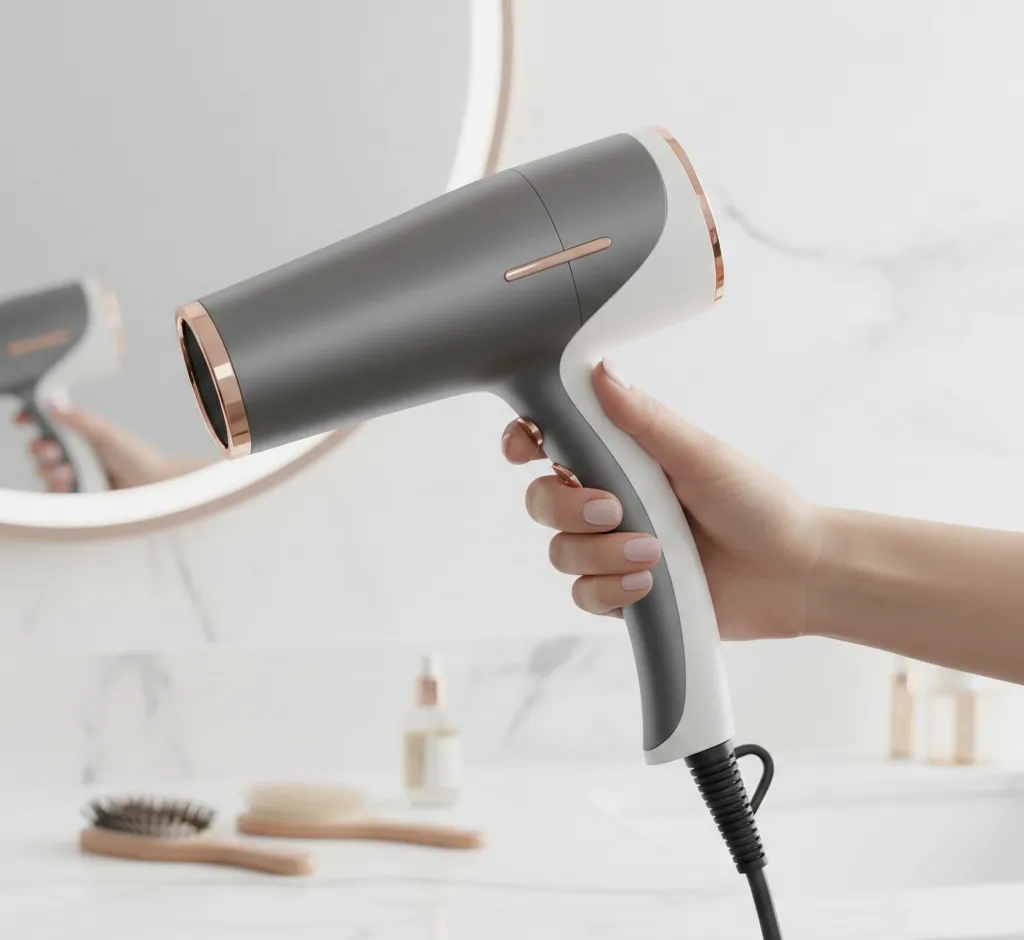
Spending 10–20 minutes holding a hair dryer above shoulder level can quickly turn into sore wrists, tight shoulders, and an uncomfortable styling routine. An ergonomic handle design is one of the most overlooked but important features when choosing a hair dryer, because it directly affects comfort, control, and even your long-term joint health. Instead of focusing only on wattage or brand, understanding how handle shape, weight balance, and button placement work together can help you pick a dryer that feels natural in your hand and makes styling easier every day.
Why Ergonomic Handles Matter
An ergonomic handle is designed to support the natural posture of your hand, wrist, and forearm, reducing unnecessary tension and fatigue. When a dryer forces your wrist into an awkward angle, or feels heavy and unbalanced, your muscles work harder to keep it steady, especially during longer blowouts. Over time, this repeated strain can contribute to discomfort and even overuse issues for home users and professionals alike.
By contrast, a well-designed handle encourages a neutral wrist position and distributes the dryer’s weight more evenly, so you can focus on styling rather than simply holding the tool. This becomes especially important for people with long or thick hair, professionals who style multiple clients per day, or anyone with existing wrist, elbow, or shoulder sensitivities.
Key Elements of Ergonomic Handle Design
Not all handles labeled as ergonomic truly feel comfortable in practice, so it helps to know what to look for. The following design details can dramatically change how a hair dryer feels and performs in your hand.
Handle Shape and Contour
The shape of the handle influences how naturally your fingers wrap around it and how relaxed your grip can be. A good ergonomic handle usually has a gentle curve that follows the shape of the hand, allowing the fingers to rest without excessive squeezing. If the handle is too straight, too wide, or too flat, you may feel pressure points in your palm or struggle to maintain a secure grip, particularly when your hand gets warm or slightly damp.
Look for smooth contours without sharp edges or abrupt thickness changes, so you can easily adjust your grip as you move around your head. Some dryers also include subtle textures or soft-touch finishes that enhance grip without feeling sticky, which can help maintain control at different angles.
Diameter and Grip Size
Grip diameter is crucial because hands come in different sizes. A handle that is too thick forces smaller hands to stretch and strain, while an overly thin handle can make larger hands feel cramped and unstable. Ideally, your fingers should wrap around the handle so that your fingertips naturally overlap or almost meet without your palm feeling overextended.
When testing or evaluating a dryer, imagine holding it for at least 10 minutes: if your thumb or fingers feel overly tense within a few seconds, the grip may not be suitable for your hand size. Adjustable or slightly tapered handles can offer more flexibility, giving different hand sizes more comfortable positions along the length of the handle.
Weight and Balance
Even a comfortably shaped handle will feel tiring if the dryer is too heavy or poorly balanced. Many high-performance models are designed to be relatively lightweight while still providing strong airflow, which makes them easier to maneuver over your head and around the back sections of your hair. A lighter dryer reduces the effort needed to hold it at shoulder or head level, particularly for extended styling sessions.
Balance refers to how weight is distributed between the handle and the body of the dryer. If the motor and components sit heavily in the barrel while the handle is very light, the dryer can feel top-heavy and harder to control. A balanced dryer feels stable when held near the center of the handle and does not try to tip forward or backward, allowing a more relaxed wrist position.
Switch and Button Placement
Buttons that are placed directly under your fingers may sound convenient but can cause accidental changes in heat or speed during use. An ergonomic layout usually positions controls where they are easy to reach with a thumb or finger shift, yet not so exposed that brushing against them turns the dryer off or switches modes unexpectedly. This design reduces frustration and keeps your hand in a more natural, steady position.
Pay attention to how much force is required to press the buttons. Controls that are too stiff can require extra grip strength and movement, while very loose switches may be bumped unintentionally. Logical placement of temperature, airflow, and cool-shot controls also helps you make quick adjustments without twisting your wrist into awkward angles.
Cord Length and Flexibility
Cord length might not seem like part of handle ergonomics, but it significantly affects how freely you can move the dryer around your head. A short or stiff cord forces you to twist your wrist and arm more to reach certain sections, which increases fatigue over time. A longer, flexible cord with a swivel at the base of the handle lets you move smoothly without the cable pulling or tangling.
For home use, a cord that comfortably reaches from your outlet to your mirror without stretching is usually enough. For salon or professional use, a longer and more durable cord is especially important, since stylists often move around clients and need consistent freedom of motion.
Types of Ergonomic Handle Configurations
Modern hair dryers come in several handle configurations, each with its own ergonomic advantages. Knowing the differences can help you choose the style that best suits your hand position and styling habits.
Traditional Pistol-Grip Handles
The classic pistol-grip design features a barrel with a perpendicular handle, similar to a small power tool. This configuration is familiar and widely used, and many people find it intuitive to hold. When designed well, with a comfortable angle and balanced weight, it can offer good control and wrist alignment for most daily styling tasks.
However, poorly designed pistol-grip dryers can force the wrist into a bent or twisted position, especially when targeting the top or back of the head. If you prefer this style, look for a model where the handle angle allows your forearm and the dryer barrel to form a smooth line when aimed at your hair, instead of requiring your wrist to bend sharply.
Handle-less and Barrel-Grip Designs
Some newer hair dryers remove the traditional handle altogether and are designed to be held directly around a central body or barrel. This design can allow a more flexible range of grips, letting you hold the dryer closer to the center of mass and reduce leverage on your wrist. For some users, especially professionals, this provides greater control when working at different heights and angles.
When considering a handle-less design, check whether the body has comfortable grip zones, heat protection, and intuitive control placement. Without a proper gripping surface and insulation, the dryer might feel awkward or warm to the touch during longer sessions, which undermines the ergonomic benefit.
Rotating or Adjustable Handles
Some dryers feature rotating or adjustable handle sections that can pivot relative to the barrel. This flexibility allows the same dryer to be used in different orientations, making it easier to maintain a neutral wrist position whether you are drying your own hair or working on someone else. For left-handed users, an adjustable handle can be particularly useful if standard configurations feel unnatural.
When evaluating adjustable designs, consider whether the rotation mechanism feels sturdy and locks securely into place. A handle that moves unintentionally or feels loose can reduce control and become distracting, especially when you are trying to focus on precise styling around the face and hairline.
Comfort Features Beyond the Handle
Although this article focuses on handle ergonomics, other design elements also affect how comfortable a hair dryer feels to use. Taken together, these features can enhance the overall ergonomics and make your styling routine smoother and more enjoyable.
Noise Level and Vibration
Noise and vibration can indirectly influence comfort and fatigue. Very loud dryers may cause you to tense your shoulders and neck unconsciously, while excessive vibration can make it harder to hold the dryer steady. Quieter models with smoother motors tend to feel more refined, helping you stay relaxed during longer drying sessions.
For people who are sensitive to sound or who dry their hair early in the morning or late at night, reduced noise can also make the experience less stressful. This small ergonomic advantage can greatly improve how often and how happily you use your dryer.
Attachments and Their Weight
Attachments such as diffusers and concentrator nozzles add weight and change the balance of the dryer. If they are heavy or poorly fitted, they can make the dryer feel front-heavy and harder to control. Lightweight, well-designed attachments allow you to direct airflow precisely without significantly increasing strain on your wrist.
Consider how easily attachments clip on and off, and whether they stay securely in place while you move the dryer around your head. A secure yet simple mechanism avoids the need for awkward, forceful movements when switching between different styling tasks.
Surface Materials and Heat Management
The materials used on the handle and body affect both grip and comfort. Soft-touch finishes, gentle texturing, and heat-resistant coatings can prevent slipping and protect your hand from warmth conducted through the dryer casing. Handles that stay cool even during high-heat use allow you to maintain a steady hold without discomfort.
Some dryers are designed with venting and airflow paths that minimize heat buildup around the handle, which is particularly important during long or high-heat sessions. This type of thoughtful design contributes significantly to overall ergonomics, even though it is not always obvious at first glance.
How to Test Ergonomics Before Buying
If possible, it is best to physically handle or simulate handling a dryer before committing to a purchase. Even when shopping online, you can use a few practical strategies to assess whether a model is likely to suit your ergonomic needs.
Simulate Real-Life Use
When you hold a dryer in a store, do more than just lifting it for a second. Raise it to the height where you usually dry your hair, move it around as if you are drying the top, sides, and back of your head, and gently rotate your wrist to see how it feels. Notice any moments of strain or awkward angles that might become more noticeable over time.
Also, pay attention to how easily you can reach the buttons while moving the dryer. If you need to change your grip significantly or twist your wrist to switch heat or speed settings, you may find it less comfortable in everyday use.
Use Product Specs and Reviews
When you cannot test a dryer in person, product specifications and user reviews become more important. Look for information about weight, handle design, and cord length, and note whether reviewers mention comfort, balance, or ease of use over longer periods. Comments about fatigued arms, awkward button placement, or excellent balance can be especially revealing.
Pay particular attention to reviews from people who share similar needs: for example, individuals with long hair, curls, or professional stylists working all day. Their experiences can highlight ergonomic strengths and weaknesses that might not be obvious from technical specs alone.
Matching Ergonomics to Your Hair and Routine
The best ergonomic handle for you also depends on your hair type, styling habits, and the environment in which you use the dryer. Considering these factors will help you narrow down your choices more effectively.
Hair Length, Density, and Texture
People with long, thick, or very curly hair often spend more time blow-drying, which makes ergonomic design even more important. A lightweight, well-balanced dryer with a comfortable handle can significantly reduce fatigue during extended sessions and give better control when using diffusers or brushes.
If you have short or fine hair and typically dry it quickly, you may not need the lightest or most advanced ergonomic design, but you will still benefit from a handle that fits your hand comfortably and offers intuitive control placement. A comfortable dryer encourages better technique, which can improve your overall results.
Home vs. Professional Use
Professional stylists and barbers use hair dryers for many hours a day, often at varying angles and heights. For them, ergonomic handles and balanced designs are not just nice-to-have features, but essential tools for protecting joint health and maintaining performance over time. A dryer built with professional ergonomics in mind usually emphasizes low weight, balanced motors, and user-friendly handles.
Home users may not demand the same level of durability or professional power, but they can still benefit from ergonomic features originally developed for salon environments. Choosing such a dryer can make daily styling more enjoyable and minimize discomfort after repeated use, especially for people who style hair for themselves and family members.
Practical Checklist Before You Decide
To make your decision easier, it helps to summarize the most important ergonomic criteria into a simple checklist. You can use this list as you compare models online or in-store.
- Comfortable grip: The handle fits your hand size, with a shape that allows relaxed fingers and a neutral wrist position.
- Balanced weight: The dryer does not feel top-heavy or unstable when held at typical drying angles.
- Reasonable total weight: Light enough that your arm and shoulder do not quickly tire during styling.
- Well-placed controls: You can change heat and speed without dramatically shifting your grip or accidentally hitting switches.
- Adequate cord length and swivel: The cord allows free movement around your head or a client without pulling.
- Comfortable noise and vibration: Sound level and motor vibration are low enough to avoid tension during prolonged use.
- Heat-safe surfaces: The handle and main grip areas stay comfortable to touch even at high settings.
- Suitable attachments: Nozzles and diffusers attach securely without making the dryer awkwardly front-heavy.
Final Thoughts on Ergonomic Hair Dryer Handles
Choosing a hair dryer with an ergonomic handle design is an investment in both comfort and performance. A well-designed handle reduces wrist and shoulder strain, improves control, and helps you maintain consistent technique, leading to better styling results with less effort. It transforms a basic routine into a more pleasant part of your day rather than a tiring chore.
When comparing dryers, consider the handle as carefully as you consider power, technology, and price. If the dryer fits naturally in your hand, feels balanced, and supports your movements, you are more likely to use it correctly, protect your body, and enjoy healthier, better-looking hair over the long term.