How to Choose a Hair Dryer with Digital Temperature Control: A Complete Guide
Learn how to choose the best hair dryer with digital temperature control. Discover key features, benefits for different hair types, safety tips, and what to look for to protect your hair from heat damage while achieving salon-quality results at home.
Hair dryers with digital temperature control have quickly moved from salon-exclusive tools to everyday essentials at home. They promise faster styling, reduced heat damage, and a more personalized experience for every hair type. However, with so many models on the market, it can be difficult to know which features actually matter and which are just marketing.
This guide explains what digital temperature control really is, why it is better than traditional dryers, and which technical and practical features you should focus on before buying. By the end, you will know exactly how to choose a hair dryer that protects your hair while helping you achieve smooth, shiny, long-lasting styles.
What Is Digital Temperature Control in Hair Dryers?
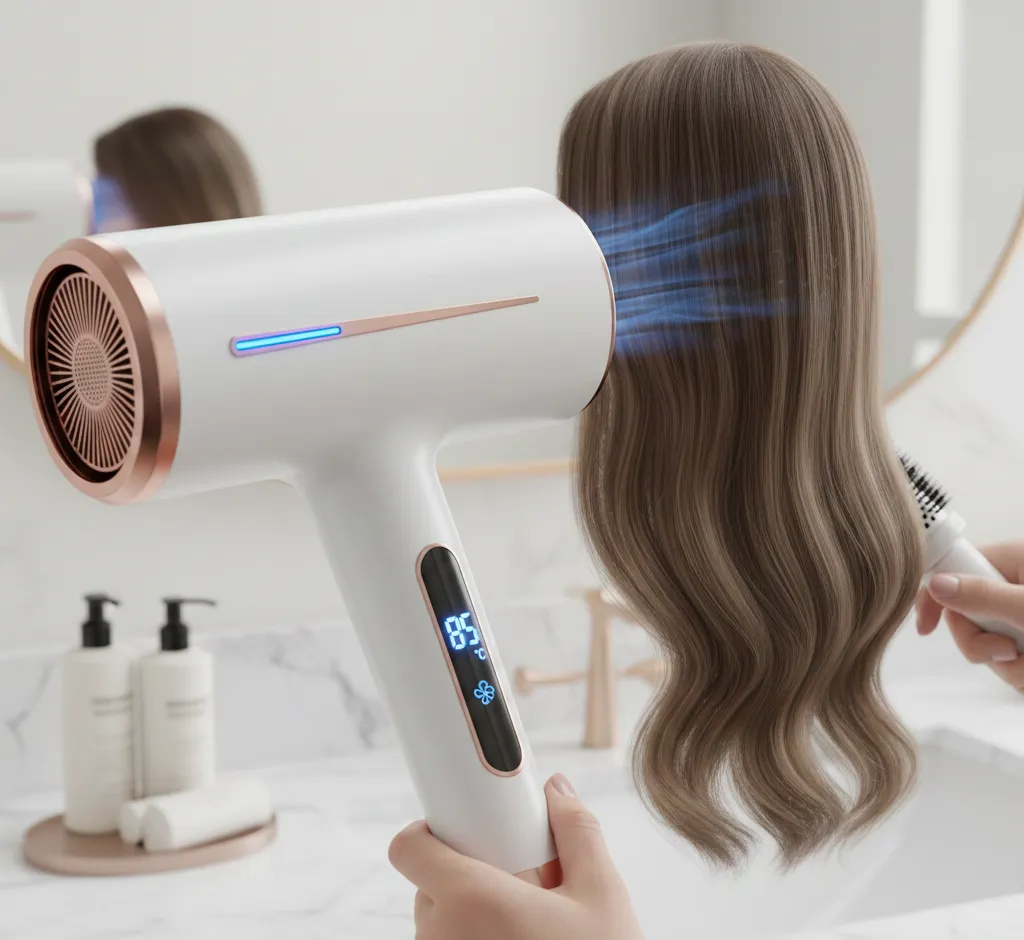
Digital temperature control refers to a system where the hair dryer constantly measures and adjusts the airflow temperature using sensors and a digital processor. Instead of relying on fixed, approximate heat settings (like low, medium, high), it can maintain a stable, precise temperature throughout your drying session.
How it works
- Heat sensors (often thermistors) measure how hot the air is as it leaves the dryer.
- Microprocessors read this data hundreds or even thousands of times per second.
- The dryer automatically adjusts power to the heating element to keep the temperature consistent.
In many models, the exact temperature or temperature range is shown on a digital display, allowing you to choose the most suitable level for your hair type and styling needs.
Digital vs. traditional hair dryers
- Traditional dryers use simple switches to control heat and airflow. The actual temperature can fluctuate widely depending on distance from the hair, airflow, voltage, and usage time.
- Digital control dryers keep the temperature within a much narrower range, even as conditions change, which helps prevent hot spots and overheating.
For anyone concerned about heat damage, color fading, or frizz, this consistency is a major advantage.
Benefits of Hair Dryers with Digital Temperature Control
Digital temperature control is more than a gimmick. It offers concrete, measurable benefits for hair health and everyday usability.
1. Better protection against heat damage
Excessive heat is one of the main causes of dryness, breakage, and loss of shine. When a dryer overheats or fluctuates, parts of your hair are exposed to temperatures far above what they can safely handle. With digital control:
- The temperature is capped and regulated, greatly reducing the risk of scorching or excessive drying.
- You can consciously choose lower, safer settings for fine, damaged, or chemically treated hair.
- The cuticle remains smoother, which helps retain moisture and color pigments.
Over time, this can translate into stronger strands and fewer split ends, especially if you style your hair frequently.
2. More consistent styling results
Stable temperature means more predictable styling. Your curls hold better, your blowouts look smoother, and your routine becomes quicker because you are not constantly compensating for uneven heat.
- Uniform drying reduces the need for repeated passes over the same section.
- Less overheating means less frizz and a smoother cuticle.
- The same settings will produce similar results every time, which is ideal if you are trying to perfect a certain style.
3. Tailored settings for every hair type
Digital temperature control allows more nuanced adjustments than just low–medium–high. This personalization is especially useful for mixed hair textures or households where several people share one dryer.
- Fine or thinning hair: Lower, controlled temperatures reduce breakage and roughness.
- Thick or coarse hair: Higher, stable heat speeds up drying without burning the outer layers.
- Curly or coily hair: Moderate heat with a diffuser keeps curl patterns defined and reduces frizz.
- Color-treated hair: Lower heat helps color last longer and stay vibrant.
4. Improved energy and time efficiency
A dryer that maintains optimal temperature and airflow tends to work more efficiently. You can often dry your hair faster at a moderate setting than with an inconsistent high-heat dryer.
- Less need to switch repeatedly between settings.
- High-performance motors (especially digital or brushless ones) often pair with digital temperature systems, adding extra power without additional bulk.
- You spend less time under heat, which further protects your hair.
Key Features to Look For
When buying a hair dryer with digital temperature control, do not rely on the term "digital" alone. Pay attention to these specific features to get the best value and performance.
1. Temperature range and precision
The whole point of digital control is accurate heat management. Look for models that clearly specify:
- Temperature range (for example, 50–110 °C or 120–230 °F).
- Number of temperature levels (e.g., 3–6 steps, or fully adjustable in small increments).
- Whether the dryer monitors temperature continuously (some brands state how many times per second it measures the heat).
If you have fragile or color-treated hair, prioritize dryers with lower minimum settings and clearly labeled "gentle" programs.
2. Digital display and controls
A clear interface makes a big difference in daily use. Consider:
- Display type: LED or LCD that shows the temperature, speed, or mode.
- Button layout: Intuitive placement so you can switch settings with one hand while holding a brush.
- Lock or memory function: Some dryers remember your last used settings or allow you to lock them during use.
For people who style hair in low-light bathrooms or early mornings, a backlit display can be particularly helpful.
3. Motor type and power
Drying performance depends heavily on the motor. Digital temperature control is even more effective when paired with a high-quality motor.
- AC motors: Powerful and durable, commonly found in professional or salon-grade dryers.
- DC motors: Lighter and quieter, often used in home dryers, but may be less durable at high use.
- Brushless or digital motors: Advanced technology offering strong airflow, long lifespan, and lower noise.
Power is usually indicated in watts (e.g., 1800–2200 W). More power generally means faster drying, but good airflow design and nozzle shape also matter. For most home users, 1800–2000 W with efficient design and digital temperature control is ideal.
4. Speed and airflow settings
Separate controls for heat and airflow are crucial. This flexibility allows you to pair lower temperatures with stronger airflow or vice versa.
- At least two or three speed levels (low, medium, high).
- A cool shot button to set styles and add shine.
- Special modes such as gentle-dry for sensitive scalps or scalp-cooling functions.
When combined with digital temperature control, these options help fine-tune your routine for minimal damage and maximum style.
5. Technology for smoothing and shine
Many modern dryers add extra technologies to support smoother, glossier hair. The most common ones include:
- Ionic technology: Emits negative ions that help reduce static, minimize frizz, and speed up moisture evaporation.
- Ceramic heating elements: Distribute heat more evenly, working well with digital temperature systems to keep heat gentle and stable.
- Tourmaline components: Often used alongside ceramic to boost ionic output and promote shiny, polished results.
These features are not mandatory, but when combined with digital temperature control, they can significantly improve the finish and feel of your blowouts.
Matching the Dryer to Your Hair Type
The best hair dryer is the one that fits your hair type, length, and styling habits. Below are practical suggestions that help narrow down your choices based on your hair.
Fine or thinning hair
- Choose a dryer with precise low-temperature options and clear digital control.
- Look for ionic technology but avoid extremely high airflow that could tangle delicate strands.
- Use lower heat with moderate speed to preserve volume without flattening the hair.
Thick, coarse, or long hair
- Prioritize higher wattage (around 2000 W) with strong, adjustable airflow.
- Digital temperature control ensures intense heat stays safe and consistent, preventing scorched ends.
- Use a concentrator nozzle for smooth blowouts or a wide diffuser if you wear your hair naturally wavy or curly.
Curly and coily hair
- Look for dryers that include a diffuser specifically designed for curls.
- Use medium, digitally controlled heat with low to medium airflow to maintain curl definition.
- Ionic and ceramic technologies can help keep curls smooth while preventing frizz.
Color-treated or chemically processed hair
- Choose models that offer low and ultra-gentle temperature settings, clearly shown on the digital display.
- Limit exposure to high heat, even with digital control—use moderate settings and higher airflow instead.
- Look for features that emphasize damage prevention, such as protective modes or specialized coatings.
Practical Considerations Before Buying
Beyond pure technology, practical details will determine whether you actually enjoy using the dryer daily. Do not overlook ergonomics, noise, and ease of maintenance.
Weight and ergonomics
If you regularly spend 10–20 minutes drying or styling, a heavy dryer will quickly cause arm fatigue. Pay attention to:
- Total weight: Lighter models (especially with digital motors) are more comfortable for everyday use.
- Handle shape and balance: The dryer should feel stable and comfortable when held at different angles.
- Button placement so you do not accidentally change settings while styling.
Cord length and flexibility
Too short a cord can make styling frustrating. Ideally, choose a dryer with:
- A cord long enough to reach comfortably from your outlet to your mirror or styling area.
- Flexible, durable insulation that can withstand frequent bending.
- A hanging loop for easy storage and to avoid tangling.
Noise level
While all hair dryers produce some noise, advanced models with digital motors or well-designed airflow can be quieter than standard dryers.
- If you style hair early in the morning or around sleeping children, noise reduction is worth considering.
- Some brands include specific information about decibel (dB) levels; if so, compare these between models.
Accessories and attachments
Attachments dramatically influence your styling options. For best versatility, look for:
- Concentrator nozzle: Narrows airflow to increase precision for smooth blowouts and detailed styling.
- Diffuser: Distributes air gently for natural curls and waves without disturbing the curl pattern.
- Optional comb or brush attachments if you frequently straighten or stretch your hair while drying.
Make sure attachments fit securely and can rotate or adjust as needed during use.
Safety Features You Should Not Ignore
Hair dryers are powerful electrical devices, so safety is essential. Digital temperature control already reduces the risk of overheating, but there are other safety features worth checking.
Overheat protection
Even the best dryers can accumulate dust or experience airflow blockages. Overheat protection automatically shuts off the dryer if it gets too hot, preventing damage to the device and reducing fire risk.
- Look for mention of a thermal cut-off switch or automatic shut-off in the product description.
- Make sure air inlets and filters are easy to clean to maintain proper airflow.
Cool touch and insulation
Quality dryers are designed so that outer surfaces do not become dangerously hot during use.
- Check reviews or descriptions for a cool-touch housing or stay-cool tip.
- Well-insulated bodies are especially important if you style for long periods or share the dryer with teenagers or less experienced users.
Quality plug and voltage compatibility
If you travel or live in an area with different voltage standards, make sure your dryer can handle it.
- Some models offer dual voltage for international use.
- Others require a voltage converter, which may reduce performance or shorten lifespan.
Always follow the manufacturer’s instructions for safe use, and avoid using the dryer near water or with damaged cords or plugs.
Price vs. Value: How Much Should You Spend?
Hair dryers with digital temperature control are typically more expensive than basic models, but the investment can pay off through better hair health and a longer-lasting device.
Budget segment
- Offers basic digital controls with a limited number of temperature steps.
- May lack advanced motors or premium materials but can still provide safer heat than a fully analog dryer.
- Good choice for occasional use or as a secondary dryer.
Mid-range segment
- Balances price and performance with decent temperature precision, ionic technology, and multiple attachments.
- Suitable for most home users who style their hair several times a week.
- Often includes easier-to-read displays, ergonomic designs, and better noise control.
Premium and professional segment
- Features high-precision digital control, brushless motors, and advanced airflow design.
- Built for frequent or professional use with durable components and extended warranties.
- Ideal if you style your hair daily, have very demanding hair types, or want salon-level results at home.
When deciding how much to spend, consider how often you use a dryer and how important hair health and styling quality are in your routine. If you blow-dry almost every day, a mid-range or premium model with genuine digital temperature control is often the most cost-effective choice over time.
Care, Maintenance, and Longevity
Even the best hair dryer will underperform or overheat if it is not properly maintained. The good news is that maintenance is straightforward and can significantly extend the life of your device.
Regular filter cleaning
Hair, dust, and product residue can clog the air intake over time, forcing the motor to work harder and raising the temperature.
- Choose a dryer with a removable filter that can be easily cleaned.
- Clean the filter at least once a month if you use the dryer frequently.
- Follow the instructions for removing and reattaching the filter to avoid damage.
Safe storage
How you store your dryer affects its durability and safety.
- Allow the dryer to cool down completely before putting it away.
- Avoid wrapping the cord tightly around the handle, which can damage internal wiring.
- Use the hanging loop or a dedicated storage space where the dryer will not fall or be crushed.
Monitoring performance over time
If you notice unusual smells, fluctuating heat, or sudden shut-offs, do not ignore them.
- First, check and clean the filter and air intakes.
- If problems persist, refer to the warranty and manufacturer support.
- Never disassemble an electrical device yourself unless the brand specifically provides user-serviceable parts and instructions.
Step-by-Step: How to Use a Digital Temperature Control Hair Dryer Effectively
Owning the right dryer is only half the equation. Using it correctly maximizes results and minimizes damage.
- Pre-dry preparation: Gently towel-dry your hair to remove excess moisture without rubbing aggressively. Apply a heat protectant suitable for your hair type.
- Select the right temperature: Set the digital control to a lower or medium temperature first. You can adjust upward if needed, but avoid the highest setting unless your hair is very thick or resistant.
- Choose airflow speed: Use higher speed for rough drying when hair is very wet, then switch to medium or low speed as you style and shape.
- Use attachments: Attach a concentrator nozzle for straight styles or a diffuser for curls. Digital control ensures that the temperature remains consistent even when airflow is directed.
- Keep the dryer moving: Maintain some distance from the scalp and keep the dryer moving continuously to avoid overheating any one area.
- Finish with cool air: Use the cool shot function to seal the cuticle and set the style, adding extra shine and reducing frizz.
Conclusion: Making a Smart Choice
Choosing a hair dryer with digital temperature control is one of the most effective steps you can take to protect your hair while still enjoying fast, polished styling. By focusing on precise heat management, motor quality, suitable attachments, and practical comfort features, you can find a model that fits your hair type, habits, and budget.
Instead of relying on guesswork or basic low–medium–high switches, you gain accurate, stable control over the heat you apply to your hair every day. Over time, this precision contributes to healthier strands, fewer split ends, better color retention, and more consistent, salon-like results at home.
When you compare models, remember to check the temperature range, display clarity, motor type, weight, noise level, and safety features. With these factors in mind, your next hair dryer will not just be another styling tool—it will be a long-term investment in the health and beauty of your hair.