How to Choose Moisture-Wicking Bedding Materials for Cooler, Drier Sleep
Learn how to choose moisture-wicking bedding materials for cooler, drier sleep. Compare bamboo, TENCEL, linen, and cotton, understand weaves and thread counts, and find the best sheets, pillowcases, and duvets for hot or sweaty sleepers.
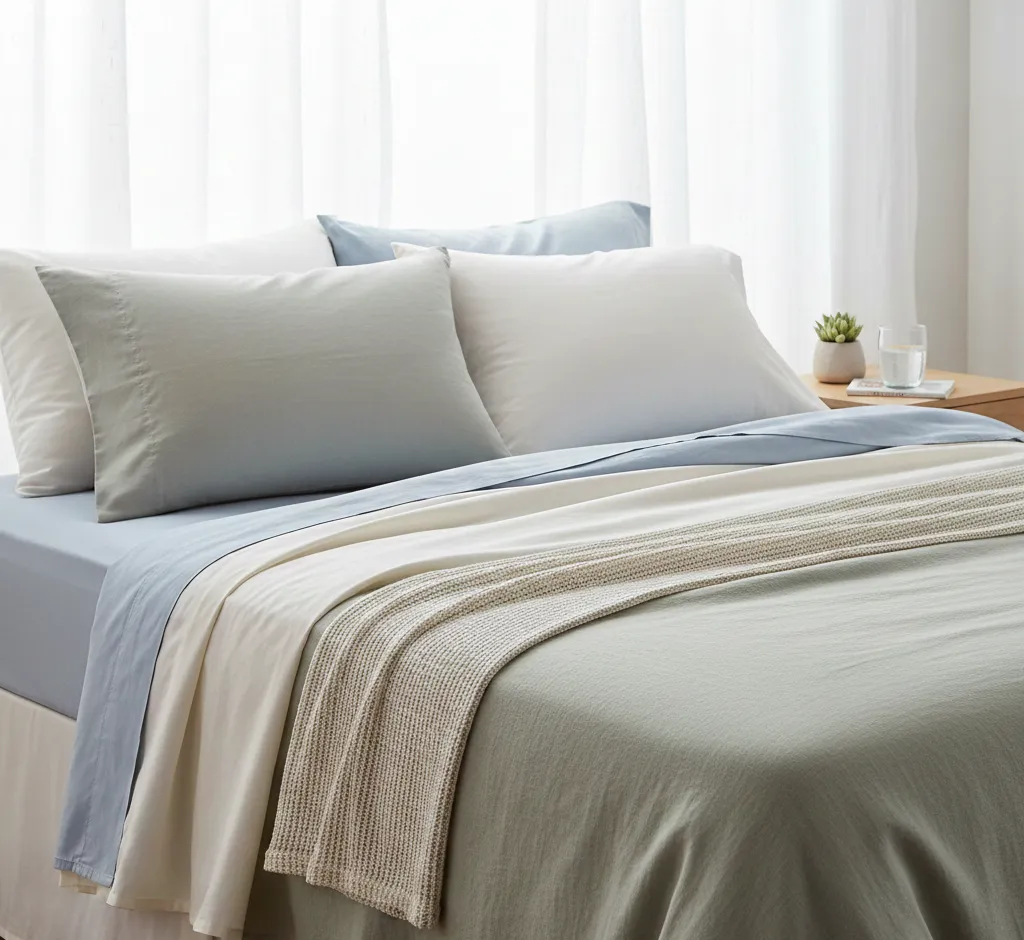
Waking up hot, sweaty, and tangled in damp sheets can ruin your night and your mood. If you tend to overheat, live in a warm or humid climate, or share a bed with a partner who runs hot, moisture-wicking bedding can make a huge difference. The right materials pull sweat away from your skin, help it evaporate quickly, and keep you feeling cooler and drier all night.
This guide explains what moisture-wicking actually means, which fabrics perform best, and how to evaluate weave, thread count, and certifications. By the end, you will know exactly how to choose moisture-wicking bedding that suits your body, your climate, and your budget.
What Does Moisture-Wicking Really Mean?
“Moisture-wicking” is often used as a buzzword, but it has a specific function. Moisture-wicking fabrics are designed to:
- Draw moisture away from your skin to the outer surface of the fabric.
- Spread moisture out across a larger area so it can evaporate faster.
- Dry quickly so your bedding does not stay damp and clammy.
This is different from simply being absorbent. A thick cotton towel, for example, absorbs a lot of water but also holds onto it, staying heavy and wet. True moisture-wicking bedding should move sweat away and allow it to evaporate instead of trapping it around your body.
Key performance factors
- Breathability: How easily air can flow through the fabric.
- Drying time: How quickly fabric releases moisture into the air.
- Thermal regulation: How well the fabric helps you maintain a comfortable temperature.
When evaluating bedding, look beyond marketing labels. Focus on fiber type, weave, weight, and user reviews that specifically mention how the bedding feels in hot or humid conditions.
Best Moisture-Wicking Bedding Materials
Some materials are naturally better than others at managing moisture and heat. Here are the top options to consider, along with their pros and cons.
Bamboo viscose and bamboo-derived fabrics
Bamboo bedding, typically made from bamboo viscose or bamboo lyocell, is popular for hot sleepers. It is known for its silky feel, breathability, and ability to manage humidity.
- Pros: Soft and smooth, highly breathable, good moisture management, often naturally cooling to the touch, resistant to odors.
- Cons: Quality varies widely; some products are blended with polyester, which can reduce breathability. Can be more delicate and may require gentle washing.
Look for bamboo bedding labeled as 100% bamboo viscose or bamboo lyocell, and check for certifications like OEKO-TEX to ensure the fabric is tested for harmful substances.
TENCEL™ Lyocell and other lyocell fibers
TENCEL™ Lyocell is a branded fiber made from wood pulp (often eucalyptus) using a closed-loop, eco-conscious process. It is naturally cool, smooth, and excellent at managing moisture.
- Pros: Exceptional moisture-wicking, cool hand feel, smooth drape, less prone to wrinkling than cotton, generally more sustainable than many synthetic options.
- Cons: Typically more expensive than standard cotton, can feel too drapey for those who prefer crisp sheets, may show oil stains more easily.
If you want bedding that feels slightly silky but not slippery, TENCEL Lyocell sheets and duvet covers are a strong choice for hot and sweaty sleepers.
Linen
Linen is made from flax fibers and is one of the oldest, most breathable fabrics. It excels in hot and humid climates and is prized for its airy, lived-in look.
- Pros: Extremely breathable, highly absorbent yet quick drying, durable, gets softer with use, naturally textured and stylish.
- Cons: Feels rougher at first than cotton or bamboo, can wrinkle easily, often more expensive upfront.
Linen does not feel slick or cold; instead, it allows maximum airflow and prevents that suffocating feeling some dense weaves cause. It is ideal for sleepers who run very hot or those living in tropical or Mediterranean climates.
Breathable cotton (especially percale)
Cotton remains a reliable choice, but not all cotton performs the same. For moisture management, focus on breathable weaves like percale rather than heavy sateen.
- Percale cotton: Crisp, matte finish with a one-over-one-under weave that allows more airflow.
- Lightweight organic cotton: Can provide a balance of breathability, softness, and sustainability.
Avoid very heavy or tightly woven cotton if you sleep hot. Look for mid-range thread counts (about 250–350), which often breathe better than ultra-high-count sheets that can trap heat and moisture.
Performance synthetics and blends
Some bedding uses performance fibers similar to those in athletic wear, such as polyester blends engineered to wick moisture quickly.
- Pros: Very fast drying, often durable and wrinkle-resistant, can be budget-friendly.
- Cons: Pure polyester is less breathable than natural fibers, may trap heat for some sleepers, can retain odors.
If you choose performance blends, pick those explicitly designed for cooling or moisture-wicking, and consider combinations with natural fibers (like cotton-poly blends) for better breathability.
Materials to Be Cautious About for Hot Sleepers
Not all cozy fabrics are suitable for people who sweat at night. Some materials are better reserved for cold climates or occasional use.
- Heavy flannel: Very warm, often traps heat and moisture, better for cold winters and naturally cold sleepers.
- Microfiber: Soft and inexpensive but made from tightly woven synthetic fibers that can reduce breathability and feel clammy when damp.
- High-thread-count sateen cotton: Can feel luxurious and smooth, but very dense weaves may trap heat and slow moisture evaporation.
If you struggle with night sweats, prioritize airy, breathable fabrics with mid-range thread counts over dense, heavy materials.
How Weave, Weight, and Thread Count Affect Moisture-Wicking
Beyond the raw material, the way a fabric is constructed plays a huge role in how cool and dry it feels.
Weave types
- Percale: A plain, one-over-one-under weave that feels crisp and breathable. Great for hot sleepers.
- Sateen: A four-over-one-under weave that creates a smooth, slightly shiny surface. It feels warmer and less airy.
- Twill or jersey: Twill has a diagonal pattern and may feel heavier, while jersey (knit like a T-shirt) is stretchy and can trap more warmth.
For maximum moisture-wicking and airflow, percale or similarly open weaves are usually the best choice.
Thread count and GSM
Thread count is often marketed as a quality indicator, but higher is not always better for hot sleepers. Sometimes, very high thread counts mean the fabric is dense and less breathable.
- Ideal cotton thread count: About 250–400 for a balance of softness and breathability.
- GSM (grams per square meter): For materials like linen and bamboo, a lower or mid-range GSM usually feels lighter and cooler.
When in doubt, prioritize feel and performance over impressive thread-count numbers. Many brands also mention whether a fabric is lightweight, midweight, or heavy, which is a helpful clue for hot sleepers.
Choosing Bedding for Different Sleep Needs
Your ideal moisture-wicking material depends on your body temperature, local climate, and personal preferences for feel and texture.
If you are a hot or sweaty sleeper
- Choose bamboo viscose, TENCEL Lyocell, or linen for maximum breathability and moisture management.
- Opt for percale weaves or open weaves instead of sateen.
- Look for lightweight or cooling labels rather than “ultra-soft” heavy fabrics.
If you live in a humid climate
- Prioritize fabrics that dry quickly, such as TENCEL Lyocell, bamboo, and linen.
- Avoid thick, heavy cotton that may stay damp.
- Make sure your mattress protector and mattress also allow airflow and do not trap moisture.
If your partner runs at a different temperature
- Use separate blankets or duvets with different warmth levels on each side.
- Choose moisture-wicking sheets for both of you but adjust the top layers individually.
- Consider a dual-zone mattress topper or cooling mattress pad if available.
Beyond Sheets: Pillowcases, Duvets, and Protectors
Moisture-wicking bedding is not just about sheets. Other layers can trap or release heat and sweat as well.
Pillowcases and pillow covers
If you sweat around your head and neck, your pillowcase choice matters. Pairing moisture-wicking pillowcases with a breathable pillow core helps keep your head cooler.
- Choose bamboo, TENCEL, or cotton percale pillowcases for better airflow.
- Add a breathable pillow protector that is thin and moisture-wicking, not thick and plastic-feeling.
Duvet covers and inserts
The combination of duvet cover and fill can make or break your sleep comfort.
- Pick lightweight duvet inserts filled with breathable materials like down, down alternative, or certain plant-based fibers.
- Pair them with moisture-wicking covers in linen, bamboo, or cotton percale.
- Avoid heavy, dense comforters if you already sleep warm.
Mattress protectors and toppers
Many waterproof protectors use plastic membranes that trap heat. If you sweat heavily, this can create a hot, sticky environment.
- Look for breathable waterproof protectors designed for cooling, with thin, moisture-wicking surfaces.
- Consider a cooling mattress topper made from gel-infused foam, breathable latex, or specialized fibers if your mattress sleeps hot.
What to Look for on Labels and Product Pages
Shopping online can feel confusing when everything is labeled “cooling” or “moisture-wicking.” Use these checks to cut through the marketing noise.
Fiber content
- Prioritize 100% bamboo viscose, TENCEL Lyocell, linen, or cotton percale.
- Be cautious of vague terms like “bamboo-blend” or “microfiber” without clear percentages.
- For blends, make sure natural fibers still make up a significant portion of the fabric.
Certifications
- OEKO-TEX STANDARD 100: Tested for harmful substances, reassuring for sensitive skin.
- GOTS (Global Organic Textile Standard): For organic cotton and other organics.
- FSC or PEFC: For wood-based fibers like TENCEL Lyocell, indicating responsible sourcing.
While certifications do not directly measure cooling, they indicate quality and responsible production, which often correlates with better overall performance.
Customer reviews
Look for specific phrases in reviews such as:
- “Helped with night sweats”
- “Feels cool and crisp”
- “No longer wake up drenched”
- “Too warm for hot sleepers” (as a warning sign)
Real-world feedback is invaluable, especially if you share similar climate conditions or sleep issues with the reviewer.
Caring for Moisture-Wicking Bedding
Proper care helps your bedding maintain its moisture-wicking properties and feel comfortable over time.
Washing tips
- Wash in cool or warm water, following the care label. Very hot water can damage some fibers.
- Use a mild, liquid detergent and avoid heavy fabric softeners, which can coat fibers and reduce wicking.
- Wash bedding separately from heavy items like towels to reduce friction and wear.
Drying and storage
- Tumble dry on a low or medium setting, or line dry if possible.
- Remove promptly from the dryer to reduce wrinkles, especially for linen and cotton.
- Store bedding in a cool, dry place to prevent musty smells and mildew.
With the right care, quality moisture-wicking bedding can last for years while maintaining its performance.
Quick Checklist for Buying Moisture-Wicking Bedding
Use this short checklist when you are ready to buy:
- Choose material: Bamboo, TENCEL Lyocell, linen, or breathable cotton percale.
- Check weave and weight: Percale or open weave, lightweight or midweight.
- Confirm fiber content: Clear percentages, minimal vague “blends.”
- Look for certifications: OEKO-TEX, GOTS, or other reputable standards.
- Read reviews: Focus on feedback from hot or sweaty sleepers.
- Plan for care: Gentle washing, no heavy fabric softeners.
Final Thoughts
Moisture-wicking bedding can transform your sleep if you struggle with overheating or night sweats. Instead of focusing only on thread count or color, pay attention to fiber type, weave, weight, and real-world performance. Materials like bamboo viscose, TENCEL Lyocell, linen, and breathable cotton percale offer excellent moisture management and can keep you cooler and more comfortable.
By choosing the right materials and layering them wisely—from sheets and pillowcases to duvet covers and protectors—you can create a sleep environment that works with your body, not against it. The result is drier sheets, fewer wake-ups, and a more restful night’s sleep.