How to Choose the Best Steam Iron for Home Use: A Complete Buyer’s Guide
Learn how to choose the best steam iron for home use with this complete buyer’s guide. Compare types, wattage, steam output, soleplates, safety features, and maintenance tips to find the ideal iron for your needs.
Choosing the best steam iron for home use can feel surprisingly complicated. There are dozens of models, a lot of marketing jargon, and price tags that range from very cheap to premium. The right iron, however, can save you time, protect your clothes, and make ironing less of a chore.
This guide explains everything you need to know before you buy: from key features and types of steam irons to safety, maintenance, and budget tips. By the end, you will know exactly what to look for and what to avoid.
1. Understand the Main Types of Steam Irons
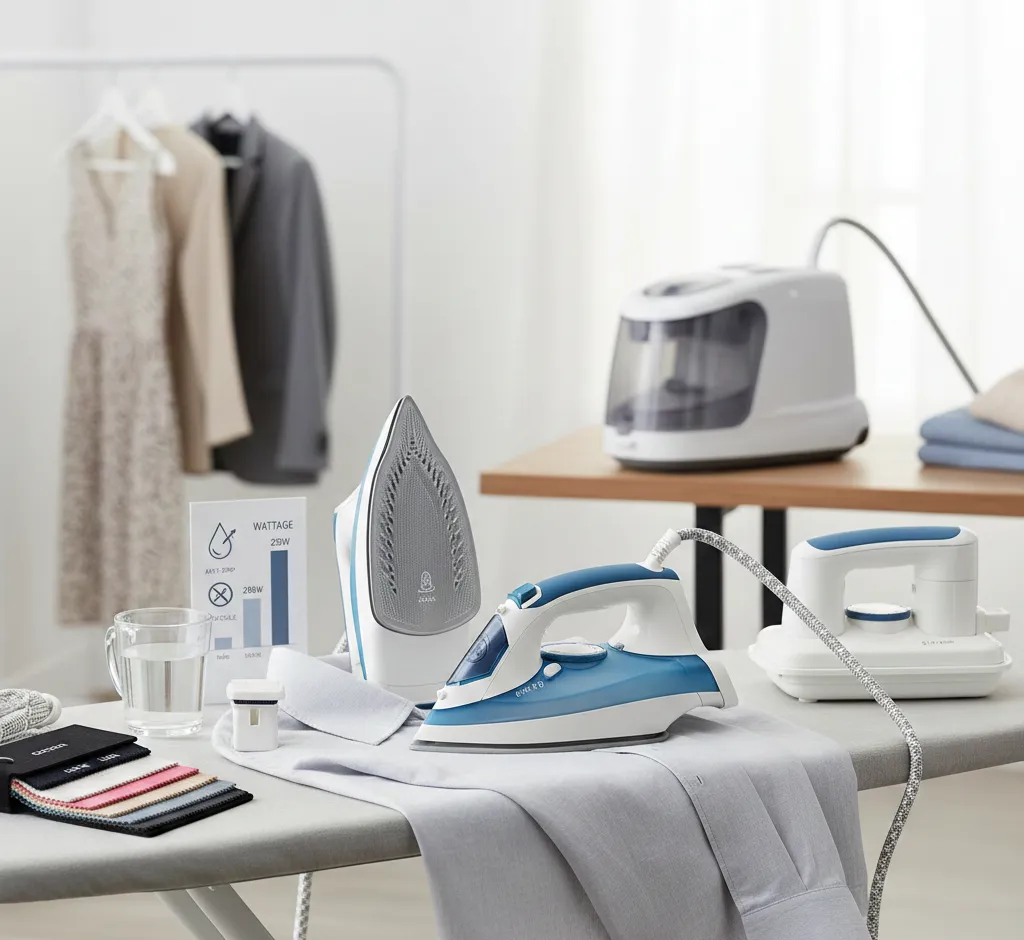
Before comparing features, you should decide which type of steam iron best fits your home and lifestyle. Each type has its own strengths and weaknesses.
1.1 Traditional steam irons
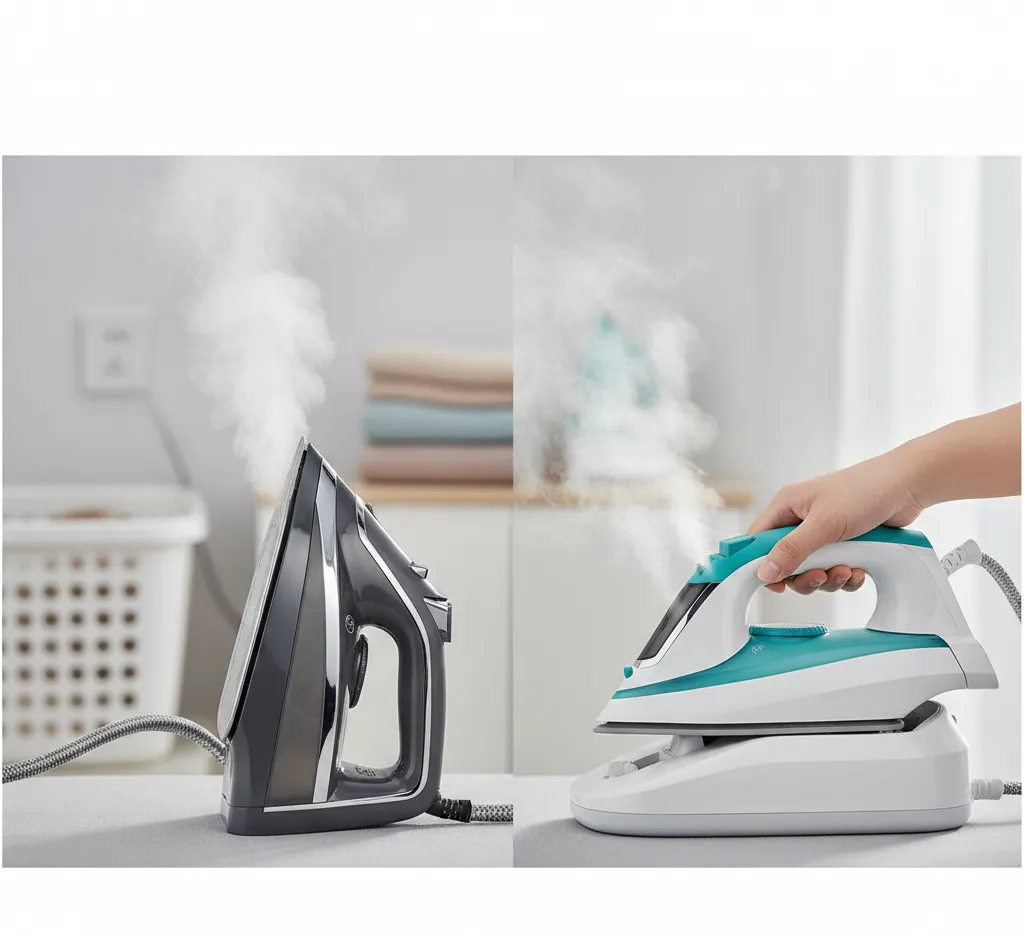
Traditional steam irons are the most common choice for home use. They have a built-in water tank and produce steam directly from the iron.
- Pros: Affordable, compact, easy to store, good enough for most households.
- Cons: Smaller water tank, may struggle with very thick fabrics or large ironing loads.
For most families who iron a few times per week, a traditional steam iron offers the best balance of price and performance.
1.2 Steam generator irons
Steam generator irons (also called steam stations) have a separate base unit with a large water tank. Steam is generated in the base and delivered to the iron via a hose.
- Pros: Very powerful, high continuous steam, great for large households, heavy fabrics, and frequent ironing.
- Cons: More expensive, bulkier, needs more storage space, sometimes longer heat-up time.
If you iron often or need professional-level results at home, a steam generator iron can dramatically speed up the process.
1.3 Cordless steam irons
Cordless irons sit on a charging base and detach for use without a cord.
- Pros: Excellent freedom of movement, no cord tangling, very convenient for quick touch-ups.
- Cons: Shorter usage time before needing to reheat, slightly less powerful in many models, you must return the iron to the base frequently.
Cordless models are great for small apartments and users who value convenience more than raw power.
1.4 Travel steam irons
Travel irons are compact, lightweight irons designed for occasional use and portability.
- Pros: Very small and light, easy to pack in a suitcase, often dual-voltage for international travel.
- Cons: Lower steam output, smaller soleplate, not ideal as your main home iron.
Use a travel iron as a backup or for vacations, but choose a full-size steam iron for everyday home use.
2. Key Features to Look For
Once you know which type suits your needs, compare models based on several important technical and practical features.
2.1 Wattage and heating performance
Wattage indicates how powerful the heating element is. Generally, higher wattage means faster heat-up and more stable temperature.
- Recommended range: 2,000–2,800 W for home steam irons.
- Benefits: Quick start-up (often under 1–2 minutes) and faster recovery when using bursts of steam.
If you iron often or in large batches, choose a higher-wattage model for consistent performance.
2.2 Steam output (continuous and burst)
Steam is what relaxes fabric fibers and removes wrinkles effectively. Two key values matter:
- Continuous steam (g/min): Steam produced continuously during ironing. Look for at least 30–50 g/min in regular irons and more in steam generators.
- Steam boost (g/min): A powerful burst used for deep wrinkles or thicker fabrics. Good home irons often offer 150–250 g/min or more.
If you mostly iron shirts, dresses, and everyday fabrics, moderate steam output is enough. For linen, heavy cotton, and thick curtains, prioritize higher steam performance.
2.3 Water tank capacity
Larger water tanks mean less frequent refilling, but also more weight.
- Standard capacity: Around 250–350 ml for traditional irons.
- Steam generators: 1–2 liters or more in the base unit.
Choose a capacity that matches your ironing habits. If you do long ironing sessions, a larger tank saves time.
2.4 Soleplate material and design
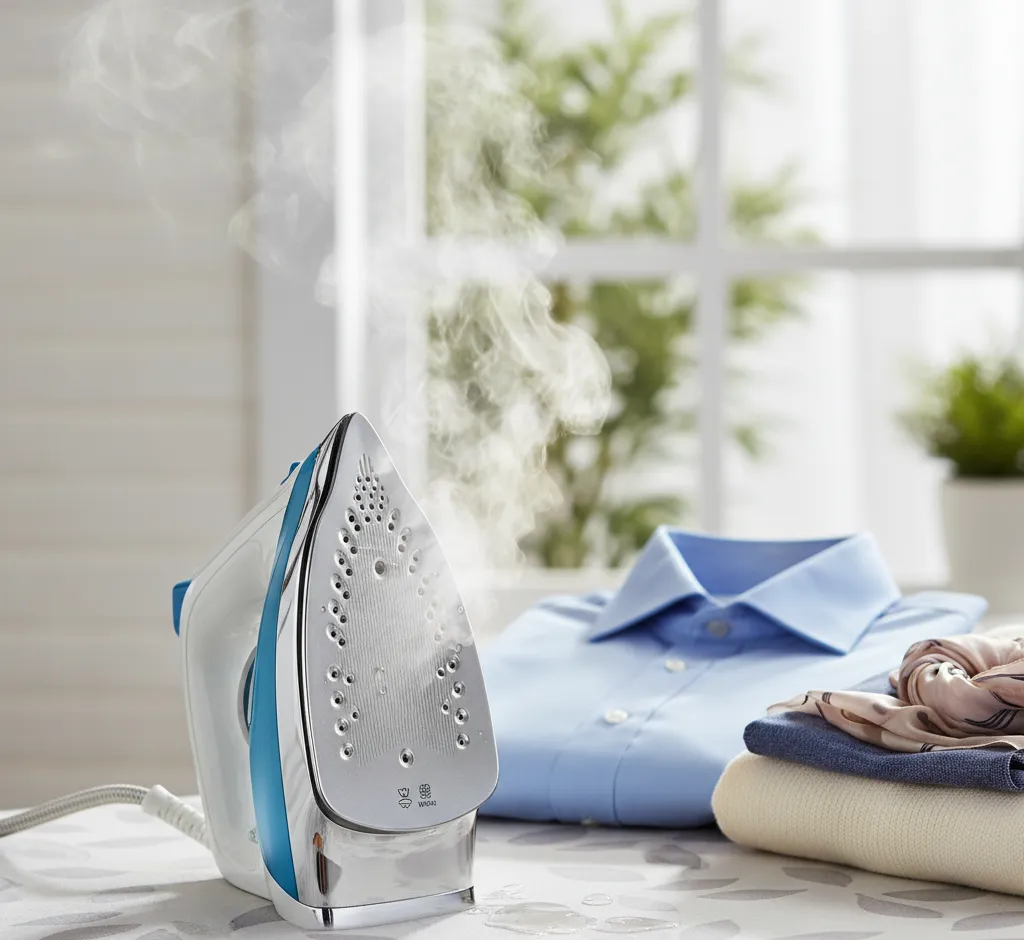
The soleplate is the flat bottom part that glides over your clothes. Its material and design strongly affect comfort and results.
Common soleplate materials
- Stainless steel: Durable, smooth, and resistant to scratches. Heats evenly and glides well on most fabrics.
- Ceramic: Very smooth, distributes heat evenly, and often glides effortlessly. However, it can be more fragile if dropped.
- Aluminum: Lightweight and fast-heating but more prone to scratches and may not glide as smoothly over time.
- Non-stick coatings: Designed to prevent fabric from sticking and burning. These can wear off over time if not cared for properly.
For home use, a quality stainless steel or ceramic soleplate is usually the safest choice.
Soleplate shape and steam holes
- Pointed tip: Helps reach tight areas like collars, around buttons, and pleats.
- Even steam hole distribution: Ensures steam spreads uniformly across the fabric.
- Precision tip with extra holes: Useful for detailed work on shirts or delicate garments.
If you iron a lot of shirts or complex garments, prioritize an iron with a nicely shaped, pointed tip and well-distributed steam holes.
2.5 Temperature and fabric settings
Different fabrics need different temperatures. A good steam iron should offer clear, easy-to-use controls.
- Manual dials or sliders: Traditional systems with fabric labels (e.g., silk, wool, cotton, linen).
- Digital controls: Buttons and displays for precise temperature adjustment and presets.
- One-temperature or smart technology: Some modern irons claim to handle all ironable fabrics without changing settings.
If you own a variety of delicate and heavy fabrics, choose a model with clear fabric presets or accurate digital controls for better protection.
2.6 Vertical steaming function
Vertical steam lets you remove wrinkles from hanging garments, curtains, and jackets without using an ironing board.
- Ideal for: Suits, delicate dresses, curtains, quick touch-ups.
- Check for: Strong steam boost and comfortable trigger placement.
If you often need to refresh clothes on hangers, make sure your iron supports efficient vertical steaming.
2.7 Anti-drip and anti-scale systems
Water quality and leakage can affect both your results and your iron’s lifespan.
- Anti-drip: Prevents water from leaking out at low temperatures, which helps avoid water stains on delicate fabrics.
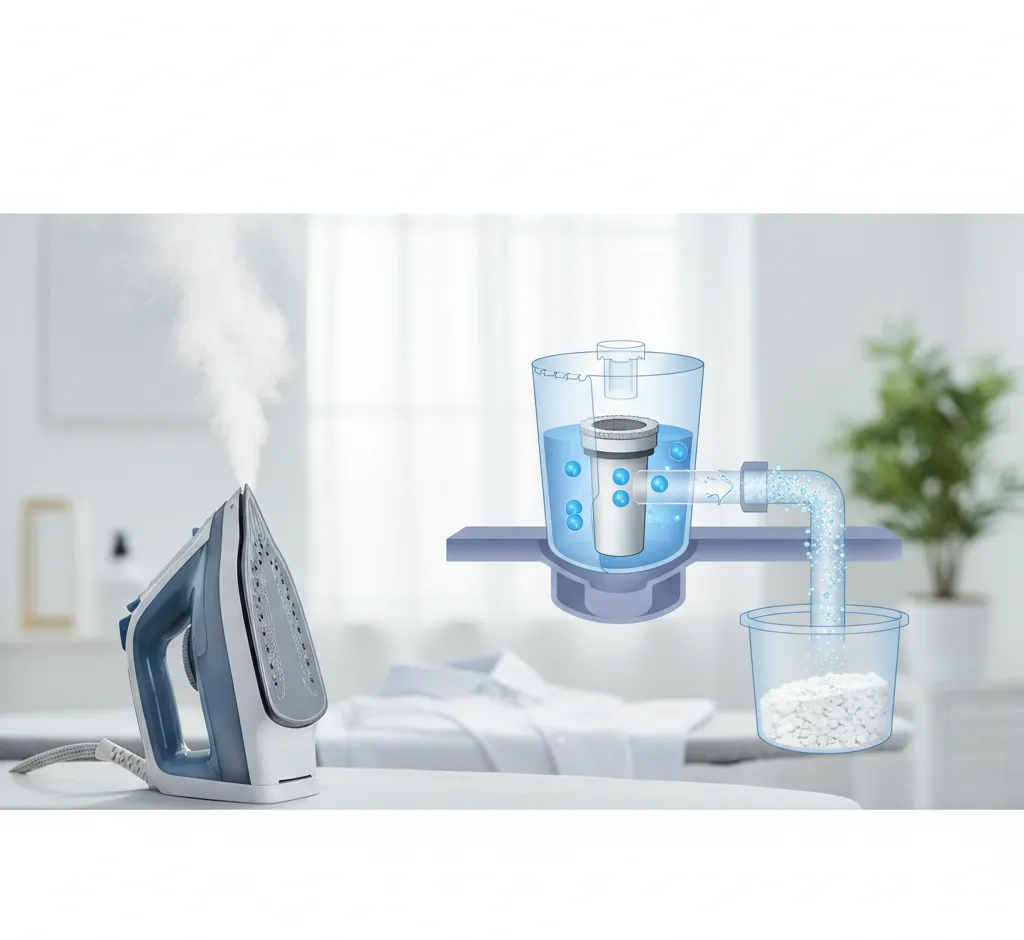
- Anti-scale or calc-clean: Reduces limescale build-up, especially important in hard-water areas. Some models have removable cartridges or self-clean functions.
If you live in a region with hard water, choose an iron with effective anti-scale features and follow the cleaning instructions regularly.
2.8 Cord length and flexibility
Nothing is more frustrating than a cord that is too short or always in the way.
- Length: Aim for at least 2–3 meters of cord for comfortable movement.
- Swivel joint: A 360-degree or flexible joint reduces tangling.
- Cord storage: Clips or wrapping areas make storage neater and safer.
If your power outlet is far from your ironing board, cord length becomes a critical factor.
2.9 Weight and ergonomics
Comfort matters, especially if you iron for long periods.
- Weight: Heavier irons press out wrinkles well but may cause arm fatigue. Lighter irons are easier to handle but may rely more on steam output.
- Handle design: Look for a comfortable, non-slip grip that fits your hand size.
- Button layout: Steam triggers and spray buttons should be easy to reach without straining.
If possible, hold the iron in your hand at a store to test its balance and comfort before you commit.
3. Safety Features You Should Not Ignore
Steam irons can reach high temperatures, so safety features are essential for every household, especially with children or pets around.
3.1 Auto shut-off function
Auto shut-off turns the iron off automatically after a period of inactivity.
- Horizontal position: Many irons switch off after 30 seconds if left face down.
- Vertical position: Often turns off after 5–10 minutes when left unused.
This feature prevents accidental burns, reduces fire risk, and saves energy. It is strongly recommended for home use.
3.2 Stable heel and anti-slip base
The back of the iron (the heel) should be stable when placed upright.
- Wide base: Reduces the chance of tipping over.
- Anti-slip elements: Rubberized or textured surfaces for additional stability.
This is especially important if you iron on a busy surface or in a home with children.
3.3 Heat-resistant materials
Look for irons with quality insulation and handles that stay cool during use. The outer body should not become dangerously hot.
Some models include a heat-resistant storage cover or pad so you can put the iron away safely even while it is still warm.
4. Matching the Iron to Your Lifestyle
The “best” steam iron for home use is not always the most expensive one. It is the one that suits your habits, wardrobe, and space. Consider how you actually use an iron in everyday life.
4.1 How often and how much do you iron?
- Occasional ironing (once a week or less): A mid-range, traditional steam iron with decent wattage and basic features is usually enough.
- Regular family ironing (several times a week): Choose a model with higher wattage, strong continuous steam, and a larger water tank.
- Heavy users (large families or home businesses): Consider a steam generator iron for faster, more efficient ironing.
4.2 What kinds of fabrics do you own?
- Mostly casual clothing (cotton, blends): Standard steam output and basic temperature settings will work well.
- Formal wear and delicate fabrics (silk, satin, wool): Prioritize precise temperature control, a smooth soleplate, and reliable anti-drip features.
- Heavy fabrics (linen, jeans, thick cotton, curtains): Look for higher steam output, strong steam boost, and good vertical steam capability.
4.3 Space and storage considerations
If you have limited storage space, a compact traditional iron is more practical than a large steam generator station. Check the dimensions and whether the cord can be neatly wrapped or clipped.
On the other hand, if you have a dedicated laundry area, a steam generator iron with a parking base may be a comfortable long-term solution.
4.4 Budget vs. long-term value
Steam irons are available at many price points. Cheaper models can be attractive, but they might lack durability, consistent steam, or advanced safety features.
- Entry level: Good for students, occasional use, or as a backup.
- Mid-range: Often offers the best value with strong performance and enough features for most households.
- Premium: Higher steam power, smart technologies, better materials, and longer warranties.
Think about how often you will use the iron and how long you want it to last. Spending a bit more on a reliable, efficient model can save you money and frustration over time.
5. Practical Tips for Comparing Models
When narrowing down your choices, use a simple checklist to compare models side by side.
5.1 Check user reviews and ratings
Real user experiences can reveal issues that are not visible in the specifications.
- Look for repeated comments about leaks, poor steam production, or failures over time.
- Pay attention to reviews about ease of use, weight, and comfort.
- Check how the manufacturer responds to negative feedback, as this reflects customer service quality.
5.2 Evaluate warranty and support
A solid warranty suggests that the brand trusts its own product.
- Typical warranty period: 1–2 years for most home steam irons.
- Longer warranties or extended coverage can indicate better build quality.
- Check how easy it is to access service centers or get replacement parts.
5.3 Consider energy efficiency
Powerful irons can consume a lot of energy. Some models offer eco modes that reduce energy usage while still producing sufficient steam for everyday fabrics.
If you iron often, an energy-saving mode may reduce your electricity usage over the long term.
5.4 Test controls and visibility
If you shop in person, check that you can clearly see the water level in the tank and understand the temperature controls at a glance.
- Water tanks should have a visible window or be semi-transparent.
- Indicators should clearly show when the iron is heating or ready for use.
- Fabric icons or labels must be easy to read.
6. Basic Care and Maintenance to Extend Lifespan
Even the best steam iron will not last long if you neglect maintenance. A few simple habits will keep your iron working efficiently and protect your clothes.
6.1 Use the right water
Always follow the manufacturer’s instructions regarding water type.
- Many modern irons are designed for tap water but may recommend mixing with distilled water in very hard-water areas.
- Avoid using scented additives, vinegar, or descaling chemicals inside the tank unless the manual allows it.
Using the correct water helps prevent limescale build-up and ensures consistent steam production.
6.2 Regular descaling and self-clean
Most steam irons include a self-clean function or anti-scale system.
- Use the self-clean feature as often as the manual suggests, especially if you notice reduced steam output.
- Empty the water tank after each use to minimize mineral deposits.
In steam generator irons, follow the recommended routine for flushing or replacing anti-scale cartridges.
6.3 Keeping the soleplate clean
A dirty or sticky soleplate can damage fabrics and reduce glide.
- Allow the iron to cool completely before cleaning.
- Use a soft cloth and mild cleaning method recommended by the manufacturer.
- Avoid abrasive sponges or harsh chemicals that scratch or damage coatings.
Regularly check the soleplate for residue from synthetic fabrics that may have melted slightly at too high a temperature.
6.4 Safe storage
Always turn the iron off, unplug it, and allow it to cool before storing. If possible, store it upright on a stable surface and avoid wrapping the cord too tightly.
Proper storage protects both the appliance and the cord, reducing the risk of damage and extending the life of the iron.
7. Common Mistakes to Avoid When Choosing a Steam Iron
To make sure you invest in the right model, avoid these frequent buying mistakes:
- Focusing only on price: The cheapest iron may end up costing more if you have to replace it frequently.
- Ignoring water hardness: Not considering anti-scale features in hard-water areas leads to faster wear and clogging.
- Overlooking weight and comfort: A powerful iron is useless if it feels uncomfortable or too heavy to handle.
- Buying unnecessary features: Fancy functions that you will never use can raise the price without adding real value.
- Skipping safety features: Lack of auto shut-off and poor stability can create avoidable risks at home.
8. Final Checklist Before You Buy
Use this quick checklist to choose the best steam iron for your home:
- Decide on the type: traditional steam iron, steam generator, cordless, or travel.
- Choose adequate power (around 2,000–2,800 W) for fast heating and stable temperature.
- Check steam output (continuous and boost) based on the fabrics you iron most.
- Pick a durable, smooth soleplate (stainless steel or ceramic) with a pointed tip.
- Look for clear temperature controls and, ideally, multiple fabric settings or smart technology.
- Make sure it includes key safety features such as auto shut-off and a stable, anti-slip base.
- Review anti-drip and anti-scale systems, especially if you live in a hard-water area.
- Confirm cord length, weight, and handle comfort match your ironing habits and space.
- Compare user reviews, warranty terms, and brand reputation.
By carefully matching these points to your daily routine, you can confidently select a steam iron that makes ironing faster, safer, and more effective for your home.