How to Choose the Right Chair for Your Standing Desk: A Complete Guide
Learn how to choose the best chair for your standing desk. Discover key features, ergonomic tips, and different chair types to create a comfortable, healthy workstation.
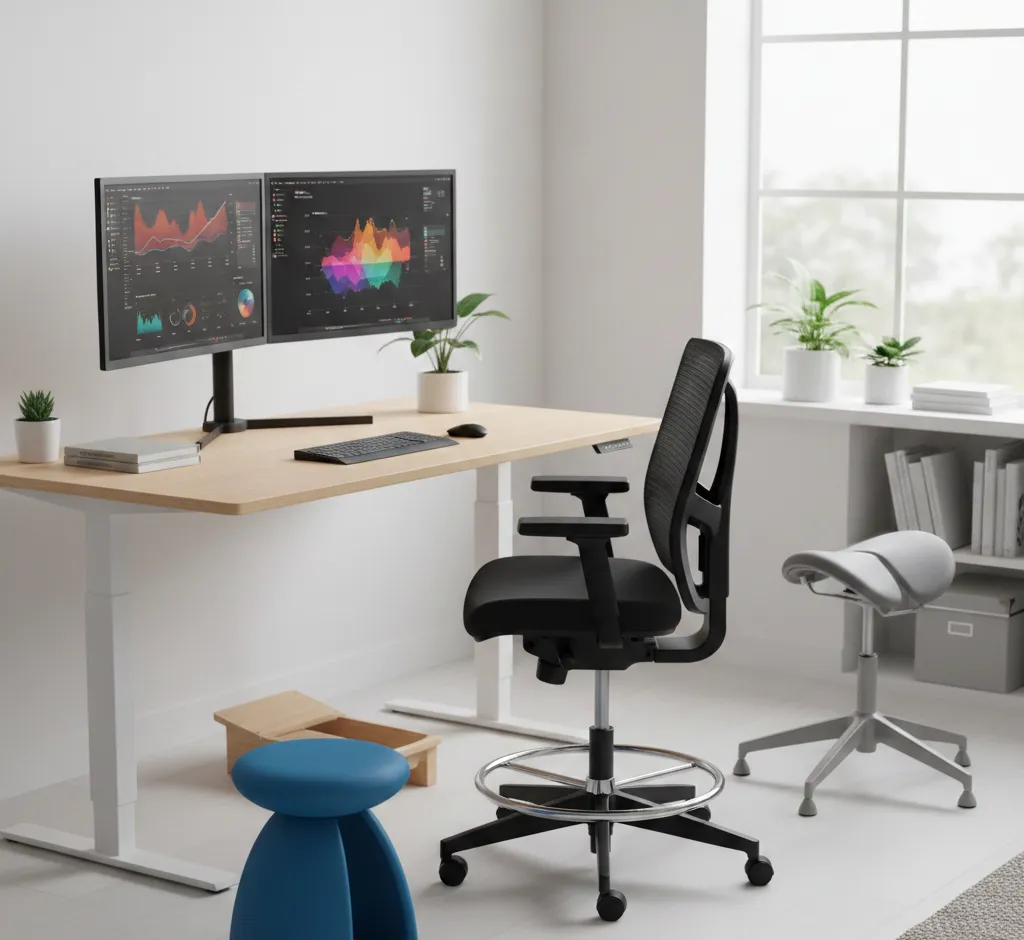
Standing desks are excellent for reducing the time spent sitting, improving posture, and boosting energy levels throughout the day. However, even with a standing desk, you still need a well-chosen chair or stool for those periods when you sit. The right chair for a standing desk is not the same as a traditional office chair. It must support more upright postures, frequent position changes, and a higher work surface.
This guide explains how to choose the best chair for your standing desk, the key features to look for, different types of seating options, and practical tips for setup and long-term comfort.
Why You Still Need a Chair for a Standing Desk
Many people imagine that a standing desk means standing all day. In reality, the healthiest approach is to alternate between sitting, standing, and moving. Most ergonomists recommend a ratio such as 1:1 or 2:1 of standing to sitting time across the day.
- Reduce fatigue: Prolonged standing can cause leg fatigue, lower back pain, and swollen feet. Having a proper chair lets you rest without losing productivity.
- Support posture changes: Alternating between different postures helps prevent stiffness and overloading any single muscle group.
- Improve focus: When your body is comfortable and supported, it is easier to concentrate on complex tasks.
- Stay flexible: A good chair for a standing desk allows half-sitting, leaning, and perching positions, which are more dynamic than standard sitting.
The goal is not to eliminate sitting but to make both sitting and standing healthier. Choosing the right chair is a major part of that strategy.
Key Differences Between Regular Office Chairs and Standing Desk Chairs
Standard office chairs are designed mainly for lower desk heights and long periods of static sitting. Chairs for standing desks need to handle higher seat heights and more active, transitional postures.
- Seat height range: Standing desk chairs usually extend higher, allowing you to perch or sit at elevated desk heights.
- Base stability: Because of the height, the base and frame must be especially stable to prevent tipping.
- Dynamic movement: Many standing desk stools and chairs allow gentle rocking, pivoting, or leaning to keep the body active.
- Foot support: Foot rings, bars, or wider bases give your legs a place to rest when the seat is higher off the ground.
- More compact design: Perching stools often have smaller footprints and can slide under or beside the desk easily.
Understanding these differences helps you evaluate whether a product is truly suitable for use with a standing desk, not just a standard chair marketed with new labels.
Types of Chairs for Standing Desks
Several categories of seating work well with standing desks, each with pros and cons. The best choice depends on your body type, work style, and health needs.
1. Active or Wobble Stools
Active stools are designed to encourage constant micro-movements. They usually have a rounded or flexible base that lets you tilt, swivel, and rock gently.
- Benefits: Promotes core engagement, improves balance, and prevents slouching by discouraging passive sitting.
- Best for: Short sitting periods, creative tasks, people who prefer movement to static postures.
- Considerations: Can be tiring for very long sessions; may require some adaptation time for balance and comfort.
2. Perching Stools and Leaning Chairs
Perching solutions keep the hips higher than the knees, placing your body in a position between sitting and standing. You partially bear your weight on the stool while still engaging leg muscles.
- Benefits: Reduces load on the lower back and feet while keeping the spine more upright than in traditional sitting.
- Best for: Frequent sit-stand transitions, standing desk users who want support without fully sitting.
- Considerations: Seat shape and padding are critical; some models offer limited adjustment.
3. Drafting Chairs (High Office Chairs)
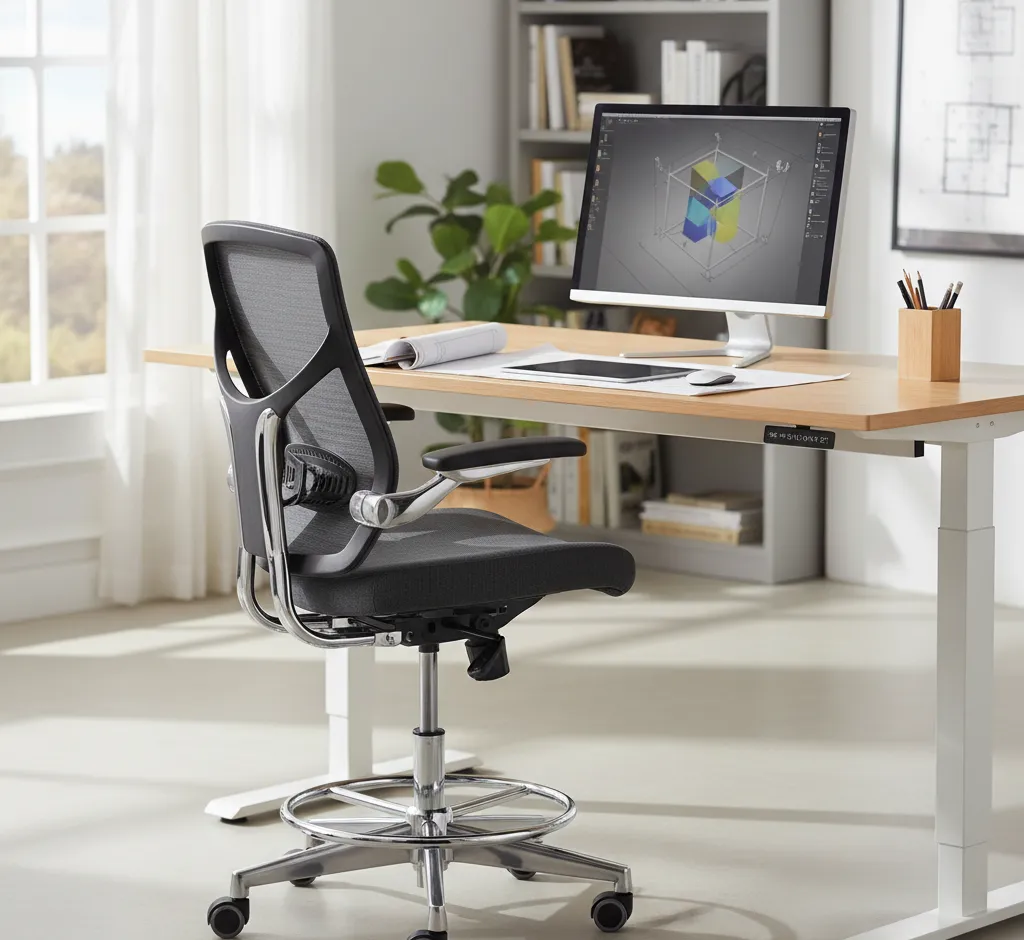
Drafting chairs look like traditional office chairs but with a taller gas lift and usually a foot ring. They are designed to match higher work surfaces like standing desks or drafting tables.
- Benefits: Familiar design with backrest, armrests, and multiple adjustments; good for longer seated work.
- Best for: Users who spend significant time sitting, or those transitioning gradually from a conventional setup.
- Considerations: Can encourage longer sitting periods; may not promote as much movement as active stools.
4. Saddle Chairs
Saddle chairs have a seat shaped like a horse saddle. They position the hips open and the spine in a more natural S-curve, often used in medical and salon environments.
- Benefits: Encourages neutral spinal alignment, opens the hips, and can reduce lower back strain.
- Best for: People with lower back issues, users who want a very upright posture at higher desk settings.
- Considerations: May require an adaptation period; seat shape may not suit everyone.
5. Kneeling Chairs (With Height Range)
Some kneeling chairs are compatible with higher desks and can be used in combination with standing desk setups. They shift some weight to the shins while keeping the hips forward.
- Benefits: Encourages a more open hip angle and can reduce slouching.
- Best for: Shorter focused tasks, people experimenting with alternative sitting styles.
- Considerations: Not ideal for all-day use; users with knee issues may find them uncomfortable.
Essential Features to Look For
When comparing chairs for your standing desk, focus on specific ergonomic features rather than just the brand or style. The following elements have the biggest impact on comfort and long-term health.
1. Correct Height and Adjustment Range
Height is the most critical factor. The chair must be able to reach a position that works with your standing desk at both sitting and perching levels.
- Choose a chair with a wide height adjustment range that matches your desk's maximum and minimum heights.
- When seated, your forearms should rest comfortably on the desk at roughly 90 degrees at the elbow.
- Your feet should be flat on the floor or supported by a foot ring or footrest to avoid pressure on the backs of the thighs.
If possible, check the product specifications for minimum and maximum seat height in centimeters or inches and compare them to your body height and desk height.
2. Stable and Safe Base
Because standing desk chairs are often higher off the ground, stability is non-negotiable.
- Look for a wide base or a five-point star base to reduce tipping risk.
- If the chair has a wobble or active base, ensure it is weighted and anti-slip for safe movement.
- Consider whether you need casters or fixed glides. Wheels are convenient but can feel unstable at higher heights.
Try to avoid very cheap options with narrow bases or poor build quality, as they may compromise safety over time.
3. Seat Comfort and Shape
The seat shape should match your preferred posture: traditional sitting, saddle-style, or perching. Comfort is not only about softness but also about support and pressure distribution.
- Choose medium-firm cushioning. Seats that are too soft can cause sinking and poor spinal alignment.
- Check the width and depth of the seat to ensure it fits your body. Your thighs should be supported without the seat edge pressing into the back of your knees.
- For perching stools, look for a slightly downward-sloping seat that supports the pelvis and reduces slipping.
Whenever possible, test the seat or choose brands with good return policies, as seat comfort is highly individual.
4. Back Support and Armrests
Not all standing desk chairs have backrests or armrests, especially active stools and minimalist designs. Decide how much support you need based on your body and working style.
- If you sit for longer periods, a lumbar-supportive backrest can help maintain a neutral spine.
- Adjustable armrests can reduce strain on shoulders and neck, but they should not prevent you from getting close enough to the desk.
- For more active setups, a backless stool encourages core engagement but may be tiring for long stretches.
A hybrid approach works well for many users: a drafting chair with full support for long tasks, plus a backless active stool for shorter sessions and movement breaks.
5. Foot Support
At increased seat heights, your feet need a stable place to rest. Otherwise, you may experience circulation problems and discomfort.
- Opt for chairs with an integrated foot ring if they extend to drafting height.
- Use a separate footrest under the desk if your chair does not have a ring and your feet do not reach the floor comfortably.
- Ensure the footrest or ring allows your knees to stay at a comfortable, natural angle without excessive bending.
Good foot support can significantly improve how long you remain comfortable in a higher sitting or perching position.
6. Materials, Durability, and Maintenance
The quality of materials influences comfort, appearance, and lifespan. A chair used daily must withstand frequent height adjustments and movement.
- Choose breathable mesh or fabric if you work in a warm environment and want better air circulation.
- Consider easy-to-clean finishes like synthetic leather if spills are likely or if multiple people use the chair.
- Check the weight capacity and look for sturdy metal or reinforced plastic components for the base and frame.
Reading user reviews about durability and squeaks or wobbles over time can help you avoid poor-quality models.
How to Match the Chair to Your Body and Desk
Even the best chair will not work well if it does not fit your body size or your desk dimensions. Use these steps to ensure a proper match.
Step 1: Measure Your Desk Height
- Set your standing desk to your preferred sitting height.
- Measure from the floor to the top of the desk surface.
- Repeat at your typical standing height if you plan to perch while standing.
Comparing these values with the chair's height range ensures you can maintain proper ergonomic alignment.
Step 2: Consider Your Body Height
Your height affects how high the seat must go and whether you will feel stable at those heights.
- Taller users should look for chairs with extra-tall gas lifts and larger seat dimensions.
- Shorter users may need a footrest even with a lower seat height to avoid dangling feet.
- If multiple people share the desk, prioritize a chair with a broad adjustment range.
Step 3: Set Up Ergonomic Alignment
Once the chair arrives, spend time fine-tuning your setup. Small adjustments can make a big difference.
- Adjust seat height so your elbows are around 90 degrees when your hands are on the keyboard.
- Keep your screen at eye level to avoid bending your neck forward.
- Make sure your hips are slightly higher than your knees when perching for a more open hip angle.
- If you use a backrest, set it to support the natural curve of your lower back, not just the upper back.
Revisit these adjustments whenever you change footwear, desk height, or chair settings.
Common Mistakes When Choosing a Chair for a Standing Desk
Avoiding frequent pitfalls can save you money and discomfort.
- Choosing a chair that is too low: A regular office chair often cannot reach a height that works ergonomically with a standing desk.
- Ignoring foot support: High chairs without a foot ring or footrest quickly become uncomfortable.
- Over-focusing on aesthetics: A stylish chair that does not fit your body or desk will not support long-term health.
- Assuming one chair does everything: Sometimes, a combination of a supportive drafting chair and an active stool works better than a single solution.
- Not testing movement: If possible, try out the wobble, tilt, or swivel mechanics to ensure they feel safe and natural.
Budget Considerations and Value
Prices for standing desk chairs vary widely, from budget stools to premium ergonomic seating. Instead of focusing only on price, consider long-term value.
- Cheaper chairs may lack key ergonomic features or wear out quickly, leading to replacement costs.
- Mid-range options often balance comfort, durability, and aesthetics well for most home offices.
- High-end ergonomic chairs can be worth the investment if you spend many hours at your desk and have specific back or joint issues.
Whenever possible, allocate more budget to items that directly impact your health and productivity, such as the chair, desk, and monitor setup.
Practical Tips for Daily Use
The right chair is just the first step. How you use it day to day matters just as much.
- Alternate positions: Switch between sitting, perching, and standing every 30–60 minutes to stay comfortable and reduce strain.
- Take micro-breaks: Every hour, step away for 1–3 minutes to stretch, walk, or roll your shoulders.
- Use a timer or app: Reminders can help you establish a healthy rhythm of movement.
- Listen to your body: If your lower back, neck, or knees start to ache, adjust your posture or chair height.
- Review your setup regularly: As your habits change, so should your chair height, footrest position, and monitor elevation.
When to Consider Professional Ergonomic Advice
If you have existing musculoskeletal issues such as chronic back pain, neck pain, or joint problems, consulting an ergonomic specialist or physical therapist can be very helpful.
- They can recommend specific chair types or adjustments tailored to your condition.
- They can show you simple exercises and stretches to complement your sit-stand routine.
- They can identify habits that might be causing pain, such as leaning on one leg or twisting the spine while seated.
Professional guidance, combined with the right standing desk chair, can make your workspace both more comfortable and more productive.
Final Thoughts
Choosing a chair for a standing desk is about more than simply finding a tall seat. The ideal solution supports different postures, fits your body and desk, and encourages movement throughout the day. Consider chair type, height range, stability, seat comfort, back support, and foot support as key decision factors.
With a well-chosen chair and an intentional sit-stand strategy, your standing desk can deliver on its promise: less discomfort, better posture, and a healthier, more energized workday.