How to Clean Fresh Ginger Root: A Complete Step‑by‑Step Guide
Learn exactly how to clean fresh ginger root with this step-by-step guide. Discover when to peel, which tools to use, how to store cleaned ginger, and tips for using it in cooking, baking, tea, and smoothies.
Fresh ginger root is a powerful ingredient that adds warmth, spice, and depth of flavor to countless dishes, drinks, and remedies. Whether you are preparing a stir-fry, a soothing tea, or a baked dessert, starting with properly cleaned ginger is essential for both food safety and taste. Although ginger’s knobby, irregular shape can make it look tricky to clean, the process is actually simple once you know the right techniques.
In this guide, you will learn exactly how to clean fresh ginger root step by step, when to peel it, which tools to use, and how to handle it depending on your recipe. You will also discover how to store ginger after cleaning it so it stays fresh and flavorful for as long as possible.
Why Cleaning Fresh Ginger Root Matters
Because ginger grows underground, the skin often carries dirt, sand, and natural residues. If it is not cleaned properly, you may end up with grit in your food or introduce unwanted bacteria to your dish. Cleaning ginger thoroughly helps you:
- Remove dirt and debris: Ginger’s crevices can trap soil and dust that must be washed away before use.
- Improve food safety: Rinsing and scrubbing lower the risk of contamination from soil-borne microbes.
- Enhance flavor and texture: Clean ginger gives you a pure, bright flavor without any muddy or earthy notes.
- Prepare for peeling and slicing: A clean surface makes it easier and safer to peel, grate, or chop the root.
While the skin of ginger is technically edible, not every recipe benefits from leaving it on. Cleaning is always the first step, whether you plan to peel the ginger or not.
What You Need to Clean Fresh Ginger
Before you begin, gather a few basic kitchen tools. You do not need anything special or expensive, but having the right items makes the process faster and more efficient.
Basic tools and supplies
- Fresh ginger root (firm, with smooth skin and a spicy aroma)
- Cool running water
- A small vegetable brush or clean dish brush
- A teaspoon (for peeling, if desired)
- Optional: a small paring knife or vegetable peeler
- Clean kitchen towel or paper towels for drying
With these simple tools, you can effectively clean even very knobby and irregular pieces of ginger.
Step-by-Step: How to Clean Fresh Ginger Root
The basic cleaning process involves rinsing, scrubbing, and optionally peeling the ginger. The exact steps depend on how you plan to use it, but the core method is always similar.
Step 1: Inspect and trim the ginger
Start by looking over your ginger root carefully.
- Check for mold or soft spots: Discard any pieces that are mushy, discolored, or have visible mold.
- Trim off dry or shriveled ends: Use a knife to remove any woody or very dried-out tips.
- Break into smaller knobs: If you have a large hand of ginger, gently snap it into smaller, manageable pieces along the natural joints. This makes it easier to reach all the crevices when washing.
Step 2: Rinse under cool running water
Place the ginger pieces in a colander or hold them directly under cool running tap water.
- Rinse thoroughly to loosen any surface dirt.
- Rotate the pieces with your hands so that water reaches every side and all the little nooks.
- Do not use hot water, as it may slightly soften the ginger and encourage faster spoilage.
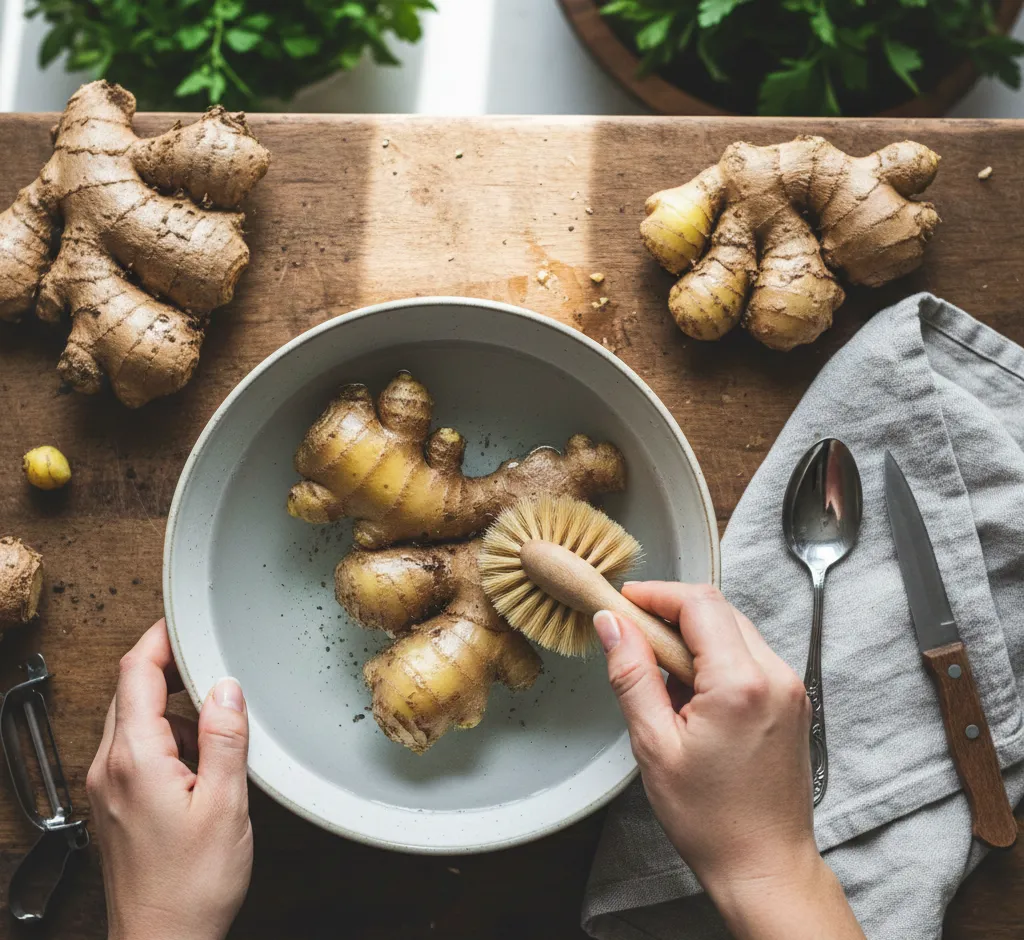
Step 3: Scrub the surface
Next, use your vegetable brush (or a clean dish brush) to scrub the ginger.
- Work the brush over the entire surface of each piece, using small circular motions.
- Pay special attention to wrinkles, joints, and crevices where dirt tends to collect.
- Rinse frequently as you scrub, so loosened dirt is washed away instead of just moving around.
If you do not have a brush, you can rub the ginger with your fingers or a clean cloth, but a brush usually works best for stubborn dirt.
Step 4: Decide whether to peel
Once the ginger root is well washed and scrubbed, you need to decide whether to peel it. The decision depends on your recipe and personal preferences:
- No need to peel: For ginger that will be used in stocks, broths, smoothies, or long-simmered dishes, the thin, well-cleaned skin is usually fine to leave on. It adds extra fiber and some flavor.
- Peeling recommended: If you are grating ginger for desserts, dressings, sauces, or any dish where texture is important and the skin might be noticeable, peeling is usually a good idea.
Either way, the ginger must be cleaned first. If you choose to peel, move on to the next step; if not, you can pat it dry and proceed directly to slicing, chopping, or grating.
Step 5: How to peel ginger easily with a spoon
Using a teaspoon is one of the safest and most efficient ways to peel fresh ginger, especially around its curves and knobs.
- Hold a piece of cleaned ginger in one hand and a teaspoon in the other.
- Turn the spoon so that the edge faces the ginger skin.
- Scrape the edge of the spoon firmly but gently along the surface, moving in one direction.
- The thin skin will lift off in strips, revealing the pale yellow flesh underneath.
- Work your way around the ginger, rotating it as needed to reach corners and crevices.
This technique minimizes waste because the spoon removes only the thin outer layer rather than carving away chunks of ginger. It also reduces the risk of cutting yourself when working around awkward angles.
Step 6: Alternative peeling methods
If you prefer, you can also peel ginger with a small paring knife or a vegetable peeler:
- Paring knife: Use the tip of the knife to carefully shave off the skin, especially from flat surfaces. This works well for larger, relatively smooth pieces of ginger.
- Vegetable peeler: A sharp peeler can be quick, but it may struggle around tight bends and can remove more flesh than necessary. It is best used on thicker, straighter sections.
Regardless of the tool, work slowly and always peel away from your fingers to stay safe.
Step 7: Final rinse and drying
After peeling (if you chose to peel the ginger), give the pieces a light final rinse to wash away any tiny bits of skin or debris.
- Shake off excess water.
- Place the ginger on a clean kitchen towel or paper towel.
- Pat it dry gently to remove surface moisture.
Your fresh ginger root is now clean and ready to use in any recipe.
Cleaning Ginger for Different Uses
The best way to clean ginger can vary slightly depending on how you plan to use it. Here are a few common scenarios and how to handle each one.
For stir-fries and savory dishes
In stir-fries and many savory recipes, ginger is usually sliced, julienned, or minced. For these dishes:
- Clean the ginger thoroughly as described above.
- Peel it with a spoon or knife to achieve a smooth texture and even browning during cooking.
- Slice, mince, or julienne the peeled ginger according to the recipe instructions.
Peeled ginger in stir-fries prevents tough bits of skin from appearing in each bite and allows the ginger to cook evenly.
For ginger tea and infused drinks
When making ginger tea, infused water, or other drinks, peeling is often optional.
- Rinse and scrub the ginger thoroughly to remove all visible dirt.
- Leave the skin on if you want a more rustic, fiber-rich infusion.
- Slice the ginger into thin coins or matchsticks to maximize surface area and flavor extraction.
Because the ginger will be strained or steeped, clean skin usually does not affect the final texture of the drink.
For baking and desserts
In baked goods and desserts, texture is crucial, and any tough pieces can stand out.
- Clean the ginger carefully and always peel it for cakes, cookies, syrups, and candies.
- Grate or finely mince the peeled ginger so it blends smoothly into batters or fillings.
- Ensure there are no remaining bits of skin, which could be chewy or visually noticeable.
This extra care results in a smooth, even flavor and a polished finished product.
For juicing and smoothies
If you are using ginger in juices or smoothies, both peeled and unpeeled ginger can work, depending on your equipment and taste.
- For high-powered blenders and juicers, thoroughly scrubbed but unpeeled ginger is usually fine.
- If your blender is less powerful, peeling the ginger can help prevent fibrous bits or skin from remaining in the drink.
- In all cases, make sure the ginger is well cleaned before blending or juicing it.
Common Mistakes to Avoid
Cleaning ginger is straightforward, but a few common mistakes can affect the quality and safety of your final dish.
- Skipping the scrub step: Rinsing alone may not remove embedded dirt from crevices. Always scrub with a brush or your fingers.
- Using very hot water: Hot water can slightly soften the ginger surface and is not necessary for cleaning. Cool water works best.
- Removing too much flesh: Aggressive peeling with a knife or peeler can waste usable ginger. Use a spoon when possible to minimize waste.
- Not drying the ginger: Leaving ginger damp before storing can encourage mold or spoilage. Pat it dry before refrigerating or freezing.
- Cleaning too far in advance: While you can clean ginger ahead of time, peeling and cutting it long before you use it may cause it to dry out. Try to peel just before use when possible.
How to Store Ginger After Cleaning
Proper storage is the final step in getting the most from your fresh ginger root. Once it is clean, you can store it in several ways depending on how quickly you plan to use it.
Storing whole, unpeeled ginger
If you have cleaned ginger but left the skin on:
- Dry it thoroughly with a towel.
- Place it in a breathable bag or wrap it loosely in a paper towel.
- Store it in the crisper drawer of your refrigerator.
Properly stored unpeeled ginger can last for several weeks. Check occasionally for soft spots or mold and trim or discard any problem areas.
Storing peeled ginger
Peeled ginger is more delicate and should be stored carefully to prevent drying out.
- Pat the peeled ginger dry.
- Place it in an airtight container.
- Optionally, add a small piece of paper towel inside the container to absorb excess moisture.
- Refrigerate and use within a week for the best flavor.
You can also submerge peeled ginger in a small jar of neutral alcohol like vodka or in an acidic liquid like vinegar (if suitable for your planned recipes). This can help extend its shelf life and mildly infuse the liquid with ginger flavor.
Freezing ginger for long-term storage
Freezing is an excellent way to preserve cleaned ginger for months.
- Clean and optionally peel the ginger.
- Pat it completely dry.
- Freeze it whole, in slices, or grated portions.
- Place the pieces in a freezer-safe bag or container, removing as much air as possible.
Frozen ginger can be grated straight from the freezer, and it often grates even more easily than fresh ginger. This makes it convenient to add to soups, marinades, and teas without thawing.
Frequently Asked Questions About Cleaning Ginger
Do you have to peel ginger?
No, you do not always have to peel ginger. If the ginger is fresh, the skin is thin and edible. For recipes where ginger will be strained out or where texture is less critical, thoroughly scrubbed unpeeled ginger works well. However, for finely grated ginger, baked goods, or dishes where you want a very smooth texture, peeling is recommended.
Can you eat ginger skin?
Yes, ginger skin is edible once it is properly cleaned. It contains fiber and some nutrients, but it can be slightly tougher than the flesh. Whether you eat it or remove it is mostly a matter of texture preference and recipe requirements.
How do you remove dirt from deep crevices?
Breaking the ginger into smaller knobs makes it easier to reach deep crevices. Use a small vegetable brush and scrub under running water, rotating the ginger so the brush can access all angles. For very tight spots, you can also use the tip of a spoon or the corner of a clean cloth to dislodge stuck dirt.
Is it safe to use soap when cleaning ginger?
You should never use soap or detergent on ginger or any other food you plan to eat. Rinsing and scrubbing with clean water is all you need. Soap can leave residues and is not intended for direct consumption.
Can you clean ginger and store it without peeling?
Yes, you can. Clean the ginger thoroughly, dry it well, and store it unpeeled in the refrigerator. Just remember to inspect it before each use and cut away any areas that may have dried out or begun to spoil.
Conclusion: Clean Ginger for Better Flavor and Safety
Learning how to clean fresh ginger root properly helps you get the best flavor, texture, and nutritional value from this versatile ingredient. By taking a few minutes to rinse, scrub, and peel (when needed), you remove dirt and potential contaminants while preserving as much of the aromatic flesh as possible.
Whether you are cooking a quick stir-fry, simmering a pot of ginger tea, baking spicy cookies, or blending a refreshing smoothie, starting with well-cleaned ginger makes a noticeable difference. With the techniques in this guide, you can handle ginger confidently and incorporate it into your kitchen routine with ease.