How to Remove Sand from Leeks: A Complete Step‑by‑Step Guide
Learn exactly how to remove sand from leeks with this step-by-step guide. Discover the best washing methods, common mistakes to avoid, and storage tips for grit-free, flavorful leeks.
Leeks add a mild, sweet onion flavor to soups, stews, quiches, and sautés. However, they have one big drawback: they are famously full of sand, grit, and soil. Because leeks grow in tightly packed layers with soil mounded up around their stalks, dirt often hides deep between the leaves. If leeks are not washed properly, that grit ends up in your food and ruins both texture and taste.
This complete guide explains exactly how to remove sand from leeks, step by step. It covers several cleaning methods, when to use each one, common mistakes to avoid, and how to store clean leeks safely. Follow these instructions, and you will enjoy perfectly clean, tender leeks every time.
Why Leeks Trap So Much Sand
Understanding how leeks grow makes it clear why they are often so sandy. Leeks are grown with soil mounded up around their long white stalks to keep them tender and pale. As rain, irrigation, and wind move the soil, tiny particles of sand and dirt slip between the overlapping leaves. Over the growing season, this grit works its way deep into the plant.
By the time leeks reach your kitchen, sand can be:
- Embedded between the outer layers of the stalk.
- Hidden in the folds near the base and root end.
- Trapped between the long green leaves at the top.
This is why simply rinsing the outside under running water is not enough. To fully remove sand, leeks must be cut open and washed thoroughly, allowing water to reach every layer.
Before You Start: Tools and Preparation
You do not need special equipment to clean leeks, but a few basic tools make the job easier and more effective.
Essential tools
- Sharp chef's knife – for trimming and slicing leeks cleanly.
- Cutting board – large enough to keep the leeks stable while cutting.
- Large bowl – for soaking and rinsing sliced leeks in water.
- Colander or sieve – to drain the leeks after washing.
- Clean kitchen towel or salad spinner – for drying leeks if needed.
Quick safety and quality checks
Before washing, check your leeks to make sure they are fresh and safe to use:
- Look for firm, straight stalks with no slimy or mushy spots.
- Avoid leeks with strong, unpleasant odors, which can indicate spoilage.
- Remove any very wilted or yellowed outer leaves.
Once your tools are ready and the leeks are trimmed of damaged leaves, you can choose the best cleaning method for your recipe.
Main Method: Cleaning Sliced Leeks in a Bowl of Water
This is the most reliable way to remove sand from leeks. It works well for most recipes, especially when leeks will be sliced into half-moons or rings for soups, sautés, and stews.
Step 1: Trim the root and dark green tops
- Place the leek on a cutting board.
- Cut off the root end, removing only the very bottom so the layers are still loosely attached.
- Slice off the very dark green tops, which are tough and fibrous. Keep the firm light green and white parts for cooking.
The dark green portions can be saved for making stock if you like, but they usually are not used in delicate dishes because of their tougher texture.
Step 2: Slice the leek lengthwise
- Lay the trimmed leek flat on the cutting board.
- Cut the leek in half lengthwise from top to bottom. For very thick leeks, you can cut them into quarters lengthwise.
Slicing lengthwise exposes the layers and makes it easier to access the sand that is trapped inside.
Step 3: Cut into smaller pieces
Depending on your recipe, you can now chop the leeks into the desired shape:
- Half-moons: Place the leek halves cut side down and slice crosswise into thin semi-circles.
- Rings: If the leek is left whole, slice crosswise into circular rings (best for soaking afterward).
- Strips: Cut lengthwise again for thinner strips, then across if needed.
Smaller pieces allow dirt to fall away more easily during soaking and rinsing.
Step 4: Soak in cold water
- Fill a large bowl with cold water.
- Place the chopped leeks into the bowl, separating the layers with your fingers.
- Gently swish the leeks around so the layers open up and release trapped sand.
The sand and grit will sink to the bottom of the bowl while the leek pieces float near the surface.
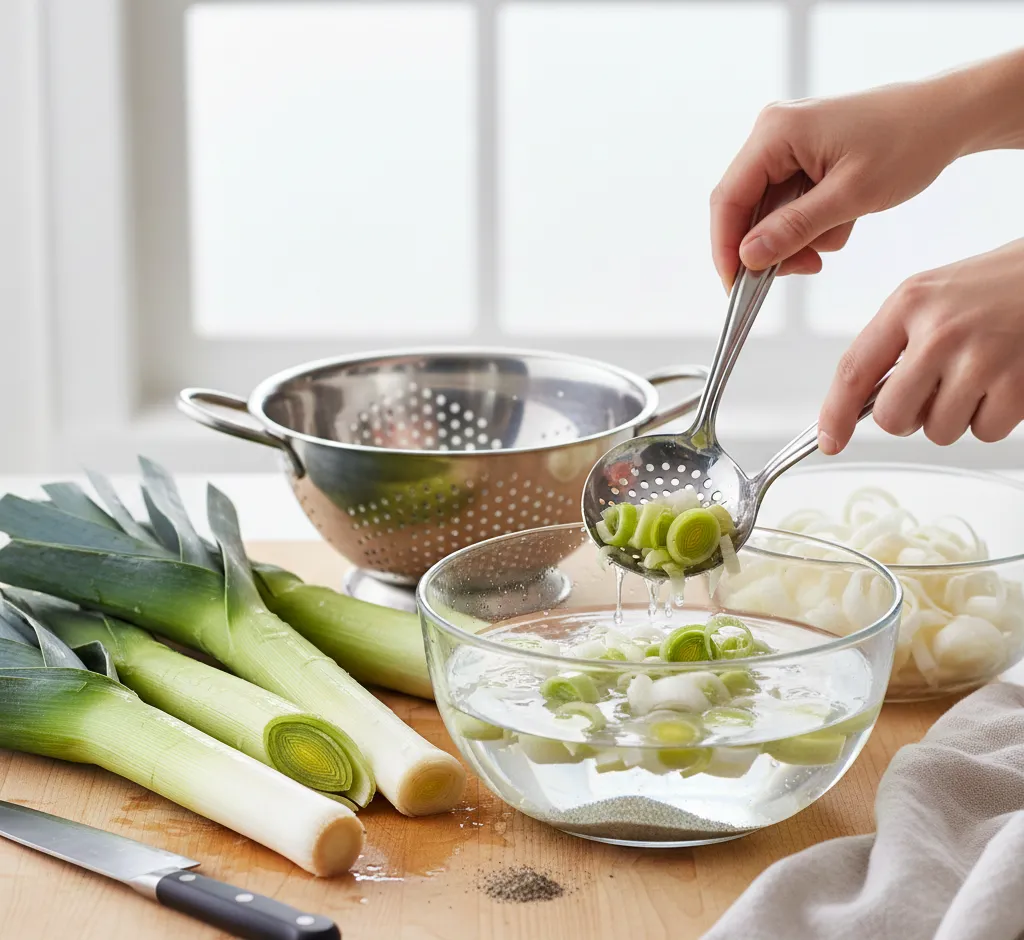
Step 5: Lift (do not pour) the leeks out
- After a minute or two of soaking, use your hands or a slotted spoon to lift the leeks out of the water.
- Transfer them into a colander or another bowl.
Do not simply pour the bowl of water through a colander. If you pour, the sand at the bottom will wash back over the leeks and undo your cleaning work. Lifting the leeks out allows the dirt to remain at the bottom of the bowl.
Step 6: Rinse and repeat if needed
Once the leeks are in a colander, rinse them quickly under cold running water while tossing them with your hands. If the leeks were very dirty to begin with, repeat the soaking process in a fresh bowl of clean water until no sand remains at the bottom.
When the water stays clear and grit-free, your leeks are ready to cook. You can use them immediately, or pat them dry with a clean towel if your recipe calls for sautéing in fat.
Alternative Method: Cleaning Leeks Before Slicing
Sometimes recipes call for leeks to be kept in longer pieces or split but not fully chopped, such as braised leeks or grilled leeks. In that case, use this method to wash them thoroughly while still mostly intact.
Step 1: Trim and split the leek
- Trim off the root end, but leave enough so that the layers stay connected.
- Cut off the dark green tops, keeping the white and light green section.
- Slice the leek lengthwise from just above the root end to the top, but do not cut completely through the root so the leek remains in one piece.
Step 2: Rinse under running water
- Hold the leek under a gentle stream of cold running water, with the cut side facing down.
- Use your fingers to fan open the layers, allowing water to flush out the sand and dirt.
- Work from the top of the leek down toward the root, making sure to reach every layer.
When rinsed thoroughly, gently shake off the excess water. At this point, the leek can be cooked whole, halved, or sliced further depending on the dish.
Method for Very Gritty Leeks: Double Soak
Homegrown or very fresh farmers' market leeks can be especially sandy. If you can feel grit even after a good rinse, use a double soak method.
Step-by-step double soak
- Trim, split, and slice the leeks as desired.
- Place the leeks in a large bowl of cold water, swish, and let them sit for 3–5 minutes.
- Lift the leeks out carefully and set aside in a colander.
- Discard the dirty water and rinse the bowl to remove all sand.
- Refill the bowl with clean cold water and repeat the soaking and swishing.
- Lift the leeks out again, then give a final quick rinse in the colander.
This double soak method virtually guarantees that even heavily soiled leeks will come out completely free of sand and grit.
How to Tell If All the Sand Is Gone
Even after careful washing, it is normal to worry about leftover grit. Use these checks to make sure your leeks are truly clean:
- Look closely: Examine a handful of leeks under good light. You should not see any dark specks or muddy streaks between the layers.
- Feel with your fingers: Rub a few pieces between your fingers. They should feel smooth and squeaky, not gritty.
- Check the water: After soaking, inspect the bottom of the bowl. If you see sand collected there, repeat the soak with fresh water.
If the leeks pass these simple tests, you can cook with confidence, knowing you will not bite down on unpleasant sand.
Common Mistakes to Avoid
Removing sand from leeks is straightforward, but a few common errors can lead to gritty results or wasted ingredients.
1. Only rinsing the outside
Washing leeks under running water without cutting them open does not remove sand from inside the layers. Always cut lengthwise and separate the leaves so water can reach every hidden pocket of dirt.
2. Pouring the soaking water through a colander
Pouring the bowl of leeks and water into a colander forces the sand at the bottom back over the vegetables. Instead, always lift the leeks out of the water and leave the grit behind in the bowl.
3. Skipping a second rinse for very dirty leeks
Some leeks, especially those grown in sandy soil, need more than one soak. If the water is cloudy or sandy after the first soak, do a second one to be safe.
4. Cutting leeks too far in advance
Pre-cut leeks can dry out, discolor, or lose flavor if left uncovered in the fridge. If you need to prep ahead, store washed and well-drained leeks in an airtight container with a paper towel to absorb moisture, and use them within a day or two.
How Clean Leeks Improve Your Cooking
Taking a few minutes to properly clean leeks has a big payoff in your cooking. Grit-free leeks offer several benefits:
- Better texture: No more crunchy, sandy bites in smooth soups or creamy quiches.
- Cleaner flavor: Dirt and soil can taste muddy or bitter. Removing them lets the leek's natural sweetness shine.
- Professional results: Restaurants never serve gritty leeks. Proper cleaning helps home-cooked dishes feel more refined and restaurant-quality.
- More versatile use: Once you trust your cleaning method, you can use leeks freely in purees, sauces, and delicate recipes where grit would be very noticeable.
Whether you are making a classic potato–leek soup, a savory tart, or a simple side dish, spotless leeks will elevate the final dish.
Storing Leeks Before and After Washing
Storing leeks correctly helps maintain freshness and makes cleaning easier when you are ready to cook.
Storing unwashed leeks
- Keep whole, unwashed leeks in the refrigerator, preferably in the crisper drawer.
- Place them in a perforated plastic bag or loosely wrap them in a damp paper towel.
- Use within 1–2 weeks for the best texture and flavor.
Unwashed leeks hold up well in the fridge because their outer layers naturally protect the inner leaves.
Storing washed leeks
- After washing, drain the leeks thoroughly in a colander.
- Spread them on a clean towel or use a salad spinner to remove excess moisture.
- Transfer to an airtight container or a resealable bag with a paper towel to absorb moisture.
- Store in the refrigerator and use within 2–3 days.
If you want to store leeks for longer, consider blanching and freezing them, but keep in mind that their texture will soften, making them better suited to soups and stews than crisp sautés.
Frequently Asked Questions
Do organic or homegrown leeks have more sand?
Organic and homegrown leeks often grow in richer, less processed soil and may not be rinsed before sale or harvest. As a result, they can have more sand and dirt than conventionally grown supermarket leeks. The same cleaning methods work, but you may need an extra soak and rinse.
Can you eat the green part of leeks?
The dark green tops of leeks are tougher and more fibrous than the white and light green sections, but they are still edible. After thorough washing, they can be used to flavor stocks, broths, and long-simmered dishes. For tender, quick-cooking recipes, stick to the pale parts of the leek.
Is it okay to wash leeks in advance?
Yes, you can wash and prep leeks 1–2 days ahead of time. Make sure they are well drained and stored in an airtight container in the refrigerator. If they sit in water or are too damp, they can become slimy or lose their crisp texture.
Can you use warm water to clean leeks?
Cold water is best for cleaning leeks. Warm or hot water can start to soften the leeks and may affect their texture before cooking. Cold water removes sand effectively without changing their structure.
Key Takeaways
Removing sand from leeks is easy once you know the right steps:
- Always trim and slice leeks lengthwise to expose the layers.
- Soak chopped leeks in a large bowl of cold water and swish them to loosen grit.
- Lift the leeks out of the water instead of pouring them through a colander.
- Repeat the soak if the leeks were very sandy or homegrown.
- Store washed leeks properly and use them within a few days for the best flavor.
With these simple techniques, sand will never ruin your leek dishes again. Clean, sweet, and tender leeks will become a reliable staple in your kitchen, ready to enrich everything from everyday soups to special occasion meals.