How to Wash Grapes in Clusters: A Complete Step‑by‑Step Guide
Learn how to wash grapes in clusters the right way. Step-by-step instructions, vinegar and baking soda methods, drying, and storage tips to keep your grapes clean, fresh, and delicious.
Grapes are one of the most convenient and delicious fruits to snack on, but they are also among the trickiest to clean properly. Their thin skin, tightly packed clusters, and delicate texture mean that dust, agricultural chemicals, and tiny insects can easily hide between the berries. Learning how to wash grapes in clusters the right way helps you protect your health, preserve freshness, and enjoy their full flavor and crunch.
This guide walks you through everything you need to know: why washing grapes matters, the best methods to clean whole clusters, what to avoid, and practical tips for storing grapes after washing so they stay fresh longer.
Why You Should Always Wash Grapes in Clusters
Even when grapes look perfectly clean, their surface can hold invisible residue and microorganisms. Washing grapes in clusters before eating is essential for three key reasons: food safety, taste, and shelf life.
1. Remove Pesticides and Surface Residue
Most commercially grown grapes are treated with pesticides and other agricultural chemicals to protect them from pests and diseases. These substances can linger on the skin of the grapes and in the tight spaces where the berries meet the stems.
- Surface spray residue: Can remain on grape skins after harvest.
- Dust and dirt: Often settle on grapes during transport and storage.
- Wax-like bloom: A natural, harmless coating that protects the fruit but can trap other particles.
Proper washing reduces the level of many surface residues and makes your grapes safer to eat.
2. Reduce Microbes and Possible Contaminants
Like all fresh produce, grapes can carry bacteria, yeasts, and molds from soil, water, or handling. Washing clusters under running water helps to physically remove a large amount of these microorganisms from the grape surface.
While washing does not sterilize grapes, it significantly lowers the microbial load and contributes to safer, more hygienic snacking.
3. Improve Flavor, Texture, and Eating Experience
Clean grapes are simply more pleasant to eat. When you properly wash grapes in clusters, you remove dusty or gritty sensations, off-flavors from residues, and any small insects or plant debris caught between berries.
In many cases, a thorough wash can also help grapes retain their crisp texture by preventing mold growth and decay that start from leftover dirt and moisture pockets.
What You Need Before Washing Grapes
Washing grapes in clusters does not require any special equipment, but having the right tools helps you clean them thoroughly without damaging the fruit.
Basic Tools and Supplies
- Clean colander or strainer: To hold the grape clusters while rinsing.
- Large bowl (optional): Useful for soaking or using a cleaning solution.
- Cool running water: The primary and most important cleaning agent.
- White vinegar or baking soda (optional): For deeper cleaning of residues.
- Clean kitchen towels or paper towels: For drying the grapes.
- Airtight container or breathable produce box: For storing washed grapes.
Choosing the Right Grapes to Wash
Starting with good-quality grapes makes the washing process easier and more effective. When buying grapes in clusters, look for the following:
- Firm, plump berries that are tightly attached to green, flexible stems.
- No signs of mold, shriveling, or leaking juice at the bottom of the bag or box.
- Consistent color appropriate to the variety (green, red, or black) without brown or translucent patches.
Remove any obviously spoiled or damaged clusters before you begin washing, as they can spread mold and spoilage to healthier grapes.
How to Wash Grapes in Clusters: Core Method
The best way to wash grapes in clusters is gentle but thorough. The method below uses only cool running water and mechanical friction, which is enough for daily cleaning.
Step 1: Keep Grapes on the Stems
Resist the urge to remove individual grapes from the stems before washing. Keeping grapes in clusters offers several benefits:
- Prevents juice from leaking out of open stem scars.
- Reduces bruising and damage during washing.
- Makes it easier to handle and rinse larger quantities at once.
If any loose grapes have already fallen off, set them aside and wash them together with the clusters using the same method, but handle them more gently.
Step 2: Prepare the Sink or Work Area
Clean the sink or surface where the grapes will be handled. A dirty sink can re-contaminate your fruit. Rinse and wipe the sink with hot water and a small amount of dish soap, then rinse thoroughly to remove any soap residue.
Place a clean colander or strainer in the sink so that water can run freely around the grape clusters.
Step 3: Rinse Grapes Under Cool Running Water
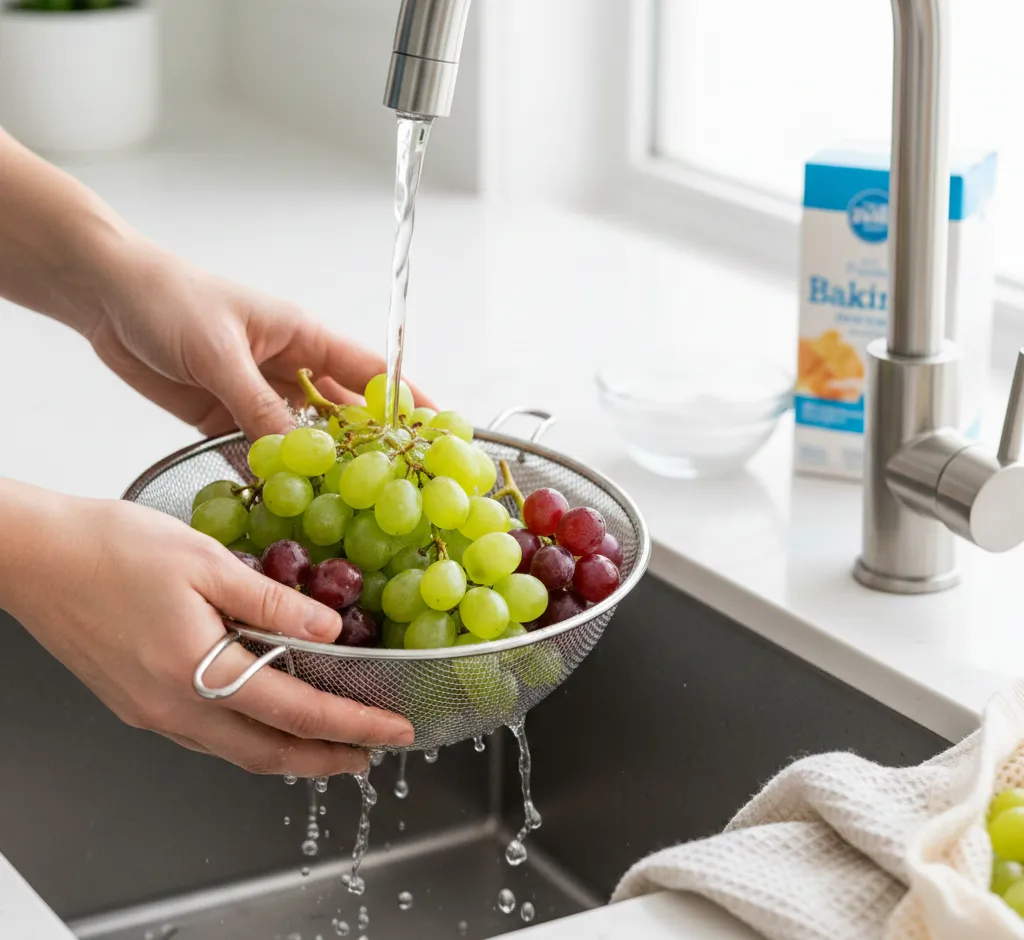
Hold each cluster by the stem and place it in the colander. Turn on cool (not hot) running water at a gentle but steady flow. Hot water can soften the grapes and make them split or lose firmness.
- Move the clusters around with your hands to expose all sides.
- Rotate each bunch so that water flows between the berries and around the stems.
- Allow at least 20–30 seconds of rinsing per cluster, or 1–2 minutes for a full colander.
The flowing water mechanically loosens dirt, surface residues, and microorganisms, carrying them away down the drain.
Step 4: Gently Rub and Agitate the Clusters
While the water is running, use your fingers to gently rub the grapes in each cluster. Focus on the following areas:
- The spaces where grapes touch each other.
- The base of each grape where it attaches to the stem.
- Any visible dusty or dull patches on the skin.
You do not need to scrub vigorously; light rubbing is enough to break the bond between the contaminants and the grape surface without damaging the skin.
Step 5: Drain Excess Water Thoroughly
Once you have rinsed and gently rubbed the clusters, turn off the water and allow the grapes to drain in the colander for several minutes. Gently shake the colander to remove as much water as possible.
Excess water trapped between grapes can encourage mold growth and shorten shelf life, so draining is an important step before drying and storing.
Deeper Cleaning Methods for Grapes in Clusters
In most situations, rinsing grapes with cool water is sufficient. However, if you want an extra level of cleaning—for example, when grapes are very dusty, have a visible film, or come from unknown growing conditions—consider using a simple vinegar or baking soda solution.
Method 1: Vinegar Soak for Grapes
White vinegar helps to remove some residues and reduce surface microbes. When used correctly and diluted, it does not affect the taste of grapes.
How to Use a Vinegar Solution
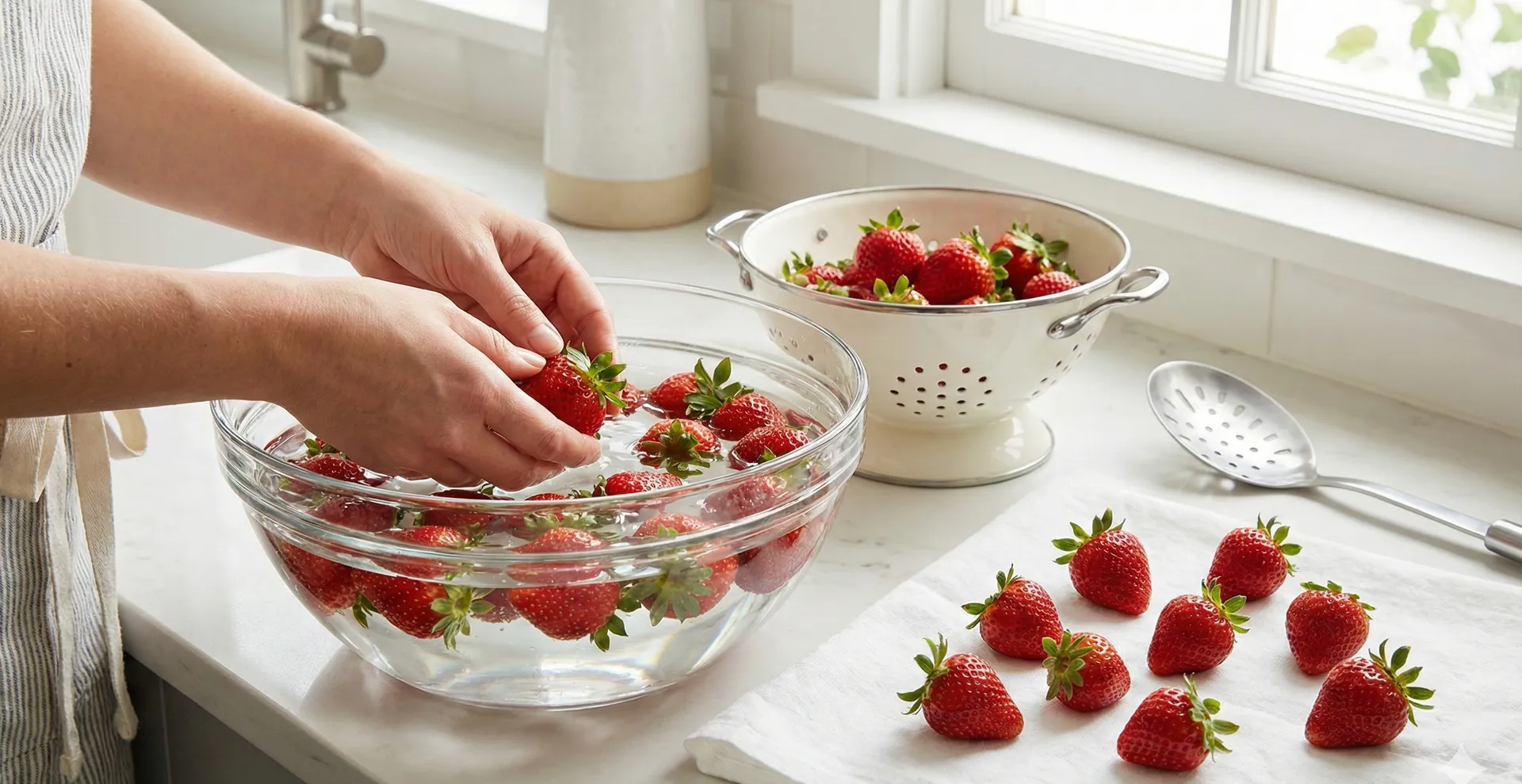
- Prepare the solution: Fill a large bowl with cool water and add white vinegar in a ratio of approximately 1 part vinegar to 3 parts water.
- Add the clusters: Place the grape clusters into the solution, making sure they are fully submerged.
- Soak briefly: Let the grapes soak for 5–10 minutes. Gently move the clusters around with your hands to encourage the solution to reach all surfaces.
- Rinse thoroughly: Transfer the clusters to a colander and rinse under cool running water for at least 30–60 seconds to remove any vinegar taste.
- Drain and dry: Let the grapes drain, then dry them as described in the next sections.
Do not increase the vinegar concentration excessively. A strong solution can alter the flavor of the grapes and is not necessary for routine cleaning.
Method 2: Baking Soda Rinse for Grapes
Baking soda is another common household ingredient that can help loosen residues on fruit surfaces.
How to Use Baking Soda
- Prepare a basin: Fill a large bowl or basin with cool water.
- Add baking soda: Sprinkle about 1–2 teaspoons of baking soda into the water and stir until dissolved.
- Submerge clusters: Place grape clusters into the mixture and swish them around gently.
- Short soak: Let the grapes sit for about 5 minutes, then agitate the clusters again to dislodge dirt and residue.
- Rinse well: Transfer to a colander and rinse under cool running water until no baking soda residue remains.
As with vinegar, the final rinse is crucial to avoid any change in flavor or mouthfeel.
How to Dry Grapes After Washing
Properly drying grapes after washing is just as important as cleaning them. Grapes stored while wet spoil more quickly and develop mold, especially when kept in tightly sealed containers.
Step 1: Spread the Clusters Out
After draining in a colander, spread the grape clusters out on a clean kitchen towel, paper towel, or a wire rack. Arrange them in a single layer for better air circulation.
- Avoid stacking clusters on top of one another.
- Keep them away from direct heat or strong sunlight.
Step 2: Pat Dry Gently
Use another clean towel or paper towel to gently pat the grapes dry. Focus on the outer surfaces of the clusters, being careful not to detach the berries from the stems.
You do not need to remove every drop of moisture, but reducing surface water significantly slows down mold growth.
Step 3: Air-Dry Before Storing
Let the grapes air-dry for 10–20 minutes at room temperature. This allows residual moisture between grapes and around stems to evaporate naturally.
Once they feel mostly dry to the touch, they are ready to be stored in the refrigerator.
How to Store Grapes After Washing
Many people wonder whether grapes should be washed only right before eating or if it is safe to wash them in advance. Both options work, as long as drying and storage are done correctly.
Option 1: Wash Grapes Just Before Serving
This is often the best approach if you want to maximize shelf life and keep grapes at peak freshness for as long as possible.
- Store unwashed grape clusters in the refrigerator in their original breathable packaging or a loosely closed bag.
- Wash only the amount you plan to eat within a day or two.
- This method minimizes handling and reduces the risk of moisture-related spoilage.
Option 2: Wash Grapes in Batches for Convenience
If you prefer ready-to-eat snacks, you can wash grapes in advance—provided that you dry them thoroughly and store them properly.
- After washing and drying, place the clusters in a shallow container lined with a dry paper towel.
- Leave the lid slightly ajar or use a container with small vents to allow minimal air circulation.
- Store in the refrigerator and aim to eat the washed grapes within 3–4 days.
Avoid tightly sealing freshly washed grapes in completely airtight containers while there is still noticeable moisture, as this encourages condensation and mold.
Common Mistakes to Avoid When Washing Grapes in Clusters
Even simple tasks like washing grapes can go wrong when certain steps are skipped or rushed. Being aware of common mistakes helps you keep your grapes fresher and safer.
Using Hot Water
Hot water can damage grape skins, causing them to split and lose juice. Always use cool or slightly cold water when rinsing and soaking grape clusters.
Removing Grapes from Stems Too Early
Detaching grapes before washing increases exposed surfaces and allows more water to get inside the fruit through the stem scars. This accelerates softening and spoilage. Keep grapes on the stems until you are ready to eat or cook with them.
Skipping the Final Rinse After Using Solutions
When cleaning grapes with vinegar or baking soda solutions, some people forget to rinse thoroughly afterward. This can leave a noticeable taste on the fruit and is unnecessary. Always finish with a generous rinse under cool running water.
Storing Grapes While Still Wet
Putting damp grapes directly into a sealed container is one of the fastest ways to invite mold. Take the time to drain, pat dry, and air-dry before storing, especially if you wash large batches at once.
Frequently Asked Questions About Washing Grape Clusters
Do I need special produce wash for grapes?
For most households, specialized produce washes are not required. Cool running water combined with gentle rubbing is typically sufficient to remove the majority of dirt and residues. If you want extra cleaning, a mild vinegar or baking soda solution works well and is inexpensive.
Can I soak grapes overnight?
Soaking grapes for long periods is not recommended. Extended soaking can soften the fruit, dilute its flavor, and increase the risk of splitting. Keep any soak to 5–10 minutes and always follow with a rinse and proper drying.
Should I wash organic grapes differently?
Organic grapes should still be washed thoroughly. While they are grown without synthetic pesticides, they can still carry natural residues, dust, microbes, and insects. Use the same steps described in this guide for both organic and conventionally grown grapes.
Is it safe to wash grapes with soap?
No. Dish soap, hand soap, and other detergents are not intended for direct use on food. Grapes are porous enough that traces of soap can cling to the surface and be difficult to rinse completely. Always avoid cleaning grapes with soap.
Quick Reference: Best Practices for Washing Grapes in Clusters
To summarize the essential steps, here is a quick reference checklist you can follow whenever you wash grape clusters:
- Keep grapes attached to the stems while washing.
- Use cool running water as your main cleaning method.
- Gently rub the grapes and move clusters around under the stream.
- Optionally use a diluted vinegar or baking soda solution for deeper cleaning.
- Rinse thoroughly after any soaking solution.
- Drain well, pat dry, and let grapes air-dry before storing.
- Refrigerate grapes and consume washed clusters within a few days.
By following these simple techniques, you can confidently wash grapes in clusters, enjoy their natural sweetness and crunch, and reduce unwanted residues and contaminants. With a few minutes of care, every handful of grapes becomes a fresher, cleaner, and safer treat.