How to Wash Lettuce Without Bruising: A Complete Step-by-Step Guide
Learn exactly how to wash lettuce without bruising it. Discover gentle cleaning techniques, tools, drying methods, and storage tips to keep your salad greens crisp, fresh, and delicious.
Lettuce is the foundation of countless fresh salads, sandwiches, wraps, and healthy meals. But if you wash it the wrong way, those crisp, vibrant leaves can quickly turn limp, bruised, and unappetizing. Learning how to wash lettuce without bruising is not only about keeping it looking beautiful; it also helps preserve flavor, texture, and shelf life while ensuring the leaves are safe to eat.
In this guide, you will learn exactly how to clean lettuce properly, which tools to use, and what to avoid so your greens stay fresh, crisp, and delicious. Whether you are preparing a quick weeknight salad or plating an elegant dish for guests, these techniques will help you elevate your lettuce from ordinary to restaurant-quality.
Why Lettuce Bruises So Easily
Lettuce leaves are delicate. They are made up of thin cell walls filled with water. When those cells are crushed, torn, or roughly handled, they release moisture and enzymes that cause bruising and wilting. This leads to:
- Dark or brown spots on the leaves.
- Limp, soggy texture instead of crispness.
- Off flavors and faster spoilage.
Because of this fragile structure, how you wash, dry, and store lettuce matters just as much as how fresh it is when you buy it.
Common Mistakes That Bruise Lettuce
Before learning the best method, it helps to understand what to avoid. These common habits can easily damage lettuce leaves:
- Running leaves directly under high-pressure water: Strong water pressure can batter the leaves and cause tearing along the veins.
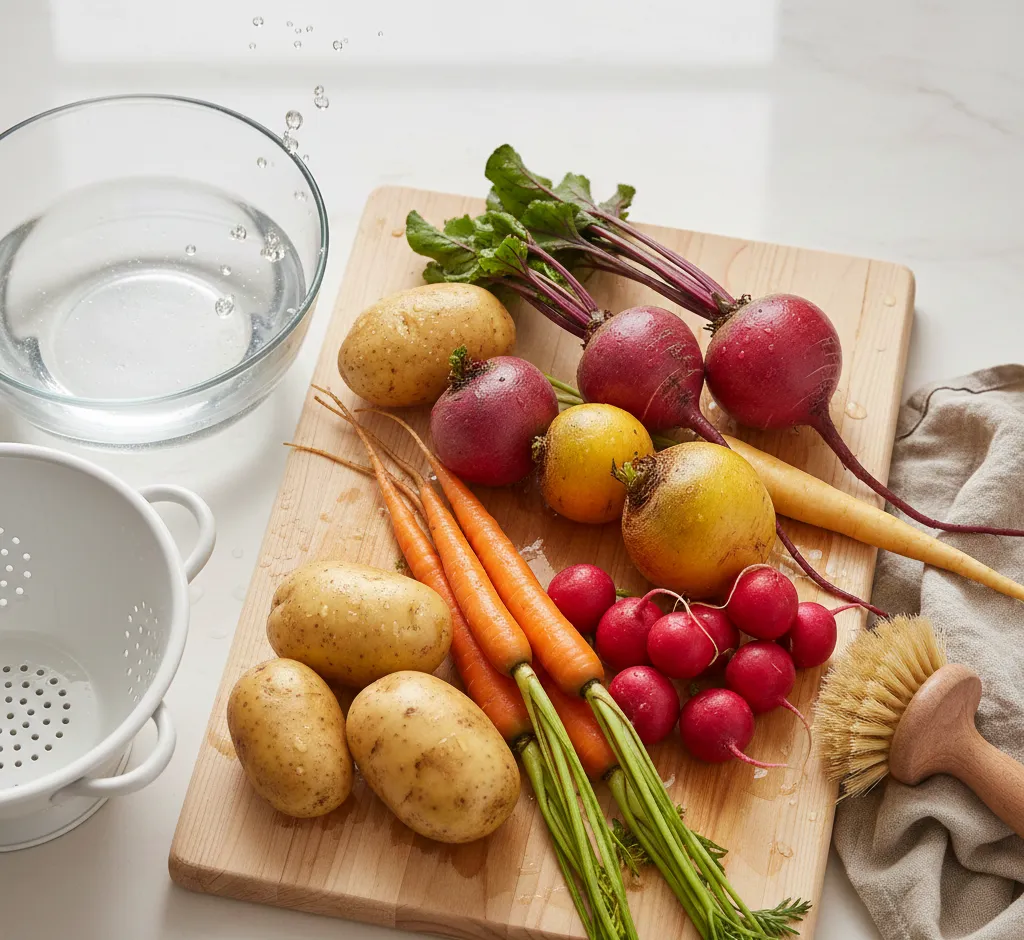
- Scrubbing or rubbing leaves aggressively: Lettuce is not like potatoes or carrots; friction damages the surface and cell structure.
- Using very hot or very cold water: Extreme temperatures can shock the leaves, leading to limpness and bruising.
- Leaving lettuce soaking for too long: Extended soaking can waterlog the leaves, making them fragile and more prone to tearing.
- Wringing or squeezing leaves to remove water: Any twisting, wringing, or pressing crushes the delicate tissue.
- Drying with rough paper towels or dishcloths: Rubbing or pressing with textured towels can scratch and bruise the surface.
By eliminating these mistakes, you are already halfway to cleaner, crisper lettuce.
Best Tools for Washing Lettuce Gently
You do not need special equipment to wash lettuce without bruising, but a few simple tools make the process easier and more effective:
- Large bowl or salad basin: Big enough to submerge and swish the leaves gently without crowding.
- Salad spinner: The easiest, gentlest way to remove excess water without squeezing or rubbing.
- Sharp knife or your hands: For separating the head and removing the core. A sharp knife reduces tearing.
- Clean kitchen towels or paper towels: For lining storage containers and absorbing excess moisture.
- Colander (optional): Useful if you do not have a salad spinner, but you must handle leaves gently.
Once you have these basics ready, you can follow a simple step-by-step process that protects your lettuce from bruising.
Step-by-Step: How to Wash Lettuce Without Bruising
Step 1: Start With Fresh, Cool Lettuce
Freshness matters. Older lettuce is already softer and more prone to bruising. Choose heads or bags with firm, crisp leaves and no slimy or dark patches. If your lettuce has been sitting at room temperature, place it in the refrigerator for a short time to cool slightly before washing. Cooler leaves are firmer and easier to handle without damage.
Step 2: Separate the Leaves Carefully
The way you separate the leaves depends on the type of lettuce you are using:
- Head lettuces (iceberg, romaine, butterhead): Cut off the stem end with a sharp knife or tap the core on the counter and twist it out. Then gently separate the leaves one by one, avoiding any tugging that tears the edges.
- Loose-leaf lettuces (green leaf, red leaf): Trim the bottom stem just enough to release the leaves. Fan them out gently with your fingers.
- Bagged or boxed lettuces: Even if labeled “pre-washed,” many people prefer to rinse again. Pour them gently into a bowl instead of grabbing and squeezing the leaves.
Avoid pulling too hard on stuck leaves; instead, wiggle the base gently or cut a bit more of the core to release them.
Step 3: Fill a Bowl With Cool Water
Use a large bowl, salad basin, or a clean sink. Fill it with cool, not icy water. Cool water refreshes the leaves and helps them crisp up without shocking or softening them.
Avoid very cold or warm water. Extremely cold water can make delicate lettuces like butterhead go limp, while warm water can accelerate wilting.
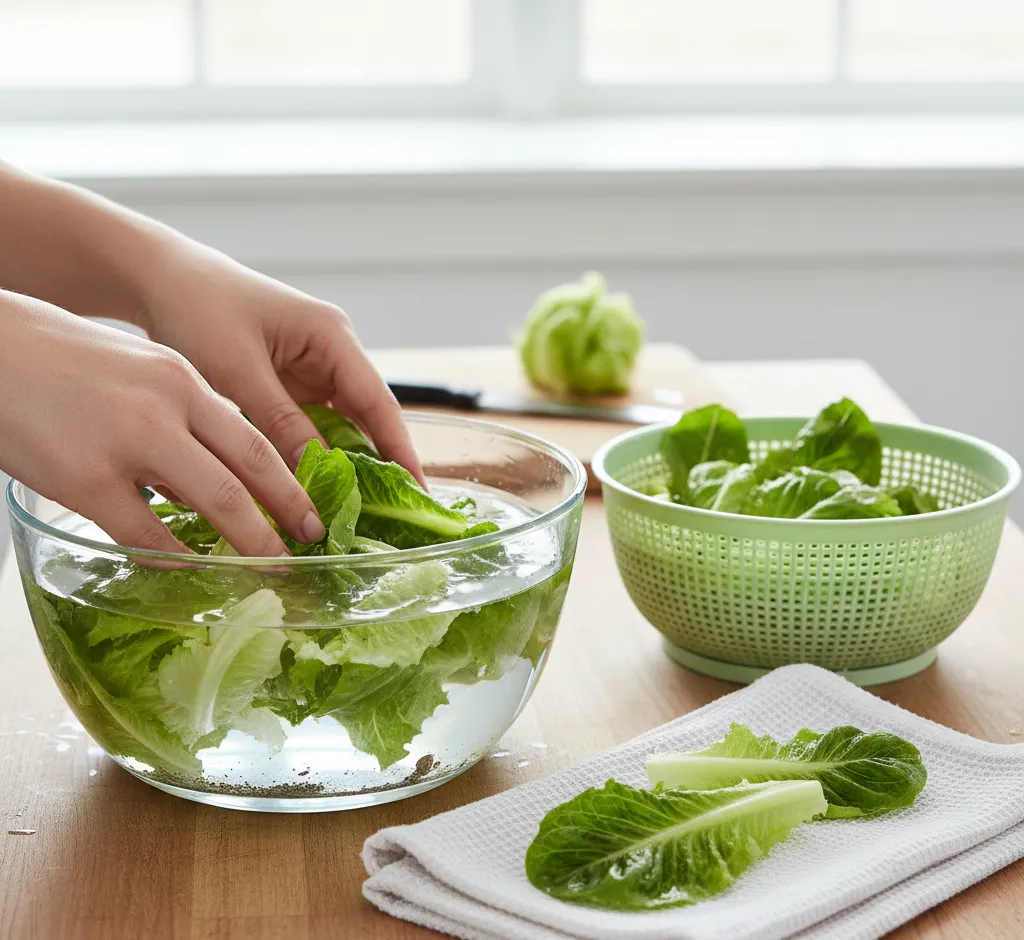
Step 4: Submerge and Swish Gently
Place the separated lettuce leaves into the bowl of water. Do not pack them too tightly; they should have room to move freely. Then:
- Use your hands to gently agitate the leaves, moving them around in the water with soft, scooping motions.
- Avoid grabbing or squeezing individual leaves. Let the water do most of the cleaning work.
- Allow dirt, sand, or debris to fall to the bottom of the bowl as you swish.
This method is much gentler than rinsing under a strong tap and is especially important for soft lettuces like butter, Boston, or baby leaf varieties.
Step 5: Let the Dirt Settle
After a brief swish, let the lettuce sit in the water for 1–3 minutes. During this time, any remaining grit or sand will sink to the bottom of the bowl. The leaves themselves will float on top.
Avoid leaving lettuce in water for long periods, as it can start to absorb too much water and become more fragile.
Step 6: Lift, Do Not Dump
When the dirt has settled, do not pour everything through a colander. Pouring can push the leaves against the edge of the bowl and cause bruising, and it can also splash dirt back onto the leaves.
Instead:
- Lift the leaves out of the water using your hands.
- Transfer them gently into a colander or directly into a salad spinner basket.
- Discard the dirty water, rinse the bowl, and repeat if the lettuce was very sandy.
If the water looks very dirty after the first wash, repeat the soaking and lifting process once or twice more until the water is clear.
Step 7: Spin or Air-Dry Without Squeezing
Removing excess water without bruising is one of the most important steps. Water clinging to the leaves can dilute dressings and lead to soggy salads, but aggressive drying will damage them.
Using a salad spinner
A salad spinner is the best tool for drying lettuce gently and quickly:
- Place the washed leaves into the spinner basket in loose layers. Do not pack them tightly.
- Cover with the lid and spin in short, gentle bursts at first.
- Increase speed gradually if needed, but avoid excessive spinning that slams leaves into the sides.
- Check the leaves. If they are still damp, spin once more, then stop.
Most modern salad spinners are designed to be gentle, but overfilling them is a common cause of torn or bruised lettuce.
Drying without a salad spinner
If you do not have a salad spinner, you can still dry lettuce without bruising:
- Lay a clean kitchen towel or a double layer of paper towels on the counter.
- Arrange the lettuce leaves in a single layer on top, giving them room to breathe.
- Place another towel loosely on top and press lightly—do not rub.
- Let the leaves air-dry for a few minutes before storing or serving.
The key is to avoid any twisting, wringing, or rubbing motions that crush the leaves.
Step 8: Store Lettuce to Prevent Bruising and Wilting
Even perfectly washed lettuce can bruise in the refrigerator if stored incorrectly. Proper storage keeps your greens crisp and reduces waste.
Best storage method
- Use a container with a lid or a large resealable bag.
- Line the bottom with a dry paper towel or clean cloth to absorb excess moisture.
- Place the dry lettuce leaves inside in loose layers, not compressed.
- Lay another paper towel on top before sealing.
- Store in the crisper drawer, where humidity is more controlled.
Check the towels after a day or two. If they are very damp, replace them to prevent soggy leaves and early spoilage.
What to avoid when storing
- Overstuffing containers or bags: This compresses the leaves and causes bruising.
- Storing near fruits like apples, pears, or bananas: These produce ethylene gas, which speeds up wilting.
- Sealing very wet leaves: Trapped moisture encourages rot and makes the leaves fragile.
Special Tips for Different Types of Lettuce
Not all lettuces behave the same. Some are sturdy and resilient, while others bruise with just a little pressure. Adjust your washing technique slightly depending on the variety.
Romaine lettuce
Romaine is relatively sturdy, especially along the ribs, but its leaf tips can bruise if handled roughly.
- Slice off the base and separate leaves gently.
- Pay extra attention to dirt near the base where the leaves join.
- Use cool water and short soaking times.
- Spin dry in moderate-speed cycles to avoid tearing the long leaves.
Iceberg lettuce
Iceberg has tightly packed layers that can trap dirt near the core but holds up well during washing.
- Remove the core by tapping it on the counter and twisting it out.
- Separate the leaves or cut wedges, then wash carefully between the layers.
- Because it is firm, iceberg can tolerate a bit more movement in the water, but avoid squeezing.
Butterhead and Boston lettuce
Butter lettuces are among the most delicate and bruise easily.
- Handle leaves by the thicker stem end, not the thin outer edges.
- Use very gentle swishing in cool water.
- Limit spinning to low speeds or rely more on air-drying on towels.
- Use these varieties sooner rather than later after washing, as they wilt faster.
Baby greens and mixed salad blends
Baby spinach, spring mixes, and mesclun are very tender. Many packaged mixes are pre-washed, but if you choose to wash them again:
- Use a large bowl and a very gentle swirling motion.
- Lift leaves with your hands instead of pouring.
- Spin in small batches at low speed or spread on towels to air-dry.
- Avoid rubbing or pressing—these greens bruise with minimal pressure.
Should You Use Vinegar or Baking Soda?
Some people like to add vinegar, baking soda, or a produce wash to lettuce water to help remove bacteria or pesticide residues. If you choose to do this, it is essential to keep the process gentle to avoid damaging the leaves.
Using vinegar
You can add a small amount of distilled white vinegar to the wash water, such as about 1–2 tablespoons per liter of water. Vinegar may help reduce some surface bacteria.
- Always mix the vinegar into the water before adding the lettuce.
- Limit soaking time to a few minutes.
- Rinse briefly in clean cool water afterward to remove any lingering taste and reduce potential irritation to the leaves.
Using baking soda
A small amount of baking soda can help remove some residues, but it is not necessary for everyday washing and should be used carefully.
- Add only a small pinch to the water—too much can make the surface feel slippery and may require extra rinsing.
- Rinse thoroughly with cool water after soaking so no residue remains on the leaves.
Whether you use plain water or add something, the gentle handling steps remain the same: soak, swish lightly, lift carefully, and dry without squeezing.
How to Tell if Lettuce Is Bruised or Spoiled
Sometimes it can be difficult to tell whether lettuce is just slightly bruised or no longer safe to eat. Understanding the difference helps you reduce waste without taking risks.
Signs of bruised lettuce
- Small brown or darkened spots, often along the edges or veins.
- Slightly limp texture in only a few leaves.
- Overall appearance still mostly fresh and green.
Mild bruising does not necessarily make lettuce unsafe, but it affects appearance and texture. You can trim away damaged areas with a sharp knife to avoid spreading discoloration.
Signs of spoiled lettuce
- Leaves feel slimy or wet in a sticky way.
- Strong, unpleasant odor.
- Large, dark patches that are soft or mushy.
- Overall limpness and loss of structure.
If lettuce shows multiple signs of spoilage, it is best to discard it. Spoiled leaves will not recover with washing or soaking.
Quick Recap: The Gentle-Wash Method
To wash lettuce without bruising, remember this simple sequence:
- Separate gently: Remove the core or stem and loosen leaves without tugging.
- Soak in cool water: Use a large bowl and let dirt sink to the bottom.
- Swish lightly: Move leaves softly with your hands instead of blasting them under the tap.
- Lift, do not pour: Lift leaves from the water so grit stays behind.
- Dry with care: Spin or air-dry without squeezing, wringing, or rubbing.
- Store loosely: Use lined containers or bags and avoid compression.
Once this becomes part of your routine, you will notice a big difference in how crisp and vibrant your salads look and taste.
Final Thoughts
Washing lettuce without bruising is a simple skill that makes a noticeable impact on both food safety and eating quality. By swapping harsh rinsing for gentle soaking, replacing squeezing with careful spinning, and storing leaves properly, you can enjoy fresher, longer-lasting greens every time.
Whether you are preparing a quick lunch salad, a platter of sandwich toppings, or a special dish for guests, these techniques will help you keep your lettuce looking bright and feeling perfectly crisp—all without bruising a single leaf.