Humidity Boosters Hidden in Houseplant Care: How to Create a Lush Indoor Microclimate
Discover the hidden humidity boosters already built into smart houseplant care. Learn how plant groupings, substrates, microclimates, and watering routines raise humidity naturally and create a lush, healthy indoor jungle without over-relying on humidifiers.
Indoor plants do more than decorate a room – they quietly transform the air, the mood, and even the humidity of your home. Yet most plant lovers focus on light and watering while overlooking one powerful success factor: humidity. Understanding how humidity interacts with houseplants not only keeps them healthier and more vibrant, but also helps you turn your home into a lush, resilient indoor jungle.
This guide reveals the hidden humidity boosters already built into smart houseplant care, along with practical strategies to raise moisture in the air without turning your living room into a swamp. From plant groupings to substrates and watering routines, you will learn how to create a stable microclimate that both you and your plants can thrive in.
Why Humidity Matters So Much for Houseplants
Humidity is the amount of water vapor in the air. Many popular houseplants come from tropical forests, cloud forests, or understories where air moisture is consistently high. When the air in your home is too dry, plants lose water faster through their leaves than their roots can absorb it, leading to stress and damage over time.
Common Signs of Low Humidity Stress
- Brown, crispy leaf tips or edges, especially on Calatheas, Marantas, and ferns.
- Curled, drooping, or puckered leaves even when the soil is moist.
- Slow new growth or deformed new leaves on plants like Philodendrons or Anthuriums.
- Premature leaf drop on Ficus, Schefflera, and similar species.
- Flower buds that dry out and fall off before opening on orchids and flowering houseplants.
While temperature, watering, light, and nutrition all play important roles, chronic low humidity is often the missing piece when plants look “off” but nothing else appears wrong.
Understanding Your Indoor Humidity Levels
Before adjusting humidity, it helps to know what you are starting with. Indoor humidity varies widely by season, heating method, and even room location.
How to Measure Humidity
- Use a digital hygrometer. These small, inexpensive devices show relative humidity (RH) as a percentage. Aim for at least 40–60% RH for most tropical houseplants.
- Check multiple locations. Near windows, radiators, air conditioners, and bathrooms, humidity can be very different.
- Track seasonal shifts. In many homes, winter heating systems drop humidity dramatically, while summer levels rise naturally.
Once you know your baseline, you can use the hidden humidity boosters in plant care to build stable, localized microclimates tailored to what your plants need.
Humidity Boosters Hidden in Everyday Houseplant Care
Raising humidity does not have to mean running large humidifiers all day. Thoughtful plant care choices create layers of moisture that build a more forgiving environment around your plants. Here are the most powerful, often overlooked humidity boosters that are already in your control.
1. Plant Groupings as Natural Humidity Domes
Plants constantly release water vapor through their leaves in a process called transpiration. When you group plants together, each plant helps raise humidity around its neighbors, creating a small microclimate that is more humid than the rest of the room.
How to Group Plants Effectively
- Cluster humidity lovers. Place ferns, Calatheas, Marantas, Alocasias, and Anthuriums close together rather than scattering them across multiple rooms.
- Create height layers. Use plant stands, shelves, and hanging planters so tall, medium, and trailing plants form a multi-level canopy that traps moisture.
- Avoid drafts. Keep groupings away from HVAC vents, frequently opened doors, and strong fans that strip moisture from the air.
- Use corners and alcoves. Corners, bay windows, and recessed spaces are perfect for holding moisture and building a stable microclimate.
A dense group of plants can raise relative humidity several percentage points on its own, especially when combined with smart watering and substrate choices.
2. Substrates, Mulch, and Moist Surfaces
The surface of your potting mix quietly acts as a mini evaporating pool. How you structure and cover that surface changes how much moisture moves into the surrounding air.
Using the Soil Surface to Boost Humidity
- Use moisture-retentive mixes wisely. Adding components like coco coir or sphagnum moss can hold water longer at the surface, but always balance with drainage so roots do not sit in soggy soil.
- Top-dress with sphagnum or decorative moss. A thin layer stays slightly damp and slowly releases humidity, especially helpful for ferns and orchids.
- Choose breathable containers. Terracotta and unglazed clay pots allow water to evaporate through the pot walls, subtly boosting local humidity while helping prevent root rot.
These choices do not replace proper watering, but they amplify the humidity effect of each watering session in a controlled, gradual way.
3. Watering Routines That Double as Humidity Support
The way you water can act as a hidden humidity booster or a silent stressor. Instead of quick, frequent splashes, well-planned watering cycles help both roots and air moisture.
Humidity-Friendly Watering Habits
- Water deeply, not constantly. Fully saturate the soil until water drains from the bottom, then let the top layer dry according to each plant’s needs. This encourages healthy roots and a predictable cycle of evaporation.
- Time watering for maximum benefit. Water in the early morning or late afternoon so moisture lingers in the air during plants’ most active periods, without staying heavy overnight on foliage.
- Use saucers carefully. Briefly allowing a small amount of water to sit in saucers under pots can increase local humidity as it evaporates, but always discard excess after 15–30 minutes to avoid root rot.
- Wash leaves occasionally. Gently showering plants to remove dust briefly raises humidity in the area and improves photosynthesis by cleaning leaf surfaces.
Healthy, hydrated soil and roots indirectly support a more consistent humidity pattern, especially when combined with grouped plants and porous materials.
4. Microclimates from Furniture, Walls, and Windows
Your furniture layout and room structure can either destroy humidity or help trap it. Think of each room as a set of potential “pockets” with their own microclimate.
Finding and Creating Humidity Pockets
- Use shelves and bookcases. Placing plants on shelves near walls helps trap moisture in that zone, especially when shelves are partially enclosed on the sides.
- Leverage bright bathrooms and kitchens. If these rooms have natural light, they are often the easiest places to maintain higher humidity due to regular water use.
- Be strategic with windows. Windows can be both dry (from drafts) and humid (from condensation). Observe where humidity naturally collects, then place appropriate plants there.
- Avoid aggressive airflow. Direct air from vents, space heaters, or dehumidifiers can undo all the subtle humidity gains from your plant care routine.
By noticing how air moves and where moisture lingers, you can place plants where their transpiration has the greatest impact.
5. Enclosures: Terrariums, Cloche Covers, and Mini Greenhouses
For the most humidity-demanding plants, simple enclosures create extremely stable microclimates without needing to raise humidity in your entire home.
Small-Scale Enclosures as Humidity Engines
- Terrariums. Closed or semi-closed glass containers recycle moisture as it evaporates and condenses on the glass, ideal for small ferns, mosses, and mini tropicals.
- Glass domes and cloches. A clear cover over a single pot traps humidity just around that plant, useful for newly imported or recovering specimens.
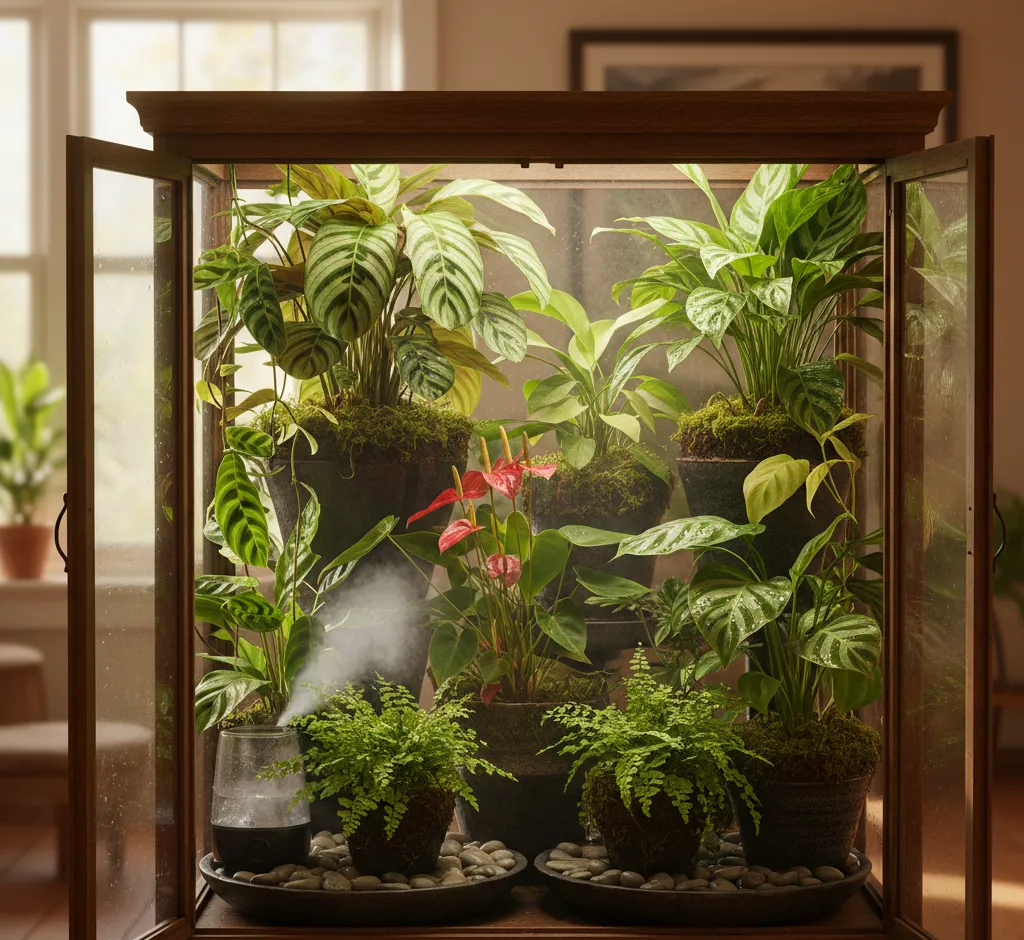
- Cabinet greenhouses. Repurposed glass display cabinets or shelving units with doors (often with a small fan) hold humidity for collections of high-demand plants like rare Philodendrons or Hoyas.
These setups magnify the humidity-boosting power of groupings, damp substrates, and regular watering without affecting other rooms or risking mold in your whole home.
Classic Humidity Hacks: Do They Really Work?
Many traditional tips promise to raise humidity around houseplants, but not all are equally effective. Understanding what actually works saves time and frustration.
The Reality of Misting
Misting is popular because it feels nurturing, but its effects are usually short-lived. Water droplets evaporate quickly, and the surrounding air returns to its original humidity within minutes in most homes.
Pros and Cons of Misting
- Pros: Can provide a brief humidity bump, remove light dust, and cool leaves slightly.
- Cons: Can encourage fungal spots or bacterial issues if leaves stay wet in cool, stagnant air, especially on fuzzy or delicate foliage.
If you enjoy misting, use it as a supplement, not your primary humidity strategy. Focus on warm rooms with good airflow and mist in the morning so leaves dry before night.
Humidity Trays and Pebble Trays
Pebble trays – shallow trays filled with stones and water, with pots resting on top – can work when sized correctly and used with multiple plants.
How to Use Pebble Trays Effectively
- Ensure air contact. Water should sit just below the pot base, so roots do not sit in standing water, while still allowing evaporation around the pot.
- Use larger surface areas. A single small tray under one pot has minimal impact. Wider trays under grouped plants work better.
- Keep them clean. Change water regularly to avoid algae and pests like fungus gnats or mosquitoes.
When combined with plant groupings, pebble trays can incrementally raise local humidity in a low-risk, low-maintenance way.
Humidifiers: Powerful but Not Always Necessary
Electric humidifiers remain the most reliable way to significantly raise humidity, especially in dry winter climates. However, they are not the only option and work best when integrated with other microclimate strategies.
Best Practices for Using Humidifiers with Houseplants
- Use a built-in or external hygrometer. Aim for 45–60% RH for most plants, and avoid constantly exceeding 65% in living spaces to reduce mold risk.
- Place near plant groupings. Position the humidifier so the gentle mist drifts through foliage, not directly blasting leaves.
- Use clean water and regular maintenance. Follow manufacturer instructions to avoid mineral buildup and bacterial growth.
For plant collectors or very dry homes, a humidifier often becomes the anchor of a humidity strategy, supported by the hidden boosters already built into smart plant care.
Match Humidity Levels to Different Plant Types
Not all plants crave the same humidity. Tailoring your efforts to each plant type prevents overcomplication and keeps care efficient.
High-Humidity Lovers (60%+)
- Calatheas, Marantas, and Ctenanthe.
- Most ferns, including maidenhair and Boston ferns.
- Many Anthuriums, rare Philodendrons, and tropical aroids.
- Orchids from cloud forests, such as some Masdevallia and Pleurothallis species.
These plants do best in grouped arrangements, terrariums, cabinet greenhouses, or naturally humid rooms with supplemental humidifiers.
Moderate Humidity Plants (40–60%)
- Most Philodendrons and Pothos.
- Ficus (rubber plants, fiddle-leaf figs) and Schefflera.
- Monstera deliciosa and similar climbers.
- Many Hoyas, Peperomias, and Dracaenas.
These tolerate typical home humidity but still appreciate microclimate support from plant groupings and thoughtful placement away from harsh drafts.
Low-Humidity Tolerant Plants (30–40%)
- Succulents and cacti.
- Snake plants (Sansevieria/Dracaena trifasciata).
- ZZ plants (Zamioculcas zamiifolia).
- Ponytail palms, jade plants, and similar species.
These plants often prefer drier conditions and can suffer from overly humid environments, especially if combined with heavy watering. Place them slightly apart from high-humidity groupings and avoid terrariums.
Balancing Plant Health with Home Comfort and Safety
While boosting humidity benefits plants, it must work for your living space too. Excess moisture in the wrong places can lead to condensation on windows, mold growth, and discomfort for people with respiratory issues.
How to Raise Humidity Safely
- Localize humidity. Focus on plant corners, cabinets, and grouped areas rather than trying to humidify an entire home to tropical levels.
- Ventilate regularly. Open windows briefly when weather permits, use exhaust fans in bathrooms and kitchens, and avoid sealing rooms too tightly.
- Watch for condensation. If windows or cold surfaces frequently fog or drip, scale back humidifier use or move plants away from those surfaces.
- Monitor with multiple hygrometers. Place at least one in your plant zone and one in a non-plant area to understand differences.
Striking a balance between thriving plants and a healthy home environment is both possible and sustainable with a microclimate-first approach.
Putting It All Together: A Practical Humidity Strategy
Instead of chasing a single trick, think of humidity as a layered system. Each small decision in plant care contributes to the overall moisture environment.
Step-by-Step Humidity Action Plan
- Measure your current humidity. Use a hygrometer in your main plant area to understand your baseline in different seasons.
- Group plants by humidity needs. Create a high-humidity zone for sensitive plants and a lower-humidity zone for succulents and other tolerant species.
- Design microclimates. Use corners, shelves, pebble trays, and porous pots to build stable, slightly more humid pockets around your plant groupings.
- Add targeted enclosures. House your most demanding plants in terrariums or cabinet greenhouses instead of raising humidity throughout your home.
- Support with smart watering. Water deeply on a consistent schedule, clean leaves periodically, and avoid extremes of over- and under-watering.
- Layer in tools as needed. Introduce a humidifier only if your baseline humidity remains very low despite these strategies, and always monitor levels.
By seeing humidity as something you can shape – not just endure – your houseplant care becomes more intentional and more effective.
Final Thoughts: Your Plants as Humidity Partners
Houseplants are not passive decorations in dry air; they are active partners in creating a more comfortable, living indoor climate. Their leaves transpire, their soil surfaces gently evaporate, and their groupings generate little pockets of tropical air right in your home.
Lean into these hidden humidity boosters across your plant care routine. With a few thoughtful adjustments – from how you group plants and structure soil surfaces to where you position shelves and when you water – you can support your plants with a stable, plant-friendly humidity level without sacrificing your own comfort. The reward is a greener, lusher, and more resilient indoor oasis that practically cares for itself over time.