Humidity Solutions for Apartment Dwellers: Sleep Better with the Right Indoor Climate
Discover practical humidity solutions for apartment dwellers who struggle to sleep in dry or damp bedrooms. Learn ideal humidity levels, how to measure them, and simple ways to use humidifiers, dehumidifiers, ventilation, and smart bedroom setup to improve comfort, reduce allergies, and sleep better.
Waking up with a dry throat, stuffy nose, or clammy sheets is often a sign that your bedroom humidity is off balance. For apartment dwellers, managing humidity can feel tricky: you usually cannot renovate, you might have limited ventilation options, and you share walls with neighbors who affect the overall building climate. Still, with the right strategies, you can create a comfortable, healthy humidity level that supports deep, restorative sleep.
This guide explains why humidity matters for sleep, what the ideal bedroom humidity range is, and which practical, apartment‑friendly solutions actually work. Whether your main problem is dry air in winter or sticky, heavy air in summer, you will find simple, actionable steps to improve your nights—without needing major home upgrades.
Why Humidity Matters for Quality Sleep
Humidity is the amount of water vapor in the air. While temperature usually gets the most attention when we talk about sleep comfort, humidity quietly plays just as big a role. When humidity is too low or too high, it disrupts your body’s natural temperature regulation, irritates your airways, and can even affect allergies and skin health.
Effects of Low Humidity While You Sleep
Low humidity is especially common during winter or in climates where heating runs for long hours. Dry indoor air can lead to:
- Dry throat and nose: The membranes in your nose and throat can dry out, causing soreness, irritation, and a scratchy feeling.
- Increased snoring: Dry airways are more easily irritated and may make snoring louder and more frequent.
- Worsened allergies and asthma: Dryness can inflame airways and make them more sensitive to dust and other triggers.
- Itchy, flaky skin and chapped lips: Your skin loses moisture more quickly in very dry air.
- Higher risk of infections: Some research suggests that excessively dry air helps certain viruses survive and spread more easily.
Effects of High Humidity While You Sleep
On the other side, high humidity—often a problem in summer or in poorly ventilated apartments—creates its own set of sleep disruptors:
- Overheating and night sweats: When the air is very humid, sweat does not evaporate well, making you feel hotter and stickier.
- Restless, shallow sleep: Feeling hot and uncomfortable makes it harder to fall and stay asleep.
- Mold and dust mites: High humidity encourages mold growth and allows dust mites to thrive, which can worsen allergies and asthma.
- Musty odors and damp bedding: Soft furnishings may never quite dry out, leading to an unpleasant smell and clammy feeling.
The Ideal Bedroom Humidity Range
For most people, the ideal relative humidity for sleeping comfortably is between 40% and 50%, with some sources extending the healthy range from 30% to 60%. Within this range:
- The air is moist enough to protect your skin and airways from dryness.
- It is dry enough to discourage mold growth and dust mites.
- Your body can cool itself through sweating and evaporation at night.
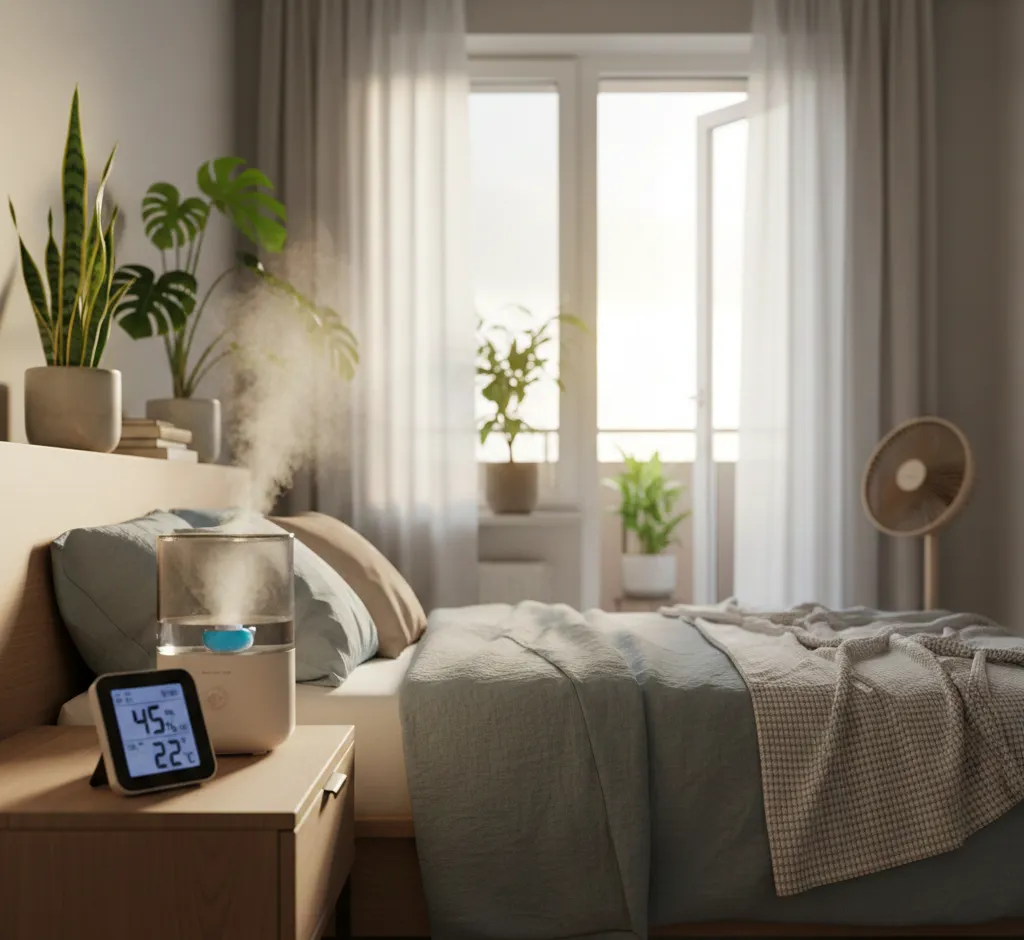
The sweet spot for bedrooms in most climates is around 45%. The first step in managing humidity is knowing your starting point.
Step One: Measure Your Bedroom Humidity
You cannot manage what you do not measure. Before buying devices or changing your routine, find out whether your apartment bedroom is actually too dry, too damp, or reasonably balanced.
Using a Hygrometer
A hygrometer is a small, affordable device that measures relative humidity. Many models also show temperature.
- Choose a simple digital model: You can find compact hygrometers online or in hardware stores, often for the price of a few coffees.
- Place it at bed level: Put it on your nightstand or a nearby shelf, away from windows, direct sunlight, or right above heaters.
- Check it at different times: Read the humidity level in the evening, during the night if you wake up, and first thing in the morning to see how it changes.
Track your readings for a week. This short “humidity diary” will show patterns: for example, maybe your humidity plummets after you turn on the heating, or spikes after showers and cooking.
Recognizing Symptoms Without a Device
If you do not have a hygrometer yet, you can still gather clues:
- Signs of low humidity: Static electricity, dry or cracking wooden furniture, extra-dry hands and lips, frequent sore throat on waking.
- Signs of high humidity: Condensation on windows in the morning, musty smells, visible mold spots on walls or ceilings, damp pillow or bedding feel.
However, a hygrometer gives you precise data and is strongly recommended for long-term humidity control.
Solutions for Dry Air in Apartments
If your readings regularly fall below about 35–40%, you will want to gently increase humidity in your bedroom, especially at night. In apartments, the best approach is a combination of small habit changes and compact devices.
Use a Humidifier Safely and Effectively
A bedroom humidifier is often the most direct way to fix dry air. For apartment dwellers, focus on models that are quiet, easy to clean, and properly sized for a smaller room.
Choosing the Right Humidifier
- Cool mist vs. warm mist: Cool mist models are generally safer if space is tight or if there are children or pets around. Warm mist models can feel more comfortable in winter but use more energy.
- Room size match: Buy a unit rated for the square footage of your bedroom to avoid over- or under-humidifying.
- Noise level: Look for a "quiet" or "sleep mode" setting if you are sensitive to sound at night.
- Built-in humidistat: Many modern humidifiers can maintain a target humidity (for example, 45%), preventing excess moisture.
Best Practices When Using a Humidifier
- Keep it clean: Empty and rinse the tank daily and deep clean it at least weekly to prevent bacteria and mold buildup.
- Use clean water: Filtered or distilled water can reduce mineral deposits and white dust on furniture.
- Do not over-humidify: Monitor with a hygrometer and aim to stay under 55–60% to avoid mold growth in a small bedroom.
- Place it safely: Put the unit on a stable surface a few feet away from your bed and electrical sockets, where mist can circulate freely.
Low-Tech Ways to Add Moisture
If you are not ready to buy a humidifier, you can still nudge humidity up with a few easy habits.
- Dry laundry indoors (in moderation): Hanging clothes to dry on a rack in or near your bedroom adds moisture naturally. Avoid overdoing this if you already have mold issues elsewhere.
- Place bowls of water near heat sources: A ceramic bowl of water on a radiator or near a warm area will slowly evaporate and add humidity.
- Shower with the bathroom door open (when appropriate): Let steam drift into your apartment, but only if you ventilate afterward to avoid excess dampness.
- Add a few houseplants: Some plants release moisture through transpiration and can slightly increase humidity while also making the room feel fresher.
These methods are gentler than a humidifier, but in a very dry apartment they may still help protect your airways and skin during sleep.
Solutions for High Humidity in Apartments
If your bedroom humidity often hovers above 55–60%, especially at night, your priority is to remove excess moisture and improve air flow. This is particularly important for people prone to allergies, asthma, or mold sensitivity.
Use a Dehumidifier for Severe Dampness
A compact dehumidifier can make a dramatic difference in a small, damp bedroom. These devices pull excess moisture from the air and collect it in a tank you empty regularly.
Choosing the Right Dehumidifier
- Room-sized units: For bedrooms, a small portable unit designed for apartments is usually enough.
- Noise concerns: Check decibel ratings and user reviews; many modern dehumidifiers include a quiet or night mode.
- Humidistat control: A model that lets you set and maintain a specific humidity level is ideal to avoid overly dry air.
- Tank size and drainage: Consider how often you are willing to empty the tank or whether you can connect a hose to a drain if your setup allows.
Safe and Effective Use
- Place it near problem areas: If you notice condensation on windows or damp corners, position the dehumidifier nearby while still allowing airflow around it.
- Run it before sleep: Many apartment dwellers run the dehumidifier in the evening to lower humidity, then switch to a fan or AC at night if the noise bothers them.
- Clean the filter: Follow the manufacturer’s guidance for cleaning air filters and tanks to maintain performance and air quality.
Optimize Ventilation Without Major Renovation
Improving ventilation in an apartment is challenging, but not impossible. Small changes in how you use windows, doors, and fans can reduce bedroom humidity and create a healthier sleep environment.
- Cross-ventilate when possible: If your apartment layout allows, briefly open windows at opposite ends to create a breeze. Even 5–10 minutes can help lower humidity.
- Use extractor fans: Always run bathroom and kitchen fans during and after showers or cooking to keep steam from migrating into your bedroom.
- Keep bedroom door slightly open: Unless noise or light is an issue, a partially open door can help moisture disperse instead of collecting in a small room.
- Avoid drying very wet laundry in the bedroom: If you already struggle with high humidity, dry clothes in a better-ventilated area or use a dryer if the building permits it.
Air Conditioning and Fans
Air conditioners naturally remove some moisture as they cool the air, while fans help sweat evaporate and keep you comfortable at a slightly higher humidity level.
- Use AC in "dry" or dehumidify mode: Many split systems include a mode specifically designed to reduce humidity without overly chilling the room.
- Combine a fan with moderate cooling: You might sleep better with a slightly warmer setting (to save energy) plus a quiet ceiling or pedestal fan to keep air moving.
- Direct air flow smartly: Avoid directing cold air or strong draft straight at your face; angle it toward the ceiling or wall to circulate gently.
Bedroom Setup Tips for Ideal Humidity and Comfort
Beyond devices, the way you set up your bedroom has a big impact on how humidity affects your sleep. Think of your sleep space as a small microclimate inside your apartment.
Choose Bedding That Handles Moisture Well
Your sheets and blankets can either trap humidity and heat or work with your body to regulate temperature.
- Natural, breathable fabrics: Cotton, linen, and some bamboo fabrics allow moisture to escape much better than heavy synthetics.
- Seasonal bedding rotation: Use lighter duvets and blankets in humid months and reserve very thick comforters for dry, cold periods.
- Moisture-wicking mattress protectors: These help manage sweat and keep your mattress from feeling damp in humid climates.
- Wash and fully dry bedding regularly: Clean sheets not only feel better but also reduce dust mites, which prefer humid, unwashed fabric.
Furniture Placement and Air Flow
How you arrange your small apartment bedroom can either trap moisture or allow it to move freely.
- Pull furniture away from exterior walls: Leave a small gap between your bed, wardrobe, and outside walls to prevent moisture buildup and hidden mold.
- Keep vents and radiators clear: Do not block heating or air conditioning outlets with furniture; this helps maintain even temperature and humidity.
- Lift items off the floor: Use bed risers or choose furniture with legs so air can circulate underneath.
Control Indoor Moisture Sources
Everyday activities add moisture to apartment air. Being mindful of when and how you do them can keep humidity closer to the ideal range at night.
- Cook with lids on pots: This simple habit reduces steam release into the apartment.
- Use bathroom fans during and after showers: Let them run for at least 15–20 minutes to clear moisture before you close bedroom doors and windows for the night.
- Fix minor leaks promptly: Even small plumbing or window leaks can dramatically increase humidity and mold risk in a small space.
- Avoid over-watering plants: Houseplants are helpful in moderation, but soggy soil and standing water in saucers add unnecessary moisture.
Health Considerations for Sensitive Sleepers
If you have allergies, asthma, or skin conditions, humidity control is not just a comfort issue—it is part of your health management plan. In apartments, where you might share ventilation systems or building humidity, being proactive matters even more.
Managing Allergies and Asthma
Balanced humidity can reduce common bedroom allergen problems:
- Dust mites: They thrive when humidity stays above about 50–55%. Using a dehumidifier, breathable bedding, and regular washing can significantly lower their numbers.
- Mold spores: Mold loves persistently damp corners and surfaces. Keeping humidity below about 50%, fixing leaks, and cleaning visible spots promptly are key.
- Respiratory irritation: Both very dry and very humid air can inflame your airways. Aim for the mid-range (around 40–50%) if you are sensitive.
If you notice wheezing, coughing, or congestion that is worse at night or on waking, track your humidity readings and discuss them with a healthcare professional. Showing them a week of data from your bedroom can help guide treatment and home changes.
Skin and Sinus Comfort
Dermatologists and ENT specialists often see patients whose symptoms get worse in extreme indoor humidity. To protect your skin and sinuses while you sleep:
- Use a bedside humidifier in dry seasons: This helps prevent nosebleeds, sinus dryness, and cracked lips.
- Apply a gentle moisturizer at night: This locks in moisture so indoor air pulls less water out of your skin.
- Stay hydrated: Drink enough water during the day so your body is not starting the night already dehydrated.
Practical Nighttime Routine for Better Humidity
To make humidity control a sustainable habit rather than a one-time project, build a simple evening routine around it. Here is a sample checklist you can adapt to your apartment and climate.
Evening Checklist (15–30 Minutes Before Bed)
- Check your hygrometer: Note the current humidity level in your bedroom.
- Adjust devices: Turn on your humidifier or dehumidifier if the reading is outside your preferred range. If you use an AC in dry or dehumidify mode, set it now.
- Vent briefly: Open a window for 5–10 minutes if outdoor conditions allow, especially after cooking or showering.
- Set up your fan: Position it so air moves around the room without blowing directly on your face.
- Look for condensation or damp spots: Check windows and corners occasionally; address any recurring issues before they worsen.
By repeating this short routine, you will start to see which actions have the biggest impact on your apartment’s humidity, and you can fine-tune your approach through the seasons.
When to Involve Your Landlord or Building Management
Sometimes, humidity problems in apartments go beyond what you can control on your own. If you notice persistent issues such as heavy condensation, ongoing mold growth, or water infiltration from outside, it may be time to involve your landlord or building manager.
- Document the problem: Take clear photos of mold, peeling paint, leaks, or condensation, and keep a log of when issues appear.
- Share humidity readings: Showing consistent high readings (for example, 65–70%+ in the bedroom) can support your request for repairs or improved ventilation.
- Ask about building-wide solutions: Some issues stem from roof leaks, poor insulation, or malfunctioning central ventilation systems that require professional intervention.
Addressing these underlying causes not only improves your sleep but can protect the building and other residents as well.
Bringing It All Together
For apartment dwellers, achieving the ideal bedroom humidity for sleep is about smart, small steps rather than large-scale renovations. Start by measuring your current humidity with a hygrometer, then focus on gradually steering it into the 40–50% range using bedroom-sized devices, better ventilation habits, and thoughtful room setup.
Whether you are battling dry winter air that cracks your lips or heavy summer air that clings to your sheets, there is a mix of solutions that fits your situation, budget, and building rules. With just a bit of attention and experimentation, you can create a more comfortable indoor climate that supports deep, refreshing sleep—night after night, even in a small city apartment.