Impact of HVAC Systems on Sleep Humidity: How to Optimize Your Bedroom Climate
Discover how HVAC systems impact bedroom humidity and sleep quality. Learn the ideal humidity range for better rest and practical ways to optimize your indoor climate.

Sleep quality depends on far more than a comfortable mattress or a quiet room. One of the most underrated factors is bedroom humidity – and your HVAC (Heating, Ventilation, and Air Conditioning) system plays a central role in shaping it. When indoor humidity falls outside a healthy range, it can disrupt breathing, irritate skin and eyes, worsen allergies, and ultimately damage sleep quality and recovery.
Understanding how HVAC systems interact with humidity gives you the power to create a healthier, more restorative sleep environment. This article explains how HVAC equipment affects moisture levels, what the ideal sleep-time humidity range is, and which practical steps you can take to optimize both your air and your sleep.
Why Humidity Matters for Sleep
Humidity describes the amount of water vapor in the air. Indoors, both too little and too much humidity can make it harder to fall asleep, stay asleep, and wake up refreshed. Most sleep specialists and building science experts recommend keeping bedroom humidity between 40% and 60% relative humidity for comfort and health.
Effects of low humidity on sleep
Low humidity is especially common in winter or in tightly sealed homes with strong heating systems. When the air is overly dry, moisture evaporates more quickly from your skin and mucous membranes.
- Dry airway irritation: Dry air can irritate the nose, throat, and lungs, triggering coughing, scratchy throat, or a stuffy nose that worsens at night.
- Snoring and breathing problems: Dryness may increase snoring and aggravate underlying issues like sleep apnea by making airway tissues more sensitive and inflamed.
- Skin and eye discomfort: Chapped lips, itchy skin, and dry eyes make it harder to relax and may cause micro-awakenings throughout the night.
- Static electricity and discomfort: Very low humidity can create static shocks and a harsh-feeling environment, reducing perceived comfort even at a normal temperature.
Effects of high humidity on sleep
Excess humidity is more common in warm climates, older homes, or areas with poor ventilation. While moist air may feel soothing to some, too much humidity creates its own set of sleep problems.
- Overheating and sweating: High humidity makes it harder for sweat to evaporate, which is the body’s main cooling mechanism. The result: you feel hotter, sticky, and restless.
- Increased allergens and mold: Dust mites, mold, and certain bacteria thrive in damp environments, irritating the respiratory system and triggering allergies or asthma at night.
- Heavy, stuffy air: Very humid air feels dense and suffocating, making breathing feel less effortless and increasing the perception of poor air quality.
- Interrupted deep sleep: Temperature and humidity discomfort often disrupt REM and deep sleep, which are crucial for physical recovery and mental performance.
How HVAC Systems Influence Indoor Humidity
HVAC systems do more than heat or cool your home. They constantly interact with indoor moisture levels through cooling, heating, and ventilation. Understanding these interactions helps you tune your system for better sleep.
Air conditioning and dehumidification
Air conditioners naturally remove moisture from the air as they cool it. When warm, humid air passes over the cold evaporator coil, water vapor condenses into liquid and drains away. This process can significantly lower indoor humidity.
- Pros for sleep: Reduced humidity makes summer nights more comfortable, prevents clammy bedding, and lowers the growth of mold and dust mites.
- Potential issues: If the system is oversized or runs in very short cycles, it may cool the room quickly without running long enough to remove sufficient moisture, leaving air cool but still damp.
- Fan mode considerations: Running the indoor fan continuously when the compressor is off can sometimes re-evaporate moisture from the coil back into the air, raising humidity again.
Heating systems and drying the air
Heating systems, especially in colder climates, tend to dry indoor air. This effect is largely due to physics: when cold outdoor air is brought inside and heated, its capacity to hold moisture increases, but the total amount of moisture stays the same. Relative humidity drops, and the air feels much drier.
- Furnaces and boilers: Forced-air furnaces and hydronic (radiator) systems both create very dry indoor conditions in winter without added humidification.
- Heat pumps: Modern heat pumps still reduce humidity in heating mode, but may do so less aggressively than traditional resistance or gas heating.
- Impact on sleep: Without humidification, bedrooms can dip far below 30% relative humidity, leading to sore throat, nosebleeds, and increased susceptibility to respiratory infections.
Ventilation and fresh air exchange
Ventilation – the exchange of indoor and outdoor air – also influences humidity. Depending on your climate, bringing in outdoor air can either raise or lower indoor moisture levels.
- In humid climates: Outside air often adds moisture to your home, increasing the burden on your air conditioning system to dehumidify.
- In dry climates: Ventilation can lower humidity even further, making indoor air extremely parched in winter.
- Mechanical ventilators: Energy Recovery Ventilators (ERVs) and Heat Recovery Ventilators (HRVs) can transfer heat and sometimes some moisture between incoming and outgoing air, moderating the impact on humidity.
Ideal Bedroom Humidity for Better Sleep
For most people, the sweet spot for sleep-time humidity is between 40% and 60%. Within this range, the air supports healthy respiratory function, reduces allergens, and feels comfortable against the skin.
Why 40–60% humidity is recommended
- Supports respiratory health: Moist enough to keep mucous membranes hydrated, but not so damp that mold and dust mites thrive.
- Temperature perception: Balanced humidity makes temperatures feel more natural, allowing slightly higher summer temperatures or lower winter temperatures to still feel comfortable.
- Skin and eye comfort: Reduces dry, itchy skin and irritated eyes that can pull you out of deeper sleep stages.
- Lower pathogen survival: Many viruses and bacteria survive longer in extremely dry or extremely humid air; mid-range humidity limits this.
How temperature and humidity work together
Humidity and temperature should be considered together. A warm, humid bedroom feels far hotter than the thermostat suggests, while a cool, dry room can feel sharper and more uncomfortable than expected.
- Summer nights: A bedroom at 24 °C with 70% humidity may feel oppressive, but the same room at 24 °C and 50% humidity can feel comfortable.
- Winter nights: A room at 19 °C and 25% humidity may feel chilly and harsh, while 19 °C and 45% humidity feels softer and more pleasant on skin and airways.
Common HVAC-Related Humidity Problems in Bedrooms
Many sleep issues trace back to how HVAC systems are designed, sized, and maintained. Here are some of the most frequent humidity-related problems that affect sleep.
Oversized air conditioners and short cycling
An oversized air conditioner cools the room quickly, but shuts off before it has time to properly dehumidify the air. The result is a cool but clammy bedroom, especially during humid evenings.
- Cool but damp bedding and pillows
- Musty odors and possible mold growth in poorly ventilated areas
- Frequent awakenings due to discomfort, even though the temperature seems fine
Unbalanced or poorly designed ductwork
If the bedroom receives too much or too little conditioned air compared to other rooms, humidity can drift out of the ideal range.
- Under-conditioned rooms: Less airflow means less cooling and dehumidification in summer, and uneven heating in winter.
- Over-conditioned rooms: Excess cooling might lead to overly dry air when combined with long AC runtimes, or excessively low humidity in winter with constant heating.
Lack of integrated humidity control
Many traditional thermostats only measure temperature, not humidity. Without a way to monitor and control moisture, your HVAC system may keep the bedroom at the right temperature but the wrong humidity.
- No feedback mechanism to increase or decrease dehumidification
- Greater reliance on portable devices that are not synchronized with HVAC operation
- Inconsistent comfort as weather conditions change overnight
Dirty filters and poor maintenance
Clogged filters, dirty coils, and blocked drains all degrade HVAC performance and indirectly affect humidity control.
- Reduced airflow leads to uneven temperature and moisture removal
- Frozen coils can interrupt normal dehumidification cycles
- Blocked condensate drains may cause moisture problems and even leaks near sleeping areas
Optimizing HVAC Settings for Healthier Sleep Humidity
Small adjustments to your HVAC setup can make a meaningful difference in bedroom humidity and sleep quality. Below are practical steps you can take, many of which do not require major renovations.
Step 1: Measure and monitor humidity
Before making changes, it is essential to understand current conditions in your bedroom.
- Use a reliable digital hygrometer to track humidity levels throughout the day and night.
- Place it at about head height, away from direct vents or windows, to get a more accurate reading.
- Record typical humidity levels at bedtime, during the night, and upon waking to identify patterns.
Step 2: Adjust thermostat strategies
Smart thermostat use can improve both temperature and humidity control.
- Use "auto" fan mode: Allow the fan to run only when the system is actively heating or cooling. This can prevent re-evaporation of moisture from AC coils in humid climates.
- Avoid extreme setbacks: Large overnight temperature changes may lead to rapid humidity swings when the system ramps back up.
- Choose sleep-friendly temperatures: Aim for around 18–20 °C, then fine-tune based on how humidity affects your comfort.
Step 3: Use dehumidifiers or humidifiers strategically
If HVAC alone cannot maintain ideal humidity, supplemental equipment can help.
- Portable dehumidifier: Ideal for damp climates or basement bedrooms where the central AC struggles to keep humidity below 60%.
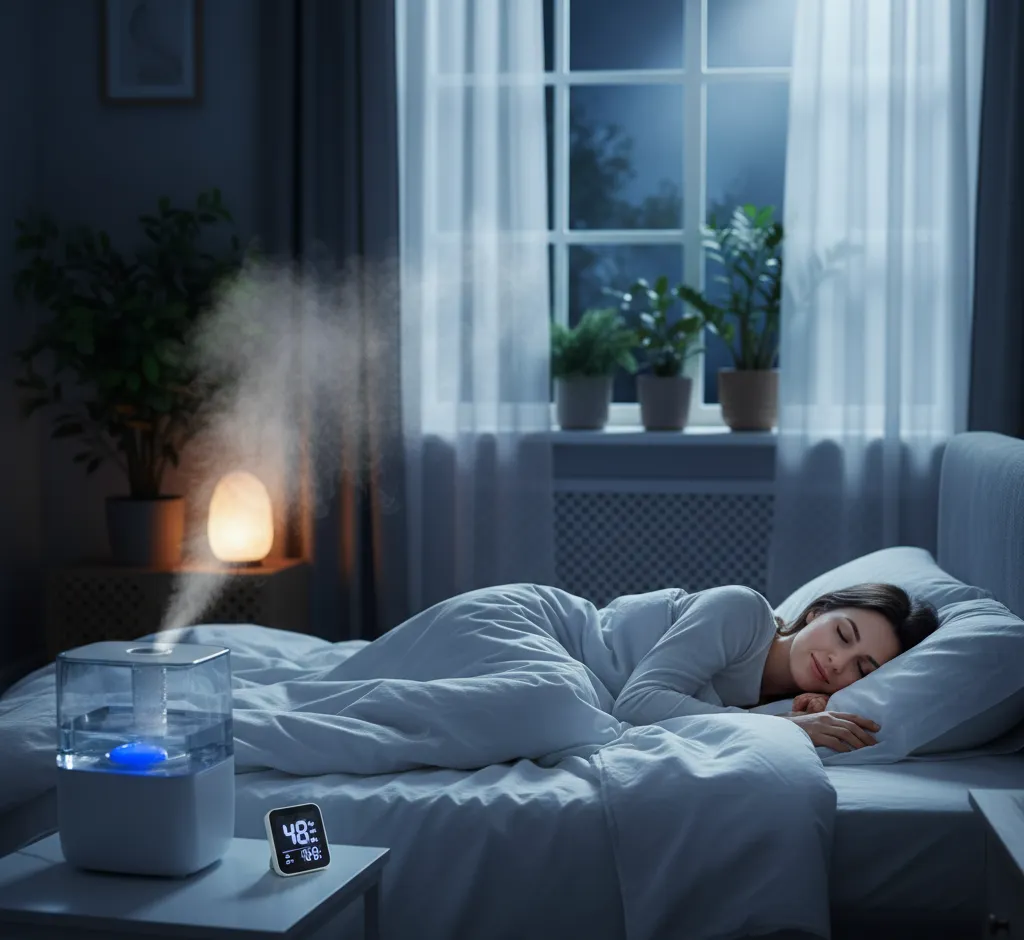
- Portable humidifier: Useful in winter or arid climates when bedroom humidity drops below 30–35%.
- Whole-house solutions: A whole-home humidifier or dehumidifier integrated into ductwork offers more consistent control, but requires professional installation.
Step 4: Improve ventilation wisely
Ventilation can support healthy humidity when managed correctly.
- Bathroom and kitchen fans: Run exhaust fans during and after showers or cooking to remove excess moisture before it spreads through the home.
- Window ventilation: In mild, dry weather, opening windows before bedtime can naturally reduce humidity and refresh the air.
- Mechanical ventilation systems: In tight, energy-efficient homes, consider ERVs or HRVs to bring in filtered fresh air with moderated moisture impact.
Step 5: Seal and insulate the building envelope
Humidity control is easier when your home’s envelope – walls, windows, doors, and ceilings – is properly sealed and insulated.
- Seal gaps around windows and doors to prevent humid outdoor air from leaking in, or dry air from escaping in winter.
- Insulate attics, crawl spaces, and exterior walls to reduce temperature swings that can drive condensation or dryness.
- Address basement moisture with proper drainage, vapor barriers, and dehumidification to protect bedrooms above.
Bedroom-Specific Tips to Balance Humidity and Comfort
Beyond whole-home HVAC strategies, bedroom-level changes can further optimize humidity for sleep.
Choose the right bedding and mattress
Bedding and mattresses influence how humidity feels in contact with your body.
- Breathable fabrics: Select cotton, linen, or bamboo sheets that wick moisture and allow air circulation.
- Moisture-regulating mattresses: Some foam mattresses retain heat and moisture; consider hybrids or designs with better airflow if you overheat at night.
- Seasonal layering: Layer blankets so you can easily adjust warmth according to both temperature and humidity.
Control bedroom moisture sources
Daily habits can add unnecessary moisture to bedroom air.
- Avoid drying laundry indoors in the bedroom, especially in small or poorly ventilated spaces.
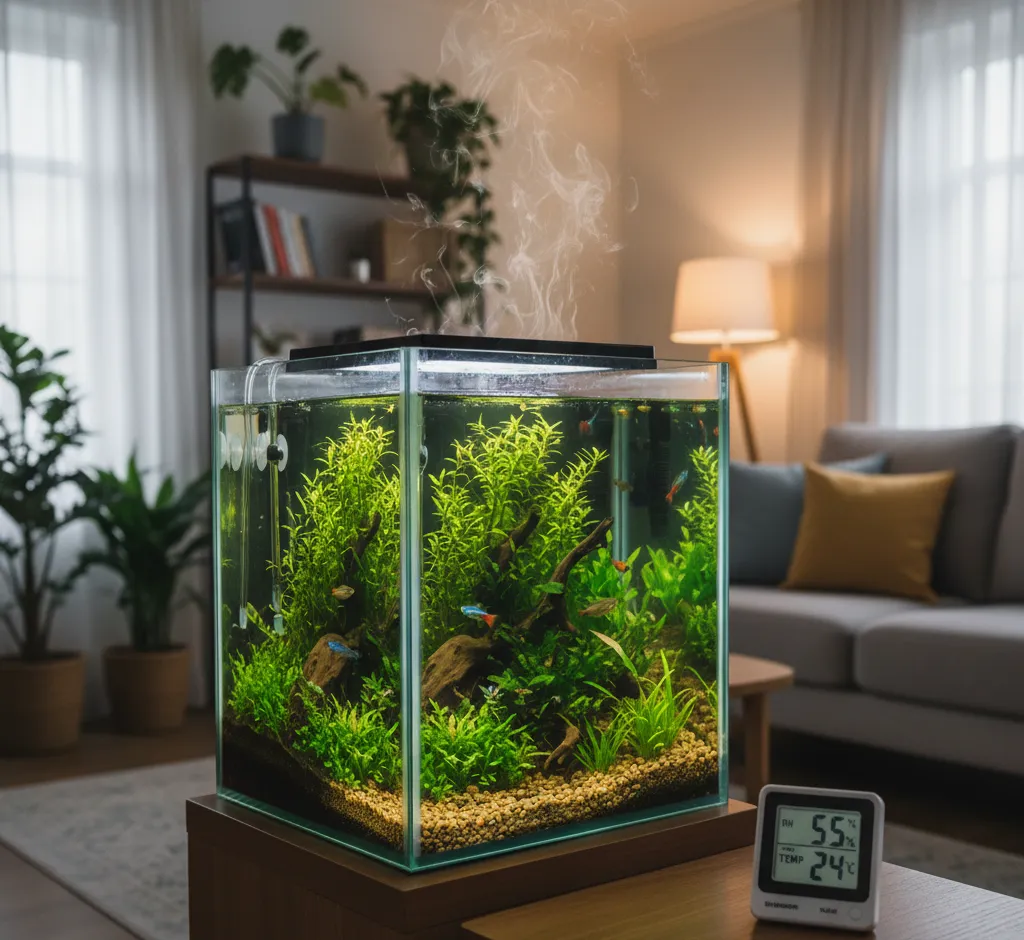
- Cover aquariums or move them out of the bedroom if they noticeably raise humidity.
- Do not run humidifiers continuously without monitoring humidity; "more" is not always better.
Allergy and asthma considerations
For people with allergies, asthma, or sleep apnea, humidity control can be especially important.
- Maintain 40–50% humidity: This range helps minimize dust mite populations and mold growth, common triggers for nighttime symptoms.
- Use high-quality filtration: Consider HVAC filters with higher MERV ratings (within equipment limits) and bedroom air purifiers to reduce airborne allergens.
- Keep bedding clean: Wash sheets and pillowcases regularly in hot water to remove allergens that thrive in humid environments.
Smart HVAC Technology for Humidity and Sleep
Modern HVAC controls and devices can automate humidity management and support better sleep without constant manual adjustments.
Smart thermostats with humidity sensors
Many smart thermostats now include built-in humidity monitoring or can connect to remote sensors.
- Track temperature and humidity trends over days and weeks.
- Set target humidity ranges and receive alerts when levels fall outside them.
- Coordinate HVAC operation with dehumidifiers or humidifiers for more precise control.
Room-by-room zoning and controls
Zoned HVAC systems allow different temperature and humidity strategies for different parts of the home, including bedrooms.
- Give bedrooms priority for comfort during night hours while relaxing settings in other rooms.
- Reduce energy waste by not over-conditioning unoccupied areas while still optimizing sleep spaces.
- Fine-tune airflow and runtime for rooms that naturally run more humid or more dry.
When to Call a Professional
While many humidity-related adjustments are DIY-friendly, certain situations call for professional HVAC support.
- Persistent humidity above 60% or below 30% despite using portable equipment.
- Visible mold, chronic musty odors, or condensation on windows and cold surfaces.
- Uneven temperatures and humidity between rooms that do not respond to minor duct or vent adjustments.
- Interest in installing whole-house humidifiers, dehumidifiers, ERVs/HRVs, or zoning systems.
A qualified HVAC professional can evaluate system sizing, duct design, ventilation strategies, and equipment performance to create a plan that supports both energy efficiency and sleep health.
Key Takeaways: Aligning HVAC and Humidity for Better Sleep
HVAC systems have a profound impact on indoor humidity, and therefore on how well you sleep. Air conditioners tend to dehumidify, heating systems often dry the air, and ventilation can either raise or lower moisture depending on the climate. Without deliberate humidity management, it is easy for bedrooms to slip into uncomfortable and unhealthy ranges.
By measuring humidity, optimizing thermostat and fan settings, using humidifiers or dehumidifiers wisely, and addressing ventilation and building envelope issues, you can bring bedroom humidity into the ideal 40–60% range. Combining these HVAC-focused steps with smart bedding choices and good maintenance habits creates a bedroom environment that supports easier breathing, deeper sleep, and better recovery night after night.