Marula Oil vs Argan Oil: Which Beauty Oil Is Better for Your Skin and Hair?
Marula oil vs argan oil: discover the key differences, benefits, and best uses for each oil in your skin and hair routine. Learn which oil suits your skin type, hair needs, and beauty goals.
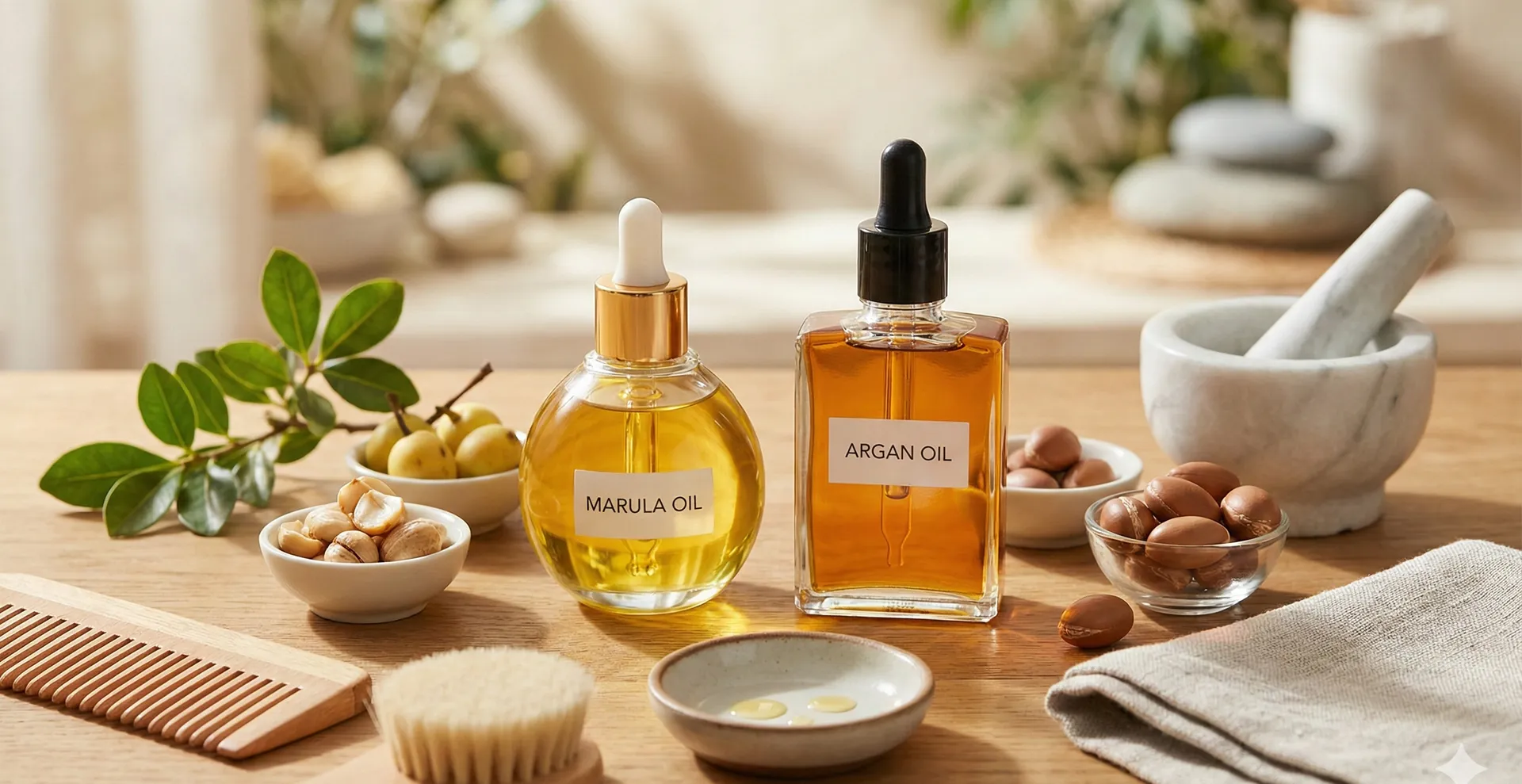
Natural beauty oils have become essential in many skincare and haircare routines, and two of the most popular are marula oil and argan oil.[web:1][web:6] Both are rich in nourishing fatty acids and antioxidants, but they behave differently on the skin and hair, making each better suited to specific needs.[web:1][web:6][web:13] Understanding those differences helps you choose the right oil instead of guessing based on trends.
What Is Marula Oil?
Marula oil is extracted from the kernels of the marula fruit tree native to Southern Africa and has long been used traditionally to protect skin and hair from harsh environmental conditions.[web:1][web:8] It is rich in antioxidants, essential fatty acids such as oleic and palmitic acid, and amino acids, giving it strong moisturizing and barrier-supporting properties.[web:1][web:2][web:3] Because of its lightweight texture and fast absorption, marula oil is commonly used in face oils, serums, and hair treatments designed to hydrate without heaviness.[web:1][web:5]
What Is Argan Oil?
Argan oil comes from the kernels of the argan tree fruit, which grows mainly in Morocco, and has been used for centuries for both cosmetic and culinary purposes.[web:6][web:18] It contains vitamin E, linoleic and oleic fatty acids, and other antioxidants that help support the skin barrier, improve texture, and add shine and smoothness to hair.[web:6][web:9][web:15] Because it delivers moisture while remaining relatively light, argan oil has earned the nickname “liquid gold” in the beauty industry.[web:6][web:16]
Key Similarities Between Marula and Argan Oil
- Both oils are plant-derived, rich in fatty acids, and support the skin’s protective barrier, helping to reduce moisture loss and dryness.[web:1][web:6][web:16]
- Each oil contains antioxidants that help neutralize free radicals from environmental stressors such as UV exposure and pollution, which can contribute to premature skin aging.[web:2][web:6][web:7]
- Both marula and argan oils can be used on skin, hair, and nails to soften, smooth, and add shine, although their ideal uses differ slightly.[web:1][web:2][web:6][web:19]
Marula Oil vs Argan Oil: At a Glance
The following overview highlights the main differences between marula oil and argan oil so you can quickly see which one better fits your goals.[web:7][web:10][web:13][web:19]
| Feature | Marula Oil | Argan Oil |
|---|---|---|
| Texture | Lightweight and fast-absorbing, often described as silky and non-greasy.[web:1][web:5][web:7] | Light to medium weight; can feel slightly richer on the skin and hair.[web:6][web:10] |
| Fatty acid profile | High in oleic acid with smaller amounts of linoleic acid, providing deep moisturization.[web:10][web:16] | More balanced ratio of oleic and linoleic acids, supporting moisture and barrier repair without being too heavy.[web:10][web:18] |
| Best for skin type | Excellent for dry, dehydrated, or mature skin and for replenishing sun-exposed skin.[web:1][web:2][web:19] | Well suited to normal, combination, and oily or acne-prone skin because it helps balance oil and is non-comedogenic.[web:6][web:10][web:13] |
| Comedogenic tendency | Generally considered non-comedogenic and suitable for many with acne-prone skin, though individual responses vary.[web:1][web:13][web:16] | Commonly described as non-comedogenic and often recommended for blemish-prone skin to support barrier repair without clogging pores.[web:6][web:10][web:13] |
| Hair benefits | Hydrates, smooths, and helps reduce frizz without weighing hair down; works for dry, brittle, or damaged strands.[web:1][web:3][web:20] | Adds shine, improves elasticity, and helps protect against heat and color damage while taming frizz.[web:6][web:12][web:15] |
| Antioxidant content | Very high antioxidant content; some sources note higher levels compared with argan oil, which aids in defending against environmental damage.[web:2][web:7][web:16] | Rich in vitamin E and other antioxidants that support skin and hair health and help reduce oxidative stress.[web:6][web:9][web:18] |
| Ideal primary use | Intensive facial moisturizer, barrier support, and overall skin nourishment; also helpful for dry body skin and cuticles.[web:1][web:2][web:19] | Daily skin-balancing oil and hair treatment for shine, smoothness, and damage protection.[web:6][web:12][web:15] |
Benefits of Marula Oil for Skin
Marula oil is highly valued for its ability to deeply hydrate while absorbing quickly, making it a strong option for dry or aging skin that feels tight or rough.[web:1][web:3][web:5] Its blend of fatty acids and antioxidants supports the skin barrier, which helps reduce transepidermal water loss and makes the skin look plumper, smoother, and more luminous.[web:1][web:2][web:16]
Because marula oil feels lightweight and non-greasy, it can be layered under makeup without causing excessive shine or product pilling.[web:1][web:5] Some people with sensitive or irritated skin use marula oil to help calm dryness and discomfort, although anyone with specific skin conditions should patch test and consult a professional if needed.[web:1][web:2][web:3]
Benefits of Argan Oil for Skin
Argan oil is known for delivering hydration alongside a protective effect on the skin barrier, which can help improve overall texture and comfort, especially in dry or environmentally stressed skin.[web:6][web:9][web:18] Its vitamin E and fatty acid content support smoother, more supple skin and may help reduce the appearance of roughness or fine dryness lines.[web:6][web:9]
Because argan oil tends to be non-comedogenic, it is widely used on normal, combination, and oily skin types and can be helpful when the barrier has been disrupted by strong treatments or over-cleansing.[web:6][web:10][web:13] Many people use a few drops of argan oil as a final step in their evening routine to lock in moisture without feeling overly greasy.[web:6][web:9]
Hair Benefits: Marula Oil vs Argan Oil
Marula oil offers hydrating and occlusive properties that help reduce water loss from hair strands, which can be especially beneficial for dry, frizzy, or brittle hair.[web:1][web:3][web:4] Its light texture allows it to coat the hair without leaving a heavy residue, making it suitable even for finer hair types when applied sparingly to mid-lengths and ends.[web:1][web:4][web:20]
Argan oil is widely used in hair products because it improves shine, smoothness, and combability while protecting against styling and coloring damage.[web:6][web:12][web:15] Its fatty acids add a protective layer around the hair shaft, helping reduce breakage, split ends, and dullness caused by heat tools and chemical treatments.[web:6][web:12][web:15]
Which Oil Is Better for Acne-Prone or Oily Skin?
When dealing with oily or acne-prone skin, the comedogenic profile and ability to balance sebum are critical factors.[web:10][web:13][web:19] Argan oil is often highlighted as a good choice for such skin types because it is considered non-comedogenic and can help support oil balance and barrier repair without heavily occluding pores.[web:6][web:10][web:13]
Marula oil is also described as lightweight and suitable for many with combination or acne-prone skin, especially when dryness or barrier disruption is present.[web:1][web:13][web:16] However, its higher oleic acid content may feel richer on some oily skin types, so patch testing and gradual introduction are important to assess individual response.[web:10][web:13]
Anti-Aging and Environmental Protection
Both marula and argan oils contribute to an anti-aging routine by supplying antioxidants that help defend against free radical damage from UV exposure and pollution.[web:2][web:6][web:7] This defense supports a more resilient skin barrier and can help reduce signs associated with photoaging, such as dullness and rough texture over time.[web:2][web:6]
Marula oil is often noted for especially high antioxidant levels, which can be appealing for those focused on counteracting environmental stress.[web:2][web:7][web:16] Argan oil’s vitamin E content further supports this protective role while also aiding in skin repair and improved elasticity.[web:6][web:9][web:18]
How to Use Marula Oil in Your Routine
For Facial Skincare
- Apply a few drops of marula oil after water-based serums and before, or in place of, a cream moisturizer to seal in hydration.[web:1][web:3]
- Use it at night as a final step to boost moisture if your skin feels dry, tight, or sensitized from weather or active ingredients.[web:1][web:2]
For Hair and Body
- Smooth a small amount through damp or dry hair focusing on mid-lengths and ends to tame frizz and add shine without heaviness.[web:1][web:4][web:20]
- Massage into dry body areas, cuticles, and hands to soften skin and support the barrier on frequently washed or exposed areas.[web:2][web:3]
How to Use Argan Oil in Your Routine
For Facial Skincare
- Blend a few drops of argan oil with your moisturizer or press it directly onto slightly damp skin to help maintain the skin’s water barrier.[web:6][web:9]
- Use it after exfoliating or using strong actives to provide comfort and help reduce post-treatment dryness or tightness.[web:6][web:10]
For Hair and Scalp
- Apply argan oil as a leave-in on mid-lengths and ends to enhance shine, reduce frizz, and protect from heat styling.[web:6][web:12][web:15]
- Use a small amount as a pre-shampoo or overnight treatment to nourish the scalp, which may help support healthy hair growth and reduce dryness or flaking.[web:12][web:15]
How to Choose Between Marula Oil and Argan Oil
The best choice depends on your skin type, hair texture, and primary concerns.[web:10][web:13][web:19] People with very dry, mature, or sun-exposed skin often prefer marula oil for its rich yet fast-absorbing moisture, while those with combination or oily skin may lean toward argan oil for its balancing and barrier-supporting effects without excessive richness.[web:1][web:6][web:13][web:19]
For hair, marula oil is a strong option if strands are dry, brittle, or prone to frizz but become easily weighed down by heavier products, whereas argan oil is particularly useful if you frequently color or heat style your hair and need extra protection and shine.[web:1][web:6][web:12][web:20] Many people ultimately use both oils in different parts of their routine—for example, marula oil for intensive facial moisture and argan oil as a daily hair serum.[web:6][web:19]
Tips for Safe Use and Patch Testing
Although both marula and argan oils are generally well tolerated, any natural oil can cause sensitivity or breakouts in some individuals.[web:1][web:3][web:6] Performing a patch test on a small area of skin before full-face or scalp application helps reduce the risk of unwanted reactions.[web:3][web:6]
Choose high-quality, minimally processed oils and store them away from heat and direct sunlight to help preserve their beneficial components.[web:1][web:6][web:18] If you have underlying skin conditions or are using prescription treatments, consult a dermatologist or other qualified professional before introducing new oils into your routine.[web:3][web:6]