Myths About Hydration and Daily Water Intake: What Science Really Says
Discover the truth behind popular hydration myths and daily water intake rules. Learn how much water you really need, what actually counts as hydration, and how to stay optimally hydrated without falling for pseudoscience.
Why Hydration Myths Matter
Hydration advice is everywhere: drink eight glasses a day, avoid coffee because it "dehydrates", carry a huge bottle at all times, and never wait until you feel thirsty. Some of these tips are useful, but many are outdated, oversimplified, or just plain wrong.
Understanding what is myth and what is science about daily water intake is crucial for feeling energetic, supporting brain function, maintaining healthy skin, and even optimizing athletic performance. At the same time, over-focusing on hydration based on misleading rules can create unnecessary anxiety and, in extreme cases, health risks.
This article breaks down the most common myths about hydration and daily water intake, explains what research actually shows, and offers practical, evidence-based tips you can apply every day.
Myth 1: Everyone Must Drink 8 Glasses of Water a Day
Where the 8×8 Rule Came From
The famous "8×8" rule (eight 240 ml glasses, about 2 liters per day) is one of the most repeated pieces of health advice. Yet, there is no strong scientific study that proves everyone needs exactly that amount.
The idea likely came from early nutrition reports that suggested around 2–2.5 liters of fluid per day for adults. However, those same reports also stated that a significant portion of this fluid comes from food and other beverages, not just pure water. Over time, the nuance was lost, and the simplified "8 glasses of water" slogan took over.
What the Science Actually Says
Hydration needs are highly individual. The amount of water you need depends on several factors:
- Body size and composition: Larger bodies and higher muscle mass often require more fluids.
- Activity level: More exercise means more sweat loss and higher fluid needs.
- Environment: Hot, humid, or high-altitude climates increase fluid loss.
- Diet: High-salt, high-protein, or low-fruit-and-vegetable diets may raise water needs.
- Health status and medication: Fever, vomiting, diarrhea, certain kidney conditions, and some medications can alter hydration requirements.
Instead of a universal number, health organizations provide broad ranges. Many adults do well with roughly 2–3 liters of total fluids per day, including water, other drinks, and water-rich foods. Some need less, some need more.
Practical Takeaway
Use the 8×8 rule as a loose guideline, not a strict target. Listen to your body, monitor your urine color (pale yellow is usually a good sign), and adjust your intake based on your lifestyle and environment.
Myth 2: Only Plain Water Counts Toward Hydration
Hydration Is About Total Fluid Intake
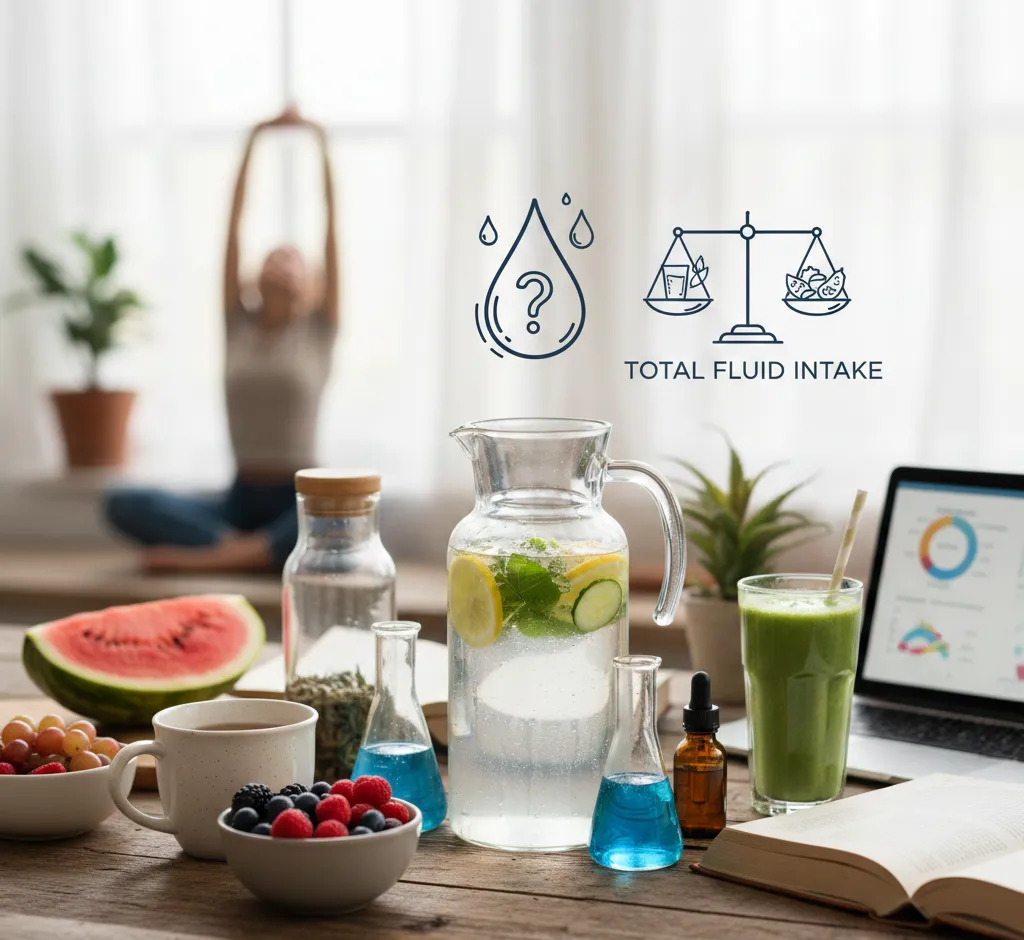
Another common myth is that only plain water contributes to hydration and that everything else—coffee, tea, juice, even soup—does not count. In reality, your body does not care whether water arrives as pure H2O, herbal tea, or watermelon. What matters is the total amount of fluid, not its exact source.
Research consistently shows that many beverages, including those with caffeine, contribute meaningfully to daily hydration. Foods also play a significant role. Fruits, vegetables, yogurt, soups, and stews can be very water-rich and help you meet your needs.
What About Caffeine and Alcohol?
Caffeine has a mild diuretic effect (it can increase urine output slightly), but in people who regularly consume coffee or tea, the body adapts. For most regular drinkers, caffeinated beverages still have a net hydrating effect.
Alcohol is a different story. It can significantly increase urine output and disrupt the hormones that regulate fluid balance. While there is still water in beer, wine, and cocktails, alcohol-containing drinks are not reliable for meeting your hydration needs and can promote dehydration when consumed in excess.
Practical Takeaway
Count the following toward your daily fluid intake:
- Plain water (still or sparkling)
- Herbal teas and regular tea
- Coffee (in moderate amounts)
- Milk and plant-based milks
- Low-sugar juices and smoothies
- Soups, broths, and water-rich foods
Rely on alcohol as little as possible for hydration, and pair alcoholic drinks with water, especially in hot weather or during long social events.
Myth 3: Thirst Is Always Too Late
The Truth About Thirst
You may have heard that by the time you feel thirsty, you are already dangerously dehydrated. This is exaggerated. Thirst is a sophisticated feedback mechanism that responds to changes in blood concentration and volume. For most healthy people, thirst kicks in before dehydration becomes dangerous.
Mild dehydration—around 1–2% body weight loss from fluid—can start to affect mood and concentration, but this does not mean you are in an emergency. It simply indicates that your body is signaling you to drink.
When Thirst Is Less Reliable
There are situations where thirst is not enough:
- Older adults: The thirst sensation can become blunted with age, increasing the risk of dehydration.
- Intense exercise: During heavy or long-duration activity, especially in heat, fluid losses can outpace thirst.
- Certain medical conditions or medications: Some diseases and drugs can alter thirst perception or fluid balance.
In these cases, a more deliberate approach to drinking is helpful: planning regular sips, monitoring body weight in athletes, or following medical advice for those with health conditions.
Practical Takeaway
For most healthy adults, thirst is a reliable guide. Do not force yourself to drink large amounts of water if you are not thirsty, but also do not ignore persistent thirst, especially if accompanied by symptoms like fatigue, dizziness, or dark urine.
Myth 4: Clear Urine Is the Only Healthy Sign
Understanding Urine Color
Urine color is a useful indicator of hydration, but it is not a perfect gauge. Clear urine all day long is not necessarily the goal and can even mean you are drinking more than you need.
A more realistic target for most people is pale yellow urine. Dark, amber-colored urine can signal under-hydration, especially if combined with thirst and other symptoms. On the other hand, completely clear urine, especially with very frequent trips to the bathroom, may suggest over-hydration for your body’s needs.
Other Factors That Affect Urine Color
Urine color can change for reasons unrelated to hydration:
- Vitamins and supplements: B vitamins, particularly riboflavin (B2), can create bright yellow urine.
- Foods: Beetroot, blackberries, and some artificial colors can alter urine appearance.
- Medications: Certain drugs can make urine darker or unusually colored.
Because of these variables, urine color should be considered together with how you feel, how often you urinate, and your overall fluid intake.
Practical Takeaway
Aim for urine that is light to pale yellow most of the day. Combine this visual check with internal cues: thirst, energy levels, and physical signs like dry mouth or headaches.
Myth 5: More Water Is Always Better
The Risk of Over-Hydration
In the wellness world, more is often seen as better. Yet with water, there is a limit. Drinking far more than your body needs—especially in a short period—can lead to a dangerous condition called hyponatremia, where the sodium in your blood becomes excessively diluted.
Symptoms of hyponatremia can include nausea, headache, confusion, seizures, and in severe cases, it can be life-threatening. Although rare in everyday life, it has been documented in endurance events (marathons, triathlons) when athletes drink large volumes of water but do not replace electrolytes or listen to their thirst.
How Much Is Too Much?
There is no single threshold that defines "too much" for everyone. However, regularly forcing down liters of water in a short time, beyond thirst and without medical reason, is not advisable. The kidneys of a healthy adult can excrete a large portion of excess water, but they have a limit to how quickly they can do so.
Balance is key: being well-hydrated supports health and performance, but turning hydration into an extreme habit can be counterproductive.
Practical Takeaway
Drink consistently throughout the day, but do not force extreme volumes. If your urine is almost always clear, you urinate very frequently, and you are drinking far beyond thirst, you may be overdoing it.
Myth 6: Drinking Lots of Water Will Detox Your Body
What "Detox" Really Means
Many claims suggest that drinking large quantities of water will "flush toxins" out of your body. While water is essential for kidney function and waste removal, it is a myth that excess water will suddenly cleanse your system or reverse the effects of an unhealthy lifestyle.
Your body already has an effective detoxification system: primarily the liver, kidneys, lungs, and skin. These organs rely on adequate hydration, but they do not require an extreme water intake to work properly.
Hydration’s Real Role in Detoxification
Proper hydration helps your kidneys filter blood and produce urine that carries metabolic waste products out of the body. When under-hydrated, this process becomes less efficient, and you may notice darker urine and a stronger odor.
However, once you are adequately hydrated, drinking much more water does not make your kidneys work "better" or faster. At that point, the excess simply passes through you.
Practical Takeaway
Stay well hydrated to support your natural detox systems, but do not expect water alone to compensate for poor diet, lack of sleep, or excessive alcohol. A balanced lifestyle matters more than any single "detox" trick.
Myth 7: Drinking Water Before Meals Guarantees Weight Loss
The Hydration–Weight Connection
Drinking water before meals is often promoted as a guaranteed weight-loss strategy. The idea is that water fills your stomach, helping you eat less. There is some truth here, but it is not a magic solution.
Studies suggest that drinking water before a meal can help some people eat fewer calories, particularly if they replace high-calorie drinks with water. Additionally, mild dehydration can sometimes be mistaken for hunger, leading to unnecessary snacking.
Limits of the Strategy
However, the effect is usually modest and varies widely between individuals. Long-term weight management depends on overall calorie intake, food quality, activity levels, sleep, and stress—not just how much water you drink.
Overemphasizing water as a quick fix can distract from more important habits, such as portion control, mindful eating, and balanced nutrition.
Practical Takeaway
Use water strategically: keep a glass nearby, drink a little before meals if it feels good, and replace sugary beverages with water when possible. See it as one helpful tool, not a stand-alone weight-loss method.
Myth 8: Bottled Water Is Always Healthier Than Tap Water
Perception vs. Reality
Many people believe bottled water is cleaner, safer, or more hydrating than tap water. In many regions, this is simply not true. Municipal tap water often undergoes strict testing and regulation. In some cases, it is more tightly regulated than bottled water.
Bottled water can be a good option where tap water quality is poor or unreliable, or when you need a convenient sealed source while traveling. However, the environmental cost of single-use plastic bottles is high, and the hydration benefit is no different from safe tap water.
Checking Your Local Water Quality
Tap water safety varies by location. If you are unsure about your local supply, check public water quality reports, consult your municipality, or consider using certified filters. For private wells, periodic testing is important.
Practical Takeaway
Choose water sources based on safety, taste, convenience, and sustainability. Where tap water is safe and pleasant, it is usually the most economical and environmentally friendly option for staying hydrated.
How Much Water Do You Really Need?
General Guidelines
Instead of rigid rules, think in terms of flexible ranges. Many adults thrive with:
- Around 1.5–3 liters of total fluids per day for most healthy adults, including water, other drinks, and water-rich foods.
- Higher intake on hot days, during intense exercise, or when ill (fever, vomiting, or diarrhea).
- Adjusted intake for specific medical conditions, under the guidance of a healthcare professional.
Your optimal intake is the amount that keeps you feeling alert and energized, with pale yellow urine, minimal headaches or dizziness, and regular bowel movements.
Simple Daily Hydration Habits
Try incorporating these straightforward habits into your routine:
- Start your day with water: Drink a glass soon after waking to gently rehydrate after sleep.
- Keep water within reach: A bottle on your desk or in your bag makes it easy to sip throughout the day.
- Drink to thirst: Pay attention to thirst cues instead of ignoring or overriding them.
- Hydrate around workouts: Have some water before, small sips during, and enough after exercise to replace losses.
- Include water-rich foods: Add fruits, vegetables, and soups to your meals.
- Adjust with the weather: Increase fluids in heat, humidity, or at high altitude.
Signs You May Need More (or Less) Water
When You May Be Under-Hydrated
Common signs that you may need more fluids include:
- Dark yellow, strong-smelling urine
- Dry mouth or cracked lips
- Headaches, fatigue, or irritability
- Dizziness when standing up quickly
- Constipation
These signs can have other causes as well, but if several occur together, increasing your fluid intake gradually over the day is often helpful.
When You May Be Overdoing Hydration
Indicators that you might be drinking more water than necessary include:
- Very clear urine all day long
- Needing to urinate very frequently, including multiple times at night
- Feeling bloated or nauseous from drinking
If you experience severe symptoms like confusion, seizures, or extreme fatigue, seek medical help immediately, as these can be signs of serious electrolyte imbalance.
Key Takeaways: Hydration Without the Hype
Hydration is vital, but it does not need to be complicated or dictated by rigid myths. You do not have to live by the 8-glasses rule, avoid your morning coffee, or drink until your urine is perfectly clear. Instead, focus on consistent, moderate habits and listen to your body.
To summarize the core lessons:
- Hydration needs are individual; use general ranges, not strict rules.
- Total fluids from all drinks and many foods contribute to hydration.
- Thirst is a useful guide for most healthy adults, with some exceptions.
- Both under-hydration and over-hydration can be harmful.
- Water supports detoxification, but it is not a miracle cleanse.
- Safe tap water is usually as hydrating as bottled water.
By understanding the myths and realities of daily water intake, you can adopt a simple, sustainable hydration routine that supports your health, without falling for pseudoscience or extreme trends.