Natural Cleansers: How to Remove Makeup Without Stripping Your Skin
Discover how to remove makeup with natural cleansers without stripping your skin. Learn about gentle ingredients, double cleansing, DIY options, and routines for every skin type.
Removing makeup is one of the most important steps in any skincare routine, yet it is also one of the most commonly rushed or skipped. Traditional makeup removers and harsh cleansers can leave your skin feeling tight, dry, and irritated. The good news is that you can effectively remove makeup while keeping your skin’s natural barrier healthy by switching to gentle, natural cleansers.
In this guide, you will learn how natural cleansers work, which ingredients to look for, how to build a simple double-cleansing routine, and how to choose the right cleanser for your skin type. All with one goal: to remove makeup without stripping your skin.
Why Traditional Makeup Removers Can Strip Your Skin
Many conventional makeup removers rely on strong surfactants, alcohol, and synthetic fragrances to break down long-wear formulas. While these ingredients can be effective at dissolving makeup, they often disrupt the skin’s protective barrier and natural oils.
Common stripping ingredients to watch out for
- Harsh sulfates (like sodium lauryl sulfate): These can over-cleanse, leaving skin tight and squeaky, a sign your barrier is compromised.
- High concentrations of alcohol: Alcohol-based removers may dissolve waterproof makeup but often cause dryness and stinging, especially around the eyes.
- Strong synthetic fragrance: Fragrance can trigger irritation and sensitivity, particularly on already stressed skin.
- Astringent toners as cleansers: Using toners with witch hazel plus alcohol as a “one-step” cleanser can dehydrate the skin over time.
When your skin is repeatedly stripped, your moisture barrier becomes impaired. This can lead to redness, flaking, breakouts, and increased sensitivity. Natural cleansers aim to avoid this by working with your skin rather than against it.
How Natural Cleansers Remove Makeup Gently
Natural cleansers focus on plant-based oils, mild surfactants derived from coconut or sugar, and soothing botanical extracts. The goal is to effectively dissolve makeup, SPF, and daily grime without disrupting your skin’s pH or lipid balance.
The science behind gentle cleansing
- Like dissolves like: Plant oils bind to the oils in makeup and sunscreen, lifting them away from the skin’s surface without harsh rubbing.
- Mild surfactants: Coconut or sugar-derived surfactants form tiny micelles that trap impurities and rinse off easily with water.
- Barrier-supporting ingredients: Natural cleansers often contain ceramide-supporting lipids, glycerin, or aloe to maintain hydration.
The result is clean, soft skin that feels comfortable instead of tight or squeaky. Over time, this supports a stronger skin barrier and healthier complexion.
Key Natural Ingredients for Non-Stripping Cleansers
When shopping for a natural makeup remover, focus on ingredient lists instead of buzzwords. Here are some hero ingredients known for being gentle yet effective.
Plant oils that melt makeup
- Jojoba oil: Very similar to the skin’s natural sebum, making it ideal for most skin types, including combination and oily skin.
- Sweet almond oil: Rich in fatty acids and vitamin E, it helps dissolve makeup while feeling lightweight.
- Grapeseed oil: Non-comedogenic and fast-absorbing, great for oily or acne-prone skin.
- Olive oil: Effective at breaking down heavy or waterproof makeup, best for normal to dry skin when used as part of a balanced routine.
- Sunflower seed oil: Gentle and soothing, suitable for sensitive skin and eye makeup removal.
Gentle surfactants from natural sources
- Coco-glucoside: A mild coconut-derived surfactant used in many natural gel cleansers.
- Decyl glucoside: Sugar-derived, known for being non-irritating and suitable for sensitive skin.
- Sodium cocoyl isethionate: A gentle cleanser made from coconut that creates a soft, creamy lather.
Soothing and hydrating botanicals
- Aloe vera: Calms redness and provides a light layer of hydration while you cleanse.
- Chamomile: Known for its anti-inflammatory properties, ideal for easily irritated skin.
- Green tea extract: Offers antioxidant protection while helping to calm stressed skin.
- Oats (colloidal oatmeal): Excellent for very dry or reactive skin, supporting barrier repair.
A truly non-stripping cleanser combines these types of ingredients to remove impurities while leaving the skin’s protective layer intact.
The Double Cleansing Method (The Natural Way)
Double cleansing is one of the most effective ways to remove makeup thoroughly without over-cleansing. This method uses two types of cleansers in a specific order, and it works especially well when you choose natural formulas.
Step 1: Oil-based cleanser
The first step focuses on breaking down makeup, SPF, and excess sebum.
- Apply with dry hands on dry skin: Pump a few drops of a natural cleansing oil or balm into your hands and gently massage it onto your face and closed eyes.
- Take your time: Spend at least 30–60 seconds working the product into areas with heavy makeup like eyes and lips.
- Emulsify (if applicable): If your cleanser emulsifies, add a small amount of water to your hands and continue massaging until the oil turns milky.
- Rinse with lukewarm water: Avoid hot water, which can dry out and irritate the skin.
Step 2: Water-based cleanser
The second cleanse removes any remaining residue, sweat, and pollution from the day.
- Choose a gentle gel, milk, or cream cleanser that is sulfate-free and pH-balanced (around 4.5–6).
- Massage onto damp skin for about 30 seconds, focusing on areas that feel congested.
- Rinse thoroughly with lukewarm water and gently pat your face dry with a clean towel.
This method is thorough yet gentle, making it ideal for those who wear medium to heavy makeup or daily sunscreen.
Choosing a Natural Cleanser for Your Skin Type
Not all natural cleansers suit every skin type. Matching your product to your skin’s needs is essential if you want to remove makeup without stripping.
Dry or dehydrated skin
- Opt for cream, milk, or balm cleansers with nourishing oils like avocado, almond, or shea butter.
- Look for added humectants such as glycerin, hyaluronic acid, or aloe vera.
- Avoid foaming cleansers that leave your skin feeling squeaky or tight.
Oily or acne-prone skin
- Use a lightweight oil like jojoba or grapeseed for the first cleanse; these do not clog pores when used properly and rinsed off.
- Follow with a gentle gel cleanser that is sulfate-free and may contain balancing ingredients like green tea or niacinamide.
- Avoid overly astringent natural ingredients (like undiluted tea tree or pure witch hazel with alcohol) that can trigger rebound oiliness.
Combination skin
- Choose a light oil cleanser for makeup removal and a low-foam gel or milk cleanser for your second cleanse.
- You can apply a richer cleanser on drier cheek areas and a lighter one on the T-zone if needed.
Sensitive or reactive skin
- Look for cleansers labeled fragrance-free or with very low essential oil content.
- Focus on simple formulations with soothing ingredients like oats, chamomile, or calendula.
- Patch test new products on a small area of skin before using them around your eyes or on your full face.
Step-by-Step Natural Makeup Removal Routine
Here is a simple routine you can adapt to your needs, using natural cleansers and minimal products.
Evening cleansing ritual
- Wash your hands: Clean hands reduce the transfer of bacteria and dirt to your face.
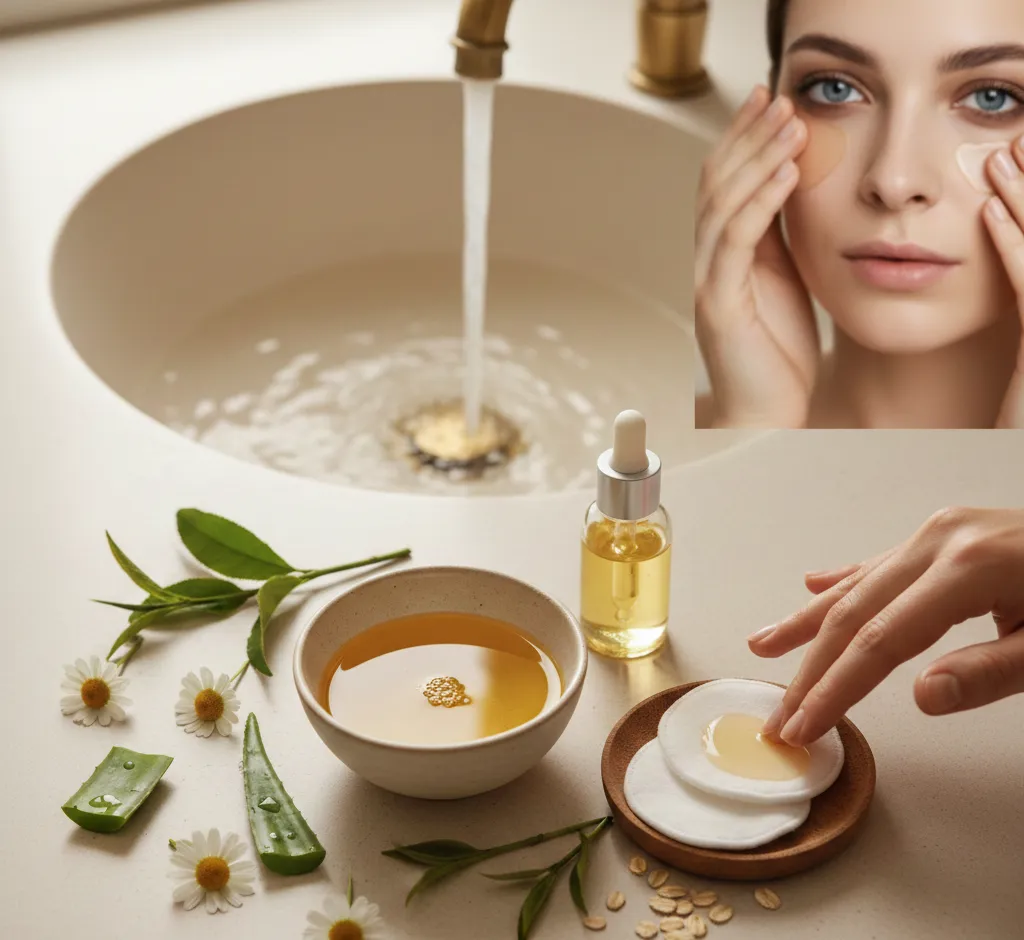
- Remove eye and lip makeup first: Apply a few drops of natural oil to a reusable cotton pad and gently press over the eyes and lips for 10–15 seconds. Wipe very gently, avoiding tugging the delicate skin.
- Massage oil cleanser over your face: Use circular motions and focus on areas with more makeup, like the cheeks and forehead.
- Rinse and follow with a water-based cleanser: Use a gel, milk, or cream cleanser to remove any remaining residue.
- Pat dry, don’t rub: Use a soft towel and press it into your skin rather than dragging it.
- Follow with hydration: Apply toner, serum, and moisturizer to seal in moisture and support the freshly cleansed skin.
Morning cleanse: keep it minimal
In the morning, your skin does not usually need heavy cleansing. Often, a single, gentle water-based cleanser or even just rinsing with lukewarm water is enough, especially if your skin is dry or sensitive.
- Use a very gentle cleanser or a micellar water with natural surfactants if your skin feels oily.
- Skip harsh scrubs or strong foaming cleansers first thing in the morning.
Natural DIY Makeup Remover Options
If you enjoy a more hands-on approach, you can create simple, natural makeup removers at home. Always patch test first and avoid DIY if you have very sensitive or reactive skin.
Simple two-ingredient oil cleanser
This is a minimalist option that can work for most skin types.
- Ingredients: 1 part jojoba oil + 1 part grapeseed oil.
- How to use: Mix in a clean glass bottle, apply a small amount to dry skin, massage, and remove with a warm, damp cloth.
Gentle aloe and oil eye makeup remover
- Ingredients: 1 part pure aloe vera gel + 1 part sweet almond or sunflower oil.
- How to use: Shake well before each use, apply to a cotton pad, press onto closed eyes, and gently wipe away.
Note: Avoid using pure coconut oil on acne-prone skin as a leave-on product, as it can be comedogenic for some people. As a rinse-off cleanser, it may be fine, but always pay attention to how your skin responds.
Common Mistakes That Lead to Stripping
Even the best natural cleanser can feel stripping if it is used incorrectly. Here are some common mistakes to avoid.
- Using water that is too hot: This can disrupt your skin barrier and worsen redness or dryness. Always choose lukewarm water.
- Over-cleansing: Washing your face more than twice a day or cleansing aggressively can weaken your barrier over time.
- Scrubbing or tugging: Rubbing your eyes or using rough cloths can cause micro-tears and irritation.
- Skipping moisturizer: Even the gentlest cleanse removes some lipids from the skin’s surface. Replenish them with a well-formulated moisturizer.
- Layering too many active ingredients right after cleansing: Powerful exfoliating acids or retinoids applied on compromised skin can increase sensitivity. Introduce them gradually.
How to Tell If Your Cleanser Is Too Harsh
Your skin will often tell you when something is not working. Pay attention to these signs after cleansing:
- Tightness or discomfort that lasts longer than a few minutes after washing.
- Flaky patches that appear despite using moisturizer.
- Increased redness or burning, especially around the nose, cheeks, or eyes.
- Sudden sensitivity to products you previously tolerated well.
If you notice these symptoms, switch to a gentler natural cleanser and simplify your routine. Sometimes, less really is more.
Frequently Asked Questions About Natural Makeup Removal
Can natural oils remove waterproof makeup?
Yes. Rich plant oils like olive, jojoba, and sunflower can effectively dissolve many waterproof mascaras and long-wear foundations. The key is to let the oil sit for a few seconds to break down the formula before gently wiping or rinsing. If you wear very heavy or waterproof eye makeup, follow with a mild second cleanse to avoid residue near the lash line.
Will oil cleansers clog my pores?
When used correctly and rinsed or wiped off thoroughly, most lightweight plant oils do not clog pores. Choose non-comedogenic options like jojoba, grapeseed, or sunflower, and always follow with a gentle water-based cleanser if you have oily or acne-prone skin.
Is double cleansing necessary if I do not wear much makeup?
If you wear only light makeup or just sunscreen, you may still benefit from double cleansing in the evening, but you can adapt it. Use a small amount of oil or micellar water to remove product, then follow with a very gentle cleanser. If your skin feels balanced and clean with a single cleanse, that is also acceptable—listen to your skin.
Are natural cleansers suitable for sensitive eyes?
Many natural cleansers are formulated to be safe around the eyes, but always check the label and avoid products heavy in essential oils or strong fragrance. For very sensitive eyes, use a minimal formula with just a few soothing ingredients and remove it with soft, reusable cotton pads.
Building a Non-Stripping Cleansing Routine That Lasts
Switching to natural cleansers is not just a trend; it is a sustainable way to care for your skin’s long-term health. By focusing on gentle ingredients and proper technique, you can remove every trace of makeup while maintaining a well-functioning, resilient skin barrier.
Start with a mild oil or balm cleanser, follow with a soft, water-based formula, and adjust your products based on your skin type and how your skin feels after cleansing. Within a few weeks, most people notice less dryness, fewer flare-ups, and a more comfortable, balanced complexion.
Your cleansing step sets the tone for everything else in your routine. When you remove makeup without stripping, you create the ideal foundation for the rest of your skincare to truly shine.