Natural Exfoliants That Are Actually Better Than Chemical Peels
Discover natural exfoliants that are actually better than chemical peels. Learn how ingredients like oatmeal, honey, fruit enzymes, and willow bark can smooth, brighten, and clear your skin gently and safely.
Glowing, smooth skin is one of the most common skincare goals, and exfoliation is a key step in achieving it. However, harsh chemical peels can sometimes do more harm than good, especially for sensitive or reactive skin. The good news is that nature offers a variety of gentle yet powerful exfoliants that can rival, and in some cases outperform, chemical peels—without the same level of irritation or downtime.
In this article, you will discover the best natural exfoliants, how they work, who they are suitable for, and how to use them safely and effectively as part of a balanced skincare routine.
What Is Exfoliation and Why Does It Matter?
Exfoliation is the process of removing dead skin cells from the surface of your skin. As we age, the natural cell turnover process slows down, causing dullness, rough texture, clogged pores, and more visible fine lines. Gentle, regular exfoliation helps to:
- Improve skin texture by smoothing dry or rough patches.
- Unclog pores and reduce blackheads, whiteheads, and congestion.
- Brighten the complexion by revealing fresher skin underneath.
- Boost product absorption so serums and moisturizers work better.
- Support anti-aging routines by promoting more even tone over time.
Traditionally, many people have turned to chemical peels for these benefits. But natural exfoliants can offer similar results with less risk of over-exfoliation and barrier damage when used correctly.
Natural Exfoliants vs. Chemical Peels
Chemical peels typically contain higher concentrations of acids such as glycolic acid, salicylic acid, or trichloroacetic acid. They dissolve the bonds between dead skin cells quickly and often aggressively. While they can be effective for acne, pigmentation, or advanced signs of aging, they also come with risks:
- Redness, burning, or stinging.
- Skin sensitivity and peeling for days or weeks.
- Potential hyperpigmentation, especially on deeper skin tones if misused.
- Barrier disruption and long-term sensitivity.
Natural exfoliants, on the other hand, are usually gentler and work in two main ways:
- Physical (mechanical) exfoliation: Using fine particles or tools to manually buff away dead skin.
- Biological or mild chemical exfoliation: Using naturally occurring enzymes and gentle acids found in fruits, sugars, or fermented ingredients.
When properly formulated and used with care, these natural ingredients can deliver smoother, brighter skin without the harsh aftermath of a strong peel—making them a better choice for daily or weekly maintenance.
Best Natural Exfoliants That Rival Chemical Peels
1. Oatmeal: The Soothing Skin Buffer
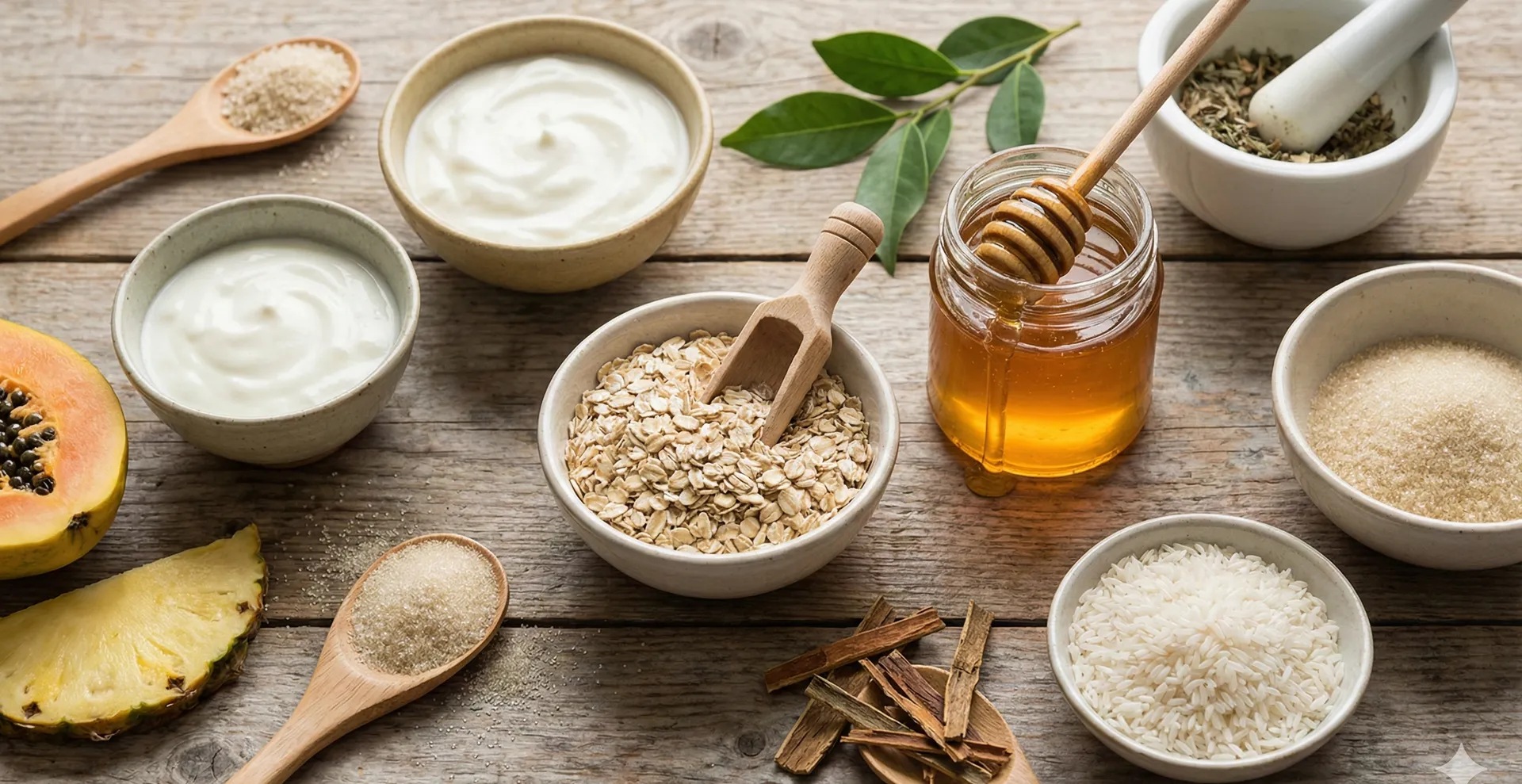
Colloidal oatmeal is one of the most underrated natural exfoliants, especially for sensitive, dry, or compromised skin. It offers very gentle physical exfoliation while also soothing irritation.
- How it works: Finely ground oats provide a soft buffing action, while beta-glucans and lipids in oats calm redness and support the skin barrier.
- Best for: Sensitive, dry, reactive, or eczema-prone skin.
How to use oatmeal for exfoliation
- Grind plain, unsweetened oats into a fine powder (or buy colloidal oatmeal).
- Mix 1–2 teaspoons with water, milk, or a gentle cleanser to form a paste.
- Massage onto damp skin with light circular motions for 30–60 seconds.
- Rinse with lukewarm water and follow with a hydrating serum and moisturizer.
Unlike many chemical peels, oatmeal can be used 2–3 times per week without leaving your skin feeling stripped or tight.
2. Honey: Enzymatic, Antibacterial Glow Booster
Raw honey and manuka honey are naturally rich in enzymes, antioxidants, and antibacterial compounds. They offer mild enzymatic exfoliation while hydrating the skin.
- How it works: Enzymes in raw honey help dissolve buildup on the surface of the skin, while its humectant properties draw moisture into the skin.
- Best for: Dehydrated, dull, acne-prone, or combination skin.
How to use honey as a gentle peel alternative
- Choose raw or manuka honey for maximum skin benefits.
- Apply a thin layer to clean, damp skin.
- Leave on for 10–20 minutes as a mask.
- Rinse with lukewarm water, massaging lightly to encourage gentle exfoliation.
Honey masks can be used 1–3 times a week, giving you smoother, plumper skin without the intense peeling or downtime of stronger chemical treatments.
3. Yogurt and Kefir: Lactic Acid from Nature
Yogurt and kefir contain naturally occurring lactic acid, a gentle alpha-hydroxy acid (AHA) that softens and exfoliates the skin’s surface. Lactic acid is known for being one of the most hydrating, barrier-friendly acids.
- How it works: Lactic acid loosens dead skin cells while milk fats and proteins condition and nourish the skin.
- Best for: Normal, dry, sensitive, or mature skin types.
DIY lactic acid mask with yogurt
- Use plain, unsweetened yogurt or kefir (avoid flavored or sugary varieties).
- Apply a thin layer to clean skin, avoiding the eye area.
- Leave on for 5–10 minutes if you are sensitive, up to 15 minutes for more resilient skin.
- Rinse well and moisturize.
This simple treatment mimics a mild lactic acid peel but is buffered by the creaminess and nutrients in the dairy, making it more forgiving and less irritating.
4. Fruit Enzymes: Papaya, Pineapple, and Pumpkin
Fruit enzymes are among the closest natural alternatives to chemical peels because they gently "digest" dead skin cells without the sharp sting of high-strength acids.
- Papaya (papain): Helps break down proteins in dead skin cells for a smoother texture.
- Pineapple (bromelain): Offers brightening and mild exfoliating benefits.
- Pumpkin: Combines enzymes, vitamins A and C, and antioxidants for a comprehensive glow treatment.
How fruit enzymes beat harsh peels
Unlike many chemical peels that flood the skin with strong synthetic acids, fruit enzymes tend to work more gradually and naturally. They focus on loosening and dissolving dead cells on the surface without aggressively penetrating deeper layers. When used in well-formulated masks, they can:
- Brighten uneven tone.
- Smooth fine lines and texture over time.
- Support collagen maintenance with antioxidant activity.
Simple fruit enzyme mask ideas
- Use pureed fresh papaya or pineapple pulp, or a professional-grade pumpkin or enzyme mask.
- Apply a thin layer to clean skin.
- Leave on for 5–10 minutes, monitoring for any tingling.
- Rinse thoroughly and apply a soothing moisturizer.
For safety, avoid using raw pineapple or papaya on very sensitive or compromised skin, and always patch test first.
5. Sugar: Gentle Mechanical Exfoliation with Natural Glycolic Acid
Fine sugar crystals provide mild physical exfoliation, and sugar itself contains small amounts of glycolic acid, a well-known AHA. When used correctly, sugar scrubs can soften rough areas without tearing the skin.
- How it works: The granules buff away dead skin while the natural acids in sugar provide a gentle resurfacing effect.
- Best for: Body exfoliation (arms, legs, lips); occasionally for the face, but only if the sugar is extremely fine and used very gently.
How to use sugar safely
- Choose finely milled sugar, especially for facial use.
- Mix with a carrier such as honey, aloe gel, or a plant oil (like jojoba or sweet almond).
- Massage on damp skin with very light pressure in circular motions for no more than a minute.
- Rinse thoroughly and follow with moisturizer.
A key advantage sugar has over many chemical peels is that you control the intensity. Use minimal pressure and avoid over-exfoliating, especially on delicate facial skin.
6. Rice Powder: Brightening, Polishing Classic
Rice powder has been used in traditional Asian skincare for centuries as a brightening and polishing treatment. When ground very finely, it offers soft mechanical exfoliation and can support a more even complexion.
- How it works: Micro-fine rice particles gently remove surface buildup, while naturally occurring compounds such as ferulic acid and phytic acid offer antioxidant and mild brightening benefits.
- Best for: Dull, uneven, or combination skin; people looking for a non-irritating brightener.
Using rice powder as a daily polish
- Use a pre-formulated rice powder cleanser/exfoliant or grind rice and sift well to achieve a very fine powder.
- Mix a small amount with water or a gentle cleanser in the palm of your hand.
- Massage lightly onto damp skin for 30–45 seconds.
- Rinse and apply hydrating products.
Compared to frequent chemical peels, a rice powder polish can be used several times per week without compromising skin comfort, as long as you use a gentle touch.
7. Natural BHA Sources: Willow Bark and Wintergreen
Salicylic acid is a beta-hydroxy acid (BHA) widely used in chemical peels for acne-prone and oily skin. Its natural precursor, salicin, is found in willow bark and certain other plants.
- How it works: Willow bark extracts gradually convert to salicylic-like compounds on the skin, helping to unclog pores and reduce inflammation more gently than many synthetic formulas.
- Best for: Oily, acne-prone, congested, or blackhead-prone skin.
How to incorporate natural BHA alternatives
- Look for toners, serums, or masks containing willow bark extract or natural BHA blends.
- Use 2–4 times a week, depending on your skin’s tolerance.
- Always pair with a non-comedogenic moisturizer to prevent dryness.
Compared with many high-strength BHA peels, these natural options provide a slower, more controlled form of pore decongestion, making them ideal for long-term maintenance.
How to Choose the Right Natural Exfoliant for Your Skin Type
Not every exfoliant suits every skin type. Selecting the right one is crucial if you want to get better results than you would from a chemical peel—without triggering irritation.
For sensitive or reactive skin
- Choose: Oatmeal, honey, yogurt, very finely milled rice powder.
- Avoid: Harsh scrubs with large or jagged particles, strong fruit acids, frequent enzyme masks.
- Frequency: 1–2 times per week, always followed by a soothing, fragrance-free moisturizer.
For dry or mature skin
- Choose: Lactic-acid rich yogurt, honey, fruit enzyme masks, gentle rice powder.
- Avoid: Daily strong scrubs or drying clay-based exfoliants.
- Frequency: 1–3 times per week, combined with rich, barrier-repairing products.
For oily or acne-prone skin
- Choose: Willow bark (natural BHA), honey, enzyme masks, occasional gentle sugar scrubs for body.
- Avoid: Over-scrubbing or using multiple exfoliants at once, which can worsen breakouts.
- Frequency: 2–4 times per week, depending on your skin’s response.
For combination or normal skin
- Choose: Mixture of enzymes, rice powder, and lactic acid sources (like yogurt).
- Avoid: Using strong exfoliants on dry areas—treat T-zone and cheeks differently if needed.
- Frequency: 2–3 times per week, adjusting based on seasonal changes.
How Natural Exfoliants Can Be Better Than Chemical Peels
While chemical peels have their place, especially in dermatology clinics, natural exfoliants offer several important advantages for everyday skincare routines.
1. Less irritation and downtime
Most natural exfoliants act more slowly and gently, which means you are less likely to experience intense redness, burning, or extreme peeling. This makes them more practical if you cannot afford days of recovery or if your skin already tends to be sensitive.
2. Barrier-friendly and hydrating
Many natural exfoliants do more than just remove dead skin. Ingredients like honey, oats, and yogurt also hydrate, calm, and nourish the skin, helping maintain a strong moisture barrier. Strong chemical peels often compromise this barrier and can trigger long-term sensitivity if overused.
3. Flexible and customizable
With natural exfoliants, you can adjust frequency, contact time, and intensity easily. Want a lighter treatment? Use less product, dilute it, or shorten the application time. This flexibility makes them more forgiving and easier to personalize than a fixed-strength peel.
4. Better for long-term maintenance
Instead of relying on occasional, aggressive peels, natural exfoliants support the idea of consistent, gentle care. This approach often leads to healthier, more resilient skin over time with fewer extremes of dryness, sensitivity, or post-peel breakouts.
How to Use Natural Exfoliants Safely and Effectively
Start slowly and patch test
Even natural ingredients can cause reactions. Before applying a new exfoliant to your entire face:
- Patch test on the side of your neck or behind your ear.
- Wait 24 hours to ensure there is no burning, itching, or rash.
Do not mix too many exfoliants
More exfoliation does not always mean better results. Combining enzyme masks, scrubs, and acid-based products in the same routine can lead to over-exfoliation, redness, flaking, and sensitivity. Choose one exfoliating step per routine.
Always follow with hydration
After exfoliating, your skin is more receptive to skincare products but also more vulnerable to dryness. To protect and nourish it:
- Apply a hydrating serum containing humectants like hyaluronic acid, glycerin, or aloe.
- Seal with a moisturizer that fits your skin type (light gel for oily skin, richer cream for dry or mature skin).
Never skip sunscreen
Exfoliation—natural or chemical—can make your skin more sensitive to UV damage. Using a broad-spectrum sunscreen of at least SPF 30 every morning is essential if you want to maintain results and prevent dark spots, premature aging, and irritation.
Know when to see a professional
Natural exfoliants work beautifully for routine maintenance and mild concerns like occasional dullness or rough texture. For severe acne, deep scarring, or pronounced hyperpigmentation, consulting a dermatologist is still recommended. A professional can combine medical treatments with a gentle, natural home routine for optimal results.
Sample Weekly Routine with Natural Exfoliants
Here is a simple example of how you can build natural exfoliants into a balanced skincare routine that outperforms occasional chemical peels in the long run.
Morning routine (daily)
- Gentle cleanser (no scrubs or acids).
- Hydrating toner or mist.
- Antioxidant serum (such as vitamin C if tolerated).
- Moisturizer appropriate for your skin type.
- Broad-spectrum SPF 30 or higher.
Evening routine with natural exfoliation
- Day 1: Oatmeal or rice powder polish, followed by hydrating serum and moisturizer.
- Day 3: Yogurt or honey enzyme mask for 10–15 minutes, then rinse and moisturize.
- Day 5: Willow bark serum or a gentle fruit enzyme mask, followed by a soothing moisturizer.
On non-exfoliation days, keep your routine simple and focus on hydration and barrier repair.
Final Thoughts: Gentle, Natural, and Effective
Natural exfoliants are more than DIY trends—they are powerful tools that can deliver smoother, brighter, clearer skin without the harsh side effects of aggressive chemical peels. By choosing ingredients like oats, honey, yogurt, fruit enzymes, sugar, rice powder, and willow bark, and using them with intention, you can create a routine that supports long-term skin health.
Instead of chasing quick, dramatic results with strong peels, think of exfoliation as a steady, supportive part of your skincare lifestyle. Your skin will reward you with resilience, radiance, and a glow that does not depend on harsh, high-risk treatments.