Natural Retinol Alternatives: How Bakuchiol Compares in Real-World Efficacy
Discover how bakuchiol, a natural retinol alternative, compares to traditional retinol in efficacy, safety, and irritation risk. Learn about clinical results, benefits, ideal skin types, and how to add bakuchiol to an anti-aging skincare routine.
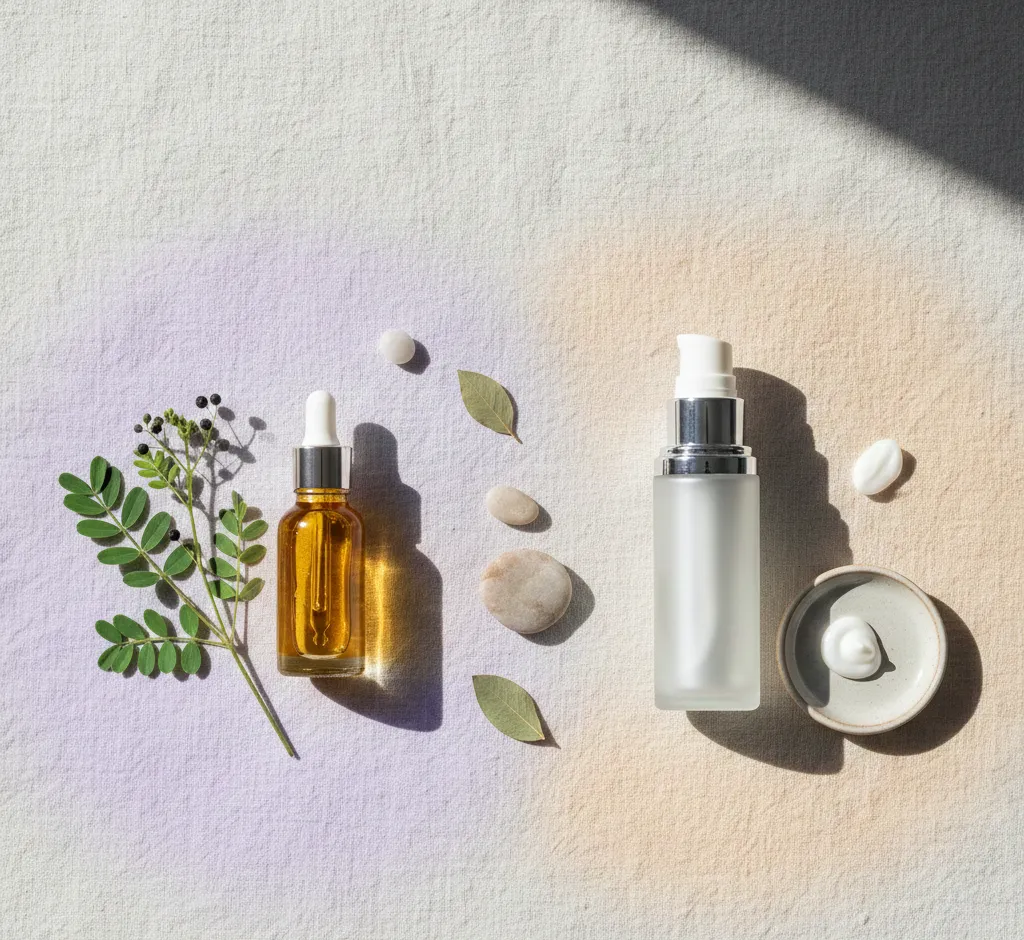
Bakuchiol has rapidly become one of the most talked‑about natural skincare ingredients, often described as a gentler, plant‑based alternative to retinol. But how well does it actually perform compared with traditional retinol, and is it really a safer choice for long‑term use? This in‑depth guide explores what current research reveals about bakuchiol’s efficacy, tolerability, and role among natural retinol alternatives.
What Is Bakuchiol?
Bakuchiol is a phytochemical isolated from the seeds and leaves of Psoralea corylifolia, a plant long used in Ayurveda and Traditional Chinese Medicine for various skin conditions. [web:11][web:18]
In modern dermatology, bakuchiol is classified as a “functional analog” of retinol because it influences many of the same cellular pathways associated with collagen production, pigmentation control, and photoaging, even though its chemical structure is completely different from vitamin A derivatives. [web:11][web:18]
How Retinol Works vs. Bakuchiol
Retinol is a vitamin A derivative that must be converted in the skin to retinoic acid, which then binds to retinoic acid receptors to regulate gene expression related to cell turnover, collagen synthesis, and melanin production. [web:6][web:20]
Bakuchiol does not bind directly to retinoic acid receptors, but gene‑expression studies show that it activates a very similar set of genes involved in extracellular matrix repair, antioxidant defense, and anti‑inflammatory pathways, which explains its retinol‑like anti‑aging and brightening effects. [web:11][web:18]
Clinical Evidence: Bakuchiol vs. Retinol
Head‑to‑head photoaging trial
One of the most cited clinical studies on bakuchiol is a 12‑week, randomized, double‑blind trial that directly compared a 0.5% bakuchiol cream used twice daily with a 0.5% retinol cream used once nightly in 44 participants with facial photoaging. [web:1][web:2][web:8]
Both groups showed significant improvement in wrinkle surface area and hyperpigmentation by week 12, and there was no statistically significant difference in these efficacy endpoints between bakuchiol and retinol, suggesting comparable visible results under the tested conditions. [web:1][web:2][web:11]
Irritation and tolerability outcomes
In the same trial, participants using retinol reported more facial scaling, stinging, and burning compared with those using bakuchiol, indicating a higher irritation burden with retinol despite similar cosmetic benefits. [web:1][web:4][web:11]
Subsequent reviews of available clinical data conclude that bakuchiol offers a favorable safety profile with minimal dryness, peeling, or photosensitivity in both normal and sensitive skin types when used at cosmetic concentrations. [web:11][web:7]
Key Differences Between Bakuchiol and Retinol
The table below summarizes the most relevant distinctions for everyday skincare users evaluating natural retinol alternatives.
| Aspect | Bakuchiol | Retinol |
|---|---|---|
| Origin | Plant‑derived compound from Psoralea corylifolia (natural). [web:11][web:18] | Synthetic or naturally derived vitamin A derivative (retinoid). [web:6][web:20] |
| Molecular structure | Non‑retinoid; structurally distinct but functionally similar in gene expression. [web:11][web:18] | Retinoid; related to retinoic acid and other vitamin A metabolites. [web:6][web:20] |
| Mechanism of action | Modulates gene expression linked to collagen, pigment, and antioxidant pathways without direct receptor binding. [web:11][web:18] | Converted to retinoic acid and binds retinoic acid receptors to regulate cell turnover and collagen synthesis. [web:6][web:20] |
| Anti‑aging efficacy | Improves wrinkles and hyperpigmentation with outcomes comparable to 0.5% retinol in a 12‑week trial. [web:1][web:2][web:11] | Gold standard for photoaging with robust long‑term clinical data across multiple concentrations. [web:6][web:20] |
| Irritation potential | Generally low; fewer reports of scaling, burning, and stinging in trials. [web:1][web:7][web:11] | Commonly associated with dryness, peeling, redness, and stinging, especially during initial weeks. [web:1][web:6][web:20] |
| Photosensitivity | Not known to increase sun sensitivity and may offer some photoprotective benefits through antioxidant effects. [web:9][web:11] | Can increase photosensitivity, making diligent daily sunscreen use essential. [web:6][web:10] |
| Use in daytime | Typically safe for morning and evening use due to lack of photosensitizing behavior. [web:6][web:10] | More often reserved for evening routines to minimize UV interaction and irritation. [web:6][web:20] |
| Pregnancy & nursing | Considered a potentially safer option based on mechanism and current data, but definitive human safety data remain limited; medical guidance is still advised. [web:11][web:13] | Topical retinoids are generally avoided in pregnancy and when trying to conceive due to concerns about systemic retinoid exposure. [web:11][web:20] |
| Best suited for | Sensitive, reactive, or barrier‑impaired skin and consumers seeking natural, plant‑based formulas. [web:7][web:11][web:16] | Individuals who tolerate actives well and want the most extensively studied anti‑aging option. [web:6][web:20] |
Other Natural Retinol Alternatives
Although bakuchiol is the most thoroughly studied, it belongs to a broader group of plant‑derived ingredients described as “retinol‑like” because they influence similar cellular processes without being retinoids. [web:11][web:12]
Examples include extracts from Vigna aconitifolia (moth bean), certain peptides, and antioxidant‑rich botanical blends that support collagen, elastin, and skin barrier integrity, often used alongside bakuchiol for synergistic effects. [web:12][web:14]
Synergistic combinations
Recent experimental work has evaluated combinations of bakuchiol with other natural analogs and retinal (a potent vitamin A derivative), showing that bakuchiol can enhance anti‑photoaging outcomes without worsening irritation in ex vivo and in vivo models. [web:12]
These findings support a layered approach to anti‑aging, where low‑irritation natural analogs help potentiate conventional actives, potentially allowing for lower retinoid doses while maintaining results. [web:12][web:11]
Bakuchiol Efficacy: What Results to Expect
Across clinical trials and observational data, bakuchiol consistently demonstrates measurable improvements in several markers of skin aging, including fine lines, wrinkles, texture, and uneven pigmentation when used for at least 8–12 weeks. [web:1][web:11][web:18]
Some analyses even report greater relative reductions in hyperpigmentation compared with retinol at similar time points, although overall wrinkle improvement appears broadly equivalent in the head‑to‑head trial. [web:1][web:5][web:11]
Timeframe for visible change
- 4 weeks: Early users may notice subtle improvements in smoothness and radiance as cell‑turnover and antioxidant activity increase. [web:1][web:11]
- 8 weeks: Fine lines and early sun spots may begin to look softer, with more even tone and refined texture. [web:1][web:11]
- 12 weeks and beyond: Clinical evaluations show significant reductions in wrinkle surface area and pigment intensity, similar to outcomes achieved with 0.5% retinol. [web:1][web:2][web:11]
Safety and Side‑Effect Profile
Dermatology reviews consistently highlight the relative gentleness of bakuchiol, emphasizing that it is well‑tolerated by most users, including those with sensitive skin, with only occasional reports of mild redness or tingling. [web:7][web:11][web:13]
Unlike retinol, bakuchiol has not been strongly associated with barrier‑disrupting side effects such as intense peeling, pronounced dryness, or significant photosensitivity when used in cosmetic formulations, although patch testing and gradual introduction are still recommended. [web:7][web:9][web:11]
Who should be cautious?
Despite its favorable profile, bakuchiol is still a bioactive compound, and individuals with highly reactive, allergy‑prone skin or complex dermatologic conditions should introduce it slowly and ideally under professional guidance. [web:11][web:13]
As with all newer cosmetic ingredients, long‑term safety data are still evolving, and evidence regarding use in pregnancy and breastfeeding, while reassuring from a mechanistic standpoint, is not yet definitive, so personalized medical advice remains important. [web:11][web:13]
Formulation Types and Concentrations
Bakuchiol is most commonly available in serums, facial oils, and creams at concentrations typically ranging from about 0.3% to 1%, often combined with hydrating agents, antioxidants, or barrier‑supportive lipids. [web:9][web:15]
The pivotal photoaging study used 0.5% bakuchiol cream applied twice daily, which has become a reference point for many brands when designing products that balance efficacy with a low risk of irritation. [web:1][web:11]
Standalone vs. blended formulas
- Standalone bakuchiol serums: Focus on delivering a defined dose of bakuchiol, usually suited for layering under moisturizers and other actives. [web:9][web:15]
- Multi‑active blends: Combine bakuchiol with niacinamide, peptides, hyaluronic acid, or botanical antioxidants to address multiple aging pathways at once. [web:11][web:12]
- Bakuchiol–retinoid hybrids: Pair bakuchiol with low‑strength retinol or retinal to enhance benefits while aiming to limit irritation; these are best reserved for users who already tolerate vitamin A derivatives. [web:12][web:20]
Choosing Between Bakuchiol and Retinol
When deciding whether to use bakuchiol as a natural retinol alternative, the best choice depends on individual skin tolerance, lifestyle, and priorities such as pregnancy safety, sensitivity, and commitment to photoprotection. [web:11][web:16][web:19]
Retinol remains the most extensively documented topical for photoaging, but bakuchiol offers a compelling option for those who want similar anti‑aging benefits with a reduced risk of irritation and more flexibility in daytime use. [web:6][web:11][web:20]
Bakuchiol may be the better fit if you:
- Have sensitive, redness‑prone, or easily dehydrated skin that struggles with standard retinol. [web:7][web:11][web:16]
- Prefer plant‑derived or “clean beauty” formulations and want to avoid synthetic retinoids. [web:9][web:15]
- Need a routine that allows for consistent daytime use without increased sun sensitivity (though daily sunscreen is still essential). [web:9][web:10]
- Are exploring options that may be more acceptable during pregnancy or breastfeeding after discussing them with a healthcare provider. [web:11][web:13]
Retinol may be more appropriate if you:
- Have resilient, non‑sensitive skin and already tolerate exfoliating acids or strong actives. [web:6][web:20]
- Seek the strongest evidence base with decades of clinical research, especially for deeper wrinkles and advanced photodamage. [web:6][web:20]
- Are comfortable managing a “retinization” period with potential dryness and peeling using moisturizers and barrier‑supportive products. [web:6][web:19]
How to Introduce Bakuchiol into Your Routine
Even though bakuchiol is typically gentler than retinol, a structured introduction can help maximize results while minimizing any chance of irritation, particularly for sensitive or compromised skin. [web:7][web:11]
Starting slowly, pairing bakuchiol with hydrating and barrier‑supportive products, and maintaining consistent daily sunscreen use will support both efficacy and long‑term skin health. [web:7][web:10][web:11]
Step‑by‑step usage guide
- Patch test first: Apply a small amount of bakuchiol product on the inner forearm or behind the ear once daily for several days to check for delayed irritation. [web:7][web:13]
- Start 2–3 times per week: Use bakuchiol on non‑consecutive nights after cleansing and before moisturizer, observing how your skin responds over the first couple of weeks. [web:7][web:11]
- Increase frequency gradually: If well‑tolerated, build up to nightly use and, when appropriate, consider adding a morning application following brand and professional guidance. [web:1][web:11]
- Support the barrier: Pair bakuchiol with gentle, fragrance‑free cleansers, ceramide‑rich moisturizers, and humectants like glycerin or hyaluronic acid. [web:11][web:15]
- Apply daily sunscreen: Even though bakuchiol is not strongly photosensitizing, broad‑spectrum SPF remains non‑negotiable for preventing new photoaging and supporting treatment outcomes. [web:9][web:10]
Can You Use Bakuchiol and Retinol Together?
Some advanced formulations and routines strategically combine bakuchiol with retinol or retinal to leverage complementary mechanisms and improve tolerance, especially at lower retinoid strengths. [web:12][web:20]
Because layering multiple actives increases the risk of irritation, any combined routine should be built cautiously, ideally starting with low frequency and possibly alternating products on different nights or using bakuchiol on non‑retinoid days. [web:7][web:11][web:12]
Takeaway: Where Bakuchiol Fits Among Natural Retinol Alternatives
Bakuchiol stands out among natural retinol alternatives because it is one of the few plant‑derived ingredients with head‑to‑head clinical data demonstrating comparable anti‑aging efficacy to retinol under specific conditions, while showing significantly better tolerability. [web:1][web:2][web:11]
For individuals who cannot tolerate conventional retinoids, prefer gentler routines, or prioritize botanical ingredients, bakuchiol offers a credible, evidence‑supported way to address fine lines, uneven tone, and photoaging as part of a long‑term, barrier‑friendly skincare strategy. [web:7][web:9][web:11]