Optimal Humidity Levels for Healthy Sleep: A Complete Guide
Discover the ideal bedroom humidity level for healthy sleep, why 40–60% relative humidity works best, and how to control dry or damp air using simple tools and habits.

Getting truly restorative sleep is about much more than a comfortable mattress and a dark bedroom. One of the most overlooked factors that can make or break your night is the humidity level in your bedroom. If the air is too dry, you may wake up with a scratchy throat, congested nose, or irritated skin. If it is too humid, you may feel sticky, hot, and unsettled, and you might even worsen allergies or asthma.
Understanding and controlling indoor humidity is one of the simplest and most effective ways to improve your sleep quality, support your respiratory health, and reduce nighttime allergies. This article explains the ideal humidity range for sleep, why it matters, how to measure it, and what to do if your bedroom is too dry or too damp.
What Is Humidity and Why Does It Matter for Sleep?
Humidity is the amount of water vapor present in the air. For everyday comfort and health, the most important measure is relative humidity, expressed as a percentage. Relative humidity indicates how much moisture the air holds compared to how much it could hold at a given temperature.
Humidity matters at night because it directly affects how your body regulates temperature, how well you breathe, and how comfortable your skin, eyes, and airway feel. Your body naturally cools down during sleep; if humidity is not in the right range, this cooling process becomes less efficient, and sleep can be disrupted.
How Humidity Affects Your Body at Night
- Breathing comfort: Very dry air dries out the nasal passages and throat, leading to irritation, congestion, and coughing. Excessively humid air can feel heavy and make breathing seem more difficult, especially for people with asthma or COPD.
- Thermal comfort: High humidity makes the air feel warmer than it actually is because sweat does not evaporate as efficiently. Low humidity can make the air feel cooler and harsher, contributing to nighttime chills or discomfort.
- Skin, eyes, and mucous membranes: Dry air pulls moisture from the skin and eyes, resulting in itching, flaking, and irritation. Adequate humidity helps maintain the protective moisture layer on your skin and respiratory lining.
- Allergens and irritants: Dust mites and mold thrive in overly humid environments, while extremely dry air increases airborne dust and fine particles. Both extremes can worsen allergy and asthma symptoms while you sleep.
Ideal Humidity Level for Healthy Sleep
Most sleep and indoor air quality experts agree that the optimal bedroom humidity level for healthy sleep is typically in the range of 40–60% relative humidity. This range balances comfort and health while helping to prevent the growth of mold and dust mites.
Recommended Humidity Range
- Minimum recommended humidity: Around 40% relative humidity. Below this, the air becomes increasingly dry and more likely to cause irritation and dehydration of mucous membranes.
- Ideal comfort zone: Approximately 40–50% for sleep. Many people find this range particularly comfortable at night, especially when combined with a slightly cool bedroom temperature.
- Upper safe limit: About 60% relative humidity. Above this level, the risk of dust mites, mold growth, and a muggy, sticky feeling increases significantly.
Aim to keep your bedroom humidity consistently within this 40–60% window, adjusting slightly based on season, climate, and personal comfort. Some individuals with respiratory conditions may feel best around 45–50%.
Effects of Low Humidity on Sleep
Low humidity is especially common in colder months when heaters run frequently or in climates with naturally dry air. While dry air may help reduce mold growth, it creates several problems for your sleep and health.
Common Signs Your Bedroom Air Is Too Dry
- Waking up with a dry, scratchy throat or hoarse voice.
- Dry, itchy, or flaky skin and chapped lips.
- Stuffy or congested nose, sometimes leading to mouth breathing.
- Increased static electricity in bedding and clothing.
- Dry, irritated eyes, especially if you sleep with contact lenses occasionally.
Why Low Humidity Disrupts Sleep
- Dry mucous membranes: The nose, sinuses, and throat are lined with a thin layer of moisture that helps trap particles and keep airways comfortable. Air that is too dry strips away this moisture, increasing irritation and the urge to cough or clear the throat at night.
- Increased vulnerability to infections: Dry air can impair the natural defense mechanisms of your respiratory tract, potentially making you more vulnerable to viruses and bacteria, which can in turn disturb sleep.
- Snoring and mouth breathing: When nasal passages are dry or congested, you are more likely to breathe through your mouth, which can worsen snoring and lead to fragmented sleep for you and your partner.
- Skin discomfort and itchiness: Dehydrated skin may itch or feel tight, making it harder to fall asleep and stay comfortable through the night.
Effects of High Humidity on Sleep
High humidity becomes especially problematic in warm or tropical climates and during summer months. While moist air can feel soothing at moderate levels, too much humidity creates its own sleep challenges.
Common Signs Your Bedroom Air Is Too Humid
- Feeling sticky, sweaty, or overheated, even at moderate temperatures.
- Clammy bedding, pillows, or mattress.
- Condensation on windows or walls.
- Musty or damp odors, especially in closets or corners.
- Visible mold spots or patches of mildew on surfaces.
Why High Humidity Interferes with Sleep
- Impaired temperature regulation: Your body cools itself by sweating and then allowing that sweat to evaporate. In very humid air, sweat does not evaporate efficiently, making it harder for your body to cool down and enter deeper stages of sleep.
- Increased allergens: Dust mites and mold thrive in moist environments. Their presence can trigger allergies, congestion, or asthma symptoms at night, leading to restless sleep.
- Respiratory discomfort: Heavy, humid air can feel harder to breathe for some people, particularly those with underlying respiratory conditions.
- Sleep fragmentation: Waking up repeatedly feeling hot, sticky, or needing to adjust blankets is common when the bedroom is excessively humid.
How to Measure and Track Bedroom Humidity
To manage humidity effectively, you need to measure it. Fortunately, this is easy and affordable with a small device called a hygrometer.
Using a Hygrometer
- What it does: A hygrometer measures relative humidity as a percentage, often combined with a thermometer in a single unit.
- Where to place it: Put the hygrometer in your bedroom at approximately breathing height, away from direct heat sources, windows, or vents, to get an accurate reading.
- When to check: Check humidity at different times of the day, especially in the evening and early morning, to understand how conditions change overnight.
- Digital smart monitors: Some modern devices connect to your phone and track humidity trends, so you can see patterns over time and adjust your environment accordingly.
How to Increase Humidity for Better Sleep
If your hygrometer shows humidity consistently below 40%, you may need to add moisture to the air in your bedroom. Here are practical ways to do it safely and effectively.
Use a Humidifier
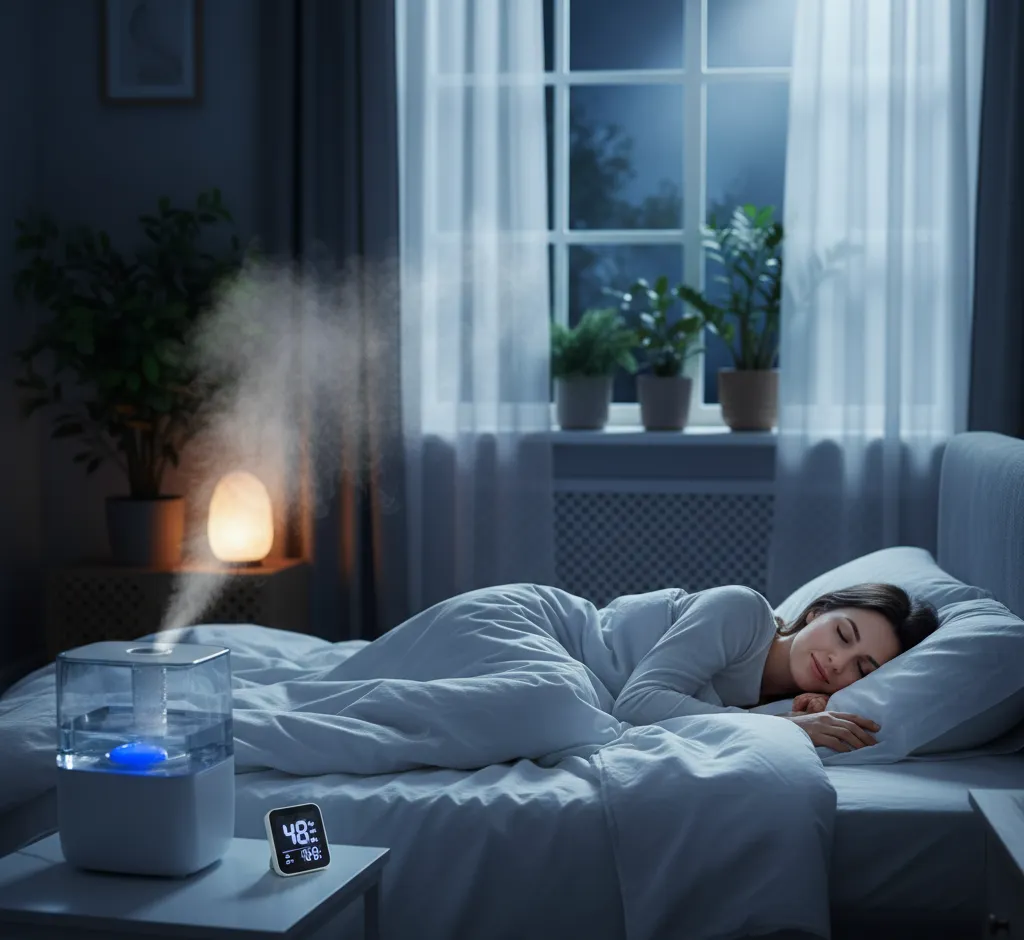
- Types of humidifiers: The most common options are cool-mist ultrasonic humidifiers, evaporative humidifiers, and warm-mist (steam) vaporizers. For bedrooms, cool-mist and ultrasonic models are popular due to their quiet operation.
- Size and capacity: Choose a unit designed for your bedroom’s square footage so it can maintain humidity in the ideal range without over-humidifying.
- Cleaning and maintenance: Clean and disinfect the water tank regularly according to the manufacturer’s instructions to prevent bacterial growth or mold, which can otherwise be dispersed into the air.
- Use distilled water: Distilled or demineralized water helps reduce white dust and scale buildup, especially with ultrasonic humidifiers.
- Built-in humidistat: Many humidifiers have a built-in humidity sensor. Set it to maintain around 45–50% humidity to avoid going too high.
Low-Tech Ways to Add Moisture
- Drying clothes indoors: Hanging damp clothes or towels in the bedroom can add some moisture, though control is less precise and this method is best used sparingly to avoid excessive humidity.
- Bowls of water near heat sources: Placing a bowl of water near a radiator or heating vent allows water to evaporate slowly into the air.
- Houseplants: Certain plants release moisture through transpiration and can contribute to slightly higher humidity, though the effect is modest.
How to Reduce Humidity for Better Sleep
If bedroom humidity regularly exceeds 60%, it is important to remove excess moisture to prevent discomfort, mold, and dust mite growth. This is especially crucial in warm climates and poorly ventilated bedrooms.
Use a Dehumidifier
- Portable dehumidifiers: These devices pull moisture from the air and collect it in a tank or drain through a hose. They are effective for bedrooms and small apartments.
- Setting your target: Many dehumidifiers allow you to set a target humidity, such as 50%, ensuring the device turns off automatically when the desired level is reached.
- Regular maintenance: Empty the water tank frequently and clean filters to maintain efficiency and prevent odors.
Improve Ventilation and Airflow
- Open windows when possible: If outdoor conditions are less humid than indoors, opening windows for a short time can help balance moisture levels.
- Use exhaust fans: Run bathroom or kitchen exhaust fans during and after showers or cooking to reduce moisture that can spread through the home.
- Ceiling or standing fans: Fans do not remove humidity but improve air circulation, helping sweat evaporate and making the room feel more comfortable at a given humidity level.
Prevent Moisture Sources
- Fix leaks: Repair any plumbing or roof leaks promptly to prevent hidden moisture and mold growth.
- Avoid drying clothes in the bedroom: In very humid climates, drying laundry indoors adds significant moisture to the air and can worsen indoor humidity problems.
- Control indoor plants: Large numbers of houseplants in a small bedroom can increase humidity. Balance greenery with proper ventilation.
Balancing Humidity with Temperature
Humidity and temperature work together to define how comfortable your bedroom feels. A room at a moderate temperature can still feel uncomfortably hot if humidity is high, or cold and harsh if humidity is low.
Ideal Bedroom Temperature for Sleep
Most sleep experts recommend keeping the bedroom slightly cool, typically around 16–20°C (60–68°F). Within this range, your body can cool down naturally, and a humidity level of 40–50% will usually feel comfortable and supportive of good sleep.
Tips for Maintaining Both Comfort Factors
- Use a programmable thermostat to keep nighttime temperatures consistent.
- Combine a humidifier or dehumidifier with gentle fans or ceiling fans to keep air moving without chilling you.
- Adjust bedding seasonally: lighter, breathable fabrics in warm, humid months; slightly heavier bedding when air is drier and cooler.
Special Considerations: Babies, Allergies, and Health Conditions
Certain groups need extra attention when it comes to bedroom humidity, because the wrong levels can affect them more strongly.
Humidity for Babies and Young Children
- Similar ideal range: For nurseries, a humidity level around 40–50% is usually recommended, similar to adults.
- Why it matters: Babies have more delicate airways and can be more sensitive to dry or excessively moist air. Proper humidity can reduce nasal congestion, improve comfort, and support better sleep.
- Safety first: If using a humidifier, place it out of reach, use cool mist models, and clean the tank thoroughly to prevent mold and bacteria growth.
Asthma, Allergies, and Respiratory Conditions
- Allergy control: Keeping humidity below about 50–55% can make it harder for dust mites and mold to thrive, which helps reduce allergy symptoms.
- Balanced moisture: Very dry air can irritate already sensitive airways, so finding your personal sweet spot, often around 45–50%, can be especially important.
- Regular cleaning: Wash bedding in hot water, vacuum with a HEPA filter, and control humidity to keep allergens low.
Practical Nighttime Routine for Healthy Humidity
Managing humidity does not need to be complicated. A simple, consistent routine can make your bedroom far more sleep-friendly.
Checklist Before Bed
- Check humidity: Glance at your hygrometer. If humidity is between 40–60%, you are in a good range for healthy sleep.
- Adjust devices: Turn on your humidifier or dehumidifier if needed and set the desired level (around 45–50%).
- Set temperature: Make sure your thermostat is set to a slightly cool, comfortable level.
- Ventilate briefly: If outdoor conditions are suitable, open a window for a short period to refresh the air, then close it before bed to maintain consistent conditions.
- Prepare bedding: Choose breathable fabrics like cotton or linen that work well with balanced humidity and let moisture escape.
Key Takeaways
- The ideal humidity level for healthy sleep is generally between 40–60% relative humidity, with many people finding 40–50% especially comfortable.
- Low humidity can cause dry throat, irritated eyes, itchy skin, and increased susceptibility to infections, all of which can disturb sleep.
- High humidity makes it harder for your body to cool down at night and encourages dust mites and mold, leading to allergies, congestion, and fragmented sleep.
- Use a hygrometer to monitor bedroom humidity and adjust with a humidifier, dehumidifier, or improved ventilation.
- Balancing humidity with a cool bedroom temperature and breathable bedding creates an environment where your body can relax, recover, and achieve deeper, more restorative sleep.
By paying attention to humidity levels and making a few simple adjustments, you can transform your bedroom into a healthier, more comfortable sleep sanctuary. The result is not just better rest at night, but also improved energy, mood, and overall well-being during the day.