Personalized Water Intake Based on Body Weight: The Complete Hydration Guide
Learn how to personalize your daily water intake based on body weight, activity level, and lifestyle. Discover science-backed formulas, examples, and practical tips to optimize hydration safely and effectively.
Staying properly hydrated is one of the simplest yet most powerful things you can do for your health. However, a generic rule like “drink eight glasses of water a day” does not work for everyone, because each body is different. That is where personalized water intake based on body weight becomes extremely useful.
This comprehensive guide explains why water needs vary from person to person, how to calculate your optimal daily water intake using body weight, and how to adjust that number for factors like activity level, climate, and health conditions. You will also learn practical tips to build sustainable hydration habits in everyday life.
Why Personalized Hydration Matters
Water plays a crucial role in nearly every function of the human body. It helps regulate temperature, supports digestion, transports nutrients, cushions joints, and assists in removing waste products. When your hydration is tailored to your body’s needs, you support these functions more efficiently.
Using body weight as a starting point is more accurate than following a one-size-fits-all recommendation. A person who weighs 60 kg and a person who weighs 90 kg have different fluid requirements because their total body water, lean mass, and energy expenditure are not the same.
Key benefits of proper hydration
- Better physical performance. Adequate water helps maintain muscle function, endurance, and strength during workouts and daily activities.
- Improved cognitive function. Even mild dehydration can affect mood, focus, alertness, and short-term memory.
- Healthy digestion. Water supports saliva production, nutrient absorption, and regular bowel movements.
- Temperature regulation. Proper hydration enables effective sweating and heat dissipation, especially during exercise or in hot environments.
- Kidney and cardiovascular health. Water assists the kidneys in filtering waste and supports healthy blood volume and circulation.
How Much Water Should You Drink Based on Body Weight?
Body weight provides a practical foundation for estimating daily water needs. From there, you can fine-tune your intake according to lifestyle, environment, and health status. While individual requirements vary, body-weight-based formulas give a realistic starting point.
General body-weight-based formulas
Two commonly used methods are based on kilograms and pounds:
- Metric guideline: Drink about 30–40 ml of water per kilogram of body weight per day.
- Imperial guideline: Drink about 0.5–0.7 ounces of water per pound of body weight per day.
These ranges account for variations in metabolism, activity, and environment. Most healthy adults fall comfortably within these recommendations, but adjustments are often necessary.
Step-by-step calculation examples
Example 1: 60 kg adult
- Body weight = 60 kg
- Daily water range = 30–40 ml × 60 kg
- Minimum: 1,800 ml (1.8 liters)
- Maximum: 2,400 ml (2.4 liters)
For a moderately active, healthy adult, aiming around 2.0–2.2 liters per day is a reasonable target.
Example 2: 80 kg adult
- Body weight = 80 kg
- Daily water range = 30–40 ml × 80 kg
- Minimum: 2,400 ml (2.4 liters)
- Maximum: 3,200 ml (3.2 liters)
Someone who is physically active or lives in a hot climate might aim closer to the upper end of this range.
Example 3: 150 lb adult (using ounces)
- Body weight = 150 lb
- Daily water range = 0.5–0.7 oz × 150 lb
- Minimum: 75 ounces (about 2.2 liters)
- Maximum: 105 ounces (about 3.1 liters)
Again, the ideal point within that range depends on lifestyle and individual factors.
Important note on total fluid intake
Daily water intake includes more than just plain drinking water. You also get fluids from:
- Other beverages such as tea, coffee, milk, and juice (preferably low in added sugar)
- Water-rich foods such as fruits, vegetables, soups, and yogurt
However, plain water should remain the primary source of hydration, as sugary or high-caffeine drinks can have additional effects on blood sugar, appetite, and sleep quality.
Factors That Modify Your Ideal Water Intake
Body weight gives a baseline, but several variables shift your daily needs up or down. Understanding these helps you personalize your hydration more accurately.
1. Physical activity level
Exercise and manual labor increase water loss through sweat and breathing. The more intense and longer the activity, the more additional fluids you need.
- Light activity (short walks, light chores): Your baseline body-weight-based intake is usually enough, with small extra sips as needed.
- Moderate activity (30–60 minutes of exercise): Add about 300–700 ml of water, spread before, during, and after your workout.
- Intense or prolonged activity (over 60 minutes, heavy sweating): You may need 700 ml to 1,000+ ml extra, plus electrolytes if you sweat heavily.
For endurance sports or workouts in hot conditions, consider including an electrolyte drink or adding a pinch of salt and citrus to water to support fluid absorption and mineral replacement.
2. Climate and environment
Hot, humid, or very dry climates significantly increase fluid needs due to higher sweat rates and faster evaporation.
- Hot or humid environment: Expect to increase water intake by at least 10–20% above your baseline, sometimes more during heat waves.
- High altitude: At elevations above roughly 2,000 meters, breathing and fluid loss increase, often requiring 500–1,000 ml more per day.
- Heated or air-conditioned spaces: These can be surprisingly dehydrating. Keep water accessible and sip regularly.
3. Age and body composition
Water needs change with age and body composition:
- Children and teens: Their needs depend on both weight and growth. Always follow pediatric guidance and encourage regular drinking, especially during play and sports.
- Older adults: Thirst sensation can weaken with age, increasing dehydration risk. They may need conscious drinking schedules even when they do not feel thirsty.
- Body fat vs. muscle: Muscle contains more water than fat, so very muscular individuals may need slightly more fluids than someone of the same weight with higher body fat.
4. Diet and lifestyle choices
Your eating habits and daily routines influence your fluid requirements.
- High-protein or high-fiber diets: These may require more water to support kidney function and digestion.
- High-sodium or processed foods: Extra water helps your body handle excess salt and maintain fluid balance.
- Caffeine and alcohol: Moderate coffee and tea intake can still contribute to hydration, but excessive caffeine or alcohol can increase fluid loss and may require additional water.
5. Health conditions and medications
Certain health conditions and medications affect fluid balance. In some cases, they increase water needs; in others, they require fluid restriction.
- Conditions like kidney disease, heart failure, or liver disease: These often come with specific medical guidance on fluid limits.
- Diuretics or other medications: Some drugs increase urine output, while others may require controlled fluid intake.
- Fever, vomiting, or diarrhea: These can rapidly dehydrate the body and may require increased fluid intake and electrolytes.
Important: Always follow the advice of your healthcare provider if you have a medical condition or take medications that influence fluid balance. Personalized medical guidance takes priority over general formulas.
Simple Tools to Personalize Your Hydration
Beyond formulas, your body gives continuous feedback about your hydration status. Combining objective calculations with subjective cues allows for effective and safe personalization.
1. Monitor urine color
Urine color is one of the easiest ways to assess hydration throughout the day.
- Pale straw to light yellow: Generally indicates good hydration.
- Dark yellow or amber: Suggests you may need more water, especially if paired with other dehydration signs.
- Almost completely clear: Can mean you are drinking more than you need, particularly if it is persistent.
Remember that certain supplements and foods can alter urine color, so always consider the bigger picture of how you feel.
2. Recognize dehydration signs
Learning to spot dehydration early helps you adjust your intake before symptoms become severe. Common signs include:
- Dry mouth or sticky saliva
- Headache or lightheadedness
- Fatigue or unusual sleepiness
- Decreased urination or very dark urine
- Dry skin or lips
If these symptoms are severe, persistent, or accompanied by confusion, rapid heartbeat, or extreme thirst, medical attention may be necessary.
3. Pay attention to thirst (but do not rely on it alone)
Thirst is a helpful but imperfect signal. Many people wait until they feel very thirsty before drinking, which can mean they are already mildly dehydrated. Older adults and children may not notice thirst as readily, making proactive hydration even more important.
Use thirst as one input among others: body-weight-based targets, urine color, and how you feel physically and mentally.
Practical Strategies to Meet Your Personalized Water Target
Calculating your ideal water intake is just the first step. Turning that number into a sustainable habit requires simple, realistic strategies that fit your lifestyle.
1. Break your daily goal into small portions
Instead of thinking, “I need to drink 2.5 liters today,” break it down into manageable segments across the day. For example:
- Morning (waking up to midday): 30–40% of your daily total
- Afternoon: 30–40% of your daily total
- Evening: 20–30% of your daily total, adjusted to avoid disrupting sleep
This approach prevents overwhelming your system with too much water at once and keeps hydration steady.
2. Use a dedicated water bottle
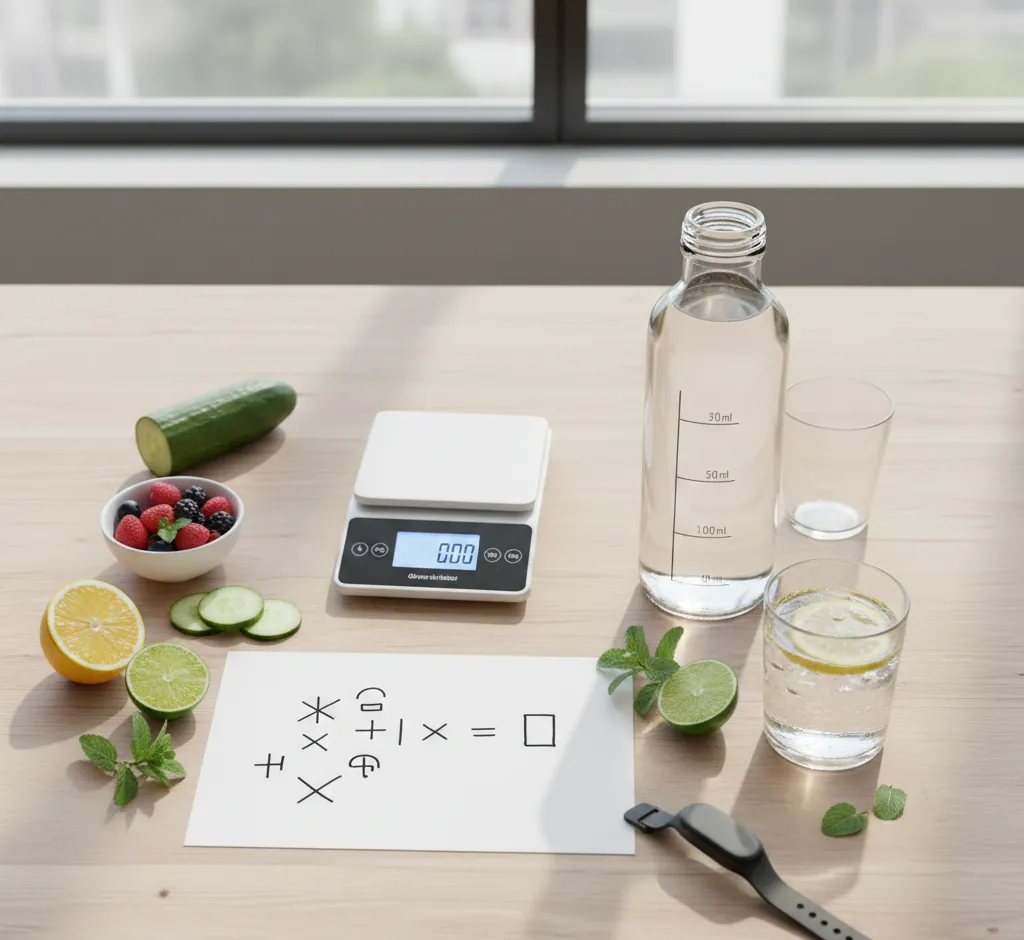
A reusable bottle makes tracking intake much easier. Choose one with volume markings (for example, 500 ml or 1 liter) and calculate how many refills you need to reach your personalized target.
- Example: If your goal is 2.4 liters and your bottle holds 600 ml, you need about four full bottles per day.
3. Build hydration into existing habits
Link drinking water to routines you already follow so it becomes automatic. For instance:
- Drink a glass of water after brushing your teeth.
- Have water with each meal and snack.
- Take a few sips every time you check your phone or email.
These small actions accumulate over the day and help you reach your target effortlessly.
4. Add flavor without extra sugar
If plain water feels boring, natural flavor boosters can make hydration more enjoyable without relying on sugary drinks.
- Lemon, lime, or orange slices
- Cucumber and mint
- Fresh berries or apple slices
- Herbal teas (hot or iced, unsweetened)
Experiment with combinations until you find flavors that encourage you to drink more consistently.
5. Include water-rich foods
Food can contribute significantly to your daily fluid intake. Some examples of hydrating foods include:
- Cucumber, lettuce, celery, and radishes
- Watermelon, strawberries, oranges, and grapes
- Tomatoes, bell peppers, and zucchini
- Soups, broths, and smoothies (with minimal added sugar)
These foods provide not only water but also vitamins, minerals, and fiber to support overall health.
Can You Drink Too Much Water?
While dehydration is more common, drinking excessive amounts of water in a short time can also be dangerous. Overhydration can dilute blood sodium levels, a condition known as hyponatremia, which can be serious if not addressed.
Signs of overhydration
- Nausea and vomiting
- Headache and confusion
- Swelling in hands, feet, or lips
- Frequent, clear urination far beyond normal
Overhydration is rare in healthy adults who follow body-weight-based guidelines and drink steadily throughout the day. Problems usually arise when people consume very large amounts of water in a short period, such as several liters in just a couple of hours, without balancing electrolytes.
The safest approach is moderation: follow your personalized target, listen to your body, and avoid extreme practices such as water-drinking contests or highly restrictive diets.
Special Considerations for Different Groups
Athletes and very active individuals
Athletes often need more detailed hydration strategies due to high sweat rates and long training sessions. In addition to body weight, they may track sweat loss by weighing themselves before and after exercise.
- For each 0.5 kg of body weight lost during exercise, a common guideline is to drink about 500–700 ml of fluid.
- Including sodium in fluids or snacks can help replace salt lost in sweat, especially during long or intense sessions.
Pregnant and breastfeeding women
Hydration needs typically increase during pregnancy and breastfeeding because the body supports both the parent and the baby.
- Pregnant individuals often require modestly higher fluid intake than non-pregnant individuals of the same weight.
- Breastfeeding can further increase water needs, as fluid is used to produce breast milk.
Body-weight-based formulas still provide a base, but personal guidance from a healthcare provider is recommended to adjust for individual needs.
People with chronic illnesses
Conditions such as kidney disease, heart failure, and certain endocrine disorders can drastically alter how the body handles water. In these cases, generalized intake formulas may be unsafe.
Anyone with a chronic illness, especially involving the kidneys, heart, or liver, should ask a healthcare professional for personalized recommendations rather than self-adjusting water intake based solely on weight.
Putting It All Together: A Personalized Hydration Plan
To create a practical hydration plan tailored to your body, follow these steps:
- Calculate your baseline. Use 30–40 ml of water per kilogram of body weight (or 0.5–0.7 oz per pound) to estimate daily intake.
- Adjust for lifestyle. Add more water if you exercise, live in a hot climate, or consume a lot of salt, protein, or caffeine.
- Listen to feedback. Monitor urine color, energy levels, and signs of dehydration or overhydration.
- Build habits. Use a water bottle, set reminders, and link drinking water to daily routines.
- Review regularly. Recalculate and adjust your intake when your weight, activity level, environment, or health status changes.
Personalized water intake based on body weight gives you a science-informed starting point, but true optimization happens when you combine that with awareness of your body’s signals.
Final Thoughts
Hydration is foundational to health, yet it is often overlooked or oversimplified. By tailoring your water intake to your body weight and unique lifestyle, you move beyond generic advice and toward a more personalized, effective approach.
Use body-weight-based guidelines as a flexible framework, not a rigid rule. Adjust for your environment, activity, and health, and consult a healthcare professional if you have any underlying conditions. With a thoughtful, individualized strategy, staying well-hydrated becomes an easy, sustainable habit that supports energy, performance, and long-term wellbeing.