Proper Method for Cleaning Rhubarb: A Complete Step-by-Step Guide
Learn the proper method for cleaning rhubarb with this step-by-step guide. Discover how to safely trim, wash, and prepare rhubarb stalks for cooking, baking, or freezing.
Rhubarb is a unique, tangy vegetable that most people treat like a fruit in the kitchen. From pies and crumbles to jams, sauces, and refreshing drinks, properly cleaned rhubarb is the foundation of every successful recipe. While rhubarb is generally simple to prepare, there are a few important steps you should follow to ensure it is clean, safe, and ready to cook or bake.
This guide explains the proper method for cleaning rhubarb, how to prepare it for different uses, and what to avoid so you get the best flavor, color, and texture every time. Whether you are working with garden-fresh stalks or store-bought rhubarb, these steps will help you handle it correctly from start to finish.
Why Properly Cleaning Rhubarb Matters
Cleaning rhubarb is about more than just rinsing away a bit of dirt. Rhubarb grows close to the soil and can collect:
- Dirt and sand trapped in grooves or creases of the stalks.
- Residual pesticides or fertilizers (depending on how it was grown).
- Insects or small debris hidden between stalks.
- Wilted, damaged, or moldy areas that can affect taste and safety.
Properly cleaned rhubarb:
- Improves food safety by removing contaminants and spoiled parts.
- Enhances flavor by trimming away tough, dry, or stringy sections.
- Protects texture so your rhubarb cooks evenly and holds its shape where needed.
- Reduces waste by teaching you how to trim only what is necessary.
Important Safety Note: Rhubarb Leaves Are Toxic
Before cleaning rhubarb, you must understand one essential safety rule: never eat rhubarb leaves. The leaves contain high levels of oxalic acid and other compounds that can be toxic to humans and animals. Only the stalks are safe to eat.
If you harvest rhubarb yourself, you will often bring in stalks with leaves still attached. These must be removed and discarded immediately.
How to Handle Rhubarb Leaves Safely
- Always cut or break off the leaves outdoors or over a trash bin.
- Do not use leaves for cooking, juicing, or as animal feed.
- Do not compost rhubarb leaves if you are concerned about pet access to the compost pile.
- Wash your hands and tools after handling the leaves.
Once the leaves are separated and discarded, you can focus on cleaning the edible stalks properly.
What You Need to Clean Rhubarb
You do not need any special equipment to clean rhubarb effectively. Most home kitchens already have everything required.
- Sharp knife for trimming ends and cutting stalks.
- Cutting board reserved for fruits and vegetables.
- Large bowl or clean sink for rinsing.
- Cool running water for washing.
- Clean kitchen towel or paper towels for drying.
- Colander (optional) for draining rinsed pieces.
Avoid using soap or detergents on rhubarb. Plain, cool water is both sufficient and safest for cleaning produce.
Step-by-Step: Proper Method for Cleaning Rhubarb
Follow this structured process to clean rhubarb thoroughly while preserving its color and crispness.
Step 1: Separate and Inspect the Stalks
Start by separating the stalks and laying them out on a clean surface.
- Remove any elastic bands, twist ties, or packaging.
- Spread the stalks so you can see all sides clearly.
- Look for signs of spoilage, such as soft spots, mold, or an unpleasant smell.
- Set aside any severely damaged stalks to discard or trim heavily.
Fresh rhubarb should feel firm, crisp, and slightly glossy. Limp, rubbery, or slimy stalks are past their prime and should not be used.
Step 2: Trim Leaves and Root Ends
If the leaves are still attached, remove them first, cutting or snapping just where the leaf meets the stalk.
- Hold the stalk flat on a cutting board.
- Use a knife to cut off the leaf portion completely.
- Discard the leaves safely as explained earlier.
Next, trim the base of the stalk:
- Cut off about 0.5–1 cm (roughly 1/4–1/3 inch) from the bottom end.
- Remove any dried, brown, or woody sections.
- If the very base looks water-soaked or moldy, cut a bit higher until the interior looks fresh.
Step 3: Rinse Under Cool Running Water
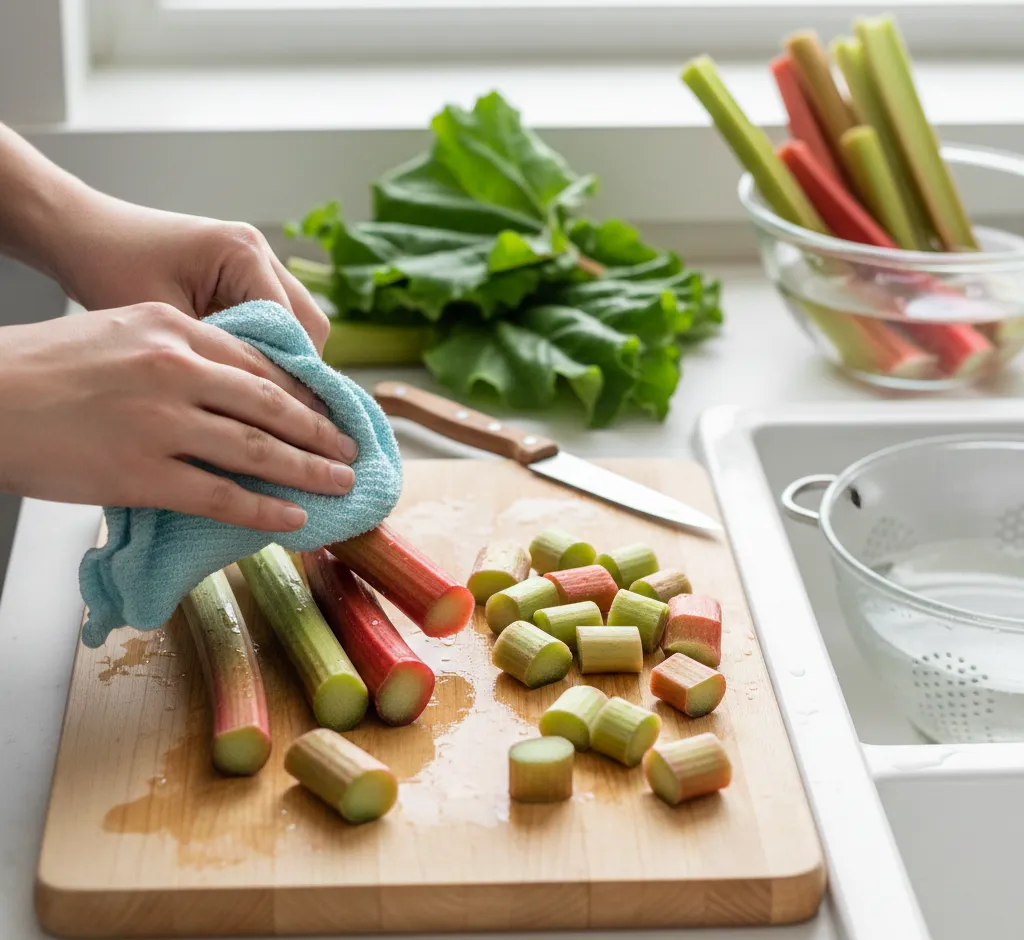
Rinsing removes dirt, dust, and small insects. Use cool—not hot—water to preserve texture and color.
- Place the rhubarb stalks in a clean sink or large bowl.
- Turn on cool running water.
- Rinse each stalk individually, rotating it to clean all sides.
- Use your fingers to gently rub along the stalk to loosen any dirt in grooves.
If the rhubarb is especially dirty, you can briefly soak it in a bowl of cool water for a few minutes and then rinse under running water. Do not soak for long periods, as this can waterlog the stalks and affect their texture when cooked.
Step 4: Check for Stringy or Tough Outer Layers
Some rhubarb, especially thicker or older stalks, can have tough, fibrous outer strings. These are not harmful, but they can be unpleasant to chew.
- Inspect the stalks after rinsing.
- Look for areas that seem very fibrous, especially along the outer edges.
- If the stalks are thin and tender, you may not need to remove any strings.
Optional: How to Peel Stringy Rhubarb
If you notice a lot of strings, you can peel some of the outer layer:
- Use a small paring knife to gently lift one edge of the skin at the cut end of the stalk.
- Pull the strip of skin downward along the stalk to remove the strings.
- Repeat around the stalk as needed, but avoid over-peeling, which can waste the colorful outer layer.
Keep in mind that the red skin contributes to the vibrant color of rhubarb dishes, so peel only when truly necessary.
Step 5: Pat Dry Before Cutting
After rinsing, lightly dry the stalks. This step is especially helpful if you plan to freeze rhubarb or use it in recipes where excess water could dilute flavor.
- Lay the stalks on a clean kitchen towel or paper towels.
- Gently pat them dry, turning as needed.
- They do not need to be completely dry, just no longer dripping.
Once dry, your rhubarb is ready to cut, cook, or store.
How to Cut Rhubarb After Cleaning
How you cut rhubarb affects how it cooks and looks in your final dish. Proper cleaning sets the stage; proper cutting fine-tunes the result.
General Cutting Guidelines
- Use a sharp knife to avoid crushing the stalks.
- Cut on a stable board to keep pieces uniform.
- Trim any remaining blemishes as you cut.
Common Cutting Sizes
- Small chunks (about 1–1.5 cm): Best for pies, crumbles, and jams where the rhubarb should soften and blend easily.
- Medium pieces (2–3 cm): Ideal for compotes, sauces, and stewed rhubarb that still has some texture.
- Larger lengths (5–7 cm or more): Suitable for roasting, poaching, or decorative uses where the pieces should stay visible.
Cutting pieces evenly ensures they cook at the same rate, preventing some pieces from turning mushy while others remain undercooked.
Cleaning Rhubarb for Different Uses
The basic cleaning steps remain the same, but you can make slight adjustments depending on how you plan to use your rhubarb.
For Baking (Pies, Crumbles, Cakes)
For most baked desserts, you want clean, evenly cut pieces that release their juices without turning into complete puree.
- Follow the full cleaning process: trimming, rinsing, and optional peeling.
- Cut into small or medium pieces depending on the recipe.
- Pat dry slightly more thoroughly to avoid watering down batter or filling.
For Sauces, Compotes, and Jams
Sauces and jams do not require perfect-looking pieces, but cleanliness still matters.
- Thoroughly rinse and trim to remove all dirt and damaged areas.
- Cut into smaller pieces to speed up cooking and breakdown.
- Peeling is rarely necessary, as the strings soften during longer cooking times.
For Freezing Rhubarb
If you want to preserve rhubarb for future use, proper cleaning before freezing is crucial.
- Clean stalks as described: trim, rinse, optionally peel, and pat dry.
- Cut into the size you most commonly use in recipes (often 1–2 cm pieces).
- Spread pieces in a single layer on a baking sheet to pre-freeze them.
- Once frozen, transfer to airtight bags or containers, label, and freeze.
Because you clean the rhubarb before freezing, there is no need to wash it again when you use it later. It can go straight from the freezer into your recipe.
Common Mistakes When Cleaning Rhubarb
A few simple mistakes can reduce the quality of your rhubarb or even pose safety issues. Here are the most important ones to avoid.
1. Leaving Leaves Attached Too Long
Rhubarb leaves are not only toxic but can also pull moisture and freshness from the stalks if left on after harvest. Always remove leaves as soon as possible.
2. Using Hot Water
Hot water may seem like a good way to clean more thoroughly, but it can soften rhubarb prematurely and dull its color. Stick to cool water for rinsing.
3. Over-Soaking the Stalks
Long soaks in water can cause:
- Waterlogged stalks that cook unevenly.
- Loss of some flavor compounds.
- Increased risk of bruising or damage.
A brief soak is fine for heavily soiled rhubarb, but prolonged soaking is unnecessary.
4. Over-Peeling and Losing Color
Peeling away too much of the outer skin removes the beautiful red or pink color that many rhubarb lovers enjoy in their dishes. Only remove strings where absolutely necessary, and keep as much of the colored exterior as possible.
5. Neglecting to Trim Damaged or Moldy Areas
Even a small moldy or rotten spot can affect flavor and safety if left in place. Always cut several millimeters beyond any visibly damaged area to ensure you are left with entirely healthy, fresh flesh.
How to Store Cleaned Rhubarb
Once your rhubarb is properly cleaned, storing it correctly helps maintain its quality until you are ready to cook or bake.
Short-Term Storage in the Refrigerator
For use within a few days:
- Whole stalks: Wrap in a slightly damp paper towel and place in a perforated plastic bag in the crisper drawer.
- Cut pieces: Store in an airtight container or resealable bag lined with a dry paper towel.
- Use within 3–5 days for best flavor and texture.
Long-Term Storage in the Freezer
For longer storage, freezing is the best option.
- Always freeze after cleaning and cutting.
- Label containers with date and portion size.
- Use frozen rhubarb within 8–12 months for best quality.
There is no need to thaw rhubarb fully before cooking. For most recipes, you can add it directly from the freezer, adjusting cooking time slightly if needed.
Frequently Asked Questions About Cleaning Rhubarb
Do you need to peel rhubarb before cooking?
No, peeling rhubarb is usually not necessary. Many varieties are tender enough that the peel softens during cooking. Only peel older, very thick, or particularly stringy stalks, and even then, peel lightly to keep as much color as possible.
Can you eat rhubarb raw after cleaning it?
Yes, the stalks can be eaten raw after thorough cleaning, though they are very tart. Some people enjoy small pieces dipped in sugar or added sparingly to fruit salads. Always ensure the stalks are fresh, clean, and trimmed of leaves and damaged areas.
How do you know if rhubarb has gone bad?
Signs of spoiled rhubarb include:
- Soft, limp, or rubbery texture.
- Brown, black, or moldy spots.
- Unpleasant or sour odor beyond the usual tart smell.
- Visible slime or excessive moisture.
Discard any stalks that show these signs rather than trying to salvage them.
Is it safe to clean rhubarb in advance?
Yes, you can clean rhubarb a day or two ahead of time and store it in the refrigerator. Make sure it is well-dried and kept in a covered container or bag to prevent drying out or absorbing odors from other foods.
Summary: The Proper Method for Cleaning Rhubarb
Cleaning rhubarb properly is a simple but essential part of preparing this tart, flavorful stalk for cooking and baking. The key steps include trimming and discarding toxic leaves, rinsing stalks thoroughly under cool water, checking for toughness and strings, and drying them before cutting. With these steps, you remove dirt, debris, and damaged areas while preserving the rhubarb’s color, texture, and bright flavor.
Once you master the proper method for cleaning rhubarb, you will be ready to use it confidently in pies, crumbles, sauces, jams, and more. Clean, well-prepared rhubarb not only tastes better but also cooks more evenly and safely, helping you get the most out of this distinctive seasonal ingredient.