Purity Testing for Essential Oils: Methods, Standards, and How to Spot Adulteration
Learn how purity testing for essential oils works, from GC–MS analysis to optical rotation and refractive index. Discover how adulteration happens, which standards matter, and how to choose truly pure, high-quality essential oils.
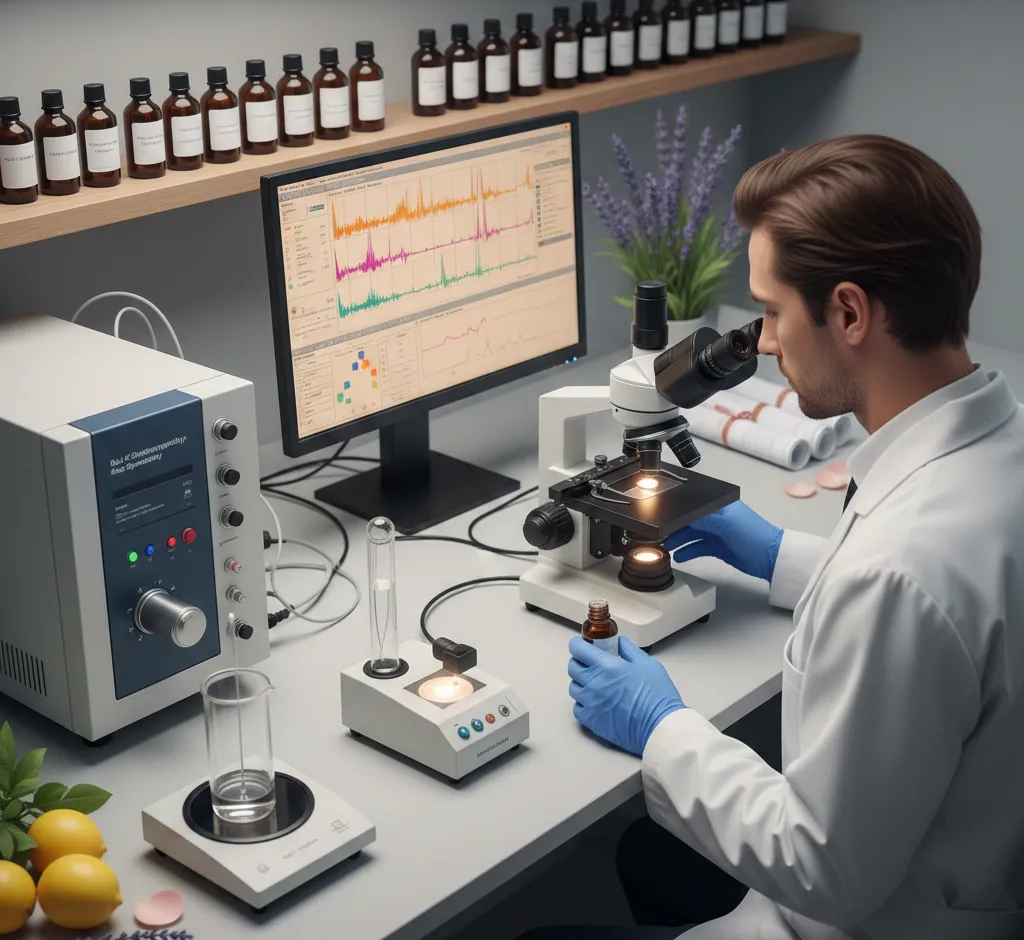
Essential oils have surged in popularity for aromatherapy, natural wellness, skincare, and even home cleaning. Yet, as demand has grown, so has the risk of adulteration and poor-quality products. This makes purity testing for essential oils one of the most important topics for consumers, practitioners, and brands alike.
In this article, you will learn what essential oil purity actually means, how oils are commonly adulterated, the main scientific methods used to test purity, and practical steps you can take to choose trustworthy, high-quality oils.
What Does “Pure” Essential Oil Really Mean?
The word pure appears on many essential oil labels, but it is not strictly regulated in most countries. Understanding what it should mean is the first step in evaluating quality.
Core criteria of a pure essential oil
- Single botanical source: The oil is distilled or expressed from one clearly identified plant species and, ideally, its chemotype (for example, Rosmarinus officinalis ct. cineole).
- No synthetic additives: No synthetic aroma chemicals, solvents, or artificial fragrances are added.
- No undisclosed dilutions: The oil is not cut with cheaper carrier oils or other essential oils without clear labeling.
- Unaltered chemistry: The natural profile of its constituents is preserved, without aggressive rectification or reconstitution.
- Traceable origin: The plant’s country of origin, part used, and extraction method are known and documented.
A truly pure and authentic essential oil is better described as 100% pure, genuine, and unadulterated, supported by transparent testing and documentation rather than just a marketing claim on the bottle.
Common Types of Essential Oil Adulteration
Adulteration ranges from relatively simple dilutions to sophisticated chemical manipulations. Knowing the common tricks helps you understand why robust purity testing is essential.
1. Dilution with cheap carrier oils
Some suppliers dilute expensive essential oils (such as rose, neroli, or jasmine) with inexpensive carrier oils like sunflower or fractionated coconut oil, then sell them as pure. This:
- Reduces cost dramatically.
- Changes viscosity and absorption.
- Can increase the risk of oxidation and skin irritation if the carrier is low quality.
2. Blending with cheaper essential oils
Another tactic is blending a high-value oil with a cheaper oil that smells somewhat similar. For example:
- Pure lavender mixed with lavandin.
- Roman chamomile partially replaced with blue tansy.
- True sandalwood blended with amyris or other woody oils.
These blends may smell pleasant, but they are no longer chemically or therapeutically equivalent to the genuine oil.
3. Addition of synthetic aromatic compounds
Some adulterators add synthetic isolates to mimic the scent of a premium oil. Examples include:
- Adding synthetic linalool and linalyl acetate to fake a pricey lavender.
- Adding synthetic vanillin to intensify vanilla-like aromas.
- Adding synthetic menthol to boost peppermint’s cooling feel.
These synthetics can skew safety profiles and may not behave like naturally balanced oils in aromatherapy or skincare applications.
4. Rectification and reconstitution
Rectification is a form of redistillation where certain compounds are selectively removed or concentrated. While some gentle rectification is technically acceptable for specific purposes, excessive manipulation can produce an oil that no longer reflects its natural source.
Reconstitution goes a step further, combining natural and synthetic constituents to create an oil that smells like the real thing but is essentially a reconstructed fragrance, not a genuine essential oil.
Why Purity Testing for Essential Oils Matters
Purity is not just an issue of ethics or marketing; it directly impacts safety, effectiveness, and trust.
- Safety: Adulterated oils may contain allergens, oxidized components, or synthetic chemicals that increase the risk of skin sensitization, headaches, or respiratory irritation.
- Therapeutic value: The subtle synergy of a natural oil’s constituents is critical for aromatherapy. Adulterated oils may lack the expected therapeutic effects.
- Consistency: Practitioners and formulators need predictable, repeatable results. Poor-quality oils make dosage and outcomes harder to control.
- Regulatory compliance: Brands that sell internationally must meet safety standards, provide documentation, and maintain batch records.
Reliable purity testing methods are therefore central to any serious essential oil supply chain.
Key Laboratory Methods for Essential Oil Purity Testing
While no single test can reveal everything, laboratories use several complementary techniques to evaluate the purity, identity, and quality of essential oils. The most important among them are described below.
Gas Chromatography–Mass Spectrometry (GC–MS)
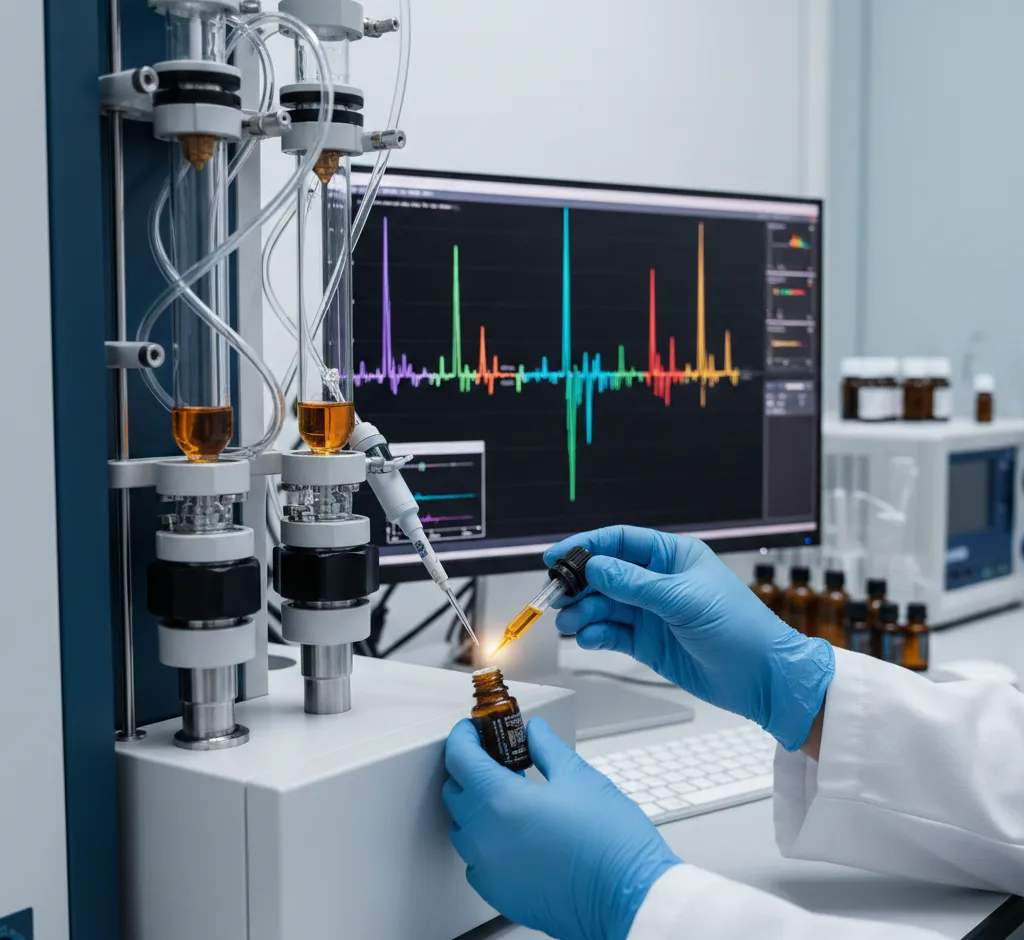
GC–MS is the gold standard for essential oil analysis. It separates the oil into its individual chemical components and identifies them based on their mass spectra.
How GC–MS works
- The essential oil sample is vaporized and carried through a long column by an inert gas.
- Different compounds travel through the column at different speeds, separating into distinct peaks.
- The mass spectrometer identifies each compound by its unique fragmentation pattern.
- The resulting chromatogram shows which molecules are present and in what approximate proportion.
By comparing this profile to reference standards or published data, analysts can detect:
- Unusual compounds that shouldn’t naturally be present.
- Abnormal ratios of key constituents, suggesting adulteration.
- Geographic or botanical variations in the oil’s chemistry.
Gas Chromatography with Flame Ionization Detection (GC–FID)
GC–FID is another gas chromatography method used to quantify the components of an essential oil. Instead of a mass spectrometer, it uses a flame ionization detector to measure compounds as they burn in a hydrogen flame.
GC–FID is particularly useful for:
- Obtaining accurate relative percentages of major constituents.
- Comparing a sample’s composition to standard ranges for authenticity.
- Monitoring batch-to-batch consistency.
Optical rotation
Optical rotation measures how a sample rotates polarized light. Many essential oil components are chiral (they exist in left- and right-handed forms), and their natural ratios are remarkably consistent.
If the measured optical rotation deviates significantly from the expected range published in pharmacopoeias or standards, this can indicate:
- Addition of synthetic isolates.
- Substitution with another species.
- Heavy processing or degradation.
Refractive index
The refractive index describes how light bends as it passes through the oil. Each genuine essential oil has a relatively narrow refractive index range at a given temperature.
Significant deviations can reveal:
- Dilution with carrier oils or solvents.
- Presence of non-volatile components.
- Incorrect labeling or misidentification.
Specific gravity (relative density)
Specific gravity compares the density of an essential oil to that of water. It is a quick, classical check that supports other analytical methods. A genuine oil should fall within a known density range; values outside this may suggest adulteration or contamination.
Organoleptic evaluation
While it is not a substitute for laboratory analysis, organoleptic testing (using the senses) remains valuable, especially for experienced aromatherapists and perfumers. They evaluate:
- Aroma complexity, depth, and natural evolution over time.
- Color, clarity, and consistency.
- Evaporation curve and dry-down characteristics.
A flat, single-note, or harsh aroma can be a red flag for adulteration or low-quality material.
Standards and Certifications for Essential Oil Purity
Several organizations and guidelines help define what quality and purity should look like for essential oils. Although not all are legally binding, they provide reference points that reputable suppliers often follow.
ISO and pharmacopoeial standards
The International Organization for Standardization (ISO) publishes standards that specify certain properties and compositional ranges for many essential oils. Additionally, pharmacopoeias (such as the European or United States Pharmacopoeia) may list monographs for oils used in medicinal contexts.
These documents cover:
- Expected ranges for key constituents.
- Physical constants like refractive index and specific gravity.
- Acceptable limits for impurities or contaminants.
GC–MS reports and Certificates of Analysis (CoA)
High-quality suppliers commonly provide a Certificate of Analysis (CoA) and sometimes full GC–MS reports for each batch of essential oil. These documents show:
- The lot or batch number.
- Botanical name and plant part.
- Country of origin and extraction method.
- Analytical results for major and minor constituents.
- Physical properties such as density and refractive index.
While consumers may not interpret every technical detail, the availability of such reports is a strong indicator of transparency and commitment to purity testing.
Organic and sustainability certifications
Organic certifications (such as EU Organic, USDA Organic, or equivalent bodies) focus primarily on agricultural practices rather than purity alone. However, organically certified essential oils:
- Are grown without synthetic pesticides or fertilizers.
- Are traceable to certified farms and processors.
- Often come from supply chains that also invest in proper testing and documentation.
Other labels (Fair Trade, sustainably harvested, wildcrafted) can support an overall quality ethos, though they do not replace chemical purity testing.
How Brands Implement Purity Testing in Practice
Reputable essential oil brands usually follow an integrated quality control process from field to bottle. While specific details vary, the general steps include:
1. Supplier qualification and traceability
- Working only with vetted distillers and producers.
- Verifying cultivation methods, harvesting practices, and distillation parameters.
- Maintaining detailed records that connect each batch to its origin.
2. Incoming raw material testing
- Performing GC–MS and GC–FID analysis on every batch.
- Checking physical properties (density, refractive index, optical rotation).
- Screening for contaminants (such as residual solvents or heavy metals when relevant).
3. Ongoing quality checks and stability monitoring
- Storing samples from each batch to observe how they age.
- Retesting oils periodically, especially for long-lived inventory.
- Using proper packaging (amber glass, tight closures) to reduce oxidation and degradation.
4. Transparent documentation and education
- Providing CoAs or summary analysis to customers.
- Labeling with full botanical names, chemotypes, and lot numbers.
- Educating consumers on safe use and realistic expectations.
When you see this level of detail and transparency, it is a strong sign that the company takes purity testing seriously.
Practical Tips for Consumers: How to Choose Pure Essential Oils
You may not have access to a laboratory, but you can still make informed decisions. Here are practical ways to assess the likelihood that an essential oil is pure and high quality.
Check the label carefully
- Botanical name: Look for the Latin binomial (for example, Lavandula angustifolia), not just a generic name like "lavender oil."
- Plant part and method: Steam distilled, cold pressed, CO2-extracted, etc.
- Country of origin: Credible brands usually list this.
- Purity statement: Phrases like "100% pure essential oil" should be backed by testing, not just marketing.
Look for batch-specific test reports
Many transparent brands share batch-specific GC–MS reports or at least summarized analysis on their website or upon request. While you may not understand every detail, consistent access to these reports signals that the brand invests in genuine quality control.
Be wary of suspiciously low prices
Essential oil production requires large amounts of plant material. For example, it takes thousands of roses to produce a small bottle of rose otto. When a rare or labor-intensive oil is priced far below the market average, adulteration is highly likely.
Assess packaging and storage
- Oils should be sold in dark glass bottles (amber, cobalt) to protect from light.
- Caps should close tightly to limit oxidation and evaporation.
- Large sizes of highly volatile oils sold in plastic containers are a red flag.
Use your senses thoughtfully
Over time, you can train your nose and observation skills:
- A genuine oil often has layers and complexity; synthetic or highly adulterated oils may smell sharp, flat, or one-dimensional.
- Compare the same type of oil from different reputable brands to learn what natural variation still feels authentic.
- Watch for unusual residues, cloudiness, or separation that might indicate added carriers or contamination.
Although aroma alone cannot confirm purity, it can help you detect obvious problems when combined with other information.
Misconceptions About Essential Oil Purity Testing
Purity testing is often oversimplified or misunderstood in marketing. Clarifying these misconceptions can prevent unrealistic expectations.
Myth 1: “Therapeutic grade” is a regulated standard
The term "therapeutic grade" is not defined by any independent regulatory body. It is a marketing phrase created by companies, and each may define it differently. What truly matters is:
- Transparent testing (GC–MS, CoA) for each batch.
- Clear botanical and sourcing information.
- Responsible safety guidelines and education.
Myth 2: Only smell tests are needed
Even highly trained noses cannot detect all forms of adulteration. Some synthetic isolates and dilutions are designed to mimic natural scents very closely. Scientific analysis is essential to confirm authenticity and identify subtle or invisible adulterants.
Myth 3: Organic always means pure
Organic certification is valuable but does not automatically guarantee that an essential oil hasn’t been diluted or altered after distillation. The most reliable situation is when a product is both organically sourced and supported by robust purity testing and documentation.
Integrating Purity Testing into Safe Essential Oil Use
Even the purest essential oil requires responsible use. Purity does not mean an oil is safe to apply undiluted or ingest. In fact, pure oils are often more potent and therefore need more careful handling.
To support safe practice:
- Always dilute essential oils appropriately in carrier oils for topical use.
- Follow evidence-based guidelines from qualified aromatherapists or reputable educational sources.
- Be aware of contraindications, such as pregnancy, epilepsy, or specific medication interactions.
- Store oils in a cool, dark place and label them with the date opened.
High-quality purity testing ensures you know what is in the bottle. Safe usage practices ensure you use that oil in a way that supports, rather than undermines, your wellbeing.
Conclusion: What to Look For in Pure Essential Oils
Purity testing for essential oils combines modern analytical chemistry with traditional organoleptic skills and robust supply chain ethics. When evaluating an essential oil or brand, look for:
- Clear botanical identity and origin on the label.
- Batch-specific GC–MS or CoA documents.
- Logical pricing that reflects production realities.
- Dark glass packaging and proper storage recommendations.
- Educational resources and honest communication about safety.
By understanding how purity is defined, how adulteration occurs, and what testing methods are used, you can make more informed choices and support companies that are genuinely committed to quality. Ultimately, investing in tested, authentic essential oils protects your health, enhances your aromatherapy practice, and supports sustainable, ethical production around the world.