Safe Methods to Remove Pesticides from Produce: A Complete Home Guide
Learn safe, science-backed methods to remove pesticides from fruits and vegetables at home. Discover how to wash, soak, scrub, and store produce to reduce residues and improve food safety.
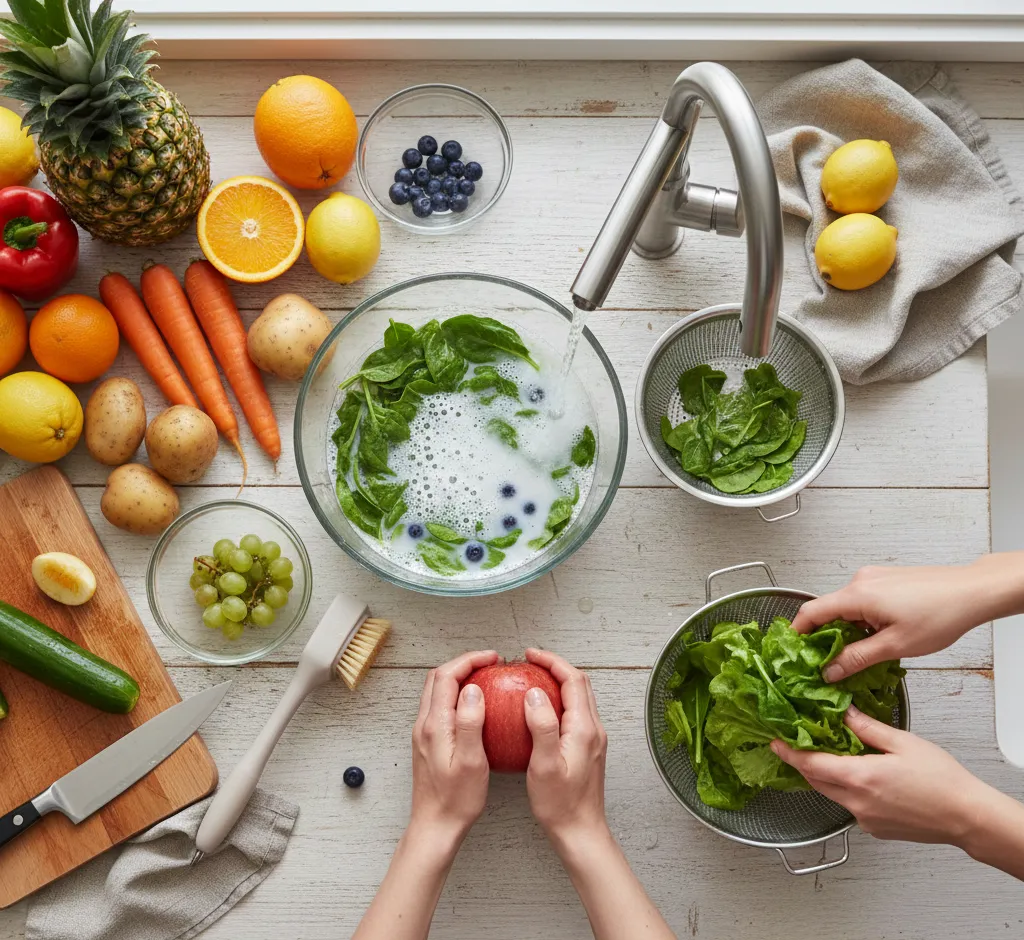
Fresh fruits and vegetables are essential for a healthy diet, but many people worry about pesticide residues on their produce. While pesticides help farmers protect crops from pests and disease, trace amounts can remain on the food we bring home. The good news is that you can significantly reduce these residues with simple, safe methods in your own kitchen.
This guide explains why pesticide removal matters, how different cleaning methods work, and which approaches are both effective and safe. You will learn practical, science-backed techniques to wash fruits and vegetables, when peeling or cooking makes sense, and what common myths you can ignore.
Why Removing Pesticides from Produce Matters
Pesticides include a wide range of substances used to kill insects, fungi, weeds, and other threats to crops. Regulatory agencies set limits on how much pesticide can remain on produce, and routine monitoring helps keep food within these limits. Still, many people prefer to reduce residues as much as possible, especially for children, pregnant people, and those with chronic health conditions.
Washing and handling produce correctly can help lower your exposure to:
- Surface pesticide residues that sit on the skin or peel.
- Dirt, dust, and debris picked up during growing and transport.
- Bacteria and other microbes that may cause foodborne illness.
It is important to understand that no home method can remove all pesticides, especially those that are systemic and absorbed into the plant tissue. However, proper cleaning can substantially reduce many common residues and improve overall food safety.
General Rules for Safely Cleaning Produce
Before exploring specific methods, keep these universal best practices in mind whenever you handle fresh fruits and vegetables.
1. Wash Your Hands and Surfaces First
Always wash your hands with soap and water for at least 20 seconds before and after handling produce. Clean cutting boards, knives, and countertops to prevent cross-contamination from raw meat, poultry, or dirty surfaces.
2. Rinse Before You Peel or Cut
Rinse produce before you remove peels or cut into it. If you peel or slice first, dirt and residues on the outer surface can transfer to the edible interior. Once clean, use a clean knife and cutting board.
3. Use Potable, Cool Running Water
Safe drinking water at cool or slightly lukewarm temperature is ideal. There is no need for hot water, which may damage delicate produce and does not necessarily improve pesticide removal.
Safe and Effective Methods to Remove Pesticides
Different types of produce require slightly different approaches. Below are safe, practical methods you can use daily, along with tips for specific fruit and vegetable types.
Method 1: Rinsing Under Running Water
For many fruits and vegetables, simple rinsing under running water is the foundation of pesticide removal. Studies show that rinsing can remove a significant portion of surface residues, as well as dirt and microbes.
How to Rinse Correctly
- Hold the produce under a gentle stream of cool running water.
- Rub the surface with your hands for at least 20–30 seconds.
- For sturdy items (like apples or cucumbers), rub more firmly as you rotate the produce.
- Place rinsed produce on a clean towel or paper towel to air-dry.
This method works well for:
- Firm fruits like apples, pears, and nectarines.
- Firm vegetables like bell peppers, cucumbers, and zucchini.
- Produce with smooth surfaces that can be easily rubbed.
Method 2: Using a Produce Brush
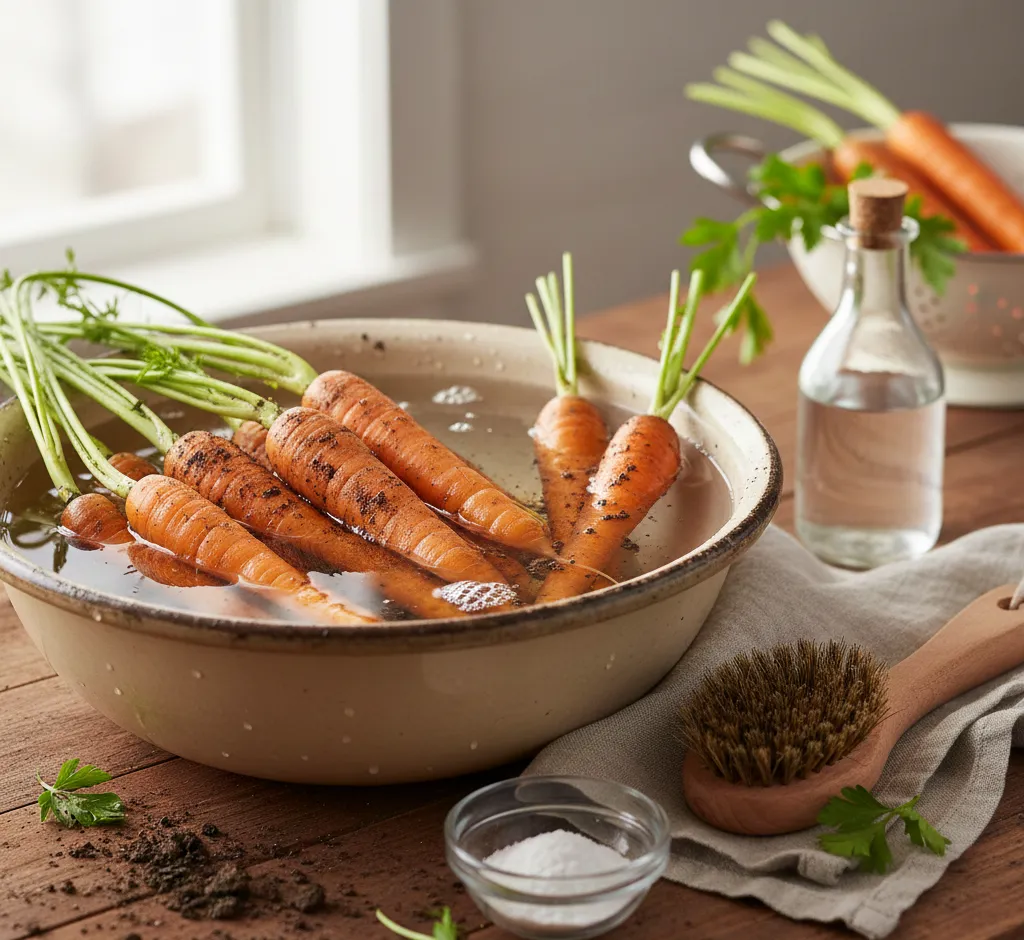
A clean produce brush can help remove residues from firm produce with thicker skin. It is especially useful when dirt or soil is visible.
How to Use a Produce Brush Safely
- Rinse the produce under running water.
- Gently scrub the surface with a dedicated produce brush.
- Pay extra attention to crevices and stem areas.
- Rinse again briefly to wash away loosened dirt and residues.
Use a brush for items such as:
- Potatoes and sweet potatoes
- Carrots, parsnips, and beets
- Melons (such as cantaloupe and watermelon)
- Cucumbers and squash
Keep the brush itself clean by washing it with hot soapy water and allowing it to air-dry between uses.
Method 3: Soaking in Clean Water
Soaking can help remove residues from produce with uneven surfaces or tightly packed leaves, where running water alone may not reach effectively. It is especially useful for leafy greens and berries.
Simple Water Soak
- Fill a clean bowl or basin with cool water.
- Submerge the produce completely.
- Gently agitate the water with your hands to release dirt and residues.
- Soak for a few minutes (usually 2–5 minutes is enough).
- Lift the produce out of the water rather than pouring the water through it, so dirt stays behind.
- Rinse briefly under running water and dry with a clean towel or salad spinner.
This method works well for:
- Leafy greens (lettuce, spinach, kale)
- Herbs (cilantro, parsley, mint)
- Berries (strawberries, blueberries, raspberries) with extra care
Do not soak produce for prolonged periods, as it can lead to nutrient loss, texture changes, and an increased risk of microbial contamination.
Method 4: Diluted Vinegar Solution
A mild vinegar solution can help reduce certain pesticide residues and microbial contamination. Vinegar is acidic, which can assist in loosening some surface residues and killing some bacteria. It should always be diluted and rinsed off thoroughly before eating.
How to Prepare and Use a Vinegar Wash
- Mix one part white vinegar with three parts clean water in a bowl or basin.
- Submerge the produce in the solution.
- Soak for 5–10 minutes, gently moving the produce occasionally.
- Remove the produce and rinse thoroughly under running water to remove the vinegar taste and loosened residues.
- Dry with a clean towel or allow to air-dry.
Use this approach mainly for:
- Firm fruits such as apples, grapes, and plums
- Tomatoes, peppers, and cucumbers
- Leafy greens that can be rinsed thoroughly afterwards
Avoid using strong vinegar solutions on delicate berries or porous produce, as they may absorb the flavor or become mushy.
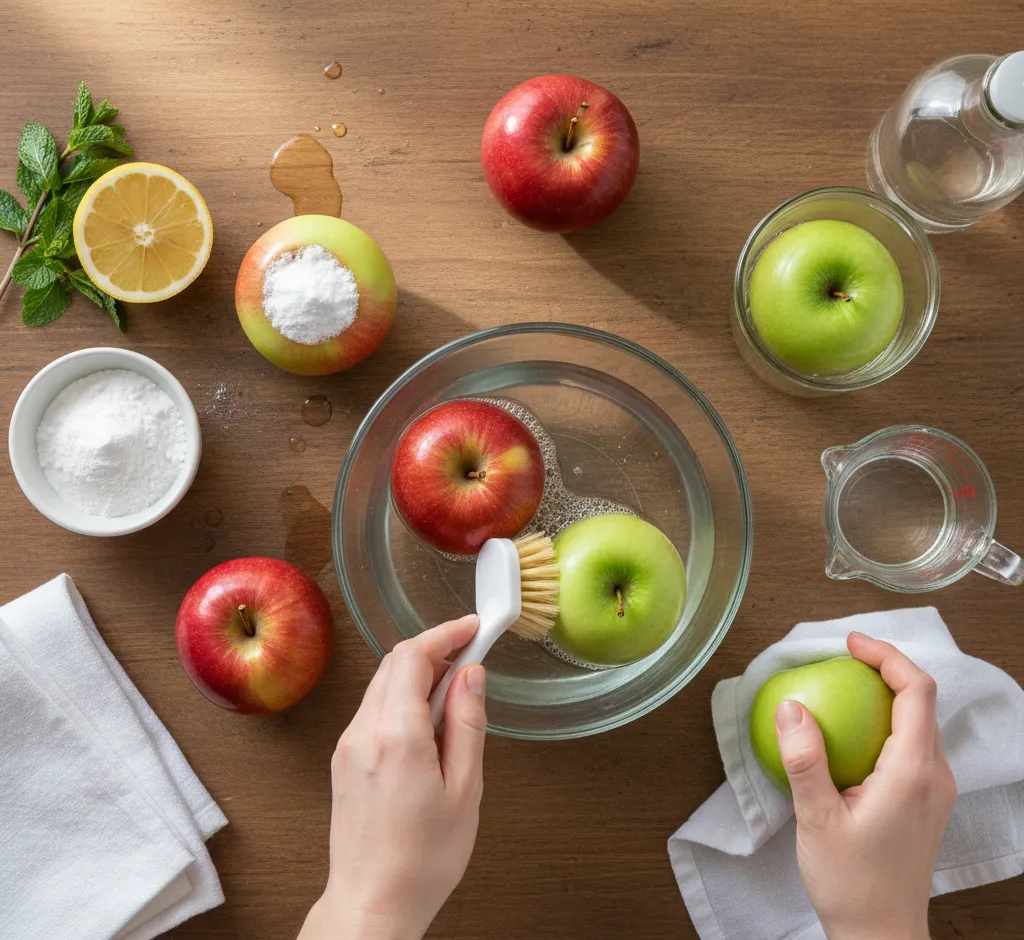
Method 5: Baking Soda (Sodium Bicarbonate) Solution
Baking soda has been shown in some studies to be effective at removing certain pesticide residues from the surface of produce. It is mildly alkaline, and when dissolved in water, it can help break down or dislodge residues on the surface.
How to Use a Baking Soda Wash
- Fill a bowl with clean water.
- Add approximately one teaspoon of baking soda per liter of water and stir to dissolve.
- Place the produce in the solution, ensuring it is fully submerged.
- Soak for 10–15 minutes, stirring or rubbing gently with your hands occasionally.
- Rinse thoroughly under running water to remove any remaining baking soda.
- Dry before storing or eating.
This method is suitable for:
- Apples, pears, and other firm fruits
- Root vegetables (carrots, potatoes) after scrubbing
- Cucumbers, eggplants, and similar vegetables
Baking soda is inexpensive, safe when used properly, and does not leave a strong taste if the produce is rinsed well afterwards.
Method 6: Peeling and Trimming
Some pesticide residues concentrate on or just beneath the skin of fruits and vegetables. Peeling or trimming can therefore be an effective final step after washing, especially if you are particularly concerned about residues.
When to Consider Peeling
- When the skin is thick and typically not eaten, such as on cucumbers or eggplants in certain recipes.
- When the surface is heavily waxed, as with some apples or citrus fruits.
- For root vegetables that have been grown in soil with uncertain quality.
Always wash produce before peeling to prevent transferring contaminants from the outer surface to the inner flesh. Use a clean peeler or knife and cut away damaged or bruised areas, which can harbor more residues and microbes.
Method 7: Cooking to Reduce Residues
Cooking does not remove all pesticides, but it can reduce some types, especially those that are heat-sensitive or water-soluble. Boiling, blanching, and steaming may help lower residue levels, particularly on vegetables.
However, keep in mind:
- Some pesticides are heat-stable and remain even after cooking.
- Cooking can also reduce certain nutrients if not done carefully.
- Washing before cooking is still essential to remove dirt and surface contaminants.
Whenever possible, combine thorough washing with appropriate cooking methods for an added layer of safety.
Special Handling Tips by Produce Type
Different textures and structures call for slightly different approaches. Here are specific tips to apply the safe methods above to common produce categories.
Leafy Greens (Lettuce, Spinach, Kale)
- Separate leaves and discard any damaged or wilted ones.
- Soak in a large bowl of cool water, swishing gently to release dirt and residues.
- Lift leaves out of the water and transfer to a colander.
- Rinse briefly under running water.
- Dry thoroughly with a clean towel or salad spinner before storing.
For greens that are more likely to have higher pesticide residues, you may choose to prioritize organic options when possible and still wash them thoroughly.
Berries (Strawberries, Blueberries, Raspberries)
- Do not soak berries for long periods, as they can become waterlogged and spoil faster.
- Place berries in a colander and rinse gently under a light stream of cool water.
- Gently move the berries with your hands to expose all surfaces.
- Allow them to drain, then dry carefully on a clean towel or paper towel.
If you use a mild vinegar solution for berries, keep the contact time short and rinse very well afterwards to avoid altering flavor and texture.
Firm Fruits (Apples, Pears, Peaches, Grapes)
- Rinse under running water while rubbing with clean hands.
- Use a produce brush for apples and pears if desired.
- For grapes, place them in a colander and rinse thoroughly while turning the bunches.
- Consider a brief baking soda or vinegar soak for apples or pears, followed by a thorough rinse.
For fruits with edible skins, washing is especially important because you consume the surface where residues are most likely to be present.
Root Vegetables (Carrots, Potatoes, Beets)
- Rinse under running water to remove loose dirt.
- Scrub with a produce brush to clean crevices and remove soil.
- Rinse again to wash away loosened dirt and residues.
- Peel if desired, especially when cooking for small children or if the skin is very dirty or damaged.
Since root vegetables grow directly in the soil, proper washing and, when appropriate, peeling can meaningfully reduce residues and contaminants.
Common Myths About Washing Pesticides Away
Many tips circulate online about how to remove pesticides from produce, but not all of them are safe or effective. Understanding the myths helps you avoid methods that can do more harm than good.
Myth 1: Dish Soap or Detergent Is Safe for Produce
Household soaps and detergents are not formulated for food use. They may leave their own residues on fruits and vegetables, which are not meant to be consumed. These products can also irritate the digestive system if ingested.
Stick to clean water, diluted vinegar, or baking soda solutions that are food-safe when properly rinsed.
Myth 2: Commercial Produce Wash Is Always Necessary
Some store-bought produce washes can be helpful, but research often shows that they do not outperform simple water rinsing or basic home methods like diluted vinegar. If you choose to use them, follow the instructions carefully and always rinse thoroughly afterwards.
For most households, a combination of water, light scrubbing, and occasional vinegar or baking soda soaks is sufficient.
Myth 3: Organic Produce Does Not Need Washing
Organic produce is grown without most synthetic pesticides, but it can still carry natural pesticides, environmental contaminants, dirt, and microbes. It may also come into contact with non-organic produce during transport or at the store.
Always wash organic produce just as carefully as conventionally grown produce.
Myth 4: Washing Removes All Pesticides
No method can completely remove all pesticide residues, especially those that are systemic and absorbed inside the plant. Washing primarily targets the surface, where many but not all residues are found.
Washing is still important to significantly reduce exposure and improve overall food safety, but it is only one part of a broader strategy that can include choosing a variety of foods and, when possible, selecting items from trusted sources.
Additional Strategies to Reduce Pesticide Exposure
Beyond washing, peeling, and cooking, you can adopt broader habits that may help reduce overall pesticide exposure over time.
Buy Seasonal and Local When Possible
Local and seasonal produce often travels shorter distances and may be grown with different pest-management practices than large-scale imports. Direct relationships with local farmers, such as through farmers markets or community-supported agriculture programs, can give you more insight into how your food is grown.
Prioritize Organic for Certain Items
If your budget allows, you might prioritize organic options for produce that typically carries higher pesticide residues and is consumed with the skin, such as certain berries, apples, or leafy greens. Even with organic options, washing remains essential.
Eat a Varied Diet
Eating a wide variety of fruits and vegetables reduces the chance of repeated exposure to a single type of pesticide from one food. A varied diet also increases your intake of different nutrients and beneficial plant compounds.
Safe Storage After Washing
How you store produce after cleaning affects both safety and quality. Improper storage can promote spoilage and microbial growth.
Dry Thoroughly Before Storing
Excess moisture can accelerate spoilage and encourage mold. After washing, dry produce as completely as possible using clean towels, paper towels, or a salad spinner for leafy greens.
Use Clean Containers
Store washed produce in clean, dry containers or bags. Avoid placing clean fruits and vegetables back into containers that previously held unwashed items without cleaning them first.
Refrigerate Promptly When Needed
Many fruits and vegetables keep best in the refrigerator once washed and dried, though some items (such as whole tomatoes or bananas) are better stored at room temperature until they ripen. Follow standard food-safety guidelines for storage times and temperatures.
Key Takeaways
Removing pesticides from produce at home does not require complicated products or harsh chemicals. By combining simple, safe methods, you can significantly reduce surface residues while maintaining the nutritional value and taste of your food.
- Always begin with clean hands, tools, and surfaces.
- Use cool running water, gentle rubbing, and a produce brush for firm items.
- Soak leafy greens and some fruits in clean water, optionally with diluted vinegar or baking soda, then rinse thoroughly.
- Peel or trim when appropriate, especially for thick-skinned or heavily waxed produce.
- Remember that washing reduces but does not completely eliminate all pesticide residues.
With these safe methods, you can feel more confident about the fruits and vegetables you serve to yourself and your family, enjoying their full health benefits with fewer unwanted residues.