Seasonal Humidity Adjustments for Optimal Sleep: A Complete Guide
Learn how to adjust bedroom humidity through winter, summer, and transitional seasons to improve sleep quality, comfort, and health. Discover ideal humidity ranges, tools, and practical tips for optimal rest all year long.
Waking up with a dry throat in winter or sticky skin in summer is more than just an annoyance. The humidity level in your bedroom can significantly influence how quickly you fall asleep, how deeply you sleep, and how rested you feel in the morning. By making smart, seasonal humidity adjustments, you can transform your sleep environment from merely acceptable to truly restorative.
Why Humidity Matters for Sleep
Humidity is the amount of water vapor in the air. When indoor air is too dry or too humid, your body has to work harder to stay comfortable and maintain its natural temperature regulation. This can lead to restless nights, congestion, skin irritation, and even worsen allergies.
Most sleep and indoor air experts recommend keeping bedroom humidity in the 40–60% relative humidity range. Within this band, the air usually feels comfortable, your airways stay moist enough to function well, and dust mites and mold are less likely to thrive.
Key ways humidity affects sleep
- Breathing comfort: Very dry air can irritate your nose and throat, while very humid air can feel heavy and make breathing feel more laborious.
- Thermal comfort: High humidity makes warm air feel hotter and more oppressive; low humidity makes cool air feel sharper and colder.
- Allergies and asthma: Improper humidity can increase dust mite activity, mold growth, and airborne irritants, triggering symptoms that disrupt sleep.
- Skin and mucous membranes: Dry air pulls moisture from your skin and eyes and dries out nasal passages, increasing irritation and susceptibility to infection.
Ideal Humidity Ranges by Season
While 40–60% is the general target, the best humidity for your bedroom can shift slightly with the seasons, your local climate, and your personal comfort. Understanding these seasonal patterns helps you fine-tune your environment more precisely.
Winter: Combatting Dry Air
In colder months, especially in regions with harsh winters, indoor heating dries out the air. It’s common for bedroom humidity to fall below 30%, which can cause a range of sleep-disrupting issues.
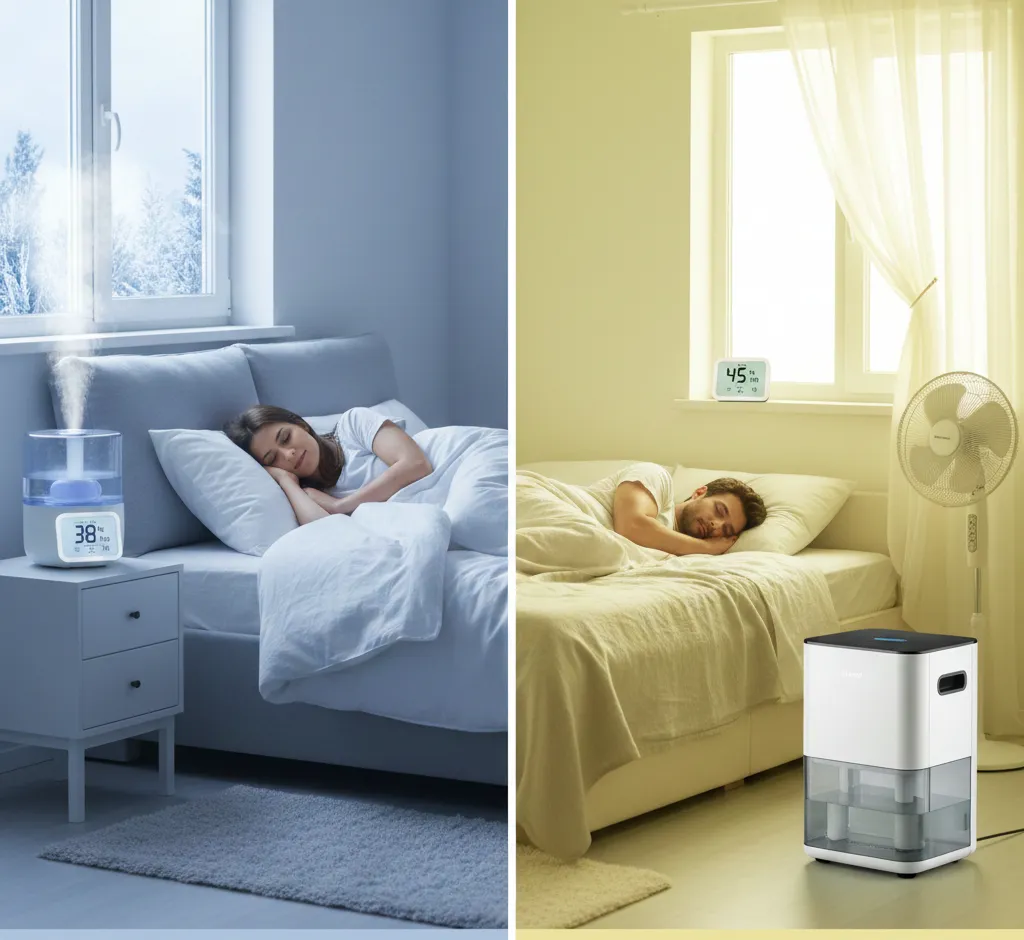
Winter target: Aim for 35–45% relative humidity to balance comfort, respiratory health, and condensation risks on windows and walls.
Common winter sleep problems from low humidity
- Dry nose and throat, leading to coughing and scratchy sensations during the night.
- Cracked or irritated lips and skin, increasing nighttime discomfort and itchiness.
- Increased snoring due to dried-out airways and nasal congestion.
- Static electricity, which is annoying and also a sign of very dry air.
How to increase winter humidity for better sleep
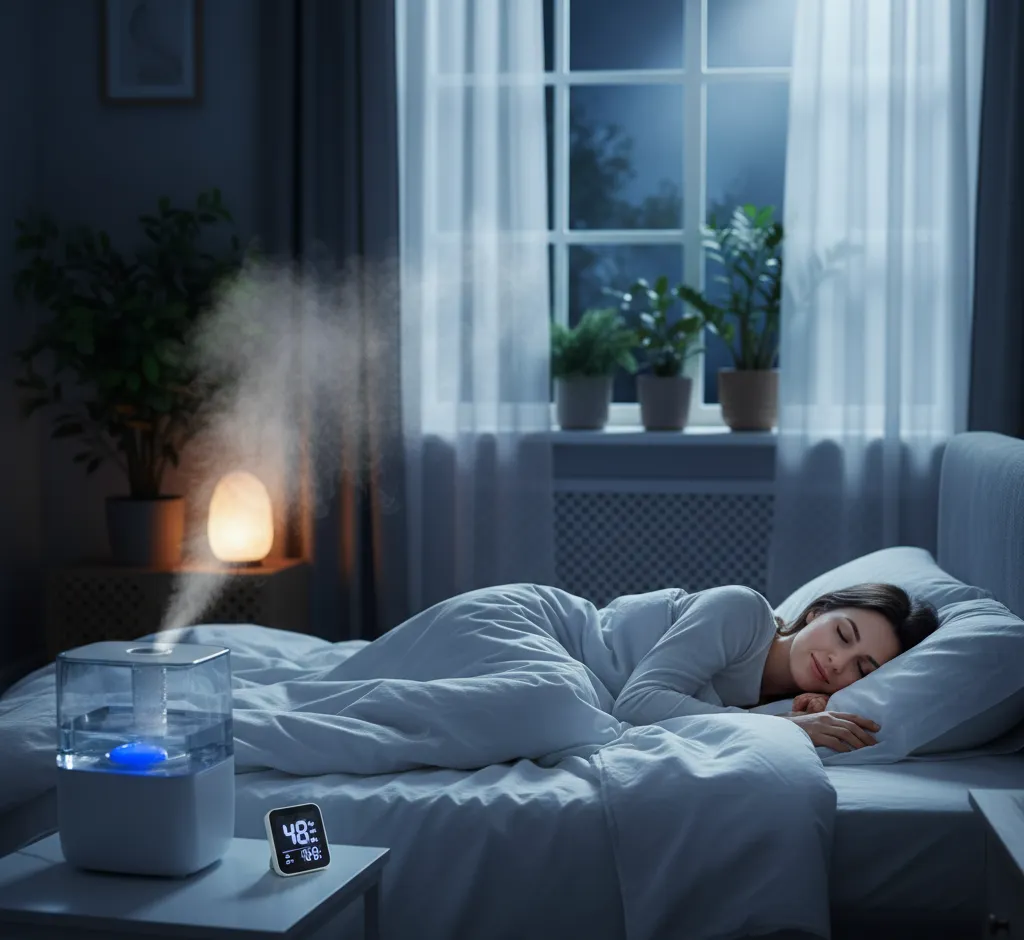
- Use a cool-mist humidifier: Place it several feet from your bed, not directly next to your head, and set it to maintain 35–45% humidity rather than running on full power all night.
- Close gaps and drafts: Seal leaky windows and doors so heated indoor air retains more moisture instead of constantly exchanging with cold, dry outdoor air.
- Air-dry laundry indoors: Hanging clothes to dry in your bedroom or nearby can gently raise humidity without overshooting into uncomfortable levels.
- Use a larger water surface: Placing open containers of water or a wide bowl on a radiator introduces slow, passive evaporation into the room.
- Stay hydrated: While not a humidity adjustment itself, drinking enough water and using saline nasal spray can lessen dryness-related sleep problems.
Summer: Managing Excess Moisture and Heat
In summer, or in warm, humid climates, the problem flips. Instead of dryness, too much moisture in the air can make your bedroom feel hot, sticky, and suffocating, even when the temperature is moderate.
Summer target: Aim for 40–55% relative humidity to keep air comfortable and discourage mold and dust mites without over-drying your skin or airways.
Common summer sleep problems from high humidity
- Difficulty cooling down at night, causing longer sleep onset and more awakenings.
- Sticky skin and sweating that soaks bedding and interrupts deep sleep cycles.
- Moldy or musty odors from excess moisture in fabrics, walls, and corners.
- Worsening allergies or asthma from mold spores and dust mite growth.
How to reduce summer humidity for better sleep
- Use air conditioning or a dehumidifier: Modern AC units naturally remove moisture, while dedicated dehumidifiers give you more precise humidity control. Set devices to maintain around 45–50% humidity.
- Improve ventilation: Use bathroom and kitchen exhaust fans, or open windows in the cooler parts of the day to move humid air out and drier air in.
- Keep doors closed to damp areas: Basements, bathrooms, and laundry rooms can be humidity hot spots. Keeping bedroom doors closed to these areas can keep your sleep space drier.
- Choose breathable bedding: Opt for cotton, linen, or bamboo fabrics that allow moisture to evaporate more easily instead of trapping sweat.
- Avoid indoor drying of heavy laundry: In humid seasons, drying many clothes indoors can push humidity to uncomfortable levels.
Transitional seasons: Spring and Autumn
In spring and autumn, outdoor humidity and temperatures can swing quickly from day to day. Your goal during these seasons is flexibility: monitor conditions and adjust gradually rather than using a set-and-forget strategy.
Spring and autumn target: Aim for 40–50% relative humidity, allowing for minor fluctuations as the weather changes.
Strategies for variable seasons
- Rely on a hygrometer: A simple digital hygrometer helps you react to daily changes instead of guessing.
- Use equipment in short bursts: Run humidifiers or dehumidifiers for limited periods, then recheck readings rather than running them continuously.
- Take advantage of natural ventilation: On mild days, opening windows briefly can reset indoor air quality and humidity, improving sleep comfort.
How to Measure and Monitor Bedroom Humidity
You cannot manage what you do not measure. A small, inexpensive device can make seasonal humidity adjustments far more accurate and prevent you from overcorrecting.
Choosing a hygrometer
- Digital display: Look for a clear screen that shows both temperature and relative humidity.
- Accuracy and calibration: Many consumer models are accurate within a few percentage points, which is sufficient for home use. Some allow manual calibration.
- Placement: Position the hygrometer away from direct sunlight, vents, and steam sources. Place it near bed height where you actually sleep.
- Smart features (optional): Connected models can log trends and send alerts if humidity goes above or below your preferred range.
How often to check humidity
During extreme seasons (very cold winters or very humid summers), check humidity daily for at least the first couple of weeks while you adjust equipment settings. Once you have stable patterns, weekly checks are often enough unless weather shifts dramatically.
Aligning Humidity with Temperature and Bedding
Humidity does not act alone. The way you experience indoor humidity depends strongly on bedroom temperature, mattress type, and bedding materials. To get truly optimal sleep, treat humidity as part of a wider comfort system.
Balancing temperature and humidity
- Cooler temperatures with moderate humidity: Many people sleep best around 18–20°C, with humidity near 45–50%. This combination often feels fresh but not harsh.
- Warm bedrooms need lower humidity: If your bedroom tends to stay warm, aim for the lower end of the recommended humidity range so the air does not feel heavy or oppressive.
- Cold bedrooms need slightly higher humidity: In cooler rooms, slightly higher humidity can prevent dryness from feeling too intense, but avoid exceeding 50% in winter to prevent condensation and mold risk on cold surfaces.
Choosing bedding and sleepwear for each season
Winter bedding tips
- Use layered blankets so you can adjust warmth without overheating and sweating into the bedding.
- Choose natural fibers like wool and cotton, which insulate while allowing moisture to escape.
- Consider a humidifier-compatible bedroom layout, keeping devices away from pillows and wooden headboards to avoid localized dampness.
Summer bedding tips
- Switch to lightweight comforters or breathable quilts that do not trap excessive body heat.
- Use moisture-wicking sheets and pillowcases to help sweat evaporate efficiently.
- Wear loose, breathable sleepwear or consider minimal clothing if it’s culturally and personally comfortable.
Health Benefits of Proper Seasonal Humidity Adjustments
Dialing in your seasonal bedroom humidity is not only about comfort; it can also support long-term health. The right balance helps your natural defenses work better and reduces the frequency of sleep-disrupting issues.
Respiratory and immune benefits
- Fewer colds and infections: Proper humidity keeps mucous membranes moist, helping your nose and throat trap and expel viruses and bacteria more effectively.
- Reduced irritation: Less dryness means fewer nosebleeds, sore throats, and coughing fits that can wake you up at night.
- Easier breathing: Both under- and over-humid conditions strain your lungs. Balanced humidity supports smoother, quieter breathing during sleep.
Allergy and asthma relief
- Controlling dust mites: Dust mites thrive in very humid environments. Keeping humidity below about 50–55% in warm months can help reduce their population.
- Limiting mold growth: Mold loves damp corners, fabrics, and poorly ventilated spaces. Maintaining seasonal humidity targets and using exhaust fans helps keep mold in check.
- Less airborne dust: Very dry air allows fine particles to remain suspended longer. Moderately humid air can reduce airborne dust levels, easing allergies.
Skin, eyes, and comfort
- Better skin hydration: Balanced humidity reduces flaking, itching, and tightness that can distract you when trying to fall asleep.
- More comfortable eyes: Appropriate humidity helps prevent dry, irritated eyes, especially if you spend evenings using screens.
- Improved sleep continuity: When you are physically comfortable, you are less likely to wake up in the middle of the night adjusting blankets, scratching dry skin, or shifting to find a cooler spot.
Practical Seasonal Checklist for Optimal Sleep Humidity
To make changes easy to remember, use a simple seasonal checklist. Review it at the start of each season or whenever you notice new sleep discomforts.
Winter humidity checklist
- Measure bedroom humidity with a hygrometer and aim for 35–45%.
- Set up and clean a cool-mist humidifier, following the manufacturer’s instructions.
- Seal drafts and inspect windows for condensation, adjusting humidity if panes are frequently wet.
- Switch to layered, breathable winter bedding.
- Monitor for signs of over-humidification, such as mold spots or persistent window condensation.
Summer humidity checklist
- Measure bedroom humidity and aim for 40–55%.
- Service air conditioning units or clean dehumidifier filters before heavy use.
- Reduce sources of indoor moisture, such as drying heavy laundry in the bedroom.
- Switch to lightweight, breathable bedding and sleepwear.
- Use exhaust fans during showers and cooking to prevent moisture creeping into the bedroom.
Spring and autumn humidity checklist
- Track humidity more frequently during rapid weather changes.
- Use natural ventilation on mild days to refresh indoor air.
- Run humidifiers or dehumidifiers in shorter increments and recheck readings.
- Adjust bedding gradually rather than switching abruptly from winter to summer sets.
Maintenance and Safety Tips
Managing humidity is not just about turning devices on and off. Regular maintenance and safe use are key to preventing new problems such as mold, bacteria, or equipment damage.
Humidifier best practices
- Use clean water: Tap water is usually adequate, but if you have very hard water, consider filtered or distilled water to reduce mineral buildup.
- Clean regularly: Follow the manufacturer’s schedule for cleaning tanks and internal parts to prevent mold and bacterial growth.
- Avoid over-humidifying: More is not always better. Use a hygrometer and adjust settings rather than relying on guesswork.
Dehumidifier and AC maintenance
- Empty and clean reservoirs: Standing water can harbor mold and bacteria, so empty tanks frequently and wipe them down.
- Replace or wash filters: Dirty filters reduce efficiency and can blow dust and allergens back into the room.
- Check for leaks: Make sure drainage hoses and pans are working properly so moisture is removed safely from your home.
When to Seek Professional Advice
Most humidity adjustments are easy to manage at home, but there are situations where professional help can make a real difference. Persistent humidity problems often signal underlying building or health issues.
Signs you may need expert help
- Visible mold that keeps returning even after cleaning and adjusting humidity.
- Strong musty odors in your bedroom or adjacent rooms.
- Condensation and water stains on walls, ceilings, or window frames that do not improve with basic adjustments.
- Chronic respiratory symptoms, coughing, or allergic reactions that worsen at home and improve when you are away.
In these cases, consider consulting an indoor air quality specialist or healthcare professional. They can help identify structural moisture problems, ventilation issues, or underlying medical conditions that interact with your sleep environment.
Bringing It All Together
Seasonal humidity adjustments are a powerful, often overlooked way to improve your sleep quality. By targeting a comfortable humidity range for each season, checking levels regularly, and pairing humidity control with appropriate temperature, bedding, and ventilation, you create an environment where your body can fully relax.
Instead of accepting restless, uncomfortable nights as a normal part of winter dryness or summer stickiness, treat your bedroom like a fine-tuned climate zone. With small, consistent changes and the right tools, you can enjoy more restorative rest all year long—and wake up feeling genuinely refreshed in every season.