Simple Guide to Washing Arugula: Keep Your Greens Fresh, Clean, and Crisp
Learn exactly how to wash arugula with this simple, step-by-step guide. Discover how to clean, dry, and store arugula properly for fresher, safer, and crisper greens in all your salads and recipes.
Arugula is a peppery, vibrant leafy green that can instantly upgrade salads, sandwiches, pizzas, and pasta dishes. However, like all salad greens, arugula needs to be washed properly before eating. Even when it looks clean, it may still carry dirt, sand, or tiny insects, and sometimes residues from the field or packaging. Learning how to wash arugula the right way ensures your meals are fresh, safe, and delicious.
This simple guide explains exactly how to wash arugula step by step, whether you are dealing with loose bunches from the farmers’ market or pre-washed baby arugula from the store. You will also learn how to dry, store, and handle arugula to keep it crisp and flavorful for as long as possible.
Why Washing Arugula Matters
Washing arugula is about much more than removing visible dirt. It is an important food safety step and also improves the texture and taste of your greens.
Remove Dirt, Sand, and Grit
Arugula often grows close to the ground. As a result, the leaves can trap:
- Fine soil and dust particles
- Sand and small pebbles
- Bits of plant debris
If you skip washing, that grit ends up in your salad bowl, making every bite unpleasant and crunchy for the wrong reasons.
Reduce Bacteria and Contaminants
Fresh greens can pick up bacteria and other contaminants during growing, harvesting, transportation, and handling. Washing arugula under clean running water helps reduce the surface bacteria and makes your greens safer to eat.
While washing cannot sterilize food, it is a simple, effective step in reducing risk, especially when you plan to eat arugula raw.
Improve Flavor and Texture
Clean, well-washed arugula tastes fresher and has a more pleasant mouthfeel. When rinsed properly and dried thoroughly, the leaves stay crisp and hold dressing better, instead of becoming soggy or waterlogged.
Know Your Arugula: Types and Packaging
Before washing arugula, it helps to know what type you are working with. Different forms of arugula may need slightly different handling.
Loose Bunches of Arugula
Loose arugula is usually sold in:
- Bunches with stems tied together
- Large leaves, sometimes called wild arugula
- Unwashed or minimally washed form
This type almost always needs a thorough wash because it is more likely to contain soil, sand, and insects.
Bagged or Boxed Baby Arugula
Baby arugula is often sold in sealed bags or plastic clamshells and may be labeled as:
- Pre-washed
- Triple-washed
- Ready to eat
Although this arugula has been cleaned during processing, some people still prefer a light rinse at home, especially if the leaves look slightly wilted or carry a faint residue. If the package clearly states that it is ready to eat, an additional wash is optional rather than mandatory.
What You Need to Wash Arugula
You do not need any special tools to wash arugula properly. A few basic kitchen items are enough.
- Large bowl or salad spinner bowl: For soaking and rinsing the leaves.
- Colander or strainer: To drain water and separate the leaves from grit.
- Clean kitchen towel or paper towels: For drying and patting the leaves.
- Salad spinner (optional but helpful): To quickly remove excess water and keep arugula crisp.
For most home kitchens, a salad spinner is the easiest way to dry arugula, but if you do not have one, towels work perfectly well.
Simple Step-by-Step Guide to Washing Arugula
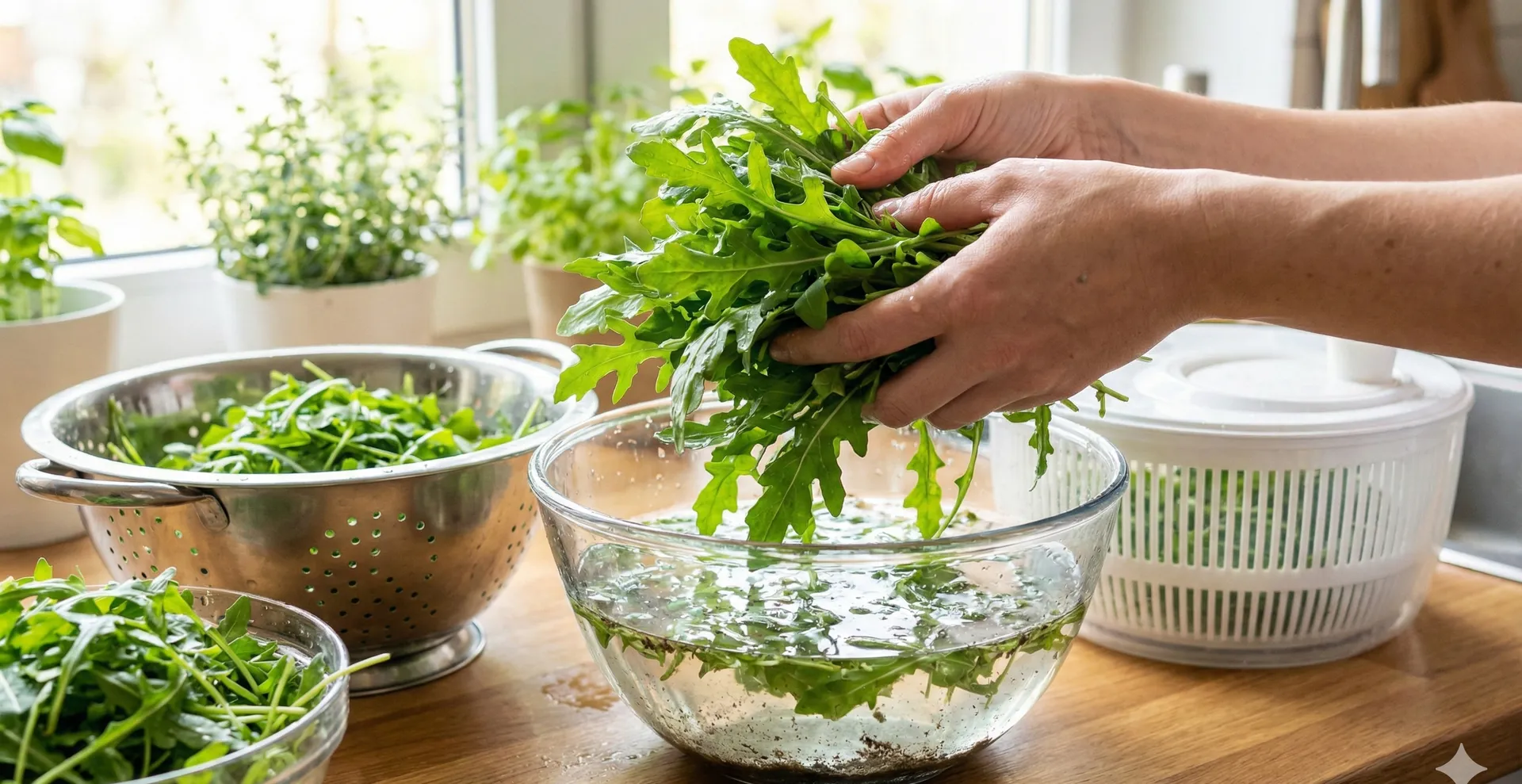
The basic method for washing arugula is soak, swish, lift, and dry. The key is to change the water as needed and handle the leaves gently.
Step 1: Sort and Trim the Arugula
Start by quickly inspecting your arugula.
- Spread the arugula out on a clean surface or leave it in the bowl.
- Remove any leaves that are yellow, slimy, or badly bruised.
- Trim off any tough or very long stems if desired, especially on mature arugula.
This step helps ensure that only fresh, healthy leaves end up in your salad and keeps the rest of the greens from spoiling faster.
Step 2: Fill a Bowl with Cool Water
Use cool, clean tap water. Avoid hot water, which can wilt delicate leaves, and very cold water, which can shock them.
- Fill a large bowl or the bowl of your salad spinner with cool water.
- Leave enough room for the arugula to move freely without being packed tightly.
Cool water helps refresh the leaves while allowing grit to sink to the bottom.
Step 3: Submerge and Swish the Leaves
Now it is time to loosen the dirt.
- Place the arugula leaves into the bowl of water.
- Gently push the leaves down with your hands so they are fully submerged.
- Swish the leaves around for 20–30 seconds using a gentle, circular motion.
As you move the leaves, dirt and sand will release and fall to the bottom of the bowl, while the arugula floats on top.
Step 4: Let the Dirt Settle
After swishing, allow the bowl to sit undisturbed for about 30 seconds to 1 minute. This pause gives the heavier particles time to settle at the bottom.
Do not pour the water out immediately or the grit may get stirred up again and land right back on your leaves.
Step 5: Lift the Arugula Out (Do Not Dump)
The most important technique is to lift, not pour.
- Use your hands or a small strainer to lift the arugula out of the bowl.
- Transfer the leaves into a clean colander or the basket of your salad spinner.
- Leave the dirty water in the bowl and discard it afterwards.
If you pour the water out with the arugula still inside, the sediment at the bottom will wash back over the leaves. Lifting keeps the dirt behind.
Step 6: Repeat if Necessary
Check the bottom of the bowl. If you see a lot of dirt, or if the arugula came straight from the garden, repeat the washing process.
- Dump the dirty water, rinse the bowl, and refill with fresh cool water.
- Return the arugula to the clean water and swish again.
- Lift the leaves out once more and drain.
For very sandy greens, you may need two or three rounds of rinsing before the water stays clear.
How to Wash Pre-Washed or Boxed Arugula
Pre-washed arugula is convenient, but the decision to rinse it again is up to you. Food safety guidelines generally consider properly processed, ready-to-eat salads safe without rewashing, but some home cooks prefer an extra rinse for peace of mind.
When to Rinse Pre-Washed Arugula
Consider giving pre-washed arugula a quick rinse if:
- The leaves look slightly slimy or wet.
- There is visible dirt, debris, or damaged leaves inside the package.
- The package has been open for a day or more and you want to refresh the greens.
In those cases, a light rinse helps restore the texture and removes any stray particles.
How to Rinse Pre-Washed Arugula Safely
- Place the pre-washed arugula into a colander.
- Run cool water gently over the leaves while tossing them with clean hands.
- Allow the water to drain thoroughly.
- Dry the arugula using a salad spinner or clean towels.
Be sure that your sink, colander, and hands are clean before starting so you do not introduce new bacteria to already washed greens.
The Best Ways to Dry Arugula
Drying is just as important as washing. Excess water dilutes salad dressings, makes leaves limp, and can cause arugula to spoil faster in the fridge.
Using a Salad Spinner
A salad spinner is the fastest and most efficient way to dry arugula.
- Place the washed, drained arugula into the spinner basket.
- Cover with the lid and spin for 10–20 seconds.
- Check the leaves. If they are still very wet, spin again.
- Once mostly dry, transfer the arugula to a clean bowl or towel.
Do not overfill the spinner; it is better to work in batches so the leaves can move freely and dry evenly.
Drying with Towels (No Spinner)
If you do not have a salad spinner, a towel works well.
- Lay a clean kitchen towel or a few layers of paper towels on the counter.
- Spread the washed arugula in a single, even layer.
- Place another clean towel on top and gently press to absorb the water.
- Let the leaves air-dry for a few minutes before using or storing.
Handle the leaves gently so they do not bruise, which can cause them to darken and spoil more quickly.
How to Store Washed Arugula
Proper storage keeps washed arugula fresh for several days and prevents it from becoming slimy or wilted.
Storing in the Refrigerator
The refrigerator is the best place to keep arugula crisp and safe to eat.
- Ensure the arugula is as dry as possible. A little surface moisture is fine, but avoid pooling water.
- Line a container or resealable plastic bag with a dry paper towel.
- Place the arugula inside in loose layers, not tightly packed.
- Cover with another towel if using a container, then seal loosely to allow some airflow.
- Store in the crisper drawer, which has slightly higher humidity than the rest of the fridge.
The paper towels absorb excess moisture and help prevent the leaves from turning slimy. Replace them if they become very damp.
How Long Washed Arugula Lasts
When washed and stored properly, arugula typically lasts:
- Baby arugula: about 3–4 days.
- Mature arugula: about 4–5 days, sometimes longer if very fresh.
Check the leaves daily and remove any that are starting to yellow or become soft. Keeping the container clean and dry helps extend the shelf life.
Do You Need Vinegar or Special Washes?
Many home cooks wonder if they should use vinegar, salt, or a commercial produce wash when cleaning arugula. For most situations, clean cool water is enough.
Vinegar Soaks
A mild vinegar solution can help reduce surface bacteria on leafy greens.
- Mix 1 part white vinegar with 3 parts water in a large bowl.
- Soak the arugula for 5–10 minutes.
- Rinse thoroughly under cool running water afterward to remove the vinegar taste.
This step is optional and mainly useful if you are concerned about food safety or if the greens are very dirty. Always rinse well after a vinegar soak to keep the arugula from tasting sour.
Commercial Produce Washes
Most food safety experts agree that commercial produce washes are not necessary for washing leafy greens like arugula. They do not significantly improve cleanliness compared to running water and may leave residues if not rinsed carefully.
Plain cool water, with optional vinegar, is effective, simple, and inexpensive.
Common Mistakes to Avoid When Washing Arugula
Washing arugula is simple, but a few small mistakes can lead to soggy, damaged, or still-dirty leaves.
Using Hot Water
Hot water wilts arugula quickly and can damage the delicate structure of the leaves. Always stick to cool water to keep the greens crisp and fresh.
Pouring the Water Out with the Leaves
Dumping out the washing water while the arugula is still in the bowl stirs sediment back up over the leaves. Always lift the arugula out and leave the dirt behind in the bowl.
Skipping the Drying Step
Wet arugula dilutes dressings and spoils faster in the fridge. After washing, always dry the leaves as thoroughly as possible with a salad spinner or towels.
Packing the Leaves Too Tightly
When storing, tightly packed arugula compresses and traps moisture. This creates a perfect environment for slimy, spoiled greens. Store the arugula loosely in a container or bag with paper towels to absorb extra moisture.
How Clean Arugula Improves Your Recipes
Properly washed and dried arugula does more than protect your health. It also makes every dish you prepare more enjoyable.
- Better salads: Clean, crisp leaves hold vinaigrettes and dressings beautifully without watering them down.
- More appealing texture: No gritty bites, just tender leaves with a pleasant bite.
- Enhanced flavor: The natural peppery taste of arugula stands out more when dirt and debris are gone.
- Longer shelf life: Washed, well-dried, and properly stored greens keep longer, reducing waste.
Whether you sprinkle arugula over pizza after baking, toss it into warm pasta, or mix it with other salad greens, starting with clean leaves makes a visible and noticeable difference.
Quick Recap: Simple Method for Washing Arugula
If you want a fast reminder the next time you prepare arugula, follow this basic routine:
- Sort and remove damaged leaves.
- Soak in a bowl of cool water and swish gently.
- Let dirt settle at the bottom.
- Lift the leaves out into a colander or spinner.
- Repeat washing if the water is very dirty.
- Dry thoroughly with a salad spinner or towels.
- Store loosely with paper towels in the fridge.
Once you get used to this simple process, washing arugula takes only a few minutes and becomes a natural part of your cooking routine. Clean, crisp arugula is well worth the small extra effort and turns everyday meals into something brighter and more satisfying.