Steam Irons for Curtains and Bedding: Complete Buyer’s and Use Guide
Learn how to choose and use the best steam iron for ironing curtains and bedding. Discover key features, fabric-specific tips, vertical steaming techniques, and maintenance advice for smooth, hotel-quality textiles at home.
Steam irons are no longer just for shirts and trousers. If you want crisp, hotel-like bedding and smooth, elegant curtains at home, choosing the right steam iron and using it correctly makes a huge difference. In this guide, you will learn how to select the best steam iron for curtains and bedding, how to use it safely, and which features matter most for large, delicate fabrics.
Why Steam Irons Are Perfect for Curtains and Bedding
Large home textiles come with unique challenges: they are bulky, often delicate, and prone to deep creases. A good steam iron helps you handle these difficulties quickly and safely.
Key benefits for large textiles
- Deep crease removal. Continuous steam and steam boost penetrate thick fabrics like cotton or linen bedding and heavy curtains.
- Vertical steaming capability. Many modern irons offer vertical steam, allowing you to smooth hanging curtains without taking them down.
- Gentle on delicate fabrics. Adjustable temperature and steam settings protect sensitive materials such as silk, voile, or blends with synthetic fibers.
- Time-saving for large areas. A powerful steam iron covers more fabric with fewer passes, which is essential when working with king-size duvet covers or floor-length curtains.
- Hygiene and freshness. Hot steam helps reduce odors and can minimize bacteria and dust mites in bedding, contributing to a fresher sleeping environment.
Types of Steam Irons for Curtains and Bedding
Before buying, it helps to understand the main categories of steam irons and which are best suited for home textiles like curtains and bedding.
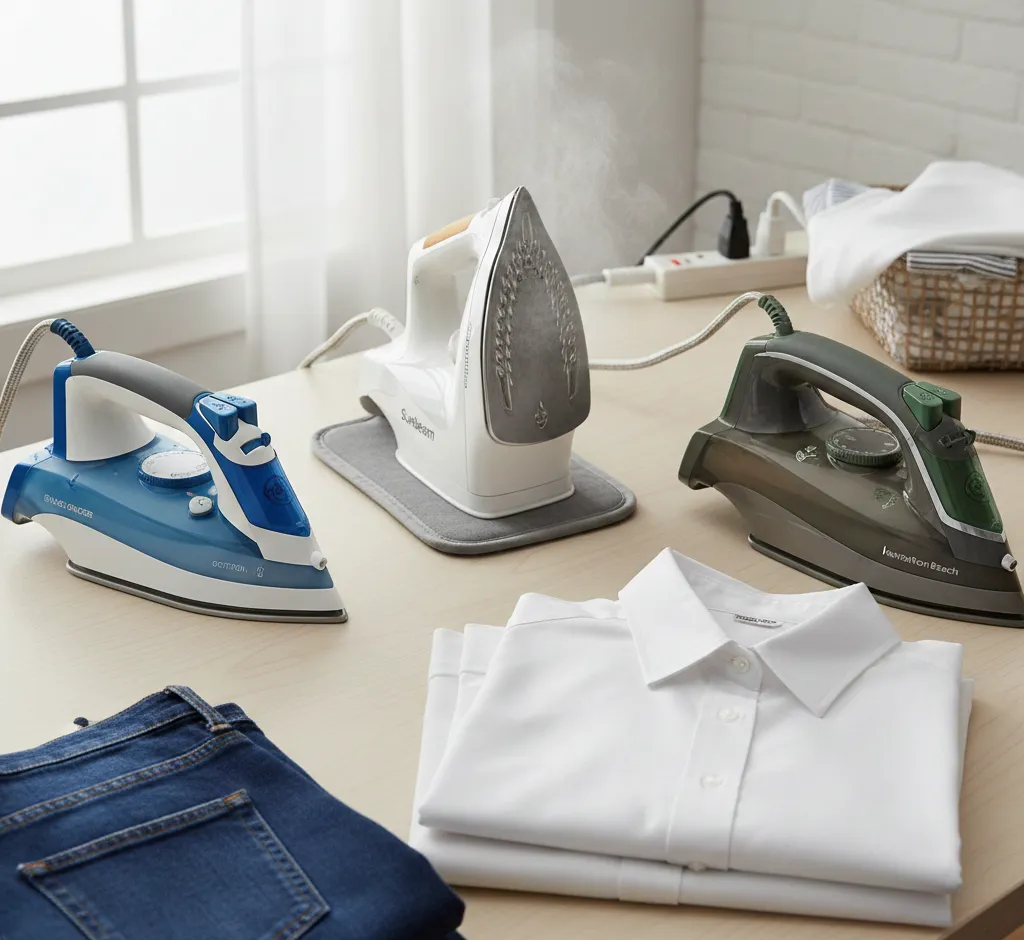
Traditional steam irons
These are classic, compact irons with an integrated water tank.
- Pros: Affordable, easy to store, simple to use, sufficient for most households.
- Cons: Limited steam output and smaller water tanks mean more frequent refills, which can be inconvenient for large items.
Steam generator irons
Steam generator irons use a separate base unit with a larger water tank and a powerful boiler.
- Pros: Very high steam output, longer continuous operation, faster ironing of large pieces like duvet covers and curtains.
- Cons: Higher price, need more space for storage, heavier base unit.
Garment steamers and vertical steamers
Garment steamers are designed primarily for vertical steaming. They are especially useful for curtains and quick touch-ups.
- Pros: Ideal for hanging curtains, gentle on delicate fabrics, easy to maneuver on vertical surfaces.
- Cons: Not as effective for very sharp creases, less precise than a soleplate for structured items like pillowcases with borders.
Which type should you choose?
If your main goal is to maintain curtains and bedding, a steam generator iron or a high-quality traditional steam iron with vertical steam is usually the best compromise. Garment steamers are excellent as a complementary tool for quick curtain refreshes.
Important Features When Choosing a Steam Iron
Not all steam irons are equal. The following features have the biggest impact when you work with bedding and curtains.
1. Steam output and steam boost
For large textiles, strong steam is critical. Look for:
- Continuous steam: Higher grams per minute mean more efficient wrinkle removal on big surfaces.
- Steam boost: A powerful burst helps tackle stubborn creases in thick cotton or linen.
- Vertical steam: Essential for treating curtains while they hang on the rod.
2. Soleplate material and shape
The soleplate glides across your fabrics and distributes heat. For bedding and curtains, you want a smooth, durable surface that will not snag delicate fibers.
- Ceramic: Smooth glide, good heat distribution, easy to clean.
- Stainless steel: Very durable, resistant to scratches, excellent sliding ability.
- Non-stick coatings: Helpful if you often iron synthetic curtains that can be temperature-sensitive.
Also pay attention to the shape of the tip. A slightly pointed tip lets you reach corners of duvet covers, along seams, and near curtain pleats.
3. Water tank capacity
Large fabrics require more steam and therefore more water. A bigger tank means fewer interruptions.
- Standard steam irons: Look for at least 250–300 ml capacity if you frequently iron bedding.
- Steam generator irons: Tanks of 1–2 liters are ideal for long sessions on multiple curtain panels and full bedding sets.
4. Temperature and fabric settings
Different fabrics require varying heat levels. Your steam iron should offer clearly marked settings for materials like cotton, linen, wool, silk, and synthetics.
- Ensure the iron has precise controls so you can safely treat delicate sheers and robust cotton sheets with one device.
- Some modern models include automatic temperature adjustments that detect fabric type, reducing the risk of scorching.
5. Anti-drip and anti-calc systems
Dripping water and limescale stains are especially visible on light-colored bedding and curtains.
- Anti-drip: Prevents water droplets from ruining your fabrics when ironing at lower temperatures.
- Anti-calc: Built-in filters or cleaning functions extend the lifespan of your iron and keep steam vents from clogging.
6. Cord length and ergonomics
When you are moving around an ironing board or reaching hanging curtains, mobility matters.
- Long power cord: Choose at least 2–2.5 meters for comfortable movement.
- Comfortable grip: An ergonomic handle reduces fatigue during longer ironing sessions.
- Weight balance: The iron should feel stable yet not too heavy to lift for vertical steaming.
How to Iron Bedding Efficiently
Ironing bedding can seem time-consuming, but the right technique and steam settings help you achieve professional results quickly.
Preparation steps
- Check care labels. Confirm the recommended temperature and whether ironing with steam is allowed.
- Pre-dry properly. Iron bedding while it is slightly damp or use the steam function generously for completely dry fabrics.
- Set up a large surface. Use a sturdy ironing board; for very big duvet covers, you can also use a clean table covered with a heat-resistant pad.
Ironing duvet covers
- Fold the duvet cover in half or quarters to match your ironing board size.
- Start from one corner, working in straight lines along the fabric, using continuous steam.
- Use the steam boost on any stubborn wrinkles, especially around button or zipper areas.
- Refold as needed so each section gets properly ironed.
- Hang the finished duvet cover immediately to prevent new creases.
Ironing fitted and flat sheets
- Flat sheets: Fold lengthwise several times, align edges, and iron layers together using strong steam. This saves time and delivers crisp edges.
- Fitted sheets: Start with the elastic corners. Stretch them gently over the ironing board and use moderate heat with steady steam. Then fold and press the central areas.
Ironing pillowcases
Pillowcases are easier but still benefit from proper technique.
- Iron them flat, focusing on seams and edges for a sharp finish.
- Use a pointed soleplate tip to get into corners and decorative borders.
- Stack freshly ironed pillowcases in a neat pile to cool, which helps them stay smooth longer.
How to Steam and Iron Curtains
Curtains can be tricky due to their size and height, but a good steam iron with vertical steam simplifies the task.
Deciding between vertical steaming and ironing
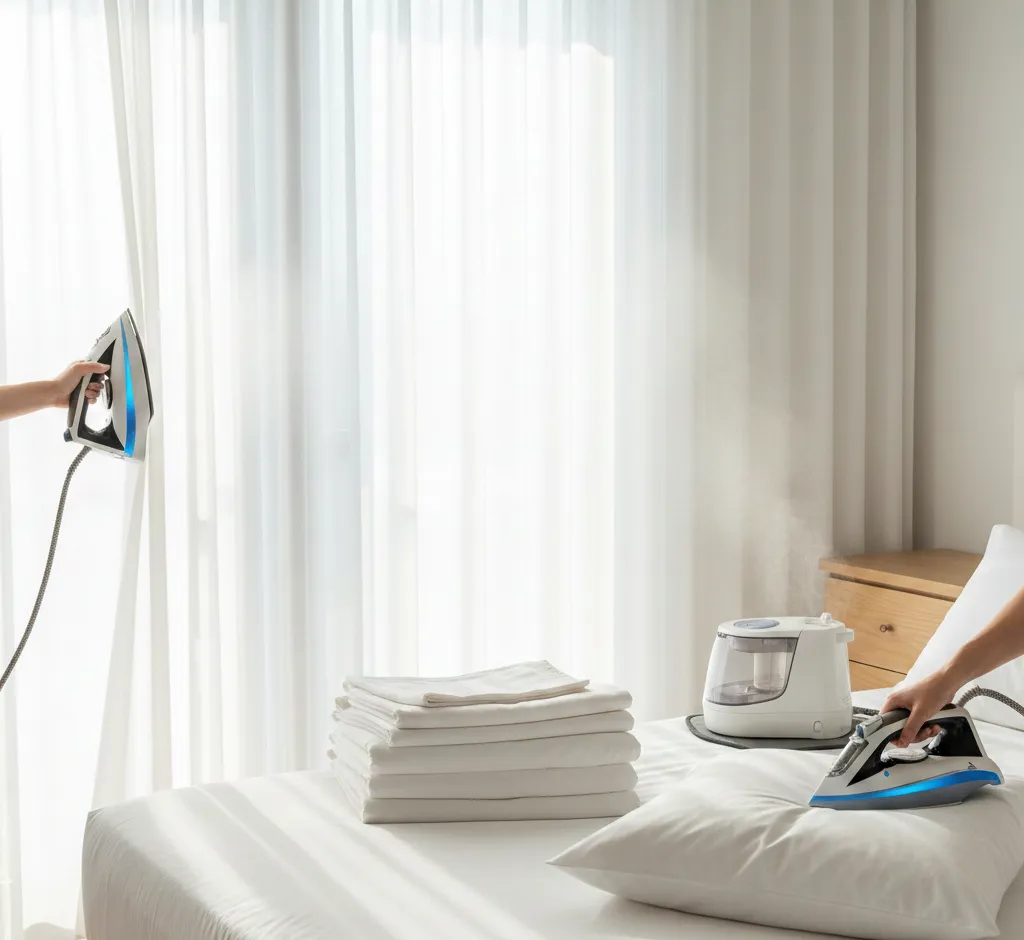
- Vertical steaming: Best for hanging curtains, delicate fabrics, and quick refreshes. It removes light to medium wrinkles and freshens the fabric.
- Flat ironing: Effective for heavy creases or after washing, especially for cotton or linen curtains. This may require ironing on an ironing board or large table.
Vertical steaming curtains step by step
- Hang the curtains properly, ensuring they are fully extended and not bunched up.
- Fill the iron tank with clean water and set it to the vertical steam mode with a suitable temperature for the fabric.
- Stand a short distance away so the soleplate does not directly touch delicate materials.
- Move the iron slowly from top to bottom, allowing steam to penetrate the fabric. Use smooth, vertical strokes.
- Focus on areas with visible creases, repeating passes if necessary until the curtain hangs smoothly.
Flat ironing curtains
- Remove the curtains from the rod and shake them gently to get rid of loose dust.
- Spread the fabric over an ironing board or clean table.
- Set the right temperature based on the material: lower for synthetics and sheers, higher for cotton and linen.
- Iron in sections, starting from the top and working your way down, using continuous steam.
- After ironing, hang the curtain immediately to cool while suspended, which helps maintain a smooth finish.
Fabric-Specific Tips for Curtains and Bedding
Each fabric type reacts differently to heat and steam. Adjust your settings to protect your textiles while achieving the best results.
Cotton and linen
- Use high heat and plenty of steam.
- Iron bedding and curtains while slightly damp if possible.
- For linen, expect some natural texture; do not try to eliminate every tiny wrinkle.
Synthetics (polyester, blends)
- Use medium to low heat to avoid melting or shine marks.
- Use steam carefully and avoid pressing too hard in one spot.
- If in doubt, place a thin pressing cloth between the iron and the fabric.
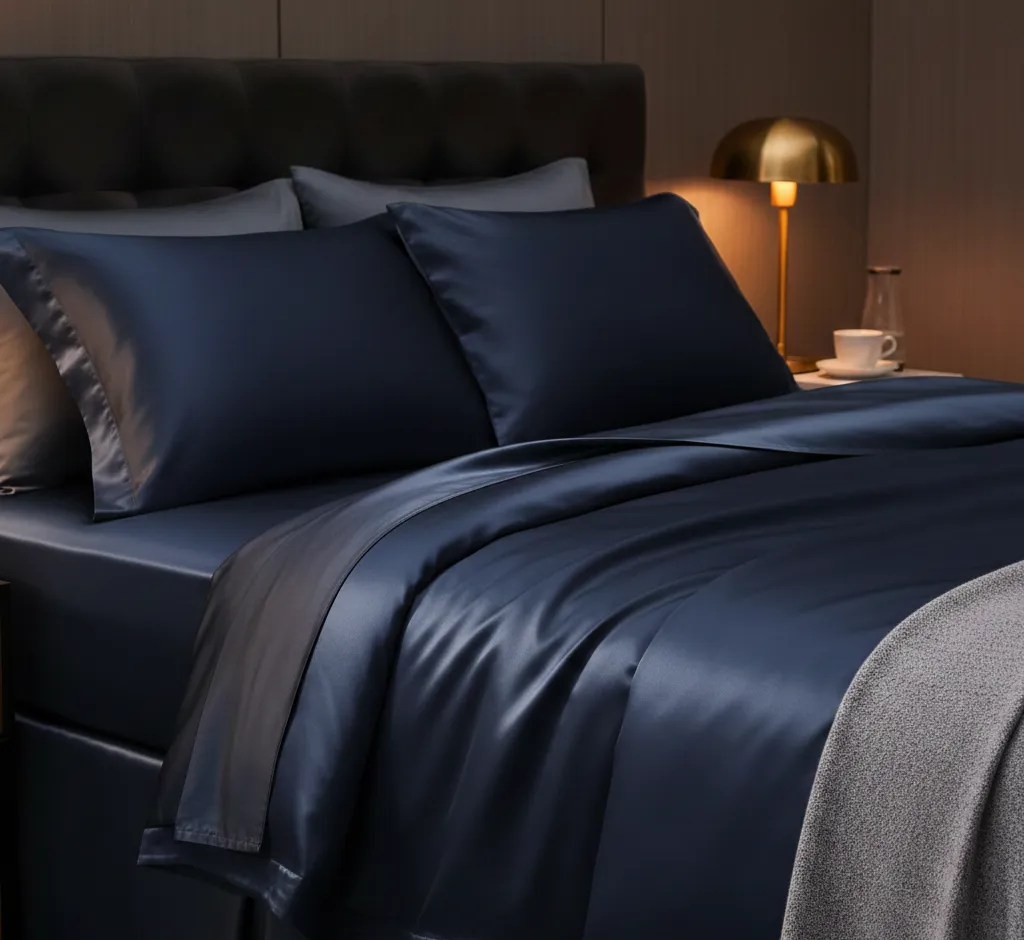
Silk, satin, and delicate sheers
- Choose the lowest safe temperature indicated on the care label.
- Prefer vertical steaming to avoid direct contact with the soleplate.
- If flat ironing, always use a protective cloth and avoid strong steam bursts directly on the fabric.
Safety and Maintenance Tips
Proper care of both your steam iron and your textiles will ensure long-lasting performance and safety.
Safe use around large textiles
- Always keep the iron stable on a heat-resistant surface when not in motion.
- Do not leave the iron unattended, especially near long curtains or bedding that could slide onto the soleplate.
- Allow fabrics to cool before folding or rehanging if they feel very hot.
Descaling and cleaning your steam iron
- Use the self-clean or anti-calc function regularly if your model includes one.
- In hard-water areas, consider using filtered or distilled water according to the manufacturer’s recommendations.
- Wipe the soleplate with a soft cloth once the iron is cool to remove any residue.
Storage best practices
- Always empty the water tank after use to reduce limescale buildup and prevent leaks.
- Wrap the cord loosely without sharp bends to protect it from damage.
- Store the iron in an upright position in a dry place, away from children’s reach.
Buying Checklist: Steam Iron for Curtains and Bedding
Before you make a purchase, review this quick checklist to ensure the iron will meet your home textile needs.
- Does it provide sufficient continuous steam and a strong steam boost for thick fabrics?
- Is there a vertical steam function for refreshing hanging curtains?
- What is the water tank capacity, and is it adequate for ironing large bedding sets?
- Is the soleplate ceramic or stainless steel and shaped for easy access to corners and pleats?
- Are the temperature controls clear and suitable for both delicate sheers and robust cotton?
- Does the iron include anti-drip and anti-calc features to protect light fabrics from stains?
- Is the cord length convenient for your ironing area and curtain placement?
Conclusion: Smooth Curtains and Bedding with the Right Steam Iron
With the right steam iron and technique, maintaining beautifully smooth curtains and bedding is easier than many people think. Strong steam power, reliable temperature control, and vertical steaming are the most important features for handling large textiles efficiently.
By understanding your fabrics, setting the correct heat and steam levels, and following safe practices, you can bring a crisp, luxurious feel to your home. Whether you choose a traditional steam iron, a steam generator, or a combination with a garment steamer, investing in the right tool will reward you with fresh, wrinkle-free bedding and elegantly hanging curtains day after day.