Step-by-Step Guide to Washing Endive: How to Clean It Properly Every Time
Learn exactly how to wash endive step by step. This detailed guide covers cleaning Belgian endive and curly endive, removing dirt and grit, drying, storing, and food safety tips for crisp, fresh results every time.
Endive is a crisp, slightly bitter leafy vegetable that adds freshness, texture, and a gourmet touch to salads, appetizers, and cooked dishes. However, like many leafy greens, endive can trap dirt, sand, and small insects between its tightly packed leaves. Learning how to wash endive properly is essential not only for food safety but also for preserving its delicate texture and flavor.
This step-by-step guide will walk you through everything you need to know about washing endive correctly, from choosing the freshest heads to drying and storing them so they stay crisp and ready to use.
What Is Endive and Why Proper Washing Matters
Before diving into the washing process, it helps to understand what endive is and why it needs special care. Endive generally comes in two main types:
- Belgian endive (also called witloof): Small, torpedo-shaped heads with tightly packed pale yellow or white leaves.
- Curly endive (also known as frisée or curly chicory): Loose heads of frilly, curly, green leaves with paler centers.
Because both types often grow close to the soil and have many layered leaves, particles of dirt and sand can get stuck deep inside. If you skip proper washing, you may end up with gritty, unpleasant bites or even consume harmful bacteria.
Thorough but gentle washing removes:
- Soil and sand trapped between leaves.
- Small insects hiding in the folds.
- Residual pesticides or contaminants on the surface.
Tools and Ingredients You Will Need
You do not need any special equipment to wash endive properly, but having a few basic tools will make the process faster and more effective.
- Large bowl or basin for soaking the leaves.
- Clean sink with cold running water.
- Sharp knife or kitchen shears.
- Cutting board reserved for vegetables.
- Salad spinner (highly recommended) or clean kitchen towels/paper towels.
- Colander or strainer (optional but useful).
You may also choose to use a mild, food-safe produce wash, but in most cases, cold running water and proper handling are sufficient to clean endive effectively.
How to Choose Fresh Endive for Easy Cleaning
Starting with good-quality endive makes the washing process easier and ensures the best flavor and texture in your dishes.
Tips for Selecting Belgian Endive
- Look for firm, compact heads that feel heavy for their size.
- Leaves should be tightly packed and pale cream to light yellow in color.
- Avoid heads with brown spots, wilted tips, or slimy areas.
- The base should be white and fresh-looking, not dried out or darkened.
Tips for Selecting Curly Endive (Frisée)
- Choose heads with crisp, vibrant green leaves and pale, tender centers.
- Avoid bunches that look wilted, yellowed, or excessively limp.
- Check the stem end; it should be clean, moist, and not overly brown.
Fresher endive not only tastes better but also holds up better during washing and drying, preventing mushy or damaged leaves.
Step-by-Step Guide to Washing Belgian Endive
Belgian endive has tightly packed leaves, so the cleaning technique is slightly different from curly endive. Follow these steps for best results:
Step 1: Prepare Your Work Area
- Clear and clean your sink or countertop so you have plenty of space.
- Place a large bowl or basin near the sink and fill it with cold water.
- Set up your salad spinner or line a tray with clean towels for drying later.
Step 2: Trim the Base and Outer Leaves
- Rinse the exterior of the endive head quickly under cold running water to remove loose dirt.
- Using a sharp knife, trim a thin slice off the base of the endive. Do not cut too far up or the head will fall apart.
- Peel away and discard any damaged, wilted, or heavily soiled outer leaves.
At this stage, the head should look clean on the outside but still mostly intact, making it easier to handle.
Step 3: Decide on Whole Leaves or Slices
How you plan to use the endive determines how you should wash it:
- Whole leaves are ideal for appetizers and “endive boats.”
- Sliced endive works best for salads or cooked dishes.
If you need whole leaves, you will separate them first and then wash them. If you plan to slice the endive, you can wash after cutting to help release hidden grit.
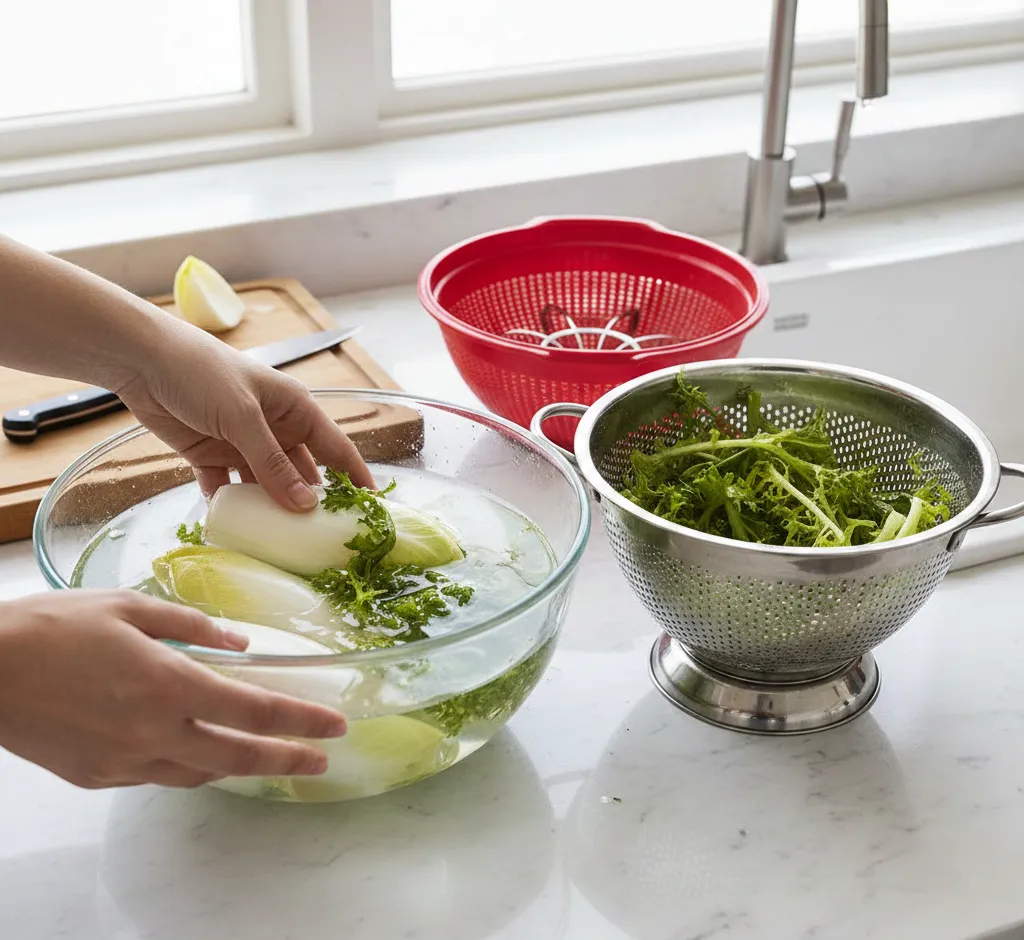
Step 4A: Washing Whole Belgian Endive Leaves
- Carefully separate the leaves from the head by gently pulling them away from the base.
- Place the loose leaves into the bowl of cold water.
- Swish the leaves gently with your hands to loosen any dirt or sand trapped inside.
- Let the leaves soak for 2–3 minutes so heavier particles can sink to the bottom.
- Lift the leaves out of the water (do not pour the water over them) and transfer them to a colander or directly into a salad spinner.
Lifting the leaves rather than draining the bowl ensures that the grit stays behind at the bottom instead of re-coating the endive.
Step 4B: Washing Sliced Belgian Endive
- Slice the trimmed endive crosswise into thin rounds or lengthwise into strips, depending on your recipe.
- Place the cut endive into a large bowl of cold water.
- Agitate gently with your fingers to separate the slices and allow dirt to fall away.
- Let sit for a couple of minutes, then lift the slices out with your hands or a slotted spoon into a colander or salad spinner.
If the water looks very muddy or sandy, repeat the soaking and swishing process with fresh water until it runs clear.
Step-by-Step Guide to Washing Curly Endive (Frisée)
Curly endive has a looser, frillier structure, which can hide dirt deep in the curls. It benefits from a slightly different approach.
Step 1: Trim and Separate the Leaves
- Place the head of curly endive on a cutting board.
- Cut off the root end to loosen the leaves, removing any tough or browned core.
- Separate the leaves and discard any wilted, yellowed, or slimy pieces.
Step 2: Soak in Cold Water
- Fill a large bowl, basin, or clean sink with very cold water.
- Submerge the curly endive leaves completely.
- Gently swirl and toss the leaves with your hands for 20–30 seconds to dislodge any dirt or insects.
- Allow the leaves to rest for 3–5 minutes. The dirt and sand will sink to the bottom.
- Scoop the leaves out of the water and place them in a colander or salad spinner basket.
If the endive was especially dirty, change the water and repeat the soaking step until there is no visible sediment left behind.
Step 3: Rinse Under Running Water (Optional)
For extra peace of mind, you can give the endive a quick final rinse:
- Hold small handfuls of leaves under cold running water.
- Turn them gently in your hands to rinse every surface.
- Transfer them back to the colander or salad spinner.
How to Dry Endive Properly
Drying is just as important as washing. Excess water can dilute dressings, make endive soggy, and shorten its shelf life.
Using a Salad Spinner
- Place the washed endive leaves or slices into the basket of the salad spinner.
- Spin gently at first to avoid bruising, then a bit more vigorously until the leaves are mostly dry.
- Check the bottom of the spinner; pour off any collected water.
- If the leaves are still damp, spin again for a few more seconds.
A salad spinner is the most efficient and gentle way to dry endive while preserving its crispness.
Drying with Towels
If you do not have a salad spinner, you can dry endive by hand:
- Lay a clean kitchen towel or several paper towels on a flat surface.
- Spread the washed endive in a single layer on the towel.
- Place another towel on top and press gently to absorb moisture.
- Let the leaves air-dry for a few minutes before using or storing.
Be careful not to rub too hard, as this can bruise the leaves and cause them to wilt faster.
Food Safety Tips When Washing Endive
Maintaining food safety standards in your kitchen is essential. Proper washing is one part, but how you handle and store endive also matters.
- Wash your hands thoroughly before and after handling raw produce.
- Use a clean cutting board reserved for fruits and vegetables to avoid cross-contamination with raw meat or seafood.
- Do not use hot water, which can wilt the leaves and encourage bacterial growth.
- Avoid harsh chemicals or dish soap on produce. Stick to cold water or a safe produce wash if necessary.
- If serving endive raw, wash it just before use for maximum freshness.
How to Store Washed Endive
Once your endive is clean and dry, proper storage will keep it crisp and flavorful longer.
Storing Whole Endive Heads
- Wrap the unwashed whole heads loosely in a paper towel to absorb excess moisture.
- Place them inside a perforated plastic bag or reusable produce bag.
- Store in the crisper drawer of your refrigerator.
- Belgian endive can often last up to one to two weeks when stored properly.
If you have already washed the heads, ensure they are as dry as possible before wrapping. Excess moisture accelerates spoilage.
Storing Washed Endive Leaves or Slices
- Place the dry, washed leaves in a container lined with paper towels.
- Cover them lightly with another towel layer before sealing the container.
- Store in the refrigerator and use within 3–5 days for best quality.
- If the towels become damp, replace them to maintain crispness.
Common Mistakes to Avoid When Washing Endive
Even simple tasks can go wrong without the right technique. Here are some common mistakes and how to avoid them:
- Skipping the soak: A quick rinse alone often does not remove grit hidden deep between leaves. Always give endive time to soak and release dirt.
- Pouring water out over the leaves: This re-distributes dirt. Instead, lift the endive out of the water, leaving sediment behind.
- Using hot water: Hot water can wilt and damage the delicate leaves, and it is not more effective at cleaning.
- Overcrowding the bowl: If you wash too much at once, leaves cannot move freely, and dirt will stay trapped. Wash in batches if needed.
- Storing while still wet: Excess moisture encourages rot. Always dry thoroughly before refrigeration.
How to Prepare Endive After Washing
Once your endive is clean and dry, it is ready to use in a variety of dishes. Endive’s slightly bitter, crisp profile pairs beautifully with rich, creamy, salty, and sweet ingredients.
Serving Belgian Endive
- Endive boats: Fill whole leaves with cheese, nuts, fruit pieces, or dips for elegant appetizers.
- Salads: Slice endive into thin strips and combine with apples, pears, walnuts, blue cheese, or citrus segments.
- Braising: Cook halved endive slowly in butter or olive oil, adding stock or wine for a tender, caramelized side dish.
Serving Curly Endive (Frisée)
- Salads: Use as a base or accent with lardons, poached eggs, bacon, croutons, and mustard vinaigrette.
- Mixing greens: Combine with milder lettuces to balance its bitterness while adding texture.
- Warm toppings: Top with warm dressings or sautéed ingredients; curly leaves hold sauces well.
Frequently Asked Questions About Washing Endive
Do I need to wash pre-packaged endive?
Even if the label says "pre-washed" or "ready to eat," it is still a good idea to rinse endive briefly under cold water. This helps remove any residual grit and ensures maximum freshness, especially if the package has been opened for a while.
Can I soak endive in vinegar or salt water?
A mild vinegar or salt solution can help if you are especially concerned about contaminants or small insects. However, avoid strong concentrations that might affect the flavor. For everyday use, plain cold water is usually enough.
Is it safe to wash endive ahead of time?
Yes, you can wash endive ahead of time as long as you dry it thoroughly and store it properly. Place dried leaves in an airtight container lined with paper towels and refrigerate. Use within a few days for best texture.
How do I know if my endive is still good after washing?
Fresh endive leaves should feel crisp and firm, not slimy or overly limp. Discard any leaves that develop a foul odor, dark wet spots, or a slippery surface. When in doubt, it is safer to throw it out.
Final Thoughts
Washing endive properly does not have to be complicated. With a few simple steps—trimming, soaking, swishing, lifting, and drying—you can remove dirt and grit while preserving the vegetable’s fresh crunch and subtle bitterness. Whether you are preparing a refined salad, elegant appetizers, or a comforting braised side dish, clean, well-prepared endive will elevate your cooking and make every bite more enjoyable.
By following this step-by-step guide, you will have the confidence to clean endive correctly every time and make the most of this versatile, delicious leafy vegetable in your kitchen.