The Complete Guide to Anti-Fatigue Chair Mats: Benefits, Types, and How to Choose
Discover how anti-fatigue chair mats reduce joint strain, boost comfort, and protect your floors. Learn about types, benefits, and how to choose the best mat for your office.
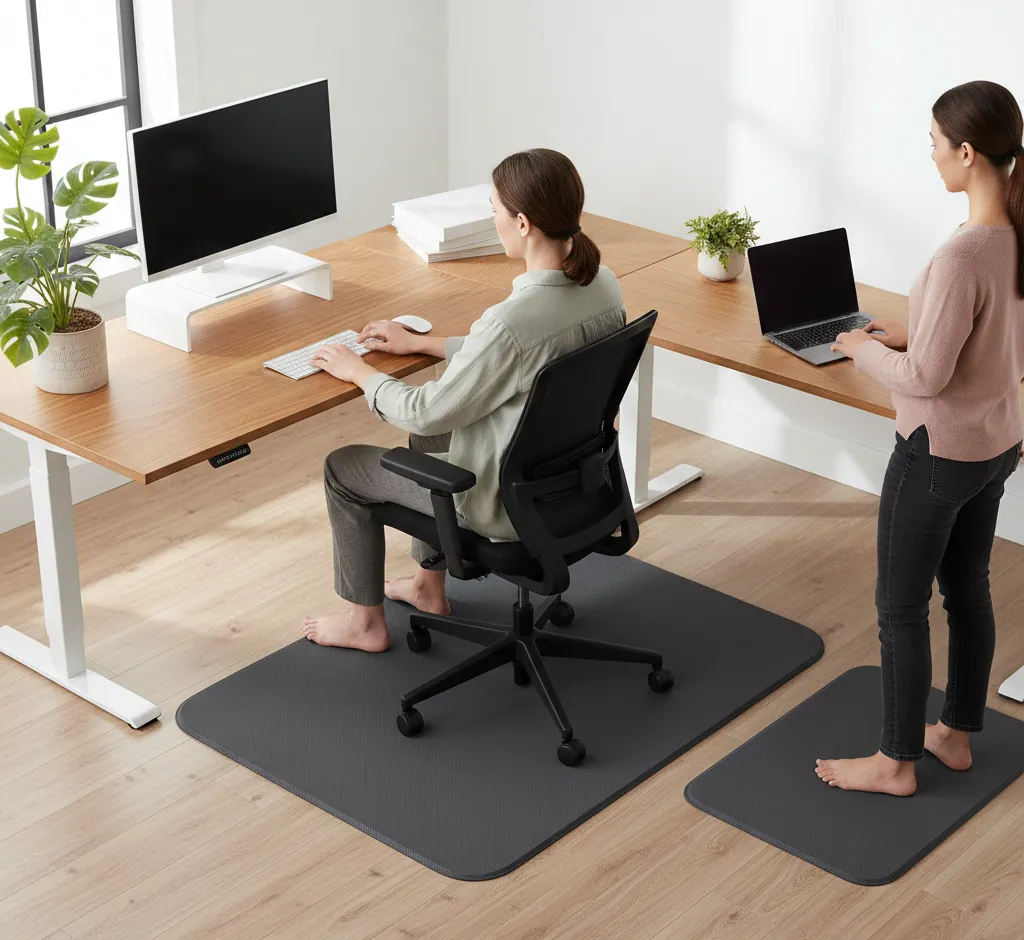
Spending long hours at a desk can take a toll on your body, especially if you sit on a hard surface or frequently shift between sitting and standing. Anti-fatigue chair mats are designed to reduce strain, improve comfort, and protect your flooring, making them an essential accessory for modern home offices and workplaces. This comprehensive guide explains what anti-fatigue chair mats are, how they work, their key benefits, and how to choose the best one for your needs.
What Is an Anti-Fatigue Chair Mat?
An anti-fatigue chair mat is a specialized floor mat designed to reduce physical fatigue and discomfort when you spend a lot of time seated or transitioning between sitting and standing. Unlike traditional plastic chair mats, anti-fatigue versions combine cushioning and ergonomic support to minimize pressure on joints and muscles.
These mats are typically placed under a rolling office chair or in front of a desk, often in combination with a sit-stand workstation. The goal is to create a more forgiving surface that encourages subtle micro-movements in your legs and feet, improving circulation and reducing stiffness.
How Anti-Fatigue Chair Mats Work
To understand why these mats are effective, it helps to look at how the body responds to hard surfaces. When you sit or stand on a rigid floor for extended periods, your muscles remain under static load. Over time, this can cause discomfort, swelling, and muscle fatigue.
Anti-fatigue chair mats are engineered to counteract this effect. They use resilient materials such as foam, rubber, or gel that gently compress under pressure and rebound as you move. This promotes small, natural shifts in posture, which in turn:
- Stimulate blood flow in the legs and feet.
- Reduce concentrated pressure on the hips, knees, and lower back.
- Encourage a more active sitting and standing posture.
When used with a rolling chair, the mat also provides a smooth, controlled surface for movement, helping you reach different areas of your desk without excessive strain.
Key Benefits of Anti-Fatigue Chair Mats
1. Reduced Joint and Muscle Fatigue
The primary benefit of an anti-fatigue chair mat is reduced strain on your body. The cushioning layers absorb part of the impact on your joints and distribute your weight more evenly. Over time, this can help minimize stiffness in your knees, hips, and lower back, especially if you work long days in front of a computer.
2. Improved Comfort for Sit-Stand Workstations
If you use a height-adjustable desk, you likely alternate between sitting and standing. Anti-fatigue mats are ideal for this setup. They provide a comfortable surface when you stand and still work effectively under your chair when you sit. This combination encourages you to move more often, which is healthier than staying in one position for hours.
3. Better Posture and Ergonomics
A well-designed chair mat can support proper ergonomic alignment. By reducing pressure points and encouraging subtle movement, it helps you maintain a more natural posture. When used alongside an ergonomic chair, footrest, and properly positioned monitor, it becomes part of a holistic approach to workplace comfort.
4. Floor Protection
Rolling chairs can scratch hardwood, wear down laminate, or create dents in soft flooring. An anti-fatigue chair mat acts as a barrier between your chair’s casters and the floor. Many mats are specifically designed for either hard surfaces or carpeted areas, helping extend the life of your flooring while keeping it looking clean and professional.
5. Enhanced Productivity and Focus
Discomfort is distracting. When you constantly adjust your position to relieve pressure on your back or hips, you break your concentration. By making your workspace more comfortable, an anti-fatigue chair mat can help you stay focused longer, making it easier to complete deep work, meetings, or creative tasks.
6. Safety and Stability
Anti-fatigue chair mats often feature non-slip backing or surface textures that reduce the risk of slipping. This is particularly important in offices with smooth tile, polished concrete, or hardwood floors. A mat that stays firmly in place adds stability when rolling in and out from the desk.
Types of Anti-Fatigue Chair Mats
By Material
- Foam anti-fatigue mats: Lightweight, cost-effective, and comfortable. They offer good cushioning but may compress over time in high-traffic areas.
- Rubber anti-fatigue mats: Durable and resilient, ideal for heavy use. They provide strong grip on hard surfaces and are often easier to clean.
- Gel-filled mats: These combine foam or rubber bases with a gel layer inside. They offer premium comfort, excellent weight distribution, and long-lasting support.
- Hybrid mats: Some models blend foam, rubber, and gel for a balance of cushioning, durability, and flexibility.
By Surface Type
- Hard floor mats: Designed for wood, tile, vinyl, or concrete. They usually have a smooth or lightly textured top and a non-slip backing to keep them in place.
- Carpeted floor mats: These may include small cleats or grips on the underside to prevent shifting on carpet. They are specifically engineered to work with low to medium pile carpets.
By Shape and Size
- Rectangular mats: The most common shape, suitable for standard desks and workstations.
- Lipped mats: Feature an extended lip that fits under the desk, allowing your chair to roll closer without leaving the mat.
- Contoured or ergonomic mats: Include beveled edges and curved sides to reduce tripping hazards and promote smoother movement.
- Compact mats: Ideal for small home offices or limited spaces, providing targeted support where you sit and stand most often.
How to Choose the Right Anti-Fatigue Chair Mat
1. Consider Your Flooring Type
Your floor surface is one of the most important factors when selecting a mat. For hard floors, look for a mat with a non-slip backing and a smooth, durable top layer that allows chair casters to roll easily. For carpeted floors, choose a mat with anchors or grip patterns designed to hold onto carpet fibers without causing damage.
2. Match the Mat Size to Your Workspace
Measure the width and depth of your workspace before buying. Ensure the mat is large enough to cover the primary movement area of your chair, including when you recline or roll back. If you use a sit-stand desk, consider a mat that gives you space to stand comfortably in front of your keyboard and still roll the chair back onto the mat when sitting.
- Measure the distance from your desk to the furthest point your chair rolls.
- Check the width required to cover both your chair and any nearby side tables or file cabinets.
- Allow for a small safety margin so your chair wheels stay on the mat during normal movements.
3. Assess Cushioning and Thickness
Comfort largely depends on the mat’s thickness and material density. Thicker isn’t always better—too soft and your chair may sink, making it hard to move. A typical sweet spot for many users is in the range of 0.5–0.75 inches (about 12–19 mm), depending on the material. Look for mats that feel supportive but not spongy, with enough resilience to return to shape after pressure is removed.
4. Check Edge Design and Safety Features
Beveled edges are valuable for two reasons: they reduce the risk of tripping and make it easier for your chair to roll onto and off the mat. Non-slip surfaces and backing help keep the mat steady as you move, while rounded corners can minimize curling over time.
5. Evaluate Durability and Warranty
High-quality anti-fatigue mats are built to withstand years of daily use. Look for features such as:
- High-density foam or rubber that resists permanent compression.
- Scratch-resistant or stain-resistant top layers.
- Reinforced edges to prevent cracking or splitting.
- Manufacturer warranties that reflect confidence in the product.
6. Style and Aesthetics
Your workspace should be both functional and visually appealing. Many modern anti-fatigue chair mats come in neutral colors such as black, gray, or brown to blend with most office decor. Some premium options offer textured patterns or subtle designs that enhance the look of your home office without drawing too much attention.
7. Budget and Value
Prices can vary widely depending on size, material, and brand. While budget mats may be tempting, they often wear out faster and provide less support over time. Consider your mat as an investment in your health and productivity. Spending a bit more on a high-quality option can deliver greater comfort and better long-term value.
Best Practices for Using Anti-Fatigue Chair Mats
Positioning the Mat
Place the mat so that the main sitting area of your chair lines up with the center of the mat. If you have a lipped mat, slide the lip under the front edge of your desk so your chair can roll close to your work surface.
- Avoid placing the mat over uneven surfaces or thresholds.
- Ensure the entire mat lies flat, with no curled edges.
- If using on carpet, confirm the mat’s cleats are gripping properly to prevent sliding.
Combining With an Ergonomic Chair
Anti-fatigue mats work best when paired with an ergonomic chair that supports your spine and allows adjustable height and tilt. Adjust your chair so your feet rest comfortably on the mat when seated, with your knees at roughly 90 degrees and your hips slightly above knee level. This alignment helps reduce pressure on the lower back and promotes healthy posture.
Use in Sit-Stand Setups
If you alternate between sitting and standing throughout the day, consider the following:
- Position the mat centrally so you can stand on it fully and still roll your chair back onto it.
- When standing, wear supportive shoes or use the mat barefoot or in socks, depending on your comfort level.
- Change positions regularly—use the mat as a tool to encourage movement rather than staying still.
Cleaning and Maintenance
Proper care extends the life of your mat and keeps your workspace hygienic. Most anti-fatigue mats can be cleaned easily with mild soap and water or a gentle household cleaner. Check the manufacturer’s instructions, but in general:
- Vacuum or sweep the surface to remove dust and debris.
- Wipe with a damp cloth and mild detergent.
- Allow the mat to dry completely before use to maintain traction.
Avoid harsh chemicals or abrasive scrubbers that might damage the surface or reduce slip resistance.
Common Mistakes to Avoid
- Choosing the wrong mat for your floor type: Using a hard-floor mat on carpet (or vice versa) can cause slipping or uneven support.
- Ignoring thickness and density: Overly soft mats make it hard to roll your chair, while overly thin mats provide minimal benefit.
- Overlooking size: A mat that is too small will not support your full range of motion, causing you to roll off the mat frequently.
- Skipping maintenance: Dirt buildup can reduce traction and degrade materials over time.
- Using damaged mats: Cracked or curled mats can become tripping hazards and should be replaced promptly.
Who Can Benefit Most From Anti-Fatigue Chair Mats?
Almost anyone who spends time at a desk can benefit from improved comfort and support, but some people may find anti-fatigue chair mats especially helpful:
- Remote workers and home office users who sit for extended periods.
- Professionals with sit-stand desks who regularly change position.
- Individuals with lower back pain, knee discomfort, or joint sensitivity.
- Gamers or creators who spend long sessions in front of a computer.
- Shared workspaces or corporate offices aiming to improve employee comfort.
When to Replace Your Anti-Fatigue Chair Mat
Even high-quality mats eventually wear out. Knowing when to replace your mat helps you maintain optimal support and safety. Consider replacing your mat if you notice:
- Permanent indentations that do not recover after you move your chair.
- Visible cracks, splits, or peeling edges.
- Loss of grip on the floor or increased sliding.
- Flattened areas where cushioning feels significantly reduced.
Most well-made mats can last several years under normal office use, but lifespan will vary based on material quality, weight load, and frequency of use.
Final Thoughts
Anti-fatigue chair mats are a simple yet powerful upgrade for any workspace. They relieve pressure on your joints, improve posture, protect your floors, and support better focus and productivity throughout the day. By choosing the right mat for your flooring, body, and work style, you can create a more comfortable and ergonomic environment that benefits your health over the long term.
Whether you are setting up a new home office or optimizing a corporate workstation, investing in a high-quality anti-fatigue chair mat is a practical step toward a more comfortable and efficient workday.