Best Way to Clean Asparagus Spears: A Complete Step-by-Step Guide
Learn the best way to clean asparagus spears step by step. Discover how to rinse, soak, trim, and prep green, white, and purple asparagus for perfect taste and texture.
Asparagus is a delicious, nutrient-dense vegetable that cooks quickly and pairs beautifully with countless dishes. However, because asparagus grows in sandy soil and has many small crevices and scales, it can trap grit, dirt, and even tiny insects. Learning the best way to clean asparagus spears ensures your dishes taste fresh, look vibrant, and are safe to eat.
This guide explains exactly how to clean asparagus the right way, step by step. You will learn how to clean thin and thick spears, how to handle white and purple asparagus, whether you really need to peel them, and the most common mistakes to avoid. Follow these tips, and your asparagus will be ready for roasting, grilling, steaming, or sautéing in just a few minutes.
Why Properly Cleaning Asparagus Matters
At a glance, asparagus looks smooth and simple to clean. In reality, the shape and structure of each spear make it easy for sand and soil to hide. The tips in particular can hold on to grit that only shows up when you bite into it.
- Food safety: Removing soil, pesticides (if present), and microorganisms lowers the risk of contamination.
- Better texture: Grit between your teeth ruins the delicate, tender texture of perfectly cooked asparagus.
- Improved flavor: Clean spears allow the natural sweetness and earthiness of asparagus to shine without any muddy taste.
- More appealing presentation: Dirt lodged in tips or along the stalks looks unappetizing, especially in elegant dishes.
Fortunately, cleaning asparagus is simple once you know the correct technique and order of steps.
How to Choose Fresh Asparagus for Easy Cleaning
The cleaning process actually begins at the store or market. Fresh, high-quality asparagus is easier to clean and tastes better.
Signs of fresh asparagus
- Firm stalks: Spears should be straight, firm, and not limp or rubbery.
- Tight tips: The tips (heads) should be compact, closed, and not mushy or flowering.
- Vibrant color: Green asparagus should be bright green with some purple at the tips; white should look pale and clean; purple should be deep and rich in color.
- Moist ends: The cut ends should not be completely dried out or overly woody.
Spears that are very old or dehydrated are more likely to have tough fibers and may require extra trimming and peeling.
Tools You Need to Clean Asparagus
You do not need any special equipment to clean asparagus properly. Simple kitchen tools work perfectly:
- Large bowl or clean sink basin
- Cold running water
- Cutting board
- Sharp knife
- Vegetable peeler (optional, for thick spears)
- Clean kitchen towel or paper towels for drying
- Colander (optional but helpful)
With these basics, you can remove sand, trim woody ends, and get spears ready for any cooking method.
Step-by-Step: Best Way to Clean Asparagus Spears
This method works for most types of asparagus, especially green and purple. It focuses on removing grit while protecting the delicate tips.
Step 1: Rinse under cold running water
Start by rinsing the asparagus spears under cold running water. Hold a handful of spears at a time and rotate them so the water flows over the tips and along the stalks.
- Use gentle pressure to avoid damaging the tips.
- Run your fingers lightly along the spears to dislodge visible dirt.
- Pay special attention to the tips, where grit often hides between the tiny leaves.
This quick rinse removes surface dirt and prepares the spears for a deeper clean.
Step 2: Soak briefly to loosen grit
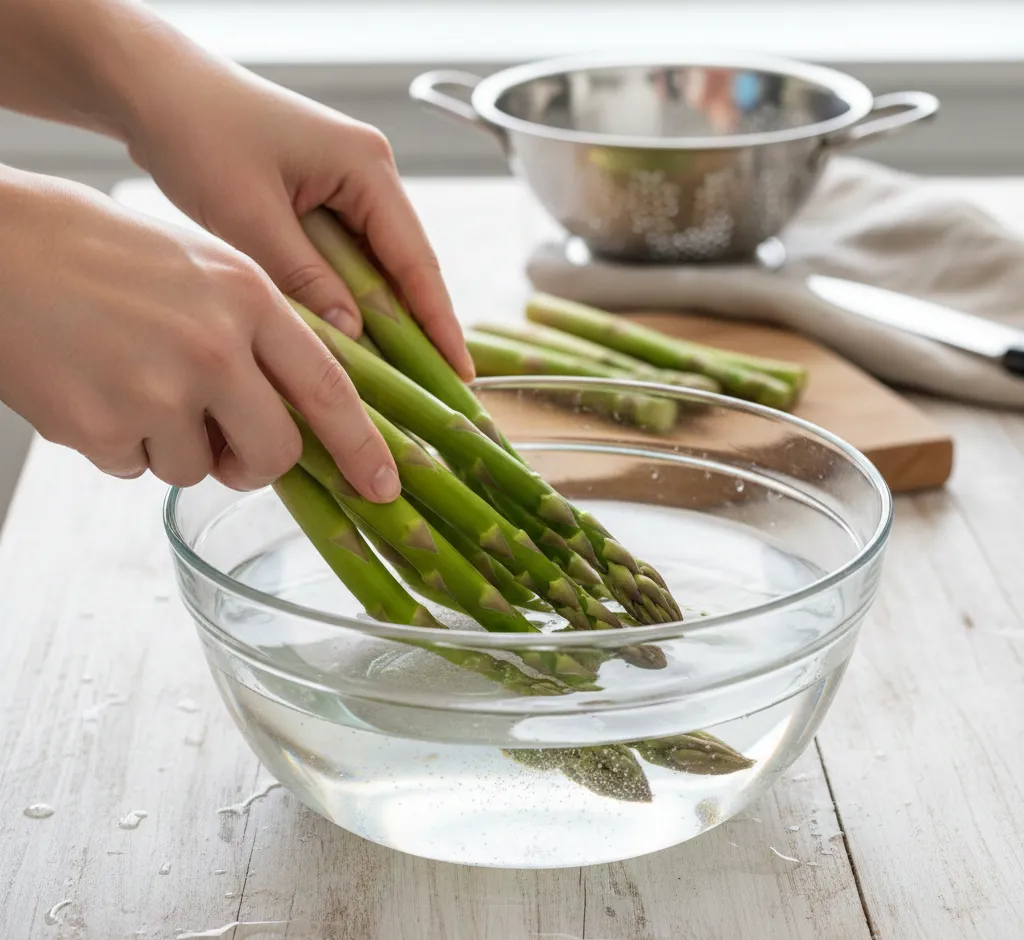
After rinsing, fill a large bowl or a clean sink with cold water. Submerge the asparagus spears, tips first, and gently swish them around.
- Soak for 1–3 minutes, not much longer, to avoid waterlogging.
- As you move the spears, grit and sand will fall to the bottom of the bowl.
- Lift the asparagus out of the water instead of pouring the water out over them, so the dirt stays behind.
This soaking step is crucial if your asparagus comes directly from a farm, garden, or farmers’ market, where soil is more likely to cling to the stalks.
Step 3: Inspect and clean the tips
The tips are the most flavorful part of asparagus but also the most delicate and prone to trapping dirt.
- Hold each spear under a light and check the tip for any remaining grit or tiny insects.
- If you see anything stuck, use your fingers to gently rub the tip while running cold water over it.
- A soft vegetable brush can help, but use it very lightly to avoid damaging the buds.
Once clean, place the spears in a colander to drain.
Step 4: Pat dry (especially for roasting and grilling)
For some cooking methods, especially roasting and grilling, excess water on asparagus can lead to steaming instead of browning.
- Lay the spears in a single layer on a clean kitchen towel or paper towels.
- Gently pat them dry, paying attention to the tips.
- Allow them to air-dry for a few minutes while you prepare the rest of your recipe.
For steaming, boiling, or blanching, it is not necessary to dry the spears completely, but removing visible water droplets still helps seasonings adhere better.
How to Trim and Prepare Asparagus After Cleaning
Cleaning and trimming go hand in hand. Once your asparagus is free from dirt, it is time to remove the tough, woody ends and prepare the spears for cooking.
Finding the natural breaking point
Asparagus has a natural point where the tender part meets the woody, fibrous bottom. You can find this point by gently bending a spear.
- Hold the spear with one hand at the bottom and the other hand a few inches above it.
- Gently bend until it snaps.
- The top part is tender and ready to cook; the bottom piece is usually too tough to eat.
Use this first spear as a guide, then line up the remaining spears and trim them with a knife at roughly the same point to save time.
Using a knife for quick trimming
If you want uniform lengths (ideal for presentation), use a sharp knife:
- Arrange the spears in a neat bundle on a cutting board.
- Line up the snapped spear as a reference.
- Cut off the woody ends in one straight line.
This method keeps your asparagus tidy and evenly sized for even cooking.
Should you peel asparagus?
Peeling is not always necessary, but it can improve the texture of thick or older spears, especially near the bottom.
- Thin spears: Generally do not require peeling. They are naturally tender.
- Thick spears: Use a vegetable peeler to remove the tough outer layer from the bottom third of the stalk.
- White asparagus: Almost always needs peeling from just below the tip to the end, as the outer skin is tougher and more fibrous.
Peel in long, smooth strokes along the stalk, rotating the spear as you go. After peeling, give the spears a quick rinse to remove any stray peel pieces.
Cleaning Different Types of Asparagus
While the general method is the same, different varieties of asparagus benefit from slight adjustments in cleaning and prep.
Green asparagus
Green asparagus is the most common variety and the easiest to handle.
- Rinse, soak briefly, and inspect the tips as described above.
- Trim woody ends and peel only if spears are very thick.
- Pat dry for roasting or grilling to encourage caramelization.
White asparagus
White asparagus is grown without exposure to light, which prevents chlorophyll development and gives it a pale color and more delicate flavor. It also has a thicker, tougher outer skin.
- Clean just like green asparagus with a rinse and short soak.
- Always peel the stalk from just beneath the tip down to the end, as the skin can be quite fibrous.
- Trim generously at the base, as white asparagus ends are usually woodier.
Because white asparagus is more fragile, handle it gently during cleaning to avoid snapping the spears.
Purple asparagus
Purple asparagus is sweeter and often more tender than green varieties. The pigments give it a beautiful color that turns greener when cooked.
- Clean with a gentle rinse and short soak, like green asparagus.
- Trimming is the same, but peeling is often unnecessary unless the spears are thick.
- Avoid overly vigorous scrubbing to preserve the attractive purple color on the surface.
How to Clean Asparagus for Different Cooking Methods
The basic cleaning steps remain the same, but small adjustments can optimize the texture and flavor of asparagus depending on how you plan to cook it.
For roasting
Roasting highlights the nutty, slightly sweet flavors of asparagus. To prepare asparagus for roasting:
- Clean thoroughly with a rinse and brief soak.
- Trim woody ends and peel thick spears if needed.
- Dry the spears very well to prevent steaming.
- Toss with oil, salt, and seasonings just before placing on a hot baking sheet.
Dry, clean spears roast more evenly and develop better color.
For grilling
Grilling requires spears that are clean but not wet, so they sear rather than steam.
- Follow the same cleaning steps as for roasting.
- Pat dry thoroughly and lightly coat with oil to prevent sticking.
- Arrange perpendicular to the grill grates or use a grill basket to avoid losing spears.
Any remaining grit will be very noticeable in grilled asparagus, so inspect tips carefully.
For steaming or boiling
Steaming and boiling are gentler cooking methods, ideal for preserving color and nutrients.
- Rinse and soak to remove dirt and sand.
- Trimming and optional peeling are still important for tenderness.
- Drying is less critical, but shake off excess water so cooking times stay consistent.
Clean spears cook evenly and absorb sauces or dressings more effectively after steaming or boiling.
For salads or raw preparations
When using asparagus in salads (blanched or raw), cleaning becomes even more important because there is less cooking to kill potential surface bacteria.
- Rinse thoroughly, soak, and pay extra attention to the tips.
- Use cold, clean water and change it if it looks cloudy or sandy.
- Dry completely before shaving or slicing for salads, so dressings cling properly.
For raw use, choose the freshest, thinnest spears and consider peeling the bottom portion for extra tenderness.
Can You Use Soap or Vinegar to Clean Asparagus?
Soap should never be used to clean asparagus or any other produce. Asparagus is porous, and soaps or detergents can leave residues that are unsafe to ingest and can affect flavor.
Some people like to add a splash of vinegar to the soaking water, especially when cleaning vegetables from the garden. A small amount of vinegar can help reduce surface bacteria, but it is not strictly necessary if the asparagus is thoroughly rinsed under cold running water.
- If you use vinegar, keep the concentration low (about 1 part vinegar to 3 parts water).
- Always rinse the spears again with fresh cold water afterward to remove any vinegar taste.
Common Mistakes When Cleaning Asparagus
A few simple errors can lead to soggy, damaged, or still-gritty asparagus. Avoid these common mistakes:
- Skipping the soak: Rinsing alone often leaves grit trapped in the tips, especially with farm-fresh asparagus.
- Soaking too long: Leaving spears in water for more than a few minutes can cause them to absorb excess moisture and lose flavor and texture.
- Using hot water: Hot water can start to cook the asparagus prematurely and reduce its crispness.
- Scrubbing too hard: Aggressive brushing can damage the delicate tips and peel away tender parts of the stalk.
- Forgetting to trim: Even well-cleaned asparagus will taste fibrous if woody ends are not removed.
- Not drying for high-heat cooking: Wet spears steam instead of sear, which prevents those delicious browned spots.
How to Store Cleaned Asparagus
If you have cleaned more asparagus than you will cook immediately, proper storage keeps it fresh and ready for quick meals.
Short-term storage (1–3 days)
- Trim the ends slightly if you have not already.
- Stand the spears upright in a jar or glass with about 2–3 cm of water, like a bouquet.
- Loosely cover the tops with a plastic bag.
- Store in the refrigerator and change the water if it becomes cloudy.
This method keeps asparagus hydrated and crisp. If already washed, make sure the spears are mostly dry before storing to prevent mold.
Storing prepped asparagus
- Pat the cleaned spears dry.
- Wrap them loosely in a damp paper towel.
- Place in a perforated plastic bag or a container with the lid slightly ajar.
Use cleaned asparagus within 2–3 days for the best flavor and texture.
Quick Cleaning FAQ
Do you wash asparagus before or after trimming?
You can do it either way, but many home cooks prefer to rinse and soak first, then trim. Cleaning first helps you see the natural color and condition of the stalks more clearly, while trimming afterward ensures you do not waste time washing parts you will throw away.
Is it safe to eat unwashed asparagus?
Eating unwashed asparagus is not recommended. Soil, bacteria, and potential pesticide residues may remain on the stalks and tips. A quick rinse and brief soak are easy steps that significantly improve safety and quality.
How do you clean asparagus from the garden?
Homegrown asparagus often has more soil attached, especially near the base. Rinse well under running water, soak for a few minutes, and consider repeating the soak if you still see grit at the bottom of the bowl. Inspect the tips carefully, then trim and peel as needed.
Final Thoughts: The Best Way to Clean Asparagus Spears
The best way to clean asparagus spears combines simplicity with attention to detail. A careful rinse, a brief soak in cold water, and a close inspection of the tips remove almost all dirt and grit. Trimming woody ends and peeling thicker stalks completes the preparation, leaving you with tender, flavorful spears ready for any recipe.
By following these steps and avoiding common mistakes, you ensure that every bite of asparagus is crisp, clean, and delicious. Whether you are roasting, grilling, steaming, or serving asparagus in a fresh salad, properly cleaned spears are the foundation of a great dish.