How to Clean Fresh Thyme Sprigs: A Complete Step‑by‑Step Guide
Learn exactly how to clean fresh thyme sprigs with this complete step-by-step guide. Discover the best way to wash, dry, and store thyme for maximum flavor, freshness, and food safety.
Fresh thyme is one of the most versatile herbs in the kitchen. Its earthy, slightly minty, and floral flavor elevates everything from roasted vegetables and chicken to soups, stews, and compound butters. However, because thyme grows close to the ground and has many tiny leaves, it often comes with dust, soil, and small insects clinging to the sprigs. Learning how to clean fresh thyme sprigs properly ensures better flavor, improved food safety, and a more pleasant texture in your dishes.
This complete guide will walk you through everything you need to know about cleaning fresh thyme at home. You will learn how to inspect, wash, and dry thyme sprigs, how to remove the leaves efficiently, and how to store them so they stay fresh and aromatic for as long as possible.
Why Cleaning Fresh Thyme Sprigs Matters
Even if your thyme looks clean at first glance, there are several reasons you should always wash fresh herb sprigs before using them.
- Removes dirt and debris: Thyme often carries traces of soil, sand, or dust from the garden or field.
- Washes away insects and tiny bugs: The compact structure of thyme leaves creates perfect hiding spots for small insects.
- Reduces pesticide residues: If your thyme is not organic, rinsing helps minimize surface pesticide residues.
- Improves flavor and texture: Clean herbs blend better into dishes and look more appealing as a garnish.
- Boosts food safety: Washing herbs lowers the risk of introducing unwanted bacteria into your food.
By taking a few extra minutes to clean fresh thyme sprigs, you protect both the quality of your cooking and the health of everyone who enjoys your meals.
What You Need to Clean Fresh Thyme
You do not need complicated tools to clean thyme effectively. Simple kitchen basics are more than enough.
- A clean bowl or large mixing bowl
- Cool running water
- A colander or fine-mesh strainer
- Clean kitchen towels or paper towels
- A salad spinner (optional, but very helpful)
- Small kitchen scissors or a knife (optional, for trimming)
Before you start, make sure your sink, bowl, and towels are clean. This prevents reintroducing dirt or bacteria to the thyme.
Step-by-Step: How to Clean Fresh Thyme Sprigs
The following step-by-step process works whether you have a small bundle of thyme from the grocery store or a big harvest from your garden.
Step 1: Inspect and Sort the Thyme
Begin by spreading the thyme sprigs out on a clean surface, such as a cutting board or kitchen towel. This makes it easier to see what you are working with.
- Look for damaged sprigs. Remove any sprigs that are slimy, moldy, or have an off smell.
- Discard yellowed or dried leaves. A few dried tips are normal, but heavily discolored sprigs are past their prime.
- Remove rubber bands and ties. Cut away any packaging or elastic bands so the water can reach all parts of the herb.
Sorting at this stage ensures you only invest effort in cleaning the freshest, most flavorful thyme.
Step 2: Fill a Bowl with Cool Water
Next, fill a large bowl with cool water. Avoid hot water, as it can wilt the delicate leaves and wash away essential oils that carry thyme’s aroma.
- Use cool or slightly cold water: This keeps the thyme crisp and helps loosen dirt.
- Leave enough room: There should be space for the thyme to move gently as you swish it.
If your thyme is especially dirty (for example, straight from the garden), you may need to refresh the water once or twice during the cleaning process.
Step 3: Submerge and Swish the Sprigs
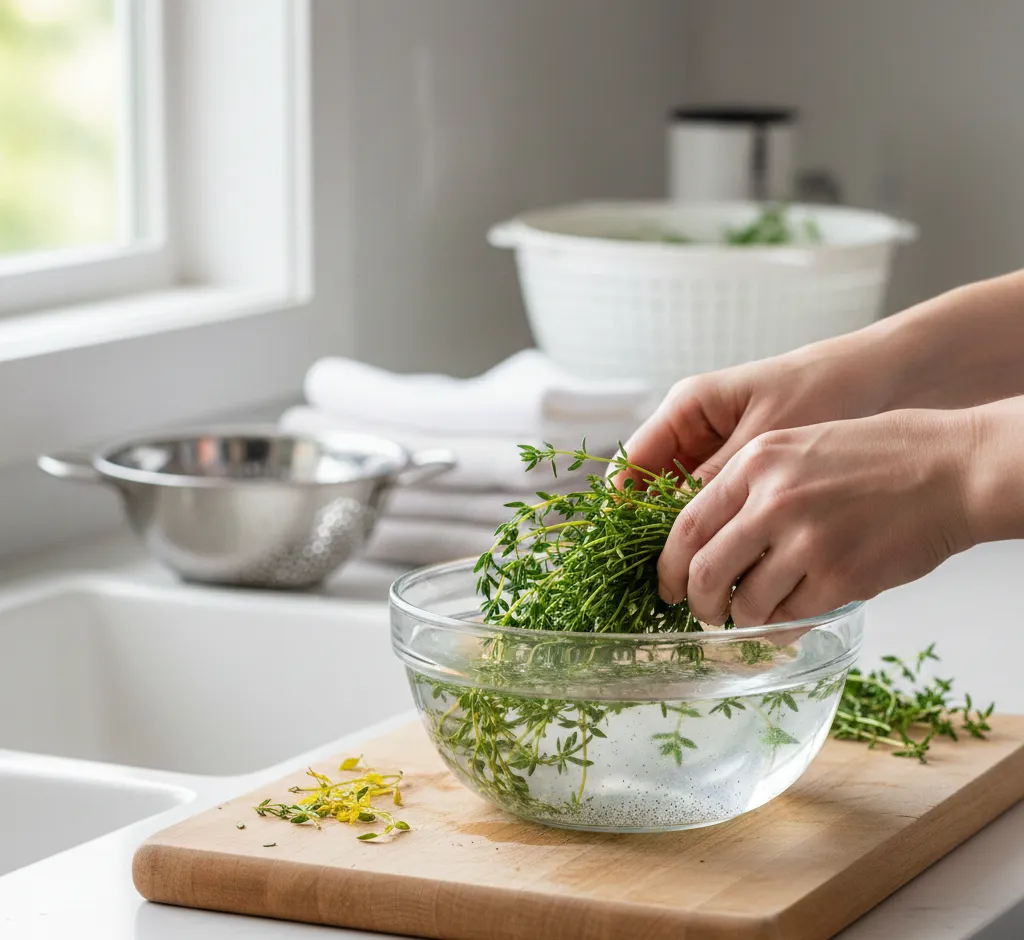
Place the thyme sprigs into the bowl of water. Gently press them down to ensure they are fully submerged.
- Swish the thyme lightly. Use your hands to stir and move the sprigs around in the water. This movement helps loosen soil and any small debris caught between the leaves.
- Let the thyme sit briefly. Allow the sprigs to soak for 30 seconds to 1 minute. Dirt and particles will sink to the bottom of the bowl.
Be gentle. Rough handling can bruise the leaves, causing them to darken and lose flavor.
Step 4: Lift, Do Not Pour
Instead of pouring the thyme and water out together, which would force the herbs through the dirty water again, lift the thyme out of the bowl.
- Use your hands or a strainer: Carefully scoop the thyme sprigs from the top of the water and transfer them to a colander or fine-mesh strainer.
- Leave the dirt behind: The sediment, sand, and debris should stay at the bottom of the bowl.
If the water looks very cloudy or gritty, empty the bowl, rinse it, and repeat the soaking and swishing process with fresh water until it runs clear.
Step 5: Rinse Under Running Water
Once you have lifted the thyme into a colander, give it a final rinse under cool, gentle running water.
- Shake the sprigs slightly. As the water flows over the thyme, lightly shake or turn the sprigs so all sides are rinsed.
- Check for remaining debris. Look closely for any stubborn specks of soil or insects and remove them by hand.
This step ensures that anything not removed by soaking is washed away before drying.
How to Dry Fresh Thyme After Washing
Drying thyme properly is just as important as washing it. Excess surface water can dilute flavors, encourage spoilage, and create steam if you add the herbs to hot oil or a pan.
Option 1: Air-Drying on Towels
This is the simplest method and works well when you do not need the thyme immediately.
- Spread out a clean towel. Lay a kitchen towel or several layers of paper towel on your counter.
- Arrange the thyme in a single layer. Place the sprigs on the towel without piling them up too high.
- Blot gently. Use another towel to pat the thyme dry, pressing lightly to remove moisture without crushing the leaves.
- Let the thyme air-dry. Leave the sprigs on the towel for 15–30 minutes until they feel dry to the touch.
Air-drying is ideal if you are preparing the thyme ahead of time for later use in salads, marinades, or garnishes where excess moisture would be noticeable.
Option 2: Using a Salad Spinner
If you need your thyme dry quickly, a salad spinner is an excellent tool.
- Place the sprigs in the spinner basket. Do not overload the basket; leave space for air to circulate.
- Spin gently. Spin for 10–20 seconds, check dryness, and repeat if necessary.
- Finish on a towel if needed. For very delicate sprigs, spread them on a towel afterward for a brief air-dry.
This method removes a large amount of surface water quickly without damaging the small leaves on the thyme stems.
Cleaning Whole Sprigs vs. Loose Thyme Leaves
You can clean thyme while it is still on the stem, or you can remove the leaves first. In most cases, it is easier and more efficient to wash the thyme while still on the sprig.
Washing Thyme on the Stem
Keeping thyme on the stem while washing offers several advantages:
- The sprigs are easier to handle in water and less likely to be lost down the drain.
- The stems support the leaves, making them less prone to bruising.
- You can decide later whether to cook with whole sprigs or strip the leaves.
For most recipes, especially those involving simmering, roasting, or braising, you can add whole clean sprigs and remove the woody stems before serving.
Washing Loose Thyme Leaves
If a recipe calls specifically for loose thyme leaves, you can remove them from the stems and wash them afterward.
- Strip the leaves. Hold the top of the sprig with one hand, then run your fingers down the stem against the direction of growth to pull off the leaves.
- Place the leaves in a fine-mesh strainer. The holes should be small enough to prevent the tiny leaves from slipping through.
- Rinse gently under cool water. Swirl the leaves with your fingers to release any remaining dirt.
- Dry thoroughly. Spread the leaves on a towel or use a salad spinner lined with a mesh insert or paper towel.
Loose leaves dry faster than whole sprigs, but they are also more delicate. Handle them gently to preserve their flavor and color.
Common Mistakes to Avoid When Cleaning Thyme
Cleaning fresh thyme sprigs is straightforward, but a few common mistakes can reduce flavor or shelf life. Avoid these pitfalls to get the best results from your herbs.
- Using hot water: Hot water can wilt and partially cook the leaves, dulling both color and aroma.
- Soaking for too long: Extended soaking (more than a few minutes) may leach out essential oils and leave thyme tasting weak.
- Scrubbing or squeezing too hard: Excess pressure bruises the leaves and can cause them to blacken or spoil faster.
- Skipping the drying step: Storing thyme while still wet encourages mold and sliminess.
- Leaving debris in the bowl: Pouring herbs and dirty water together through a strainer re-coats them with the very dirt you just removed.
By being gentle, using cool water, and drying thoroughly, you preserve both the quality and the shelf life of your thyme.
How to Store Clean Fresh Thyme Sprigs
Once your thyme is clean and dry, proper storage keeps it fresh and fragrant for days or even weeks. Clean, well-stored sprigs are easier to grab and use whenever you cook.
Short-Term Storage (Up to 1 Week)
For thyme you plan to use within a few days, the refrigerator is the best place.
- Wrap in a slightly damp towel. Place the dry thyme sprigs on a barely damp paper towel and roll them loosely.
- Place in a breathable bag. Transfer the wrapped thyme to a partially open plastic bag or a reusable produce bag.
- Store in the crisper drawer. Keep the bundle in the refrigerator, away from very wet or very ethylene-producing produce (like ripe apples or bananas).
Check the thyme every few days. If the towel becomes too wet, replace it to prevent mold.
Glass Jar or Herb Jar Method
Another popular method is to treat thyme like cut flowers.
- Trim the ends of the stems. Cut off a small portion of the woody ends with kitchen scissors.
- Place in a small jar with water. Add a little water to the bottom of a jar or glass, just enough to cover the stem ends.
- Cover loosely. Drape a plastic bag lightly over the top to keep some humidity around the leaves.
- Refrigerate. Store the jar in the refrigerator and change the water every couple of days.
This method can keep thyme fresh for up to two weeks if the sprigs were in good condition to begin with.
Freezing Clean Thyme for Long-Term Use
If you have more thyme than you can use within a week or two, freezing is a great way to preserve its flavor.
- Ensure the thyme is completely dry. Any excess moisture can form ice crystals that damage the leaves.
- Strip or leave whole sprigs. You can freeze thyme as whole sprigs or as loose leaves.
- Flash-freeze on a tray. Spread the thyme in a single layer on a baking sheet and freeze until solid.
- Transfer to airtight containers. Place the frozen thyme into freezer bags or small containers, label, and store for up to several months.
You can also freeze thyme in olive oil or butter using an ice cube tray. Simply add clean, dry thyme to each compartment, cover with oil or melted butter, freeze, and then transfer the cubes to a bag. These flavor cubes are perfect for sautéing or starting soups and sauces.
When to Clean Thyme: Before or After Storing?
Many cooks wonder if they should wash thyme immediately after bringing it home or wait until just before using it. Both approaches can work, but each has its advantages.
Cleaning Thyme Right Away
Cleaning thyme as soon as you get it home offers several benefits:
- You remove dirt and any insects before they have a chance to spread in your kitchen.
- You have ready-to-use, clean herbs whenever you cook.
- You can easily assess the quality and discard any spoiled sprigs immediately.
If you choose this method, make sure the thyme is thoroughly dry before storing to avoid moisture-related spoilage.
Cleaning Thyme Just Before Use
Some people prefer to store thyme unwashed and clean it only when needed.
- This reduces the risk of storing the herbs while still damp.
- The thyme may last slightly longer if it stays completely dry in the refrigerator.
If you follow this approach, keep the thyme loosely wrapped in dry paper towels inside a bag, and always wash it before it goes into your food.
Using Clean Fresh Thyme Sprigs in Cooking
Once you have clean, dry thyme sprigs, you can use them in a wide range of recipes. The way you handle the sprigs often depends on the cooking method and the dish you are preparing.
Cooking with Whole Sprigs
Whole sprigs are ideal for long-cooking dishes where you want thyme flavor but do not necessarily want to eat the stems.
- Add whole sprigs early. Drop clean sprigs into soups, stews, and braises during the simmering phase.
- Remove stems before serving. The leaves will often fall off into the dish, while the woody stems can be lifted out with tongs.
- Use in bouquets garnis. Tie thyme with other herbs like parsley and bay leaf for easy removal after cooking.
Because the sprigs are woody, they stand up well to heat and time without breaking apart.
Using Loose Thyme Leaves
Loose thyme leaves work best when you want a burst of fresh herb flavor distributed throughout a dish.
- Sprinkle over roasted vegetables. Toss clean leaves with oil and vegetables before roasting, or scatter over the top after cooking for a fresher taste.
- Mix into marinades and dressings. Finely chopped thyme blends well with lemon, garlic, and olive oil.
- Finish sauces and pan juices. Add thyme toward the end of cooking to preserve its bright aroma.
- Use as a garnish. A pinch of fresh thyme on top of grilled meats or creamy dishes adds both color and fragrance.
Because the leaves are small, they do not need much chopping. A quick run-through with a sharp knife is usually enough if you want a finer texture.
Frequently Asked Questions About Cleaning Fresh Thyme
Do I have to wash packaged thyme from the store?
Yes. Even if thyme is labeled as pre-washed, it may still carry traces of dirt, handling residues, or packaging dust. A quick rinse in cool water, followed by thorough drying, is a simple way to ensure your herbs are truly clean.
Can I use vinegar or baking soda to wash thyme?
For everyday use, plain cool water is usually enough. If you want an extra level of cleaning, you can briefly soak thyme in a mixture of water and a small splash of vinegar, then rinse well. Avoid strong or prolonged acidic soaks, as they can affect flavor and texture. Baking soda is not usually necessary for tender herbs like thyme.
How do I know if thyme has gone bad?
Fresh thyme should look vibrant and smell aromatic. Signs that it has gone bad include slimy stems, dark or blackened leaves, mold spots, or an unpleasant, sour odor. Discard any thyme that shows these signs and do not attempt to wash and salvage it.
Is it okay to clean thyme in advance?
Yes, you can clean thyme in advance as long as you dry it thoroughly before storing it. Properly dried and stored clean thyme sprigs can last in the refrigerator for about a week or more, depending on their original freshness.
Final Tips for Perfectly Clean Thyme Sprigs
Cleaning fresh thyme sprigs does not have to be complicated. With a few simple steps, you can ensure your herbs are free from dirt and ready to enhance your cooking.
- Always inspect and sort your thyme before washing to remove damaged sprigs.
- Use cool water and gentle swishing to loosen dirt without bruising the leaves.
- Lift thyme out of the water instead of pouring the water out over it.
- Rinse under running water, then dry thoroughly using towels or a salad spinner.
- Store clean thyme properly to preserve freshness and flavor.
By following these guidelines, you will have clean, fragrant thyme ready for any recipe, from everyday weeknight dinners to special-occasion meals. The extra attention you give to cleaning your thyme will translate directly into better flavor, better presentation, and a more enjoyable cooking experience.