How to Remove Dirt from Mushrooms: A Complete Cleaning Guide
Learn how to remove dirt from mushrooms the right way. Discover safe, effective methods for cleaning button, portobello, wild, and specialty mushrooms without making them soggy.
Mushrooms add deep flavor, meaty texture, and nutrition to countless dishes, but they often arrive from the store or forest with bits of soil, sand, or debris attached. Knowing how to remove dirt from mushrooms properly is essential for both food safety and great taste. Clean them the wrong way and you risk soggy, waterlogged mushrooms that do not brown well in the pan. Clean them the right way and you get firm, flavorful mushrooms that shine in any recipe.
This guide explains, step by step, how to clean different types of mushrooms, when to rinse and when to avoid water, how to store cleaned mushrooms, and which common cleaning mistakes to avoid. Whether using button mushrooms from the supermarket or wild chanterelles from the forest, these methods will help keep them clean, safe, and delicious.
Why Removing Dirt from Mushrooms Matters
Mushrooms grow close to the soil, on decaying wood, or on organic matter, so bits of dirt and small particles are almost inevitable. While a little soil may not seem dangerous, there are several important reasons to remove dirt from mushrooms before cooking.
- Food safety: Soil can contain bacteria and other microorganisms. Thorough cleaning reduces the risk of contamination, especially if mushrooms are used in quick-cook dishes like stir-fries or in salads.
- Better flavor and texture: Grit and sand can ruin an otherwise perfect dish. Properly cleaned mushrooms taste purer, with no unpleasant crunch from hidden dirt.
- Improved appearance: Clean mushrooms look more appealing, especially in dishes where they are served whole or sliced visibly, such as sautés, pasta, or risottos.
- Even cooking: Excess dirt or debris can burn or char in a hot pan, creating off-flavors and affecting browning.
The key is to remove dirt without soaking mushrooms in water for too long, which can affect their ability to brown and concentrate flavor.
Should You Wash Mushrooms?
There is an ongoing debate about whether mushrooms should ever be washed with water. The common myth is that mushrooms absorb water like sponges and become waterlogged, preventing proper browning. In reality, mushrooms do absorb some water, but brief rinsing or quick washing does not usually cause serious problems, especially if they are dried well afterward.
When to Rinse Mushrooms
Rinsing is usually fine and often recommended in these situations:
- Heavily soiled mushrooms: If mushrooms have visible clumps of soil, sand, or forest debris, a brief rinse makes cleaning faster and more effective.
- Delicate ridged mushrooms: Varieties like chanterelles or morels have many folds and crevices where dirt hides, so a quick rinse can be practical.
- Large batches: When cleaning a big quantity, a short wash followed by careful drying can save a lot of time compared with brushing each mushroom individually.
When to Avoid Too Much Water
Over-soaking mushrooms can cause issues. Avoid prolonged contact with water in these cases:
- High-heat cooking: If planning to sear or brown mushrooms intensely, excess surface water will cause steaming instead of caramelization.
- Older or fragile mushrooms: Mushrooms that are already soft, bruised, or starting to age may become mushy faster when exposed to too much water.
- Whole stuffed mushrooms: If using mushrooms for stuffing and baking, keeping them as dry as possible helps maintain structure and prevents a watery result.
The best approach is balanced: use minimal water only when necessary, clean thoroughly, and always dry mushrooms well before cooking.
Basic Tools for Cleaning Mushrooms
You do not need special equipment to remove dirt from mushrooms. Simple kitchen tools work very well.
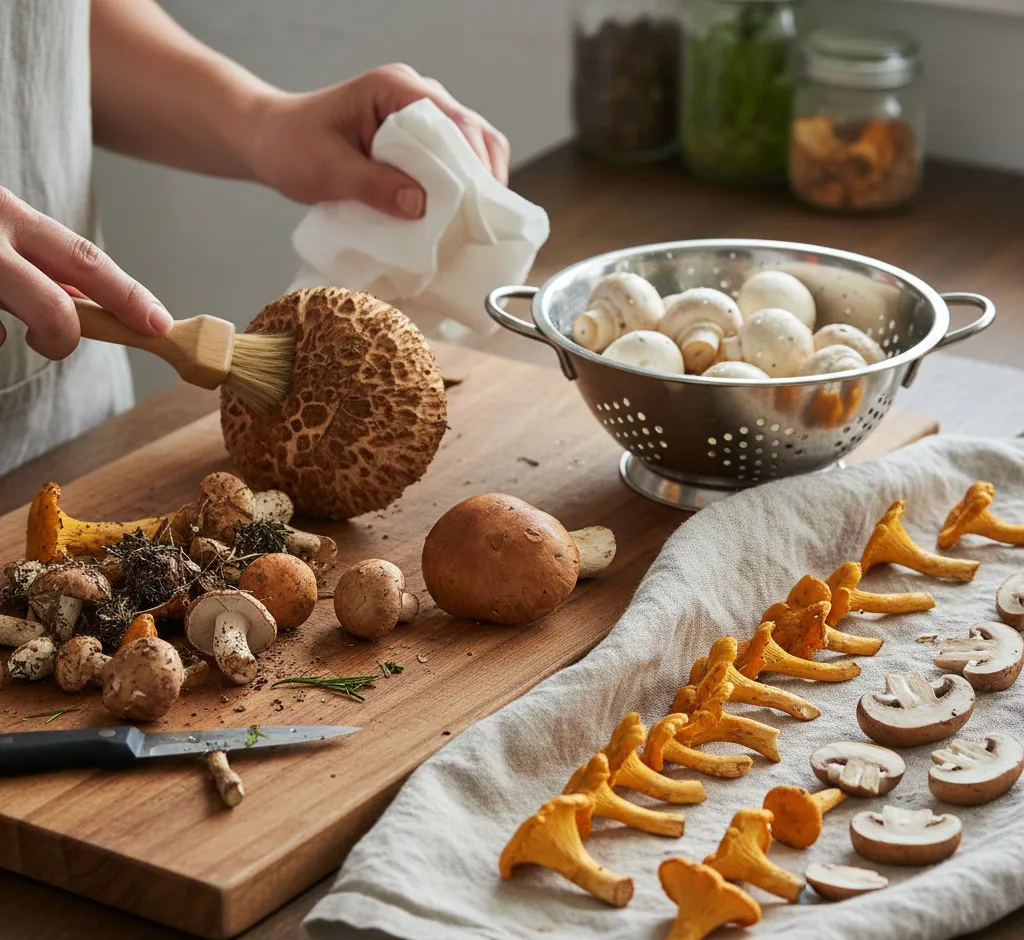
- Soft brush: A dedicated mushroom brush or a clean pastry brush is ideal for gently removing soil from the caps and stems.
- Damp paper towel or cloth: Perfect for wiping the surface of mushrooms that are only lightly soiled.
- Small paring knife: Useful for trimming stem ends, removing damaged spots, or scraping off stubborn dirt.
- Colander or sieve: Helpful for briefly rinsing mushrooms under running water while shaking off debris.
- Clean kitchen towel or paper towels: Essential for drying mushrooms thoroughly after rinsing.
Choose the gentlest method that effectively removes the visible dirt. Mushrooms do not have tough skins, so avoid hard scrubbing or abrasive sponges.
How to Remove Dirt from Common Store-Bought Mushrooms
Most people cook with common varieties like white button, cremini (baby bella), or portobello mushrooms. These are typically grown under controlled conditions and are not extremely dirty, but they may still have small amounts of soil.
Cleaning White Button and Cremini Mushrooms
- Sort and inspect: Place mushrooms in a single layer on a clean surface. Remove any that are slimy or badly bruised, as these are starting to spoil.
- Trim the stems: Using a small knife, cut off the very end of each stem if it looks dry, cracked, or dirty.
- Dry clean first: Use a soft brush or slightly damp paper towel to gently wipe the caps and stems. Very often, this is enough to remove light dirt.
- Rinse if needed: If some mushrooms are still dirty, place a small batch in a colander and briefly rinse under cool running water for just a few seconds while turning them with your hand.
- Dry thoroughly: Spread the rinsed mushrooms on a clean kitchen towel or paper towels, then gently pat them dry. Let them sit for a few minutes to air-dry fully before cooking.
For sliced mushrooms, clean them before slicing to minimize water absorption and make drying easier.
Cleaning Portobello Mushrooms
Portobellos are larger and often used as burger replacements or grilled steaks. They usually have more visible gills and sometimes more trapped dirt underneath the cap.
- Remove the stem: Gently twist the stem to detach it or cut it off with a knife if it does not loosen easily.
- Wipe the cap: Use a damp paper towel to remove surface dirt from the top and sides of the cap.
- Decide about the gills: The dark gills under the cap are edible but can hold some dirt and release dark color into sauces. If preferred, use a spoon to gently scrape out the gills, then discard them.
- Quick rinse (optional): If the underside still seems dirty, give the mushroom a fast rinse and immediately pat dry.
Removing the gills is optional but common when portobellos are used in recipes where a cleaner appearance or lighter color is desired.
How to Clean Wild Mushrooms and Forest Finds
Wild mushrooms, such as chanterelles, morels, porcinis, or oyster mushrooms growing in nature, tend to carry more dirt, insects, pine needles, and other forest debris. Proper cleaning is even more critical here, not only for flavor but also for safety.
General Steps for Wild Mushrooms
- Inspect carefully: Lay out the mushrooms and examine them closely. Remove any visibly damaged, moldy, or overly worm-eaten pieces.
- Dry clean first: Use a soft brush to remove loose soil, leaves, and insects. Concentrate on folds, ridges, or under the caps where debris hides.
- Trim and cut: Trim the stem ends to remove the dirtiest parts. Large mushrooms can be sliced or halved to reveal and remove hidden dirt.
- Rinse briefly if needed: If there is still significant dirt, rinse quickly in cool water. For particularly dirty mushrooms, fill a bowl with cool water, immerse a few at a time, swirl gently to dislodge debris, then lift them out instead of pouring everything through a strainer. This keeps the separated dirt at the bottom of the bowl.
- Dry thoroughly: Place cleaned mushrooms on a towel, then gently pat them dry. Spread them in a single layer and allow them to air-dry for several minutes.
Do not soak wild mushrooms for long periods. Long soaking can dilute their flavor and make the texture spongy.
Cleaning Specific Wild Mushroom Types
Chanterelles
Chanterelles have ridges, folds, and a trumpet-like shape that traps pine needles, sand, and soil.
- Start with a brush to remove the largest pieces of debris.
- Trim the stem base generously because this area often contains the most dirt.
- If sand or soil remains inside the folds, give them a brief rinse or swirl in a bowl of cool water, then dry them well on a towel.
Morels
Morels are hollow with a honeycomb texture, making them magnets for grit and tiny insects.
- Cut large morels in half lengthwise to expose any dirt or insects inside.
- Swirl them gently in a bowl of cool water to wash away trapped grit. Replace the water if it becomes muddy.
- Lift the morels out of the water rather than pouring them through a strainer, so the dirt stays behind.
- Dry them thoroughly on towels before cooking.
Porcini and Similar Boletes
Porcini mushrooms have thick stems and spongy pores under the cap instead of gills.
- Use a knife to remove heavily damaged or worm-eaten areas, often near the base of the stem.
- Gently brush off soil from the cap and stem.
- If the pore layer is very soft, dark, or full of insects, it can be removed and discarded before cooking.
- Quickly rinse only if necessary, then dry thoroughly.
How to Clean Specialty Mushrooms
Some cultivated varieties like shiitake, oyster, or enoki mushrooms require slightly different handling but still follow the same basic principles: minimal water and careful trimming.
Shiitake Mushrooms
- Wipe the caps with a damp paper towel or brush off any dirt.
- Trim or remove the stems. Shiitake stems are often tough and are usually discarded or saved for stock.
- Only rinse if dirt remains after dry cleaning, and then pat dry immediately.
Oyster Mushrooms
- Gently separate large clusters into smaller pieces.
- Use a brush or damp cloth to clean the tops and undersides of each piece.
- If there is still debris near the base, trim that portion off.
- A brief rinse is acceptable if dirt is stubborn, followed by careful drying.
Enoki Mushrooms
- Cut off the root cluster at the base where the stems meet. This area usually holds the most dirt.
- Gently separate the stems and discard any slimy or discolored pieces.
- Lightly rinse if needed, then place on paper towels to dry.
Drying Mushrooms After Cleaning
Effective drying after rinsing is as important as the cleaning itself. Moisture left on the surface of mushrooms will turn to steam in the pan, preventing browning and concentrating flavor.
Best Practices for Drying
- Use absorbent towels: Spread mushrooms out on a clean kitchen towel or several layers of paper towels. Avoid stacking them.
- Pat, do not squeeze: Gently press another towel over the top to absorb moisture. Do not crush or squeeze, as this will damage the texture.
- Air-dry briefly: Let the mushrooms sit uncovered on the towel for 5–10 minutes before cooking. This allows remaining surface moisture to evaporate.
- Dry before slicing for browning: If planning to sear or roast mushrooms, make sure they feel dry to the touch first.
Cleaning Mushrooms Before or After Slicing?
A common question is whether mushrooms should be cleaned whole or after slicing. In most cases, cleaning them before slicing is best.
- Whole mushrooms absorb less water: Their outer surface is more intact, so brief rinsing introduces less moisture.
- Easier to dry: It is simpler to dry whole mushrooms thoroughly than many thin slices.
- Cleaner cuts: Slicing clean mushrooms produces neat, less slippery pieces that cook more evenly.
If mushrooms have already been sliced and still appear dirty, quickly rinse them in a colander and dry them very well, then allow extra time in the pan for moisture to evaporate before browning.
How to Store Cleaned Mushrooms
Once dirt is removed, storing mushrooms correctly helps maintain freshness, texture, and flavor. Improper storage can lead to sliminess, dark spots, or mold.
Short-Term Storage (1–3 Days)
- Refrigerate promptly: Place mushrooms in the refrigerator soon after cleaning and drying.
- Use breathable containers: Store them in a paper bag, a container lined with paper towels, or a partially open plastic container. This allows excess moisture to escape.
- Avoid airtight packaging: Sealed plastic bags trap moisture and encourage sliminess.
- Do not wash too far in advance: If possible, clean mushrooms shortly before cooking rather than days ahead. Cleaned mushrooms generally keep for up to a couple of days when stored properly.
Signs Mushrooms Have Spoiled
- Strong, unpleasant odor.
- Very slimy surface or sticky film.
- Dark, wet spots or visible mold.
- Excessive softness or shriveling.
When in doubt, discard questionable mushrooms. Safety should always come first, especially with wild varieties.
Common Mistakes When Cleaning Mushrooms
Avoid these frequent errors to keep mushrooms in top condition from market to plate.
- Soaking mushrooms for a long time: Leaving mushrooms in a bowl of water for extended periods leads to waterlogged, less flavorful results.
- Using very hot water: Hot water can partially cook the mushrooms and change their texture even before they reach the pan.
- Scrubbing with abrasive tools: Hard brushes or scouring pads can damage the delicate surface and shorten shelf life.
- Skipping drying: Cooking mushrooms while still wet causes steaming instead of browning and can dilute sauces.
- Cleaning far in advance: Washing mushrooms several days before using them increases the risk of spoilage in the refrigerator.
Frequently Asked Questions About Cleaning Mushrooms
Is it safe to eat mushrooms without washing them?
Most cultivated mushrooms from reputable sources are relatively clean, but they can still carry traces of soil. At minimum, wipe or brush them thoroughly before use. For peace of mind and best quality, always remove visible dirt by brushing, wiping, or briefly rinsing and drying.
Can you peel mushroom caps instead of washing them?
Some cooks like to peel the outer skin from mushroom caps, especially on large portobellos. This is optional. Peeling removes any surface dirt but also removes some flavor and takes extra time. In most cases, a good wipe or quick rinse followed by drying is sufficient.
Do pre-sliced or pre-washed mushrooms need additional cleaning?
Pre-sliced or pre-washed mushrooms from the store are usually ready to cook, but it is still wise to give them a quick check. If there are visible specks of dirt or if the mushrooms feel slimy, rinse them briefly, dry them well, and use them promptly.
How long can cleaned mushrooms be stored?
Cleaned and properly dried mushrooms generally keep for 1–3 days in the refrigerator in a breathable container. For best flavor and texture, try to cook them within 24–48 hours of cleaning.
Key Takeaways for Removing Dirt from Mushrooms
- Use the gentlest effective method: brush or wipe first, rinse only when necessary.
- Keep rinsing quick and always dry mushrooms thoroughly afterward.
- Clean mushrooms just before cooking when possible to preserve freshness.
- Pay extra attention to wild mushrooms and varieties with folds, ridges, or pores.
- Store cleaned mushrooms in the refrigerator in a breathable container and watch for signs of spoilage.
With these simple techniques, it becomes easy to remove dirt from mushrooms while preserving their texture and deep, savory flavor. Cleaned correctly, they brown beautifully, stay pleasantly firm, and add rich umami to everything from quick weeknight dinners to special-occasion meals.