Proper Method for Washing Green Onions: A Complete Hygiene and Prep Guide
Learn the proper method for washing green onions (scallions) step by step. Discover how to clean, trim, dry, and store green onions safely for the best flavor and freshness.
Green onions, also known as scallions or spring onions, are a staple in many kitchens thanks to their mild flavor, versatility, and vibrant color. However, because they grow close to the soil and are often bundled and transported in bulk, they can collect dirt, sand, and microorganisms along the way. Learning the proper method for washing green onions is essential for both food safety and the best possible taste.
This guide walks through every step of cleaning green onions correctly—from trimming and rinsing to safe handling and storage—so you can confidently use them in salads, soups, stir-fries, garnishes, and more.
Why Properly Washing Green Onions Matters
At first glance, green onions might look clean, but close inspection often reveals hidden dirt, sand, and other contaminants. Skipping or rushing the washing process can affect your dish and your health.
Food safety considerations
- Soil and grit: Green onions are grown in loose soil that can easily lodge between layers near the root end and along the stalk.
- Microorganisms: Bacteria such as E. coli, Salmonella, and other pathogens can be present on raw produce if it is not properly washed.
- Pesticide residues: Even when used according to regulations, pesticides can remain on the surface and should be removed as much as possible by washing.
Although cooking will kill many microorganisms, green onions are frequently eaten raw as a garnish, on salads, or in salsas, making thorough washing even more important.
Flavor and texture benefits
- Better texture: Grit and sand can be unpleasant when bitten, especially in raw applications.
- Cleaner appearance: Bright, crisp green onions without spots or dirt elevate the look of your dish.
- Longer shelf life: Removing damaged or slimy layers while washing helps prevent spoilage from spreading to healthy parts.
How to Choose and Prepare Green Onions Before Washing
Proper washing starts with proper selection and preparation. Handling the onions carefully before they go under water reduces waste and makes cleaning more efficient.
How to select fresh green onions
- Look for bright green tops: Leaves should be firm and vibrant, not wilted, yellowing, or slimy.
- Check the white bulbs: They should be smooth and firm, with no mushy spots, cracks, or dark discoloration.
- Inspect the roots: Roots can be present and still edible; they should not be overly slimy or emitting a strong off-odor.
- Avoid strong odor: A faint onion smell is normal, but a sour or rotten odor indicates spoilage.
Tools and setup
Before you start washing, gather the following:
- Clean cutting board (preferably reserved for vegetables).
- Sharp knife or kitchen scissors.
- Large bowl or salad spinner.
- Clean colander or fine-mesh strainer.
- Paper towels or a clean kitchen towel.
Make sure your sink and work surface are clean to avoid re-contaminating the onions after washing.
Step-by-Step Method for Washing Whole Green Onions
The most effective way to clean green onions is to trim them first, then wash under running water, focusing on the root area and between layers.
Step 1: Separate and inspect the onions
- Remove green onions from the bundle, bands, or packaging.
- Gently fan out the stalks so each one is accessible.
- Visually inspect for wilted, slimy, or yellow leaves and set those aside for trimming or discarding.
Step 2: Trim the roots and tops
- Place a few stalks on the cutting board.
- Using a sharp knife, slice off the root end, removing the tiny root hairs and about 0.5–1 cm of the white base. This area typically holds the most dirt.
- Trim off dry or wilted tips from the green tops. Remove any leaves that feel slimy or look heavily discolored.
- Repeat with the remaining stalks.
Trimming before washing reduces the amount of dirt you introduce into your washing water and exposes inner layers for better cleaning.
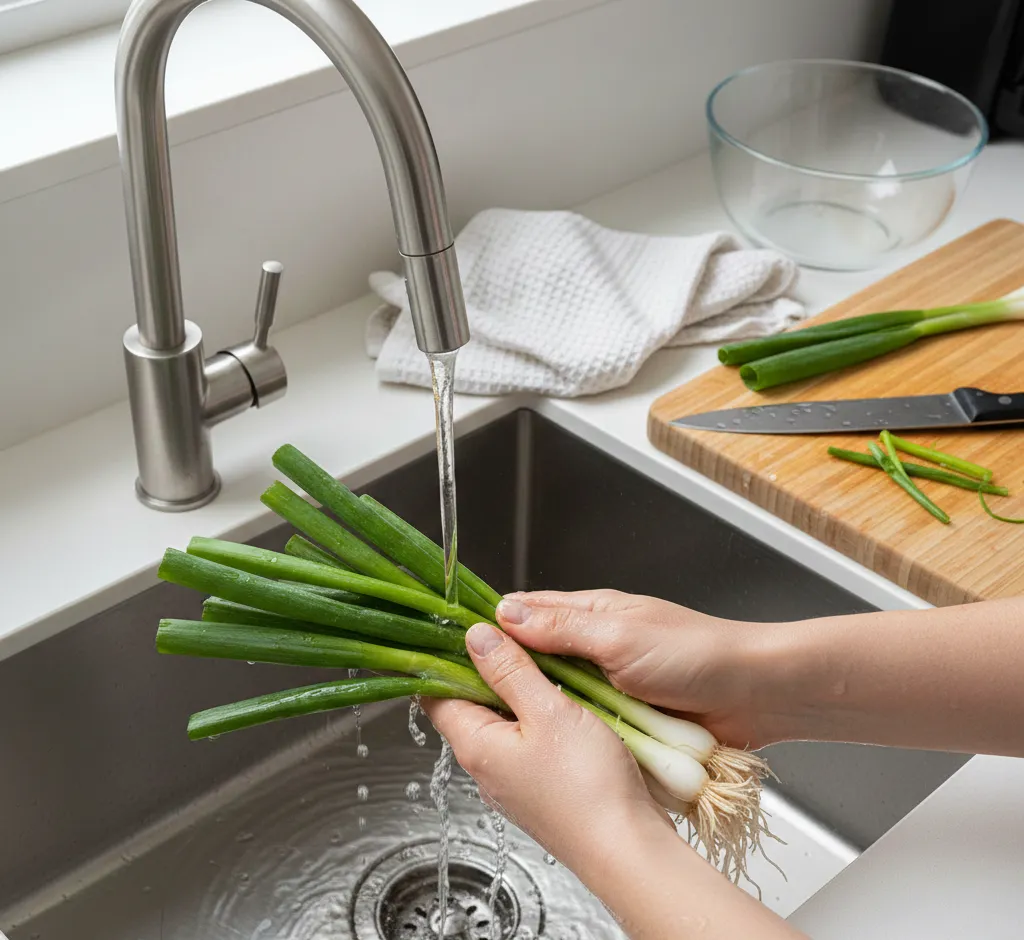
Step 3: Rinse under cool running water
- Turn on cool running water—not hot, which can soften and damage the delicate leaves.
- Hold a few stalks at a time under the stream, starting from the green tops and moving toward the cut white ends.
- Use your fingers to gently rub along the length of each stalk, paying special attention to any visible dirt or sand.
- Gently separate any overlapping leaves near the white bulb area to let water flush away dirt that may be trapped between layers.
Rinsing under running water is more effective than soaking alone because it physically carries away dirt and microorganisms.
Step 4: Optional soak for heavily soiled onions
If your green onions are particularly sandy or muddy (common with farmers’ market or home-grown bunches), a brief soak can help loosen debris.
- Fill a large bowl with cool water.
- Place the trimmed green onions in the bowl, fanning them out.
- Swish them gently with your hands to release dirt.
- Let them sit for 1–2 minutes so sediment falls to the bottom.
- Lift the onions out of the water (do not pour the water over them, which re-deposits dirt).
- Finish with a quick rinse under running water.
Step 5: Drain and dry
- Place washed green onions in a colander or the basket of a salad spinner.
- Shake gently to remove excess water.
- If using a salad spinner, spin for a few seconds to dry the leaves.
- Lay the onions on paper towels or a clean kitchen towel and pat dry.
Drying is especially important if you plan to store the onions for later use or if you want them to sear or sauté properly without steaming.
Washing Green Onions After Chopping
Some cooks prefer to wash green onions after chopping, especially when using them raw. This method can be useful when you want to ensure tiny pieces are completely free of grit. However, it requires careful handling to avoid losing flavor and nutrients.
When to wash after chopping
- When the onions are visibly sandy or came directly from a garden.
- When using raw in salads, salsas, or as a garnish.
- When cutting very fine slices for toppings.
How to wash chopped green onions safely
- Trim and discard roots and damaged tops as described earlier.
- Slice the onions into rounds or small pieces according to your recipe.
- Place the chopped pieces in a fine-mesh strainer or small colander.
- Rinse under cool running water, gently agitating the pieces with your fingers.
- Shake off excess water and spread the chopped onions on paper towels or a clean towel to dry.
Avoid soaking chopped green onions for long periods. Prolonged soaking can dilute flavor, soften their texture, and wash away water-soluble nutrients.
Should You Use Soap, Vinegar, or Special Produce Wash?
When washing vegetables, some people consider using soap, vinegar, or store-bought produce washes. With green onions, simple methods are usually best.
Never use soap or household cleaners
Dish soap, detergents, and household cleaners are not designed for food and can leave harmful residues. They may also alter the taste and texture of delicate leaves like those of green onions. Stick to potable water for regular cleaning.
Using vinegar or produce wash
- Vinegar solutions: A mild vinegar solution (for example, 1 part vinegar to 3 parts water) can help reduce some surface bacteria. If you choose this method, limit the soak to a couple of minutes and rinse thoroughly with fresh water afterward.
- Commercial produce washes: Some products are designed specifically for fruits and vegetables. Always follow manufacturer instructions and rinse thoroughly after use.
For everyday home cooking, cool running water, gentle rubbing, and proper trimming are generally sufficient for green onions.
Handling Cross-Contamination and Kitchen Hygiene
Even if green onions are washed correctly, poor kitchen habits can reintroduce contaminants. Follow these hygiene tips to keep your prep area safe.
Use separate cutting boards when needed
- Do not cut raw meat or poultry on the same board you use for washed vegetables without washing it thoroughly first.
- If possible, designate one cutting board for produce and another for raw animal products.
Wash your hands and tools
- Wash hands with soap and water before and after handling green onions, especially if you touch raw meats or unclean surfaces in between.
- Clean knives, colanders, and bowls with hot, soapy water after use.
Maintaining a clean workspace helps ensure that the effort spent washing your green onions is not wasted.
Drying and Storing Clean Green Onions
Once washed, proper drying and storage keep green onions fresh and flavorful for as long as possible. Excess moisture is the main enemy, as it encourages sliminess and spoilage.
How to dry green onions effectively
- Pat dry thoroughly: After rinsing, gently pat the stalks with a clean towel to remove surface moisture.
- Avoid crushing: Handle the green tops gently to prevent bruising, which speeds up decay.
- Air-dry briefly: Let the onions sit on the towel for 5–10 minutes to air-dry before storing.
Refrigerator storage methods
Method 1: Wrapped in paper towel and bagged
- Lay the dry green onions on a sheet of paper towel.
- Roll them loosely, allowing some air circulation.
- Place the roll inside a perforated plastic bag or a partially open reusable bag.
- Store in the vegetable crisper drawer.
This method keeps excess moisture away while preventing the onions from drying out completely.
Method 2: Stored upright in a jar
- Place about 1–2 cm of water in the bottom of a clean jar or glass.
- Insert the washed, trimmed green onions with the roots or cut base end down.
- Loosely cover the tops with a plastic bag to maintain humidity.
- Store in the refrigerator, changing the water every couple of days.
This method works similarly to keeping herbs fresh and can extend the life of your green onions for up to a week or more, depending on initial freshness.
How long do washed green onions last?
- Properly washed and stored green onions typically last 5–7 days in the refrigerator.
- Discard any stalks that become slimy, emit a strong off-odor, or turn dark and mushy.
Common Mistakes When Washing Green Onions
A few simple errors can undermine your efforts to clean green onions properly. Avoid these common pitfalls for the best results.
Soaking for too long
Extended soaking in water can cause green onions to lose crispness and leach out some of their flavor and nutrients. Keep soaking times short, and always rinse under running water afterward.
Skipping the root area
The white bulb and root end harbor the most soil. Failing to trim and rinse this area carefully often leaves behind grit that shows up in your finished dish.
Not drying before storage
Storing green onions while still very wet encourages bacterial growth and speeds up spoilage. Always blot dry and allow brief air drying before refrigeration.
Using hot water
Hot water can soften the leaves and negatively affect texture. Always use cool running water for washing green onions.
Tips for Using Clean Green Onions in the Kitchen
After washing and prepping your green onions, use them in a way that maximizes their flavor, color, and texture.
Separate white and green parts
- The white and light green parts offer more intense flavor and hold up well to sautéing, stir-frying, and simmering.
- The dark green tops are milder and best used as a fresh garnish or added at the end of cooking for a bright, oniony finish.
When washing, pay attention to both sections so you can use them strategically in your recipes.
Add at the right time
- For soups and stews, add the white parts early to infuse flavor, and reserve the green tops for the last few minutes or for sprinkling on top.
- In stir-fries, cook the white sections with other vegetables or proteins, then toss in the green tops just before removing from heat.
Summary: Key Steps for Washing Green Onions Properly
To recap, a proper method for washing green onions balances food safety, flavor, and longevity:
- Select fresh, firm green onions with vibrant tops and clean white bulbs.
- Trim off roots and any damaged or slimy leaves before washing.
- Rinse thoroughly under cool running water, gently rubbing and separating layers near the bulb.
- Use a brief soak only if the onions are heavily soiled, followed by a fresh rinse.
- Dry well using a towel or salad spinner, then store properly to maintain freshness.
- Avoid soap and harsh cleaners; rely on water, good handling, and kitchen hygiene.
With these steps, your green onions will be clean, crisp, and ready to enhance your dishes with their fresh, mild onion flavor.