Step‑by‑Step Guide to Washing Cabbage: Clean, Safe, and Ready to Cook
Learn exactly how to wash cabbage step by step for salads, stir-fries, soups, and fermentation. Discover the best methods for cleaning green, red, Savoy, and Napa cabbage, removing dirt and insects, and storing it safely for maximum freshness.
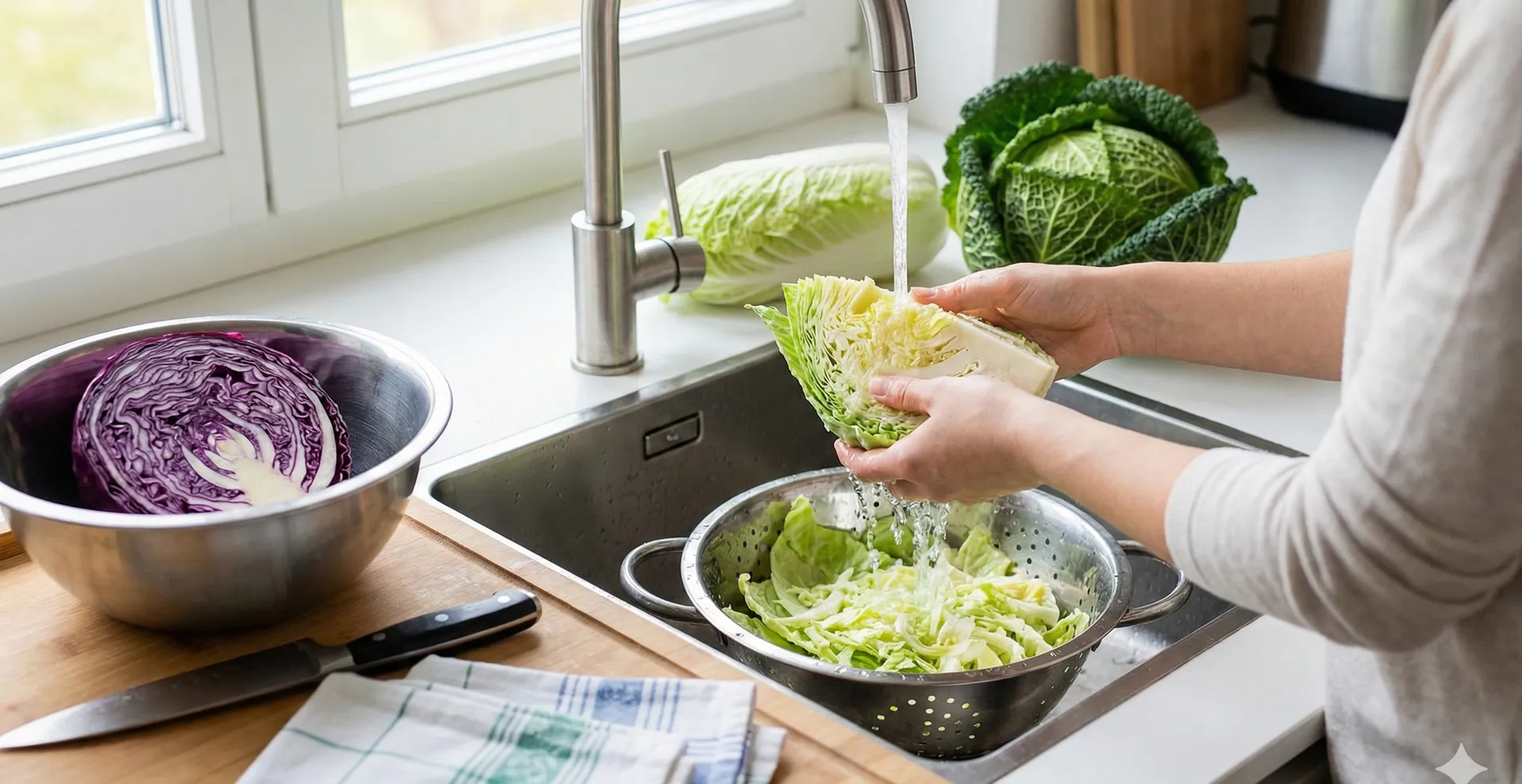
Washing cabbage properly is one of the most important steps in preparing it for salads, stir-fries, soups, and fermented dishes like sauerkraut or kimchi. Because cabbage grows close to the ground and has many layers, it can trap dirt, sand, insects, and pesticide residues deep between its leaves. A thorough cleaning not only improves taste and texture, but also supports food safety and hygiene in your kitchen.
This step-by-step guide explains exactly how to wash cabbage for different uses, how to remove dirt and insects, when and how to use salt or vinegar water, and common mistakes to avoid. By the end, you will feel confident cleaning any type of cabbage quickly and effectively.
Why Properly Washing Cabbage Matters
Food safety and hygiene
Cabbage is often eaten raw in coleslaw, salads, and fresh wraps. When it is not cooked, any bacteria, pesticide residues, or contaminants present on the leaves can go straight to your plate. Washing helps reduce:
- Dirt and sand from the field and transport.
- Insects and small pests hiding between leaves.
- Residual chemicals such as pesticides or fertilizers.
- Cross-contamination from handling and storage.
Better taste and texture
Clean cabbage tastes fresher, crunches better, and looks more appealing. Grit or hidden insects can ruin even the best recipe. Thorough rinsing removes bitterness from damaged outer leaves, soil from the core area, and any unpleasant residues, leaving you with crisp, sweet, and ready-to-use leaves or shreds.
Versatility in the kitchen
Once washed properly, cabbage becomes a flexible ingredient for many dishes:
- Raw salads and coleslaws.
- Stir-fries and sautéed dishes.
- Soups, stews, and braises.
- Fermented foods like sauerkraut and kimchi.
- Stuffed cabbage rolls and wraps.
The cleaning method you choose can slightly differ depending on how you plan to use the cabbage. The next sections cover the most effective, practical techniques.
Types of Cabbage and How Washing Differs
Different cabbage varieties have slightly different structures, which affects how you should wash them. The basic principles stay the same, but small adjustments help you clean more efficiently.
Green and red (purple) cabbage
Green and red cabbages have dense, tightly packed heads. Dirt and insects usually hide:
- On the outer leaves.
- Near the stem and core.
- Occasionally between inner leaves if the head is loose or damaged.
These types usually need outer-leaf removal, trimming of the core, and a good rinse after cutting or shredding.
Savoy cabbage
Savoy cabbage has crinkled, wrinkly leaves that trap dirt and tiny insects more easily. The head is looser, so water can reach deep inside, but you must pay closer attention:
- Separate the leaves more thoroughly.
- Rinse each leaf carefully to remove grit from the folds.
- Soak briefly if needed to loosen stubborn dirt or insects.
Napa (Chinese) cabbage and similar varieties
Napa cabbage has an elongated, loosely packed head with softer, thinner leaves. Dirt gathers:
- Near the base and root end.
- Between layered ribs where the leaves overlap.
You will usually:
- Slice off the base.
- Separate the leaves or cut the head lengthwise.
- Rinse thoroughly between the ribs.
What You Need Before You Start
Setting up your workspace helps you wash cabbage efficiently and safely. Gather the following items:
- Fresh cabbage (any type).
- Clean cutting board (use one for vegetables only to avoid cross-contamination with raw meat).
- Sharp knife for trimming and cutting.
- Large bowl or basin for soaking and rinsing.
- Colander or strainer for draining washed leaves.
- Clean running water, preferably cool.
- Optional: salt or vinegar for soaking solutions.
- Clean kitchen towels or paper towels for drying.
Step-by-Step Guide to Washing Whole Cabbage Heads
Use this method when you want to store a cabbage head or are not yet ready to cut it. Washing the outside still helps remove surface dirt and contaminants.
Step 1: Inspect the cabbage
Place the cabbage on your cutting board and examine it from all sides:
- Look for damaged, wilted, or discolored outer leaves.
- Check for visible dirt, mud, or insect damage.
- Note any strong odors that may indicate spoilage.
Step 2: Remove outer leaves
Gently peel away the outer one or two leaves. These layers are often tougher, more exposed to pesticides, and more likely to harbor dirt or insects. Discard any leaves that are:
- Yellow, brown, or slimy.
- Heavily stained with dirt or mold.
- Torn and dried out.
Step 3: Rinse the exterior
Hold the cabbage under cool running water. Using your hands, lightly rub the surface to remove dirt. Be sure to rinse:
- The top and sides.
- The base and core area.
- Any crevices where leaves overlap.
Pat dry with a clean towel before storing, or proceed with cutting and further washing as described below.
Step-by-Step: Washing Cabbage for Cooking
Most recipes require cabbage to be cut or shredded before washing thoroughly. This allows water to reach the inner parts and ensures every piece is clean.
Step 1: Remove outer leaves
Follow the same process as with whole heads: remove one or two outer leaves that look tough or dirty. This immediately reduces surface contaminants and improves the quality of the remaining cabbage.
Step 2: Trim the core
Place the cabbage on the cutting board with the core facing up. Cut around the core in a cone shape to remove it, or slice the cabbage in half through the core and then cut the core out of each half. Removing the core makes cutting and washing easier, especially for:
- Shredded cabbage for salads.
- Chunks or wedges for roasting or boiling.
- Leaves for wraps or rolls.
Step 3: Cut according to your recipe
The ideal cutting method depends on how you plan to cook the cabbage:
- Shredded cabbage: Slice the cabbage halves into thin strips.
- Chunks or wedges: Cut into quarters or smaller wedges.
- Whole leaves: Gently separate individual leaves from the core.
Cutting before washing helps water reach more surfaces and makes rinsing more effective.
Step 4: Rinse under running water
Place the cut cabbage pieces or leaves into a colander. Rinse thoroughly under cool running water, gently tossing with your hands to expose all sides to the flow. Pay special attention to:
- The base of each leaf where dirt often collects.
- Crinkled areas in Savoy or Napa cabbage.
- Tightly folded inner leaves that may hide grit.
Step 5: Optional soaking for extra cleaning
If the cabbage seems particularly dirty, sandy, or buggy, soaking can help:
- Fill a large bowl or basin with cool water.
- Add the cabbage pieces and gently separate them with your hands.
- Let sit for 5–10 minutes to allow dirt and sand to sink to the bottom.
- Lift the cabbage out with your hands or a colander (do not pour the water and cabbage through a strainer, or you may reintroduce dirt).
After soaking, give the cabbage a quick final rinse under running water.
Step 6: Drain and dry
Allow the cabbage to drain in a colander for several minutes. If you plan to use it raw or stir-fry it, excess water can dilute dressings or cause splattering in hot oil. To remove more moisture:
- Gently pat the cabbage with clean kitchen towels or paper towels.
- Spread it out on a clean towel to air-dry for a few minutes.
How to Wash Cabbage for Salads and Coleslaw
Raw cabbage dishes require extra attention because there is no cooking step to kill potential bacteria. Follow these additional tips when preparing cabbage for salads and coleslaw.
Choose fresh, firm heads
Pick cabbage that feels heavy for its size, with crisp leaves and no unpleasant odor. Avoid heads with large bruises, black spots, or extensive wilting, as these may harbor more bacteria or be partially spoiled.
Use cool water and gentle agitation
For raw preparations:
- Use cool, clean water to keep the cabbage crisp.
- Soak shredded cabbage in a bowl of cool water for 3–5 minutes, stirring occasionally.
- Lift out and drain well before dressing to prevent a watery salad.
Consider a vinegar rinse
Some home cooks prefer to use a mild vinegar rinse to help reduce surface microbes and pesticide residue. To do this safely:
- Fill a large bowl with cool water.
- Add 1–2 tablespoons of white vinegar per liter of water.
- Submerge the cabbage for 5–10 minutes, swishing occasionally.
- Drain and rinse thoroughly with plain water afterwards to remove any vinegar taste.
Do not overuse vinegar or soak for excessively long periods, as it may affect texture and flavor.
How to Wash Cabbage for Stir-Fries and Hot Dishes
When cabbage will be cooked, the heat will help reduce bacteria, but washing is still important to remove grit, insects, and residues.
Wash after slicing
For stir-fries, cabbage is often sliced into thin strips or bite-sized pieces. Cut the cabbage according to your recipe, then rinse thoroughly in a colander under cool water. This ensures every piece is clean before it hits the pan.
Dry well to avoid splattering
Extra water on the cabbage can cause oil to splatter and produce steam instead of a quick sear. After rinsing:
- Let the cabbage drain for several minutes.
- Pat dry with towels if you want especially crisp, caramelized edges.
How to Wash Cabbage for Fermentation (Sauerkraut, Kimchi)
Fermented cabbage relies on beneficial bacteria, salt, and time. Over-sanitizing the cabbage with harsh solutions is not necessary and can even interfere with proper fermentation. Focus instead on thorough but gentle cleaning.
Use plain water only
For sauerkraut or kimchi, stick to cool, clean water without soap, strong chemicals, or concentrated vinegar. The goal is to remove visible dirt and insects while preserving the natural microbes that contribute to fermentation.
Remove damaged sections
Trim away any rotten, moldy, or severely damaged sections, as these can introduce unwanted organisms or off-flavors into your ferment. Remove outer leaves if they are tough or dirty, but reserve a few clean leaves to place on top of the ferment as a natural weight or cover if needed.
Thorough rinsing and draining
Rinse separated leaves or cut pieces in cool water until no visible dirt remains. Drain very well in a colander. Excess water can dilute the salinity of your brine, so allow extra time for the cabbage to dry slightly before massaging it with salt.
Using Salt and Vinegar Solutions Safely
Salt and vinegar can support cleaning, but they must be used correctly and never as a replacement for fresh, clean water.
Salt water soak
A mild salt solution can help draw out small insects and loosen dirt from wrinkled or folded leaves. To create a simple soak:
- Dissolve 1–2 teaspoons of salt in 1 liter of cool water.
- Submerge separated leaves or cut pieces for 10–15 minutes.
- Swish occasionally to help dislodge dirt.
- Drain and rinse thoroughly with fresh water before using.
This method is especially helpful for Savoy or garden-grown cabbages that may contain more insects.
Mild vinegar soak
As mentioned earlier, a mild vinegar soak can reduce surface microbes and pesticide residues. Always:
- Use only a small amount of vinegar.
- Limit soaking time to about 10 minutes.
- Rinse well with plain water afterwards.
Never use pure vinegar or harsh chemicals to wash cabbage, as they can damage the leaves, alter flavor, and may not be safe for consumption.
Common Mistakes to Avoid When Washing Cabbage
Even simple tasks can lead to problems if done incorrectly. Avoid these frequent mistakes to keep your cabbage safe and delicious.
Using hot water
Hot water can wilt cabbage, damage its texture, and encourage bacterial growth if it is not cooked immediately. Always wash with cool, clean water to maintain crispness and freshness.
Skipping the outer leaf removal
Outer leaves often carry the most dirt, pesticides, and environmental contaminants. Skipping this step can reduce the effectiveness of your washing and lower overall quality. Always remove at least one or two outer leaves.
Not rinsing after salt or vinegar soaks
Failing to rinse after using salt or vinegar can leave unpleasant flavors and overly salty or acidic residues on your cabbage. A final rinse with plain water is essential for good taste and balance.
Washing too far in advance
Washed cabbage that is not dried and stored properly can become soggy or spoil more quickly because moisture encourages microbial growth. If you must wash in advance:
- Dry the cabbage thoroughly.
- Store in an airtight container or resealable bag with a paper towel to absorb extra moisture.
- Keep it refrigerated and use within 1–2 days for best quality.
How to Store Cabbage After Washing
Storage method depends on whether the cabbage is whole or cut.
Storing whole cabbage
If you have rinsed the exterior of a whole head, dry it completely before storing. Place it in the refrigerator, preferably in the crisper drawer. Whole cabbage can last for several weeks if kept cold, dry, and uncut.
Storing cut or shredded cabbage
Cut cabbage is more delicate and perishable. To store it properly:
- Dry it as well as possible after washing.
- Place it in a sealed container or zip-top bag.
- Add a dry paper towel to absorb moisture.
- Refrigerate and use within 1–3 days for best flavor and texture.
Quick Reference: Washing Cabbage Step-by-Step
Use this brief checklist as a reminder whenever you prepare cabbage:
- Inspect the head and remove damaged outer leaves.
- Trim and remove the core.
- Cut the cabbage into the desired shape (shreds, wedges, leaves).
- Rinse thoroughly under cool running water.
- Use a mild salt or vinegar soak if needed, then rinse again.
- Drain well and dry with towels or air-dry briefly.
- Use immediately or store safely in the refrigerator.
With these simple but effective steps, your cabbage will be clean, crisp, and ready for any recipe. From raw salads to comforting soups and probiotic-rich ferments, properly washed cabbage supports both flavor and food safety in your kitchen.