The Ultimate Guide to Washing Berries: Maximize Freshness and Remove Pesticides
Learn the scientific method for washing berries to remove pesticides and kill mold. Discover the vinegar soak technique to keep strawberries and blueberries fresh for weeks.
There is perhaps no greater culinary heartbreak than buying a quart of pristine, ruby-red strawberries or plump blueberries, only to find them coated in a fuzzy grey mold the very next morning. Berries are among nature's most delicious candies—packed with antioxidants, vitamins, and fiber—but they are also notoriously fragile. Their thin skins and high water content make them the perfect breeding ground for mold spores and bacteria.
Furthermore, because berries are often eaten raw and whole (skin and all), they frequently top the lists of produce with high pesticide residues. Knowing how to wash them correctly is not just a matter of hygiene; it is an economic strategy to stop throwing money in the trash, and a health imperative to reduce your exposure to agricultural chemicals.
This comprehensive guide will explore the chemistry of berry spoilage, the most effective washing techniques proven by food science, and the critical storage steps that follow the wash. Whether you are dealing with hardy blueberries or delicate raspberries, this is how you treat them right.
The Science of Spoilage: Why Berries Go Bad
To understand how to clean berries, we must first understand what we are fighting against. There are three main enemies of fresh berries:
- Mold Spores: These are microscopic and omnipresent. They live on the surface of the fruit, waiting for the right conditions (moisture and warmth) to bloom.
- Bacteria: Pathogens like Salmonella or E. coli can reside on produce, usually transferred during harvest or handling.
- Moisture: This is the catalyst. Water accelerates decomposition and activates mold spores.
Most people rinse berries under the tap right before eating. While this removes surface dust, it does little to kill the spores that cause spoilage, nor does it effectively remove oil-based pesticides. To truly extend the shelf life of your fruit and ensure it is safe, you need a more chemical approach.
The Great Debate: Wash Now or Wash Later?
Ask five chefs when to wash berries, and you might get five different answers. However, the consensus in food science has shifted. Traditionally, the advice was "never wash until you are ready to eat." This prevents moisture buildup.
However, if you use the Vinegar Soak Method (detailed below) and dry the fruit thoroughly, you should actually wash your berries as soon as you get them home. Why? Because the vinegar kills the mold spores immediately. If you leave unwashed berries in the fridge for three days, those spores are already working, even if you can't see the fuzz yet. By eliminating the spores immediately and drying the fruit, you essentially reset the clock on the berry's lifespan.
Method 1: The Vinegar Soak (The Gold Standard for Longevity)
This is widely considered the most effective method for extending shelf life. Acetic acid (vinegar) lowers the pH on the surface of the berry, creating an environment where mold spores cannot survive. It also helps cut through waxy pesticide residues.
What You Need
- Distilled white vinegar
- Cold water
- A large bowl or salad spinner
- Paper towels or clean dish cloths
The Protocol
- The Ratio: Mix a solution of 1 part vinegar to 3 parts water in a large bowl. For example, 1 cup of vinegar and 3 cups of water.
- The Soak: Gently submerge the berries in the mixture.
- Timing: Let them soak for 5 to 10 minutes. Do not go longer than 10 minutes, or the delicate skins may begin to break down, affecting the texture.
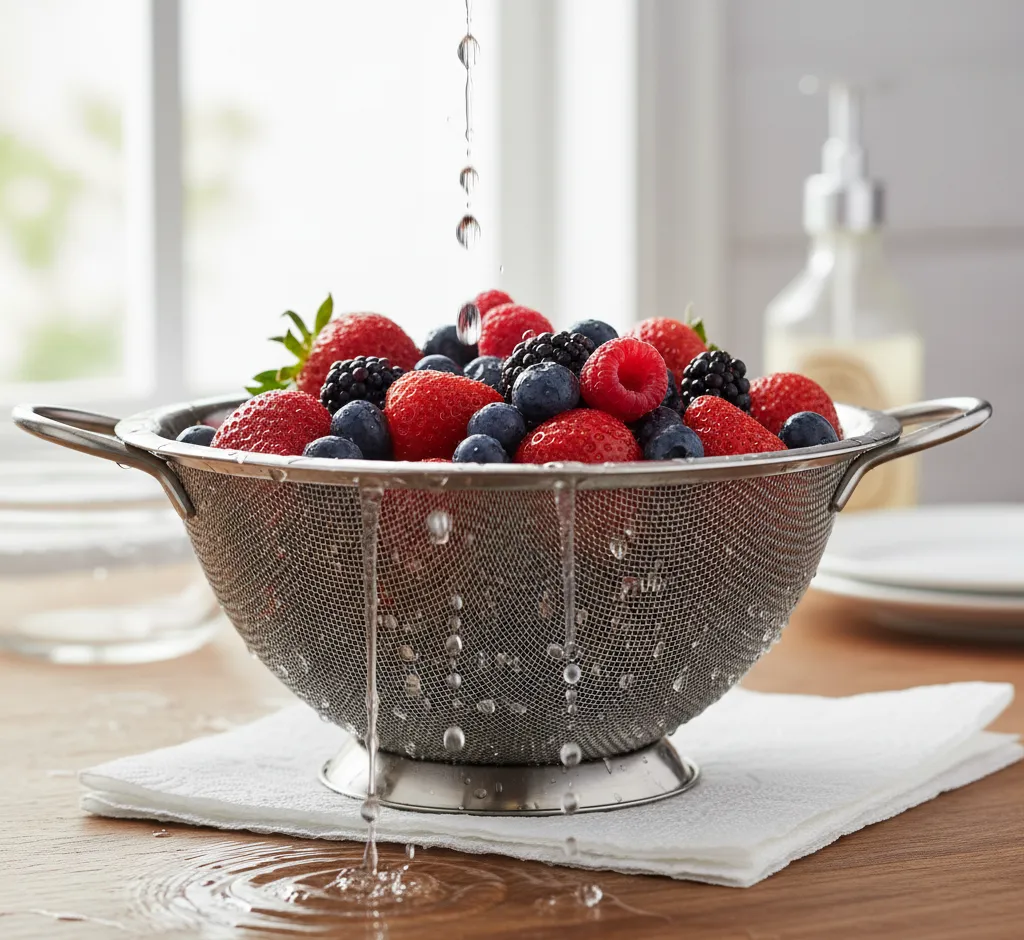
- The Rinse: Drain the berries into a colander and rinse them thoroughly with cool running water. This step is crucial to wash away the vinegar flavor.
- The Dry: Spread the berries out in a single layer on paper towels. This is the most important step. They must be completely dry before storage.
Note: Don't worry about your fruit tasting like pickles. As long as you rinse them well, the vinegar aroma dissipates completely.
Method 2: The Baking Soda Soak (Best for Pesticides)
If your primary concern is removing pesticides rather than extending shelf life, a study by the University of Massachusetts suggests that baking soda (sodium bicarbonate) is highly effective. Baking soda helps degrade certain types of pesticides, making them easier to wash away.
The Protocol
- Mix 1 teaspoon of baking soda into 2 cups of water.
- Soak the berries for 12 to 15 minutes.
- Rinse thoroughly with cold water.
- Dry completely.
While this is excellent for cleaning, it does not have the same anti-fungal (anti-mold) properties as the vinegar soak. If you have organic berries, stick to the vinegar method. If you have conventional berries, you might choose this method or do a quick vinegar rinse afterward.
Method 3: Salt Water Solution (For Removing Bugs)
If you have picked wild blackberries or raspberries, or purchased organic berries from a farmers market, you may encounter tiny white larvae (spotted wing drosophila) inside the fruit. While harmless to eat, they are unappetizing.
The Protocol
- Dissolve 1 teaspoon of salt per cup of warm water. Let the water cool down before adding berries.
- Soak the berries for 10 to 20 minutes.
- If there are larvae, the salt will irritate them, and they will exit the fruit and float to the bottom.
- Rinse very thoroughly to remove the salty taste.
Berry-Specific Handling Guidelines
Not all berries are created equal. The structural integrity of a strawberry is vastly different from a raspberry. Here is how to handle each type.
Strawberries
Strawberries are like sponges. Never remove the green cap (hull) before washing. If you cut the top off, you create a large open wound in the fruit. When you submerge it, water will flood the interior of the berry, diluting the flavor and making the texture mushy. Wash first, dry, and then hull only when you are ready to eat.
Raspberries and Blackberries
These are the most fragile of all aggregates. They are hollow and made of tiny drupelets held together by tenuous bonds. The force of a strong faucet stream can blow them apart. When washing raspberries:
- Never put them directly under a high-pressure tap.
- Use the "dunk and swish" method in a bowl of water.
- Be incredibly gentle when drying; do not rub them. Let air drying do the work.
Blueberries
You will notice a dusty, silvery-white coating on blueberries. This is called the "bloom." It is a natural waxy coating that the berry produces to protect itself from insects and moisture loss. It is edible and safe. However, washing will often remove the bloom. Blueberries are hardier than other berries and can withstand a slightly more vigorous rinse.
The Crucial Step: Drying Techniques
You have killed the mold and washed away the pesticides. Now, you must ensure the berries are dry. Storing wet berries is a recipe for disaster. Even a few drops of water trapped between berries can create a micro-climate for bacterial growth.
The Salad Spinner Trick
For strawberries and blueberries, a salad spinner is a game-changer. Line the bottom of the spinner with paper towels to cushion the fruit. Spin gently. This uses centrifugal force to pull water away without crushing the fruit.
Note: Do not use a salad spinner for raspberries; they will crush.
The Air Dry
Lay out a clean kitchen towel or layers of paper towels on your counter. Spread the berries in a single layer. Do not heap them. Let them sit for at least 20 to 30 minutes. You can gently pat them with another paper towel, but time is your best friend here.
Storage: The Final Frontier
Once your berries are washed and dried, how you store them determines if they last three days or two weeks.
1. The Container
Never put berries back into the plastic clamshell if it is wet or dirty. If you reuse the clamshell, wash and dry it first. Ideally, use a container that allows for airflow. Glass containers with locking lids are great, provided you leave the vent open or the lid slightly cracked.
2. The Paper Towel Buffer
Place a folded paper towel at the bottom of your storage container. This acts as a humidity regulator, absorbing any excess moisture that the berries release (transpiration) during storage. If you have a lot of berries, layer them: paper towel, berries, paper towel, berries.
3. Fridge Location
Berries like it cold, but not frozen. The crisper drawer is actually not the best place for them because the humidity there is often set high for leafy greens, and airflow is restricted. Place your berry container on a central shelf where the air circulates freely.
Freezing: When You Can't Eat Them Fast Enough
If you have bought in bulk and know you won't finish them, freeze them immediately while they are fresh, rather than waiting for them to get soft.
- Wash and Dry: Follow the standard washing and drying procedures described above.
- Flash Freeze: Spread the berries on a baking sheet in a single layer so they are not touching. Place the sheet in the freezer for 2–3 hours.
- Storage: Once the berries are frozen solid individually, transfer them to a ziplock bag or vacuum seal bag.
This "flash freezing" technique prevents the berries from freezing together into a giant solid brick of ice. You can then pour out exactly as many as you need for your morning smoothie.
Common Mistakes to Avoid
- Soaking too long: Leaving berries in water for over an hour can cause them to absorb water and lose flavor.
- Washing with soap: Never use dish soap or hand soap on porous fruit. The skin can absorb the detergent, which is not safe for consumption and tastes terrible.
- Ignoring one bad apple: Before washing, inspect your pint. If you see one moldy berry, throw it out immediately. Mold spreads rapidly. If a berry next to it looks wet or bruised, toss that one too. Quarantine is key.
Conclusion
Properly washing berries is a blend of science and patience. While it may seem tedious to perform a vinegar soak and a meticulous drying session right after grocery shopping, the rewards are substantial. You will enjoy crisper textures, cleaner flavors, and significantly less food waste. By controlling the pH with vinegar and controlling humidity with proper drying and storage, you can turn a fruit that usually lasts three days into a treat that stays fresh for up to two weeks.