Traditional Chinese Medicine Oral Tips: A Practical Guide for Daily Health
Discover practical Traditional Chinese Medicine oral tips for everyday health. Learn TCM-based advice on food, drinks, herbal teas, and seasonal eating to support digestion, energy, and emotional balance, while staying aligned with modern medical guidance.
Traditional Chinese Medicine (TCM) offers a rich, holistic approach to health that has evolved over thousands of years. Instead of focusing only on isolated symptoms, TCM seeks to balance the entire body, mind, and spirit. When applied to oral tips and daily self-care, these principles can support digestion, energy, sleep, emotional balance, and long-term vitality.
This guide explains key Traditional Chinese Medicine oral tips you can safely integrate into your modern lifestyle. It focuses on food choices, herbal teas, simple home practices, and mindset shifts that align with core TCM concepts, while also encouraging cooperation with modern medical care.
What Is Traditional Chinese Medicine?
Traditional Chinese Medicine is a comprehensive medical system that includes herbal medicine, acupuncture, dietary therapy, movement practices like qigong and tai chi, and lifestyle guidance. TCM views the body as an interconnected network of organs and energy pathways called meridians, all influenced by the flow of vital energy known as Qi.
Rather than simply treating symptoms, TCM practitioners aim to identify underlying patterns of imbalance, such as Qi deficiency, Yin deficiency, or internal dampness. Oral tips in TCM often focus on what you eat and drink, how you eat, and how your daily habits either support or block the smooth flow of Qi.
Key Principles Behind TCM Oral Tips
- Balance of Yin and Yang: Yin represents coolness, rest, and nourishment; Yang symbolizes warmth, activity, and transformation. TCM oral tips often seek to harmonize Yin and Yang through food temperature, flavor, and preparation.
- Support for the Spleen and Stomach: In TCM theory, these organs govern digestion and the transformation of food into Qi and blood. Gentle, warm, easy-to-digest foods are preferred over cold, raw, or excessively greasy choices.
- Seasonal adaptation: What you eat and drink should adjust with the seasons to match environmental changes, protect the body, and preserve energy.
- Prevention first: Daily oral tips focus on preventing illness, strengthening defenses, and cultivating long-term resilience instead of waiting for disease to appear.
Foundational TCM Oral Tips for Everyday Life
The most powerful TCM practices are often simple, consistent habits. Below are foundational oral tips you can apply daily to support digestion, immunity, and overall vitality.
1. Eat Warm, Cooked Foods More Often
According to TCM, the Spleen prefers warmth and dislikes cold. Excessive cold food and drink can weaken digestive fire, leading to bloating, fatigue, loose stools, or poor appetite.
- Favor lightly cooked meals like soups, stews, steamed vegetables, stir-fries, and congee (rice porridge).
- Limit ice-cold drinks, chilled desserts, and large amounts of raw salads, especially if you often feel cold or have weak digestion.
- Drink warm water or herbal teas throughout the day instead of iced beverages.
Warm, cooked foods are easier to digest, allowing the body to convert nutrients into Qi and blood more efficiently.
2. Chew Thoroughly and Eat Mindfully
In TCM, how you eat can be as important as what you eat. Eating quickly, under stress, or while distracted burdens the digestive system and scatters Qi.
- Take time to chew each bite well so the Stomach and Spleen are not overloaded.
- Avoid eating when extremely upset, angry, or rushed; allow emotions to settle first.
- Put down devices and focus on your meal to cultivate a calm, grateful mindset.
Mindful eating supports better nutrient absorption and can reduce bloating, indigestion, and overeating.
3. Follow Regular Meal Times
TCM emphasizes living in rhythm with natural cycles. Irregular eating patterns can disturb the Spleen and Stomach, weaken Qi, and contribute to fatigue or mood swings.
- Eat breakfast, lunch, and dinner at about the same times each day.
- Make lunch the largest meal if possible, when digestive fire is strongest.
- Avoid heavy, late-night meals that force the body to process food instead of resting.
Stable meal times help regulate energy levels, blood sugar, and sleep quality.
4. Choose Foods That Strengthen Qi
Qi-strengthening foods are central to many TCM oral tips. These foods support stamina, immunity, and mental clarity.
- Whole grains: Oats, brown rice, millet, barley, and quinoa help nourish Spleen Qi.
- Legumes: Lentils, chickpeas, black beans, and mung beans provide steady energy.
- Root vegetables: Sweet potatoes, carrots, beets, and yams ground and strengthen the body.
- Light protein: Fish, eggs, tofu, tempeh, and moderate amounts of lean meat help build Qi and blood.
- Nuts and seeds: Walnuts, sesame seeds, sunflower seeds, and pumpkin seeds nourish both Qi and essence when eaten in moderation.
Balance these staples with plenty of seasonal vegetables and modest portions of fruit to maintain steady energy throughout the day.
TCM Herbal Teas and Drinks: Gentle Daily Allies
Herbal teas and simple medicinal drinks are a classic way TCM applies oral tips in daily life. These preparations are usually mild, taken consistently, and tailored to the individual’s constitution and current needs.
Important note: Herbal remedies can interact with medications or underlying conditions. Always consult a qualified healthcare professional or licensed TCM practitioner before using herbs therapeutically, especially during pregnancy, breastfeeding, or if taking prescription drugs.
Common Gentle TCM Teas
- Ginger tea (Sheng Jiang Cha): Made by simmering fresh ginger slices in water. Often used to warm the body, support digestion, and ease mild nausea or cold-induced symptoms. Avoid excessive use if prone to heat symptoms such as mouth sores or strong irritability.
- Chrysanthemum tea (Ju Hua Cha): Traditionally used to clear mild heat, soothe the eyes, and calm the Liver. Commonly enjoyed by those who spend long hours on screens or feel easily irritated. Best consumed mildly warm rather than very cold.
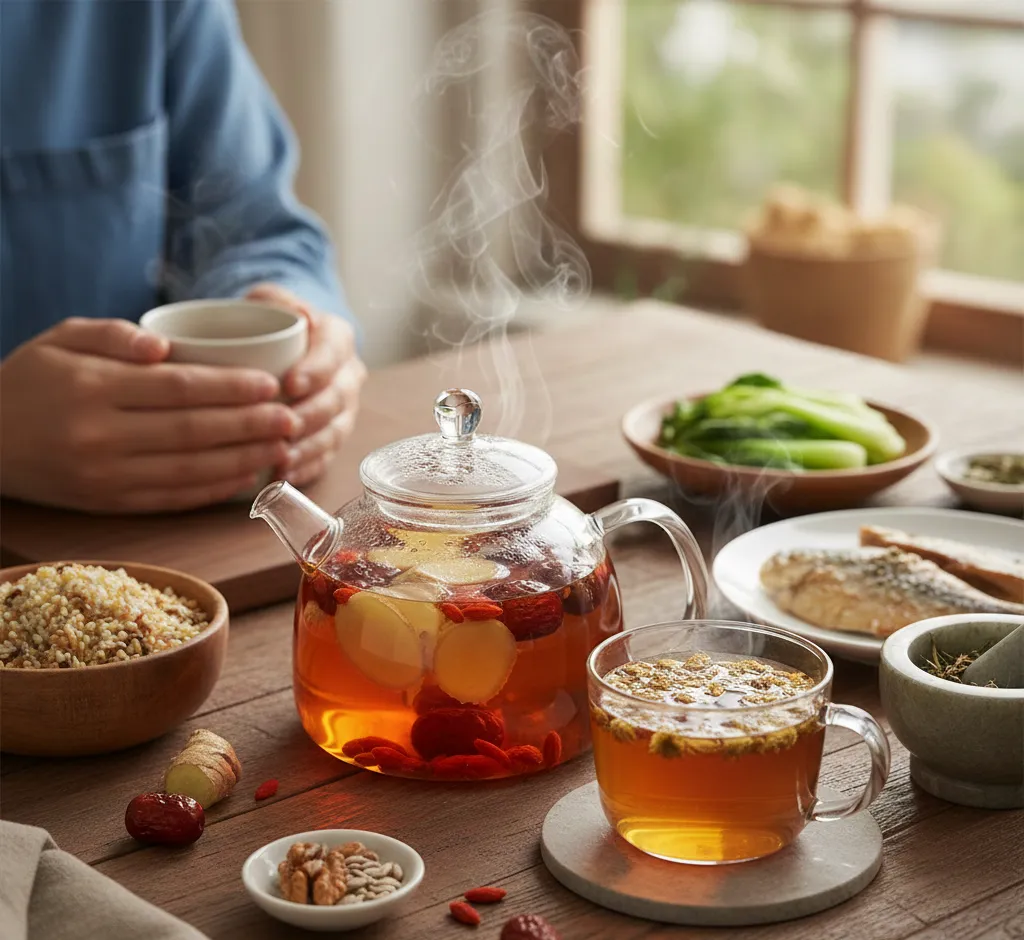
- Goji berry tea (Gou Qi Zi Cha): Goji berries are believed to nourish Liver and Kidney Yin, support the eyes, and gently boost energy. Often combined with chrysanthemum or red dates for a balanced tonic tea.
- Red date tea (Da Zao Cha): Red dates are used in TCM to tonify Qi and blood, calm the mind, and strengthen digestion. A simple drink is made by simmering a few pitted red dates in water until the flavor is rich and sweet.
Hydration the TCM Way
From a TCM standpoint, hydration is not just about drinking large quantities of water. The temperature, timing, and quality also matter.
- Sip warm or room-temperature water rather than large quantities of cold water.
- Drink steadily throughout the day instead of chugging large amounts at once.
- Reduce very sugary drinks and highly caffeinated beverages that can disturb Qi and Yin.
This moderate approach supports the body’s natural balance without overwhelming the digestive system.
Supporting Emotional Balance Through Oral Habits
Emotional health plays a central role in TCM. Each major organ system is associated with particular emotions, and chronic emotional strain can disturb Qi flow, leading to physical symptoms. Oral tips in this context focus on how food and drink can either soothe or aggravate the mind.
1. Calm the Liver with Bitter and Green Foods
In TCM, the Liver governs the smooth flow of Qi and is easily affected by stress, frustration, and anger. When Liver Qi stagnates, symptoms like headaches, tension, irritability, and digestive upset can appear.
- Include moderate amounts of dark leafy greens such as kale, spinach, and dandelion leaves to gently move Liver Qi.
- Add mildly bitter foods like romaine lettuce, endive, or small amounts of green tea to help clear excess heat.
- Avoid overeating spicy, greasy, or heavily fried foods, which may aggravate Liver heat and irritability in sensitive individuals.
Combined with stress management practices, these choices can help maintain a calmer mood and smoother energy flow.
2. Nourish the Heart with Warm, Moderate Meals
The Heart in TCM is linked to joy, mental clarity, and sleep. Overstimulation or depletion can lead to anxiety, palpitations, restlessness, or insomnia.
- Eat regular, warm meals rather than skipping meals or relying on excessive stimulants such as strong coffee or energy drinks.
- Include foods that gently nourish blood and Yin, such as tofu, black sesame seeds, red dates, and moderate amounts of high-quality protein.
- Limit very spicy, greasy, or late-night meals that can disturb the Heart spirit and interfere with restful sleep.
A balanced diet can be an anchor for emotional stability and better sleep hygiene.
Seasonal TCM Oral Tips
One of the strengths of TCM is its attention to the seasons. The body responds to changes in temperature, daylight, and environmental Qi, and oral tips aim to match these shifts.
Spring: Gently Move Qi
Spring is associated with the Liver and new growth. The focus is on gently moving Qi and releasing stagnation accumulated during winter.
- Introduce more fresh, lightly cooked green vegetables.
- Use small amounts of sour flavors such as lemon or vinegar to support the Liver, but avoid excess sourness if prone to Heartburn.
- Keep meals light and avoid heavy, greasy foods that hinder Qi movement.
Summer: Clear Heat and Protect Fluids
Summer corresponds to the Heart and Fire element. The body is more prone to heat and fluid loss.
- Emphasize hydrating foods such as cucumber, watermelon (in moderation), and lightly cooked vegetables.
- Enjoy teas such as chrysanthemum or mint to gently clear heat, if appropriate for your constitution.
- Avoid excessive ice-cold foods that can injure digestion, even in hot weather.
Autumn: Moisten and Protect the Lungs
Autumn is linked to the Lungs and dryness. TCM oral tips focus on moisturizing and gentle nourishment.
- Include pears, cooked apples, pumpkin, and small amounts of sesame or flax seeds to support fluids.
- Use mild soups and congee to warm and hydrate the body.
- Reduce overly spicy or drying foods that irritate the throat and lungs.
Winter: Warm and Deeply Nourish
Winter belongs to the Kidneys and Water element. It is a time for conserving energy and strengthening the body’s foundation.
- Favor warm, slow-cooked dishes like stews, bone broths, and congee.
- Use warming spices in moderation, such as ginger, cinnamon, and cloves, if suitable for your constitution.
- Avoid excessive raw, cold, or iced foods that could deplete Kidney Yang.
Adjusting diet and drinks according to the season can help maintain resilience and reduce susceptibility to colds, fatigue, or mood dips.
Simple TCM-Inspired Daily Routines
Beyond specific foods and drinks, TCM oral tips extend into daily rituals that indirectly support digestion, circulation, and relaxation.
Morning Warm Water Ritual
Starting the day with a cup of warm water is a common TCM-inspired habit. This practice gently awakens the digestive system, supports bowel movements, and helps flush metabolic waste.
- Drink one cup of warm or lightly hot water soon after waking.
- Optionally add a thin slice of fresh ginger or a few goji berries if they suit your constitution and do not conflict with medical advice.
- Wait a few minutes before having breakfast to give the body time to respond.
Evening Light Tea and Early Dinner
Evenings are a time to transition from activity to rest. Heavy meals and strong stimulants can disrupt sleep and burden digestion.
- Have dinner a few hours before bedtime and keep it lighter than lunch.
- Choose a gentle, caffeine-free herbal tea such as red date or chamomile if it agrees with your system.
- Avoid large amounts of sugar, alcohol, or spicy foods late at night.
This pattern helps the body shift into recovery mode, supports liver detoxification processes, and enhances sleep quality.
Modern Science and TCM: A Complementary Approach
While TCM is rooted in traditional theories and language, many of its oral tips align with modern nutritional and lifestyle research: eating whole foods, reducing ultra-processed products, managing stress, and respecting daily rhythms all have evidence-based benefits.
At the same time, TCM concepts such as Qi, meridians, Yin, and Yang are not directly measurable by current scientific methods. Therefore:
- Use TCM oral tips as complementary self-care, not as a replacement for professional medical diagnosis or treatment.
- Discuss any major dietary or herbal changes with a doctor or qualified practitioner, especially if you have chronic illness.
- Pay attention to your own body’s feedback. If a particular food or tea does not suit you, adjust accordingly.
A respectful, informed blend of TCM wisdom and modern medical guidance can offer a broader, more flexible toolkit for maintaining health.
Safety, Personalization, and When to Seek Help
TCM strongly emphasizes individualization. A food or herb that benefits one person could aggravate symptoms in another, depending on constitution and current imbalances.
When to Consult a Professional
- Persistent digestive discomfort, pain, or sudden changes in appetite or weight.
- Chronic fatigue, dizziness, palpitations, or insomnia.
- Ongoing emotional distress such as anxiety, depression, or irritability that affects daily functioning.
- Long-term medication use, pregnancy, breastfeeding, or serious chronic illness.
A licensed TCM practitioner can take a detailed history, examine the tongue and pulse, and design a personalized plan that may include herbs, acupuncture, and dietary recommendations. Always coordinate with conventional healthcare providers for comprehensive care.
Integrating TCM Oral Tips into Your Life
Adopting TCM oral tips does not require an overnight transformation. Small, consistent changes often bring the most sustainable benefits.
- Start with one or two habits: For example, replace iced drinks with warm water and add one warm, cooked meal each day.
- Observe your body’s response: Notice changes in digestion, energy, sleep, and mood over a few weeks.
- Adjust seasonally: Make small modifications as the weather changes, following the seasonal suggestions above.
- Seek guidance when needed: If you feel lost or have complex health conditions, consult a qualified practitioner.
By gradually weaving TCM oral tips into your daily routine, you can cultivate better digestion, steadier energy, and deeper alignment with natural rhythms. Combined with modern medical insight, this holistic approach can become a powerful framework for lifelong self-care and wellbeing.