Chocolate Phenolics Bioavailability: How Cocoa Polyphenols Are Absorbed and Used in the Body
Learn how chocolate phenolics are absorbed, metabolized, and utilized in the body, which factors influence their bioavailability, and how this affects the health benefits of dark chocolate rich in cocoa polyphenols.
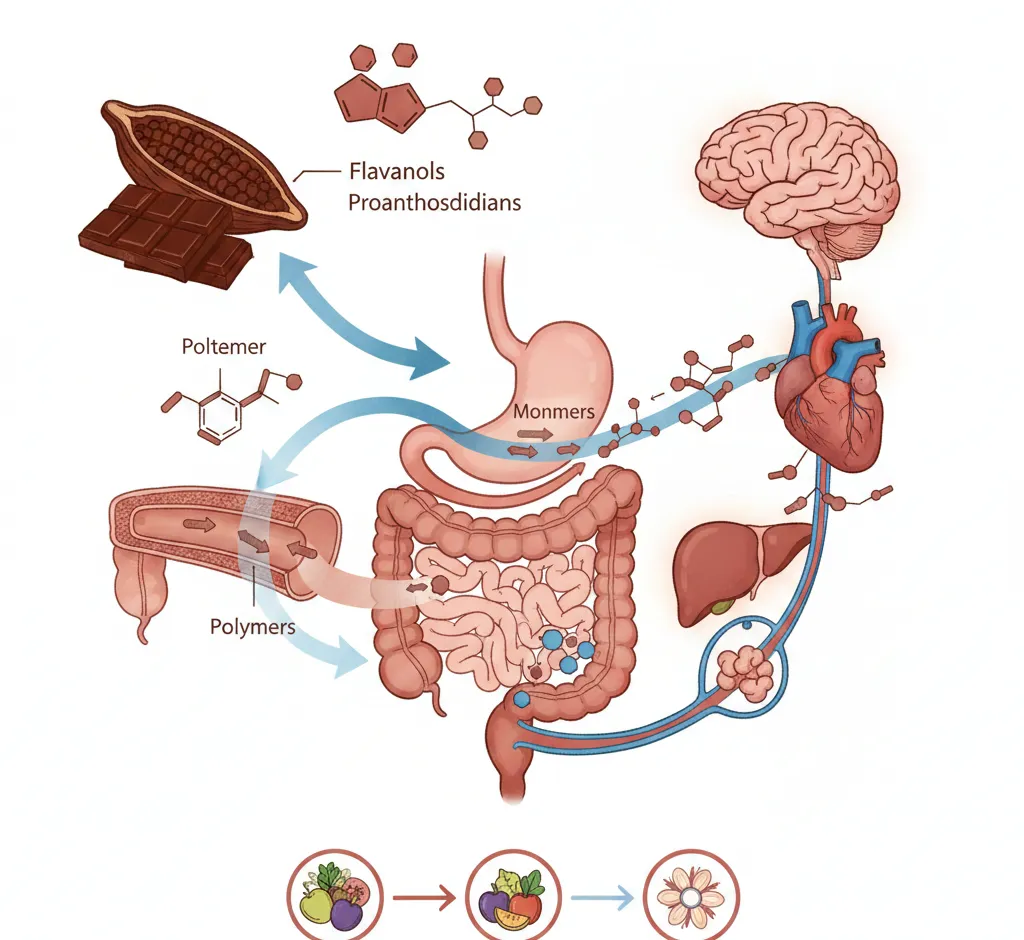
Chocolate, especially dark chocolate with a high cocoa content, is widely promoted as a functional food thanks to its rich content of phenolic compounds such as flavanols and proanthocyanidins. Yet the potential health benefits of these molecules depend not only on how much is present in the chocolate bar, but also on how efficiently the body can absorb, metabolize, and utilize them—this concept is known as bioavailability. Understanding the bioavailability of chocolate phenolics helps explain why some cocoa products are more beneficial than others and how processing, food matrix, and individual factors shape their impact on cardiovascular, metabolic, and cognitive health.
What Are Chocolate Phenolics?
Phenolic compounds in cocoa are mainly flavonoids, particularly flavan-3-ols (also called flavanols) such as catechin and epicatechin, as well as their oligomeric and polymeric forms known as proanthocyanidins. Cocoa also contains smaller amounts of other phenolics, including anthocyanins and phenolic acids, which contribute to its antioxidant capacity and biological activity.
In typical cocoa and dark chocolate, proanthocyanidins account for more than half of total polyphenols, while monomeric flavanols like epicatechin and catechin make up a significant minority. These compounds can scavenge reactive oxygen species, modulate cell signaling pathways, and influence vascular function, but their in vivo effects depend heavily on their fate during digestion and metabolism.
Defining Bioavailability for Cocoa Phenolics
Bioavailability describes the proportion of an ingested compound that reaches the systemic circulation or target tissues in an active form after digestion, absorption, and metabolism. For chocolate phenolics, this involves several stages: release from the food matrix in the gastrointestinal tract, absorption in the small or large intestine, chemical transformation by intestinal and hepatic enzymes, and distribution, action, and excretion.
This multi-step journey means that the polyphenol profile measured in a chocolate product is not identical to the profile that appears in blood or tissues after consumption. Many cocoa phenolics are extensively conjugated (for example, glucuronidated, sulfated, or methylated) in the body, and larger proanthocyanidins are primarily converted by gut microbiota into smaller phenolic metabolites before absorption.
Main Classes of Cocoa Phenolics and Their Fate
Monomeric flavanols (catechin and epicatechin)
Monomeric flavanols such as (−)-epicatechin and (+)-catechin are the best-studied cocoa phenolics from a bioavailability perspective. Human trials show that epicatechin from dark chocolate is rapidly absorbed, with plasma levels detectable within 30 minutes, reaching a peak around 2–3 hours after ingestion, and declining to baseline within approximately 6–8 hours.
Once absorbed, these flavanols are found mainly as conjugated metabolites, including glucuronides, sulfates, and methylated forms, rather than as free parent compounds. Despite their relatively modest absolute concentrations, these metabolites can exert biological activities such as improving endothelial function, modulating nitric oxide bioavailability, and influencing platelet activity.
Oligomeric and polymeric proanthocyanidins
Higher molecular weight proanthocyanidins (dimers, trimers, and polymers) show very limited direct absorption in the small intestine, with studies indicating negligible systemic levels of intact large oligomers after chocolate consumption. Instead, these compounds largely reach the colon, where they are extensively degraded by gut microbiota into smaller phenolic acids and related metabolites.
These microbial-derived metabolites, such as various hydroxyphenyl-γ-valerolactones and phenolic acids, can then be absorbed, further metabolized in the liver, and excreted in urine. One study identified 5-(4′-hydroxyphenyl)-γ-valerolactone sulfate as a sensitive biomarker of cocoa flavanol intake, highlighting the importance of colonic metabolism for the overall bioavailability of chocolate phenolics.
Digestion and Absorption Pathways
Small intestine absorption
In the upper gastrointestinal tract, a fraction of monomeric flavanols is released from the chocolate matrix, remains sufficiently soluble, and is absorbed through the small intestinal epithelium. In vitro models and human data suggest that only around 5–10% of cocoa polyphenols are absorbed in the small intestine, largely in monomeric form, which underscores their relatively low intrinsic bioaccessibility.
Once inside enterocytes, these compounds undergo phase II metabolism, mainly glucuronidation, sulfation, and methylation, before entering the portal circulation and reaching the liver for additional transformation. Therefore, circulating cocoa flavanols are better described as a diverse pool of conjugated metabolites rather than unmodified epicatechin or catechin.
Colonic fermentation and microbiota
The majority of non-absorbed proanthocyanidins and unabsorbed monomers continue to the colon, where they interact with gut microbiota. Microbial enzymes cleave interflavan bonds and further degrade these molecules into smaller phenolic acids and valerolactone derivatives, which can be absorbed over a longer time frame, sometimes up to 24 hours after ingestion.
These microbial metabolites have been associated with antioxidant, anti-inflammatory, and vascular effects, suggesting that the health benefits of chocolate phenolics are partly mediated by the gut microbiome. Interindividual differences in microbiota composition can therefore lead to substantial variability in the bioavailability and physiological impact of cocoa polyphenols.
Factors Influencing Bioavailability of Chocolate Phenolics
Chocolate processing and manufacturing
Postharvest steps such as fermentation, drying, roasting, and alkalization (Dutch processing) can significantly reduce polyphenol content and alter their structure, thereby affecting both the amount and profile of phenolics that reach the gut. Prolonged fermentation and strong alkalization are particularly detrimental, often leading to markedly lower flavanol levels in the final cocoa powder or chocolate product.
Minimal processing, careful control of fermentation, and avoidance of aggressive alkalization help preserve flavanol content and may enhance the overall bioavailability of chocolate phenolics. As a result, high-cocoa dark chocolates and specially formulated high-flavanol products usually deliver higher bioactive doses than heavily processed, low-cocoa, or alkalized chocolates.
Food matrix and co-ingested nutrients
The composition of the chocolate matrix, including fat, sugar, milk proteins, and other ingredients, modulates the release, solubility, and absorption of phenolics in the gastrointestinal tract. Studies have examined the impact of carbohydrates and milk on catechin and epicatechin bioavailability, showing that different sugar types or sweeteners can alter total flavanol absorption and metabolic profiles.
For example, experimental work comparing sucrose- and maltitol-sweetened chocolates found lower total plasma flavanol levels after maltitol-containing products, suggesting carbohydrate composition influences small intestinal uptake. The presence of proteins, particularly from milk, has been reported to slow polyphenol absorption and potentially reduce the bioavailability of certain flavanols, although results may vary based on study design and product formulation.
Interindividual variation and physiological factors
Beyond product formulation, individual factors such as age, genetic polymorphisms in metabolic enzymes, gut microbiota composition, and overall diet can strongly influence cocoa phenolic bioavailability. Differences in phase II metabolism (for instance, in enzymes responsible for glucuronidation or sulfation) may lead to distinct profiles of circulating flavanol metabolites and different physiological effects among individuals consuming the same chocolate.
Gastrointestinal transit time, gastric pH, and concurrent intake of other foods or medications can further modulate absorption and metabolism of chocolate phenolics. Moreover, people with distinct microbiota enterotypes may generate different sets and amounts of microbial phenolic metabolites, contributing to varying responses in vascular or cognitive outcomes after cocoa consumption.
Bioavailability and Health Effects
Cardiovascular health
A substantial body of experimental and clinical evidence links cocoa polyphenol intake with improvements in cardiovascular risk markers, many of which have been attributed to bioavailable flavanol metabolites rather than the parent compounds themselves. These metabolites can enhance endothelial function, increase nitric oxide bioavailability, reduce platelet aggregation, and improve blood pressure and arterial stiffness in various populations.
Short- and medium-term interventions with flavanol-rich cocoa beverages or high-cocoa dark chocolate have shown dose-dependent benefits on flow-mediated dilation, vascular elasticity, and some inflammatory markers. However, the magnitude and consistency of these effects are influenced by the dose, the specific flavanol profile, and interindividual differences in absorption and metabolism, all of which are rooted in bioavailability.
Cognitive performance and brain health
Cocoa flavanols may indirectly support cognitive function by improving cerebrovascular blood flow and endothelial health, processes that depend on the presence of bioavailable flavanol metabolites. Research indicates that epicatechin-rich cocoa can enhance nitric oxide–mediated vasodilation, which in turn may improve brain perfusion and contribute to better cognitive performance and protection against age-related decline.
Several human studies report acute and sub-chronic improvements in certain cognitive tasks, mood states, or mental fatigue following consumption of flavanol-rich cocoa, though findings are not uniform across all trials. Differences in study design, participant characteristics, and the flavanol dose and matrix likely reflect underlying variability in phenolic bioavailability and downstream neurovascular responses.
Metabolic and other systemic effects
Experimental data suggest that cocoa polyphenols and their metabolites may exert beneficial effects on insulin sensitivity, lipid profiles, and inflammatory processes, though the clinical evidence is still evolving. These effects could be mediated through modulation of cell signaling pathways, antioxidant defenses, and interactions with gut microbiota, all of which depend on the presence and persistence of bioavailable phenolic metabolites.
Furthermore, the colonic metabolites of proanthocyanidins may influence local gut health, including barrier function and microbial ecology, thereby contributing indirectly to cardiometabolic outcomes. The extent to which these systemic effects translate into long-term disease risk reduction remains an active area of research.
Optimizing the Bioavailability of Chocolate Phenolics
Choosing the right chocolate
From a practical standpoint, consumers seeking to maximize the benefits of chocolate phenolics should focus on products with higher cocoa content and minimal processing. Dark chocolates with a cocoa content of 70% or more and products specifically labeled as high in cocoa flavanols generally provide higher quantities of phenolics than milk chocolates or heavily alkalized cocoa powders.
- Prefer dark chocolate or cocoa beverages made from minimally processed, non-alkalized cocoa to preserve flavanol content.
- Check labels or product information for cocoa percentage and, when available, flavanol content per serving.
- Balance portion size to obtain beneficial doses of polyphenols while avoiding excessive sugar and energy intake.
Dietary patterns and timing
Consuming chocolate phenolics as part of a balanced diet rich in fruits, vegetables, and other polyphenol sources may synergistically influence gut microbiota and metabolic responses. Regular moderate intake, rather than sporadic large doses, might support more consistent levels of beneficial metabolites and sustained vascular or cognitive effects.
Some evidence suggests that co-ingestion with certain foods, such as carbohydrate-rich matrices, can increase flavanol absorption compared with alternative sweeteners, though the overall impact must be weighed against metabolic health considerations. Individuals with specific health conditions or on medication should consider professional guidance when integrating high-flavanol chocolate into their diet.
Future Directions in Chocolate Phenolics Research
Current research highlights that cocoa flavanols and related phenolics are moderately bioavailable and extensively metabolized, with both small intestinal and colonic processes contributing to the pool of active metabolites. Yet there is still a need for more detailed mapping of metabolite profiles, tissue distribution, and dose–response relationships to clarify which specific compounds drive particular health outcomes.
Future work is likely to focus on personalized nutrition approaches that account for genetic, metabolic, and microbiome variability when recommending cocoa-based interventions. In addition, food technologists are exploring novel processing and formulation strategies, such as encapsulation and matrix optimization, to enhance the stability and bioavailability of cocoa polyphenols in consumer products.
Key Takeaways on Chocolate Phenolics Bioavailability
- Chocolate phenolics consist mainly of flavanols and proanthocyanidins, which show relatively low but biologically meaningful bioavailability after ingestion.
- Monomeric flavanols like epicatechin are quickly absorbed and extensively conjugated, while larger proanthocyanidins depend on colonic microbial metabolism to generate absorbable phenolic metabolites.
- Processing, product formulation, food matrix, and individual factors such as gut microbiota composition strongly influence the bioavailability and health effects of cocoa polyphenols.
- Evidence suggests that bioavailable cocoa phenolic metabolites can support cardiovascular function, modulate vascular and neurocognitive processes, and potentially improve some metabolic markers when consumed in appropriate doses.
- Selecting minimally processed, high-cocoa products and integrating them into a healthy dietary pattern offers a pragmatic strategy to harness the benefits of chocolate phenolics without excessive sugar or calorie intake.